

Motmot

Macaroni Penguin vs Snares Penguin

Eudyptes chrysolophus contro Eudyptes robustus

Fai un quiz con Macaroni Penguin e Snares Penguin
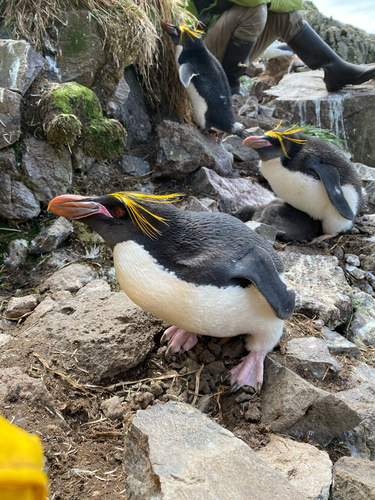
Macaroni Penguin (Eudyptes chrysolophus) Macaroni Penguin
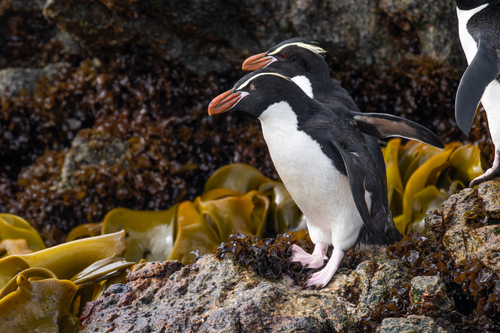
Snares Penguin (Eudyptes robustus) Snares Penguin

Media

Caricamento…

In breve

The most reliable field mark to separate Macaroni Penguin from Snares Penguin is the position and shape of the yellow crest: Macaroni's crest emerges from the center of the forehead and sweeps straight back, while Snares' crest starts at the base of the bill and runs along the sides of the head. Macaroni is also notably bulkier, with a heavier build and a larger, orange-brown bill. Juvenile Macaroni Penguins lack a full crest and have a duller, smaller bill, which can cause confusion with Snares, but Snares juveniles still show the crest starting at the bill base. Both species have similar black-and-white body patterns, so careful attention to crest origin and bill structure is essential. In the field, size and bill color/shape are secondary but helpful clues, especially at close range.

Consigli di identificazione

  1. Crest origin and shape: Macaroni Penguin's yellow crest starts from the center of the forehead and sweeps straight back; Snares Penguin's crest begins at the base of the bill and runs as a thin line above the eye. This is the single most reliable mark in all ages except very young juveniles.
  2. Bill color and structure: Macaroni has a large, bulbous, orange-brown bill with a pinkish bare skin patch from the bill base to the eye; Snares has a thick, reddish-brown bill with a distinct light pink skin patch at the base. Bill size is especially useful in adult males.
  3. Crest development in immatures: Juvenile Macaroni Penguins may lack a full crest or show only scattered yellow feathers, but the few yellow feathers, if present, still originate from the forehead, not the bill base. Snares juveniles retain the bill-base origin even with a less developed crest.
  4. Chin and throat color in immatures: Juvenile Macaroni has a dark grey chin and throat, while Snares shows a black chin and throat similar to adults.
  5. Body structure: Macaroni is bulkier and more barrel-chested, while Snares is slimmer and less robust. This is most apparent in side-by-side views or in colonies.
  6. Flipper pattern: Macaroni's flippers are blue-black above with a white trailing edge, and mostly white below with a black tip and leading edge; Snares' underwing pattern is variable and not diagnostic.
  7. Iris color: Macaroni's iris is deep red, while Snares' is bright red-brown but can appear lighter depending on lighting. This is a minor mark and not always reliable.
  8. Leg and foot color: Both species have pink legs and feet, not useful for separation.
  9. Location: If observed on the Snares Islands, the bird is almost certainly Snares Penguin; elsewhere in the Subantarctic or Antarctic, Macaroni is far more likely.
  10. Behavior: Macaroni is more aggressive in colony interactions, with frequent bill-jousting and flipper strikes, but this is subtle and not a primary field mark.
  11. Sexual dimorphism: Both species are similar between sexes, but Macaroni males have a slightly larger bill; this is only useful with experience and when sex is known.
  12. Vocalizations: Calls are not reliably separable in the field without detailed study.
  13. Seasonal context: Both species breed in the southern summer, but Snares' season is tied to New Zealand's summer (September–January), while Macaroni's timing varies with latitude.
  14. Pitfalls: Immature Macaroni Penguins lacking a full crest can be mistaken for Snares, but check for crest origin (forehead vs bill base) and bill size/color. Snares never shows a forehead-origin crest.
  15. Group composition: If seen in a mixed group (unlikely in the wild), compare size and crest origin directly; Macaroni will be the larger, more robust bird with a forehead-origin crest.

Taglia

Macaroni Penguin is substantially heavier and more robust than Snares Penguin. Macaroni averages nearly 5 kg (4985 g), while Snares is much lighter (noting a likely data error in the source, but Snares is consistently described as smaller and lighter, typically 2.5–4 kg in other references). Macaroni also reaches up to 70 cm in length, while Snares ranges from 50–70 cm, but is generally more slender and less bulky. In mixed or distant groups, Macaroni's larger, more barrel-chested appearance stands out, especially when birds are side by side.

Piumaggio

Juvenile Macaroni Penguins are smaller, with a duller brown bill and a dark grey chin and throat, and they lack or have only a few yellow crest feathers. The adult Macaroni's yellow crest is thick, bushy, and arises from a central forehead patch, extending horizontally back above the eye to the nape. In contrast, Snares Penguin's crest starts at the base of the bill and runs in a thin, bright-yellow line above the eye, ending at the back of the head. Both have black upperparts and white underparts, but Snares' bill is reddish-brown with a distinct pinkish skin patch at the base, and its crest is more sharply defined at the bill base. The underwing patterns are variable in Snares and not useful for ID. Macaroni's flippers are blue-black above with a white trailing edge, and mostly white below with a black tip and leading edge. Both species have red to reddish-brown irises, but Macaroni's are more consistently deep red, and Snares' can appear lighter or variable depending on light. Immature Snares Penguins retain the crest starting at the bill base, even if less developed.

Comportamento

Both species are highly social and breed in dense colonies, but Macaroni Penguins are known for especially vigorous visual and vocal displays, including bill-jousting and dramatic head waving. Macaroni males are more likely to engage in aggressive displays such as bill-locking and flipper batting. Snares Penguins also display, but their courtship involves standing erect with wings spread and chest pumping, and pairs reinforce their bond with mutual bowing and trumpeting. These differences are subtle and most visible during the breeding season.

Habitat

Macaroni Penguins breed from the Subantarctic to the Antarctic Peninsula, while Snares Penguins are endemic to the Snares Islands off southern New Zealand. In the field, location is a strong clue: Snares Penguins are only found on or near the Snares Islands, whereas Macaroni has a much broader southern distribution. Overlap is extremely unlikely except in captivity or vagrancy.

Voce

Both species have a range of braying and trumpeting calls, but the notes do not provide diagnostic differences in voice. Macaroni's ecstatic display includes loud throbbing and braying, while Snares' calls are described as hisses, explosive cries, and rhythmical braying. In practice, vocalizations are not reliable for separation without extensive experience.

Invia una descrizione migliore

Usa le stesse sezioni del confronto. Il testo viene pubblicato subito.

The most reliable field mark to separate Macaroni Penguin from Snares Penguin is the position and shape of the yellow crest: Macaroni's crest emerges from the center of the forehead and sweeps straight back, while Snares' crest starts at the base of the bill and runs along the sides of the head. Macaroni is also notably bulkier, with a heavier build and a larger, orange-brown bill. Juvenile Macaroni Penguins lack a full crest and have a duller, smaller bill, which can cause confusion with Snares, but Snares juveniles still show the crest starting at the bill base. Both species have similar black-and-white body patterns, so careful attention to crest origin and bill structure is essential. In the field, size and bill color/shape are secondary but helpful clues, especially at close range.

  1. Crest origin and shape: Macaroni Penguin's yellow crest starts from the center of the forehead and sweeps straight back; Snares Penguin's crest begins at the base of the bill and runs as a thin line above the eye. This is the single most reliable mark in all ages except very young juveniles.
  2. Bill color and structure: Macaroni has a large, bulbous, orange-brown bill with a pinkish bare skin patch from the bill base to the eye; Snares has a thick, reddish-brown bill with a distinct light pink skin patch at the base. Bill size is especially useful in adult males.
  3. Crest development in immatures: Juvenile Macaroni Penguins may lack a full crest or show only scattered yellow feathers, but the few yellow feathers, if present, still originate from the forehead, not the bill base. Snares juveniles retain the bill-base origin even with a less developed crest.
  4. Chin and throat color in immatures: Juvenile Macaroni has a dark grey chin and throat, while Snares shows a black chin and throat similar to adults.
  5. Body structure: Macaroni is bulkier and more barrel-chested, while Snares is slimmer and less robust. This is most apparent in side-by-side views or in colonies.
  6. Flipper pattern: Macaroni's flippers are blue-black above with a white trailing edge, and mostly white below with a black tip and leading edge; Snares' underwing pattern is variable and not diagnostic.
  7. Iris color: Macaroni's iris is deep red, while Snares' is bright red-brown but can appear lighter depending on lighting. This is a minor mark and not always reliable.
  8. Leg and foot color: Both species have pink legs and feet, not useful for separation.
  9. Location: If observed on the Snares Islands, the bird is almost certainly Snares Penguin; elsewhere in the Subantarctic or Antarctic, Macaroni is far more likely.
  10. Behavior: Macaroni is more aggressive in colony interactions, with frequent bill-jousting and flipper strikes, but this is subtle and not a primary field mark.
  11. Sexual dimorphism: Both species are similar between sexes, but Macaroni males have a slightly larger bill; this is only useful with experience and when sex is known.
  12. Vocalizations: Calls are not reliably separable in the field without detailed study.
  13. Seasonal context: Both species breed in the southern summer, but Snares' season is tied to New Zealand's summer (September–January), while Macaroni's timing varies with latitude.
  14. Pitfalls: Immature Macaroni Penguins lacking a full crest can be mistaken for Snares, but check for crest origin (forehead vs bill base) and bill size/color. Snares never shows a forehead-origin crest.
  15. Group composition: If seen in a mixed group (unlikely in the wild), compare size and crest origin directly; Macaroni will be the larger, more robust bird with a forehead-origin crest.

Macaroni Penguin is substantially heavier and more robust than Snares Penguin. Macaroni averages nearly 5 kg (4985 g), while Snares is much lighter (noting a likely data error in the source, but Snares is consistently described as smaller and lighter, typically 2.5–4 kg in other references). Macaroni also reaches up to 70 cm in length, while Snares ranges from 50–70 cm, but is generally more slender and less bulky. In mixed or distant groups, Macaroni's larger, more barrel-chested appearance stands out, especially when birds are side by side.

Juvenile Macaroni Penguins are smaller, with a duller brown bill and a dark grey chin and throat, and they lack or have only a few yellow crest feathers. The adult Macaroni's yellow crest is thick, bushy, and arises from a central forehead patch, extending horizontally back above the eye to the nape. In contrast, Snares Penguin's crest starts at the base of the bill and runs in a thin, bright-yellow line above the eye, ending at the back of the head. Both have black upperparts and white underparts, but Snares' bill is reddish-brown with a distinct pinkish skin patch at the base, and its crest is more sharply defined at the bill base. The underwing patterns are variable in Snares and not useful for ID. Macaroni's flippers are blue-black above with a white trailing edge, and mostly white below with a black tip and leading edge. Both species have red to reddish-brown irises, but Macaroni's are more consistently deep red, and Snares' can appear lighter or variable depending on light. Immature Snares Penguins retain the crest starting at the bill base, even if less developed.

Both species are highly social and breed in dense colonies, but Macaroni Penguins are known for especially vigorous visual and vocal displays, including bill-jousting and dramatic head waving. Macaroni males are more likely to engage in aggressive displays such as bill-locking and flipper batting. Snares Penguins also display, but their courtship involves standing erect with wings spread and chest pumping, and pairs reinforce their bond with mutual bowing and trumpeting. These differences are subtle and most visible during the breeding season.

Macaroni Penguins breed from the Subantarctic to the Antarctic Peninsula, while Snares Penguins are endemic to the Snares Islands off southern New Zealand. In the field, location is a strong clue: Snares Penguins are only found on or near the Snares Islands, whereas Macaroni has a much broader southern distribution. Overlap is extremely unlikely except in captivity or vagrancy.

Both species have a range of braying and trumpeting calls, but the notes do not provide diagnostic differences in voice. Macaroni's ecstatic display includes loud throbbing and braying, while Snares' calls are described as hisses, explosive cries, and rhythmical braying. In practice, vocalizations are not reliable for separation without extensive experience.

Scartare le modifiche?

Hai modifiche non salvate. Se esci ora, andranno perse.

Macaroni Penguin · Snares Penguin · I miei uccelli difficili