

Motmot

シロハラトウゾクカモメ 対 トウゾクカモメ

Stercorarius longicaudus 対 Stercorarius pomarinus

シロハラトウゾクカモメとトウゾクカモメのクイズ
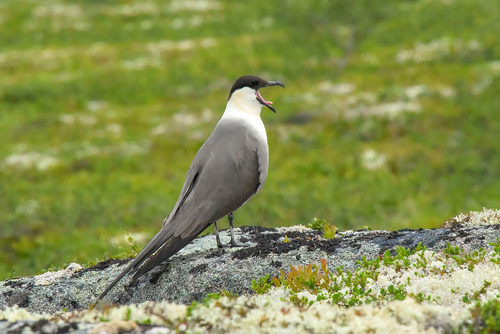
シロハラトウゾクカモメ (Stercorarius longicaudus) シロハラトウゾクカモメ
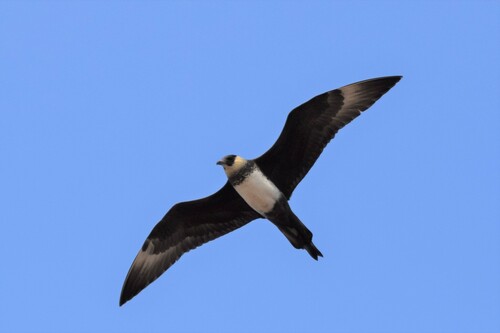
トウゾクカモメ (Stercorarius pomarinus) トウゾクカモメ

メディア

読み込み中…

要点

シロハラトウゾクカモメとトウゾクカモメの最も信頼できるフィールドマークは、翼の上に大胆な白い「フラッシュ」があるかどうかです:トウゾクカモメの成鳥(すべての形態)は、下翼に目立つ白い二重フラッシュを示しますが、シロハラトウゾクカモメの成鳥はこの特徴がなく、単色の暗い初列風切を持っています。飛行中、トウゾクはより大きく、翼が広い一方で、シロハラはより細身で、よりアジサシのようです。成鳥のシロハラトウゾクカモメは非常に長く、細い尾羽を持っていますが、トウゾクの尾羽は短く、スプーン状で、ねじれています。幼鳥の識別は難しいですが、シロハラは一般的に冷たいトーンで灰色がかっており、トウゾクはより大きく、茶色がかっています。サイズも手がかりで、トウゾクは全体的にずっと重く、大きいです。

識別のコツ

  1. 白い翼のフラッシュ(すべての年齢): トウゾクカモメは常に下翼に大胆な白い二重フラッシュを示します(すべての形態と年齢)、飛行中に見えます。シロハラトウゾクカモメはこれがなく、単色の暗い初列風切を持っています。これは最も信頼できるフィールドマークです。
  2. 尾の形と長さ(成鳥、繁殖): 成鳥のシロハラトウゾクカモメは非常に長く、細く、尖った尾羽(最大29 cm)を持っていますが、トウゾクの尾羽は短く(約10 cm)、スプーン状で、ねじれています。繁殖外では、両種とも尾羽を失うため、これはあまり役に立ちません。
  3. 全体的な構造: トウゾクはずっと大きく、翼が広く、重く、よりカモメのような体型をしています。シロハラは細身で、よりアジサシのようで、翼が狭く、より繊細な印象です。
  4. 飛行スタイル: シロハラトウゾクカモメは敏捷で、しばしばホバリングし、軽やかで浮遊感があります。トウゾクは重く、より意図的で力強い飛行をします。
  5. 幼鳥の羽毛: 幼鳥のシロハラトウゾクカモメは冷たく、灰色がかっており、より均一ですが、トウゾクの幼鳥は茶色がかっており、より大きいです。両者とも変動がありますが、トウゾクの白い下翼フラッシュは重要なマークです。
  6. 頭の模様(成鳥、明るい形態): 成鳥のトウゾク(明るい形態)は、黒い帽子を持つ黄白色の頭と首を持っていますが、シロハラは黒い帽子を持っていますが、背中は灰色がかっており、黄白色のトーンがありません。
  7. くちばしと頭: トウゾクのくちばしはより太く、重く、全体的な頑丈な外観に合っています。シロハラのくちばしはより細く、繊細です。
  8. 文脈におけるサイズ: カモメと一緒に見られた場合、トウゾクはほとんどの普通のカモメと同じかそれ以上の大きさですが、シロハラは明らかに小さいです。
  9. 生息地の文脈: 移動中のカモメの内陸での目撃は、特にその鳥がフィールドで昆虫や小さな獲物を狩っている場合、シロハラである可能性が高いです。トウゾクは繁殖外では海から離れて見られることはほとんどありません。
  10. 人間の近くでの行動: シロハラの幼鳥はしばしば恐れを知らず、移動中に近づいてくることがありますが、トウゾクはそうする可能性が低いです。
  11. 羽毛の形態: トウゾクは三つの形態(明るい、暗い、中間)がありますが、すべてが白い下翼フラッシュを保持しています。シロハラは変動が少なく、白い翼のフラッシュを決して示しません。
  12. 腹部(成鳥): トウゾク(明るい形態)は主に白い腹部を持っていますが、シロハラはより均一に灰色と白で、コントラストが少ないです。
  13. 鳴き声: 聞こえた場合、シロハラの鳴き声は高音でガラガラしています;トウゾクの鳴き声はより深く、チャッタリングですが、これはフィールドで診断的であることはほとんどありません。
  14. 尾の非繁殖/幼鳥: 両種とも繁殖外では尾羽を失うため、尾の形はその時にはあまり役に立ちません;翼のフラッシュと構造に頼ってください。
  15. 混合群れ: 複数のカモメが存在する場合、サイズと構造を直接比較してください—トウゾクは最も大きく、最もがっしりしていることが際立ち、シロハラは最も細身でアジサシのようです。

大きさ

トウゾクカモメはシロハラトウゾクカモメよりもかなり大きく、重いです。成鳥のトウゾクは平均約694 gで、シロハラは約289 gです。トウゾクの翼幅(110–138 cm)と体長(46–67 cm、尾羽を含む)は、シロハラの(翼幅102–117 cm;長さ38–58 cm、尾から最大29 cm)を超えています。フィールドでは、トウゾクはよりがっしりしていてカモメのように見え、シロハラは明らかに細身でより繊細です。

羽色

幼鳥と未成熟の鳥は最も識別が難しいです。トウゾクの幼鳥は変動がありますが、一般的に茶色がかっていてがっしりしており、下翼に白い二重フラッシュがあります(すべての形態と年齢で見える)、一方でシロハラの幼鳥は冷たく、灰色がかっており、白い翼のフラッシュがなく、初列風切がより均一で単調に見えます。繁殖羽毛の成鳥のシロハラトウゾクカモメは、非常に長く、細い尾羽、灰色の背中、黒い帽子、白いフラッシュのない清潔で暗い初列風切を持っているため、間違いなく識別できます。トウゾクの成鳥(明るい形態)は、茶色の背中、白い腹部、黒い帽子を持つ黄白色の頭と首、そして下翼に診断的な白い二重フラッシュを持っています。彼らの尾羽は短く、スプーン状で、ねじれています。暗い形態と中間形態のトウゾクは全体的に暗い茶色ですが、白い下翼フラッシュを保持しています。両種の非繁殖および幼鳥は混乱を招くことがありますが、構造と翼のパターンが重要です。

行動

シロハラトウゾクカモメは飛行中により敏捷でアジサシのようで、繁殖地の上でしばしばホバリングします。トウゾクカモメはより重く、より計画的な飛行をし、敏捷性が低く、よりカモメのように見えます。両種ともクリプトパラサイトで、他の海鳥を追いかけて食べ物を奪いますが、トウゾクのがっしりした体型と広い翼は、より力強い存在感を与えます。シロハラは移動中に陸上で小さな獲物を狩っているのが見られることが多く、時には人間に近づいてくることもあります。

生息環境

両種とも北極地域で繁殖しますが、トウゾクカモメは湿ったツンドラや沿岸地域に関連している傾向があり、シロハラトウゾクカモメは乾燥したツンドラや高地を好みます。移動中および冬季には、両者とも外洋性ですが、シロハラは通過中に内陸で見られることが多く、特にフィールドやゴルフコースで幼鳥が見られます。トウゾクは繁殖シーズン外ではより厳密に海洋性です。

声

繁殖地のシロハラトウゾクカモメは、吠えるような音やガラガラした音を出し、繁殖シーズン外では厳しい「クリーア」という音を出します。トウゾクカモメは厳しいチャッタリングの音と「ウィッチ・ユー」という音を出します。ほとんどのフィールド状況では、鳴き声は識別の主要な手段ではありませんが、シロハラの鳴き声は高音でガラガラしており、トウゾクの鳴き声はより深く、厳しいです。

より良い説明を送る

比較と同じ項目を使ってください。文章はすぐに公開されます。

The most reliable field mark between Long-tailed Skua and Pomarine Skua is the presence or absence of a bold white 'flash' on the wing: Pomarine Skua adults (all morphs) show a prominent white double flash on the underwing, while Long-tailed Skua adults lack this feature and have plain dark primaries. In flight, Pomarine is bulkier and broader-winged, while Long-tailed is slimmer and more tern-like. Adult Long-tailed Skuas have extremely long, slender tail streamers, whereas Pomarine's tail streamers are shorter, spoon-shaped, and twisted. Juvenile separation is difficult, but Long-tailed is generally colder-toned and greyer, while Pomarine is bulkier and browner. Size is also a clue, with Pomarine being much heavier and larger overall.

  1. White wing flash (all ages): Pomarine Skua always shows a bold white double flash on the underwing (all morphs and ages), visible in flight. Long-tailed Skua lacks this, with plain dark primaries. This is the single most reliable field mark.
  2. Tail shape and length (adults, breeding): Adult Long-tailed Skua has extremely long, slender, pointed tail streamers (up to 29 cm), while Pomarine's are shorter (about 10 cm), spoon-shaped, and twisted. Outside breeding, both species lose tail streamers, so this is less useful.
  3. Overall structure: Pomarine is much bulkier, with broader wings and a heavier, more gull-like build. Long-tailed is slimmer, more tern-like, with narrower wings and a more delicate jizz.
  4. Flight style: Long-tailed Skua is agile, often hovers, and appears light and buoyant. Pomarine is heavier, with a more deliberate, powerful flight.
  5. Juvenile plumage: Juvenile Long-tailed Skua is colder, greyer, and more uniform, while Pomarine juvenile is browner and bulkier. Both are variable, but Pomarine's white underwing flash is a key mark.
  6. Head pattern (adults, light morph): Adult Pomarine (light morph) has a yellowish-white head and neck with a black cap, while Long-tailed has a black cap but a greyer back and lacks the yellowish tones.
  7. Bill and head: Pomarine's bill is stouter and heavier, matching its overall robust appearance. Long-tailed's bill is finer and more delicate.
  8. Size in context: If seen with gulls, Pomarine is as large or larger than most common gulls, while Long-tailed is noticeably smaller.
  9. Habitat context: Inland sightings of skuas in migration are more likely to be Long-tailed, especially if the bird is hunting insects or small prey on fields. Pomarine is rarely seen away from the sea outside breeding.
  10. Behavior near humans: Long-tailed juveniles are often fearless and may approach closely on migration; Pomarine is less likely to do so.
  11. Plumage morphs: Pomarine comes in three morphs (light, dark, intermediate), but all retain the white underwing flash. Long-tailed is less variable and never shows a white wing flash.
  12. Underparts (adults): Pomarine (light morph) has mainly white underparts, while Long-tailed is more evenly grey and white, with less contrast.
  13. Vocalizations: If heard, Long-tailed's calls are higher-pitched and rattling; Pomarine's are deeper and chattering, but this is rarely diagnostic in the field.
  14. Tail in non-breeding/juvenile: Both species lose tail streamers outside breeding, so tail shape is less useful then; rely on wing flash and structure.
  15. Mixed flocks: If multiple skuas are present, compare size and structure directly—Pomarine will stand out as the largest and bulkiest, Long-tailed as the most slender and tern-like.

Pomarine Skua is substantially larger and heavier than Long-tailed Skua. Adult Pomarine averages around 694 g, while Long-tailed averages about 289 g. Pomarine's wingspan (110–138 cm) and body length (46–67 cm, including tail streamers) exceed Long-tailed's (wingspan 102–117 cm; length 38–58 cm, with up to 29 cm from the tail). In the field, Pomarine appears bulkier and more gull-like, while Long-tailed is noticeably slimmer and more delicate.

Juvenile and immature birds are the toughest to separate. Pomarine juveniles are variable but generally browner and bulkier, with a white double flash on the underwing (visible in all morphs and ages), while Long-tailed juveniles are colder, greyer, and lack the white wing flash, appearing more uniform and plain in the primaries. Adult Long-tailed Skuas in breeding plumage are unmistakable with their very long, slender tail streamers, grey back, black cap, and clean, dark primaries without a white flash. Pomarine adults (light morph) have a brown back, white underparts, yellowish-white head and neck with a black cap, and the diagnostic white double flash on the underwing. Their tail streamers are shorter, spoon-shaped, and twisted. Dark and intermediate morph Pomarines are overall dark brown but retain the white underwing flash. Non-breeding and juvenile birds of both species can be confusing, but structure and wing pattern are key.

Long-tailed Skua is more agile and tern-like in flight, often hovering over breeding territories. Pomarine Skua has a heavier, more measured flight, appearing less agile and more gull-like. Both species are kleptoparasitic, chasing other seabirds for food, but Pomarine's bulkier build and broader wings give it a more powerful presence. Long-tailed is more likely to be seen hunting small prey on land during migration, sometimes fearlessly close to humans.

Both species breed in Arctic regions but Pomarine Skua tends to be associated with wetter tundra and coastal areas, while Long-tailed Skua prefers drier tundra and higher ground. On migration and in winter, both are pelagic, but Long-tailed may be seen inland more often during passage, especially juveniles on fields or golf courses. Pomarine is more strictly marine outside the breeding season.

Long-tailed Skua on breeding grounds gives yelping and rattling calls, and a harsh 'kreeah' outside the breeding season. Pomarine Skua has harsh chattering calls and a 'which-yew' sound. In most field situations, vocalizations are not the primary means of separation, but Long-tailed's calls are higher-pitched and more rattling, while Pomarine's are deeper and harsher.

変更を破棄しますか?

保存していない編集があります。今離れると失われます。

シロハラトウゾクカモメ · トウゾクカモメ · 苦手な鳥