

Motmot

タカサゴモズ 対 ヨーロッパオオモズ

Lanius schach 対 Lanius excubitor

タカサゴモズとヨーロッパオオモズのクイズ
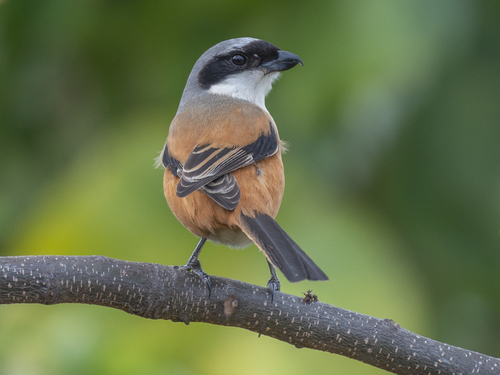
タカサゴモズ (Lanius schach) タカサゴモズ
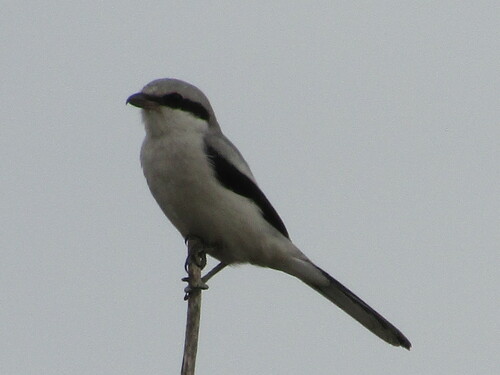
ヨーロッパオオモズ (Lanius excubitor) ヨーロッパオオモズ

メディア

読み込み中…

要点

タカサゴモズとヨーロッパオオモズの最も信頼できるフィールドマークは尾です:タカサゴモズは明確に長く、狭く、段階的な尾を持ち、赤褐色のトーンがありますが、ヨーロッパオオモズの尾は短く、くさび形で、赤褐色がありません。両者は黒い顔のマスクを持っていますが、タカサゴモズのマスクはより広く、特にいくつかの亜種では額を覆うことがよくあります。ヨーロッパオオモズは全体的にずっとがっしりしていて色が薄く、真珠のような灰色の背中と白い腹部を持っていますが、タカサゴモズは脇腹と尾に赤褐色を示します。飛んでいるときや止まっているときは、タカサゴモズの小さなサイズとよりカラフルで対照的な羽毛を探してください。ヨーロッパオオモズはより大きく、灰色がかっていて重い外観をしています。

識別のコツ

  1. Tail shape and color: タカサゴモズは淡い赤褐色の外羽を持つ長く、狭く、段階的な尾を持っています;ヨーロッパオオモズの尾は短く、くさび形で、赤褐色がありません。これはどの年齢でも最も信頼できるフィールドマークです。
  2. Overall size and build: ヨーロッパオオモズはずっと大きく、重い体を持ち(ほぼ2倍の質量)、頭ががっしりしていて首が太いです。タカサゴモズはより細身で細長いです。
  3. Facial mask: タカサゴモズの黒いマスクはより広く、しばしば額を覆います(特にトリカラーやナスータス亜種では)、一方でヨーロッパオオモズのマスクは狭く、頭頂部を越えません。
  4. Back and flanks color: タカサゴモズは尾と脇腹に赤褐色を示し、いくつかの亜種は背中と上部に赤褐色があります。ヨーロッパオオモズは上面が真珠のような灰色で、赤褐色のトーンはありません。
  5. Wing pattern: 両者は初列羽の基部に白がありますが、ヨーロッパオオモズの白い翼の斑点はより目立ち、黒い翼と対照的です。タカサゴモズの白は小さく、あまり目立ちません。
  6. Underparts: ヨーロッパオオモズは清潔な白い腹部を持っていますが、タカサゴモズは赤褐色の脇腹を持つ白い腹部があります。
  7. Perched posture: 両者は直立して止まりますが、タカサゴモズは尾のためにより細長く見えることが多く、ヨーロッパオオモズはよりがっしりしていて直立しています。
  8. Flight style: ヨーロッパオオモズの飛行は波状で重く、社会的な文脈でのディスプレイの螺旋やホバリングがあります。タカサゴモズは止まり木から斜めに滑空します。
  9. Bill structure: ヨーロッパオオモズはより重く、より強力なくちばしを持っていますが、これは近くで見ないと判断が難しいかもしれません。
  10. Habitat context: タカサゴモズは茂みやワイヤーのある暖かく乾燥した開けた国にいる可能性が高いです;ヨーロッパオオモズは散発的な木々のある涼しい気候の開けた国を好みます。
  11. Vocalizations: もし広範な模倣や厳しい、耳障りな鳴き声が聞こえたら、タカサゴモズを疑ってください。ヨーロッパオオモズの鳴き声は模倣的ではありません。
  12. Sex and age: 両種は羽毛において性別が同形です。フィールドでの使用のために特徴的な幼鳥の翼のパターンは記述されていないので、成鳥のマークに焦点を当ててください。
  13. Subspecies variation: 一部のタカサゴモズの亜種(例:トリカラー、ナスータス)は全体が黒い頭を持ち、混乱を招くことがありますが、赤褐色の尾と脇腹は診断的です。
  14. Pitfalls: 照明が悪いと、タカサゴモズの赤褐色のトーンが抑えられることがありますが、尾の長さと形は依然としてヨーロッパオオモズと区別します。ヨーロッパオオモズは決して赤褐色を示しません。
  15. Group behavior: ヨーロッパオオモズは冬に小さな群れで見られることがありますが、タカサゴモズは通常孤独またはペアでいます。

大きさ

ヨーロッパオオモズはかなり重く(約63g対36g)、タカサゴモズよりもずっとがっしりしていて頑丈に見えます。フィールドでは、ヨーロッパオオモズは頭が大きく、首が太く見え、より重いくちばしと一般的により威圧的な存在感を持っています。タカサゴモズは明らかにスリムで、長く狭い尾のためにより細長いシルエットを持っています。両方の鳥が一緒に見られると、サイズの違いは際立っていますが、孤独なヨーロッパオオモズは距離があるときに小さく見えることがあるので注意が必要です。

羽色

幼鳥と未熟な羽毛は、どちらの種についても詳細に記述されていないため、成鳥と一般的なフィールドマークに焦点を当ててください。タカサゴモズは常に淡い赤褐色の外羽を持つ長く、狭く、段階的な黒い尾、赤褐色の尾と脇腹、そして広く、しばしば額を越える黒いマスクを示します(特にいくつかの亜種では)。初列羽の基部には小さな白い斑点がありますが、これはヨーロッパオオモズの白い翼の斑点よりも目立ちません。ヨーロッパオオモズは上面が真珠のような灰色で、黒い目のマスク(タカサゴモズのものほど広くはありません)、白い腹部、白い縁のあるくさび形の尾を持っています。翼は黒で、目立つ白い斑点があります。全体的な印象は、ずっと色が薄く、赤褐色が少ない鳥で、よりクリーンで単色の外観です。両種の性別は同じです。

行動

両種は目立つ場所に止まり、高い位置から狩りをしますが、ヨーロッパオオモズはしばしば動きがより慎重で重いように見え、特徴的な波状で力強い飛行を持っています。社会的な文脈では、ディスプレイの飛行を行い、高く螺旋状に舞い上がり、短時間ホバリングした後に滑空します。タカサゴモズは典型的にクラシックなモズのポーズで直立して座り、獲物を捕まえるために斜めに滑空します。両者は獲物を突き刺しますが、タカサゴモズは孤独または適度に間隔を空けたペアで見られることが多く、ヨーロッパオオモズは繁殖シーズン外に小さな群れを形成することがあります。

生息環境

タカサゴモズは乾燥した開けた生息地を好み、しばしば茂みや木の多い場所、またはワイヤーや露出した枝に止まっています。アジア全体に広く分布しており、東の諸島も含まれます。ヨーロッパオオモズは開けた国により関連しており、時には散発的な木や低木があり、ユーラシア全体に分布し、しばしば寒冷または北部の地域に見られます。両者は一部の開けた生息地で重なることがありますが、タカサゴモズはより暖かい亜熱帯または熱帯の環境にいる可能性が高く、ヨーロッパオオモズは温帯から亜寒帯の地域を好みます。

声

タカサゴモズは厳しい、耳障りで叱責するような鳴き声を出し、時には鳴くカエルに似ており、他の鳥や哺乳類を模倣する能力を持っています。ヨーロッパオオモズの鳴き声はここでは詳細に記述されていませんが、一般的にタカサゴモズのものよりも変化が少なく、模倣的ではありません。もしモズが広範囲の音を模倣しているのを聞いたら、タカサゴモズである可能性が高いです。

より良い説明を送る

比較と同じ項目を使ってください。文章はすぐに公開されます。

The most reliable field mark between Long-tailed Shrike and Great Grey Shrike is the tail: Long-tailed Shrike has a distinctly long, narrow, and graduated tail with rufous tones, while Great Grey Shrike’s tail is shorter, wedge-shaped, and lacks rufous. Both have a black facial mask, but Long-tailed Shrike’s is broader and often covers the forehead, especially in some subspecies. Great Grey Shrike is much bulkier and paler overall, with a pearly grey back and white underparts, whereas Long-tailed Shrike shows rufous on the flanks and rump. In flight or perched, look for the Long-tailed Shrike’s smaller size and more colorful, contrasting plumage versus the Great Grey Shrike’s larger, greyer, and heavier appearance.

  1. Tail shape and color: Long-tailed Shrike has a long, narrow, and graduated tail with pale rufous outer feathers; Great Grey Shrike’s tail is shorter, wedge-shaped, and lacks rufous. This is the most reliable field mark at any age.
  2. Overall size and build: Great Grey Shrike is much larger and heavier-bodied (almost double the mass), with a bulkier head and thicker neck. Long-tailed Shrike is more slender and elongated.
  3. Facial mask: Long-tailed Shrike’s black mask is broader, often covering the forehead (especially in tricolor and nasutus subspecies), while Great Grey Shrike’s mask is narrower and does not extend over the crown.
  4. Back and flanks color: Long-tailed Shrike shows rufous on the rump and flanks, and some subspecies have rufous on the mantle and upper back. Great Grey Shrike is pearly grey above, with no rufous tones.
  5. Wing pattern: Both have white at the base of the primaries, but Great Grey Shrike’s white wing patch is more prominent and contrasts with the black wing. Long-tailed Shrike’s white is smaller and less striking.
  6. Underparts: Great Grey Shrike has clean white underparts, while Long-tailed Shrike has white underparts with rufous flanks.
  7. Perched posture: Both sit upright, but Long-tailed Shrike often appears more elongated due to its tail, while Great Grey Shrike is chunkier and more upright.
  8. Flight style: Great Grey Shrike’s flight is undulating and heavy, with display spirals and hovering in social contexts. Long-tailed Shrike glides down at an angle from its perch.
  9. Bill structure: Great Grey Shrike has a heavier, more powerful bill, but this may be hard to judge without close views.
  10. Habitat context: Long-tailed Shrike is more likely in warm, dry, open country with bushes and wires; Great Grey Shrike favors open country in cooler climates, often with scattered trees.
  11. Vocalizations: If you hear extensive mimicry or harsh, grating calls, suspect Long-tailed Shrike. Great Grey Shrike’s calls are less mimetic.
  12. Sex and age: Both species are sexually monomorphic in plumage. No distinctive juvenile wing patterns are described for field use, so focus on adult marks.
  13. Subspecies variation: Some Long-tailed Shrike subspecies (e.g., tricolor, nasutus) have an all-black head, which can be confusing, but the rufous tail and flanks remain diagnostic.
  14. Pitfalls: In poor light, Long-tailed Shrike’s rufous tones may be subdued, but the tail length and shape still separate it from Great Grey Shrike. Great Grey Shrike never shows rufous.
  15. Group behavior: Great Grey Shrike may be seen in small groups in winter, while Long-tailed Shrike is usually solitary or in pairs.

Great Grey Shrike is substantially heavier (about 63 g vs 36 g) and appears much bulkier and more robust than Long-tailed Shrike. In the field, Great Grey Shrike looks larger-headed and thicker-necked, with a heavier bill and a generally more imposing presence. Long-tailed Shrike is noticeably slimmer, with a more elongated silhouette due to its long, narrow tail. If both birds are seen together, the size difference is striking, but beware that a lone Great Grey Shrike can sometimes appear smaller at a distance if not well seen.

Juvenile and immature plumages are not described in detail for either species in the sources, so focus on adult and general field marks. Long-tailed Shrike always shows a long, narrow, and graduated black tail with pale rufous on the outer feathers, a rufous rump and flanks, and a black mask that is broad and often extends over the forehead (especially in some subspecies). There is a small white patch at the base of the primaries, but this is less prominent than the white wing patch of Great Grey Shrike. Great Grey Shrike is pearly grey above, with a black eye-mask (not as broad as Long-tailed Shrike’s), white underparts, and a wedge-shaped tail with white edges. Its wings are black with a prominent white spot. The overall impression is of a much paler, less rufous bird with a cleaner, more monochrome look. Sexes are alike in both species.

Both species perch conspicuously and hunt from elevated positions, but Great Grey Shrike often appears more deliberate and heavy in its movements, with a characteristic undulating and powerful flight. It may perform display flights, spiraling high and hovering briefly before gliding down, especially in social contexts. Long-tailed Shrike typically sits upright in a classic shrike pose and glides down at an angle to catch prey. Both impale prey, but Long-tailed Shrike is more likely to be seen alone or in well-spaced pairs, while Great Grey Shrike may gather in small groups outside the breeding season.

Long-tailed Shrike favors dry open habitats, often in scrub, bushy areas, or perched on wires and exposed branches. It is widespread across Asia, including the eastern archipelagos. Great Grey Shrike is more associated with open country, sometimes with scattered trees or shrubs, and is found across Eurasia, often in colder or more northern regions. Both can overlap in some open habitats, but Long-tailed Shrike is more likely in warmer, subtropical, or tropical settings, while Great Grey Shrike prefers temperate to subarctic zones.

Long-tailed Shrike gives harsh, grating, and scolding calls, sometimes likened to a squealing frog, and is capable of extensive vocal mimicry, including imitating other birds and even mammals. Great Grey Shrike’s calls are not described in detail here, but are generally less varied and less mimetic than Long-tailed Shrike’s. If you hear a shrike mimicking a wide range of sounds, it is more likely to be Long-tailed Shrike.

変更を破棄しますか?

保存していない編集があります。今離れると失われます。

タカサゴモズ · ヨーロッパオオモズ · 苦手な鳥