

Motmot

ハイイロアホウドリ 対 ハイガシラアホウドリ

Phoebetria palpebrata 対 Thalassarche chrysostoma

ハイイロアホウドリとハイガシラアホウドリのクイズ
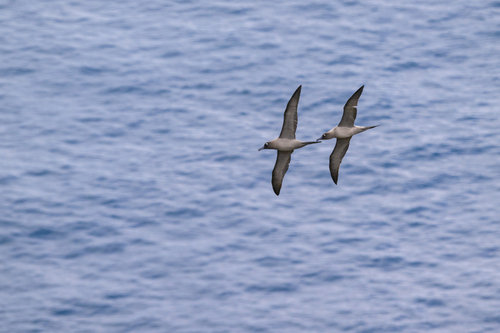
ハイイロアホウドリ (Phoebetria palpebrata) ハイイロアホウドリ
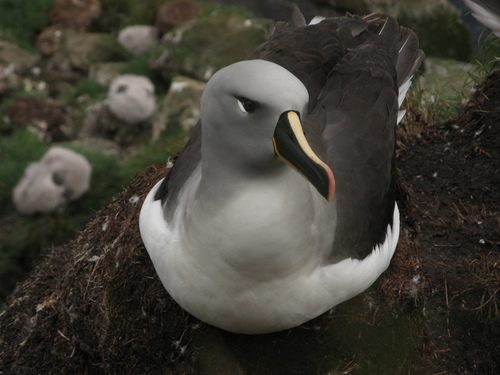
ハイガシラアホウドリ (Thalassarche chrysostoma) ハイガシラアホウドリ

メディア

読み込み中…

要点

ハイイロアホウドリとハイガシラアホウドリの最も信頼できるフィールドマークは、マントルと頭の色合いのコントラストです:ハイイロアホウドリは淡い灰色のマントルと背中を持ち、暗く、ほぼ黒に近い頭を示しますが、ハイガシラアホウドリは均一な灰色の頭と首を持ち、はるかに暗く、ほぼ黒のマントルと上翼を持っています。幼鳥のハイガシラアホウドリは特に混乱を招くことがあります。なぜなら、彼らの頭とくちばしはどちらも暗いですが、彼らの下翼はほぼ完全に暗く、ハイイロアホウドリのよりコントラストのあるパターンとは異なるからです。くちばしの色も重要です:ハイイロアホウドリは主に黒いくちばしを持ち、青と灰色がかった黄色の線がありますが、ハイガシラアホウドリの成鳥は鮮やかな黄色の隆起とピンクがかった先端を持つ印象的な黒いくちばしを持っています。飛行中、ハイガシラアホウドリの白い尾と下部はその暗い上翼に対して際立っていますが、ハイイロアホウドリはより均一に淡いマントルを持ち、白い尾がありません。どちらも大型で長い翼を持つ海鳥ですが、構造と羽毛の微妙な違いが確実な識別には重要です。

識別のコツ

  1. Juvenile underwing pattern: 幼鳥のハイガシラアホウドリはほぼ完全に暗い下翼を示しますが、ハイイロアホウドリはそのような広範な暗い下翼を持っていません—飛行中の幼鳥に役立ちます。
  2. Mantle and back color: ハイイロアホウドリは淡い灰色のマントルと背中を持ち、「ハイイロアホウドリ」の外観を作り出します;ハイガシラアホウドリははるかに暗く、ほぼ黒のマントルと上翼を持ち、灰色の頭と対照的です。
  3. Head and neck: ハイイロアホウドリの頭はマントルよりも暗いですが、それでもすすけた茶色/黒っぽいです;ハイガシラアホウドリは均一な灰色の頭、喉、上部の首を持ち、黒いマントルからはっきりと区別されます。
  4. White rump: ハイガシラアホウドリは目立つ白い尾と白い下部を持ち、特に飛行中に明らかです;ハイイロアホウドリはこれを欠き、上部がより均一に淡いように見えます。
  5. Bill color and pattern: 成鳥のハイイロアホウドリは主に黒いくちばしを持ち、下顎に青い溝と灰色がかった黄色の線があります;ハイガシラアホウドリの成鳥は鮮やかな黄色の隆起とピンクがかったまたはオレンジの先端を持つ黒いくちばしを持っています。幼鳥のハイガシラアホウドリは黒いくちばしを持ち、混乱を招くことがあります。
  6. Eye crescent: 両種は目の後ろに淡い三日月を示すことがありますが、成鳥のハイガシラアホウドリではより目立ちます。幼鳥では、このマークはハイガシラアホウドリでは不明瞭です。
  7. Underwing pattern (adult): ハイガシラアホウドリの成鳥は前縁に重い黒があり、後縁には少ない白い下翼を持っています;ハイイロアホウドリの下翼パターンはそれほど強く対照的ではないため、より均一な淡い印象を探してください。
  8. Overall contrast: ハイガシラアホウドリは強いコントラストのある鳥です:暗い上部、白い尾と下部、灰色の頭。ハイイロアホウドリはより微妙で、淡い灰色のマントルから暗い頭への滑らかなグラデーションを持ち、全体的にコントラストが少ないです。
  9. Structure and jizz: 両者はサイズと形が似ていますが、ハイイロアホウドリはわずかに細身で長い翼に見えることがあります。これは微妙で、主要なフィールドマークではありません。
  10. Courtship behavior: 観察された場合、ハイイロアホウドリはハイガシラアホウドリよりも尾のディスプレイと編隊飛行を多く使用します。
  11. Habitat context: 繁殖コロニーの近くで見られた場合、ハイガシラアホウドリは南の方が多いですが、両者は海で広く重なることがあります。
  12. Vocalizations: ハイイロアホウドリの声のみが記述されています—鋭く、トランペットのようで、脅かされたときにくちばしを鳴らします。これは海では診断的ではありません。
  13. Pitfall—juvenile confusion: 幼鳥のハイガシラアホウドリは非常に暗い頭と暗いくちばしに見えることがありますが、ハイイロアホウドリに似ていますが、ほぼ完全に暗い下翼はハイガシラアホウドリのサインです。
  14. Pitfall—distance and light: 遠距離または悪い光の中では、微妙なマントルと頭のコントラストが失われることがあります;可能な場合は白い尾(ハイガシラアホウドリ)または滑らかな淡いマントル(ハイイロアホウドリ)に焦点を当ててください。
  15. Bill detail requires close view: くちばしの色の違いは信頼できますが、良い光と近い視界が必要です—遠くからはくちばしの色だけに頼らないでください。

大きさ

両種はサイズが似ており、ハイイロアホウドリは平均3150gの質量を持ち、ハイガシラアホウドリは2.8〜4.4kg(平均3.65kg)の範囲です。長さと翼幅は重なります:ハイイロアホウドリは79〜89cmの長さで、183〜232cmの翼幅を持ち、ハイガシラアホウドリは平均81cmの長さと2.2mの翼幅を持っています。フィールドでは、サイズだけでは信頼できる識別子ではなく、両者は中型のアホウドリであり、遠くから非常に似て見えることがあります。

羽色

幼鳥と未熟な鳥は主な落とし穴です:幼鳥のハイガシラアホウドリは黒いくちばしと頭、暗いうなじ、ほぼ完全に暗い下翼を持ち、成鳥に見られる鮮明な白い下翼が欠けています。対照的に、ハイイロアホウドリは淡い灰色のマントルと背中を持ち、暗い頭を持ち、下翼は幼鳥のハイガシラアホウドリほど広範に暗いとは記述されていません。成鳥では、ハイイロアホウドリは印象的な淡い灰色のマントルと背中(「ハイイロアホウドリ」の外観)を持ち、暗い頭と薄い灰色の目の三日月があります。ハイガシラアホウドリの成鳥は均一な灰色の頭、喉、上部の首を持ち、ほぼ黒のマントル、上翼、尾、さらに白い尾と下部を持っています。くちばしは強力な識別子です:ハイイロアホウドリのくちばしは黒で青と灰色がかった黄色の線がありますが、ハイガシラアホウドリのくちばしは黒で鮮やかな黄色の隆起とピンクがかった先端を持っています。目の後ろの白い三日月はハイガシラアホウドリの成鳥でより目立ちますが、幼鳥ではそれほど目立たないか不明瞭です。飛行中、ハイガシラアホウドリは暗い上部と対照的な白い尾と下部を示しますが、ハイイロアホウドリは上部がより均一に淡い色を持ち、白い尾がありません。

行動

両種は典型的なアホウドリの行動を共有しています:滑空飛行、長い滑空、海洋的な習性。ハイイロアホウドリは繁殖時の空中ディスプレイと編隊飛行で知られ、他のアホウドリよりも尾をディスプレイに使用します。両種は防御と雛の給餌のために胃油を生成し、似たようなくちばしを鳴らす脅威のディスプレイを持っています。行動は、繁殖時のディスプレイを除いて、強力なフィールドの識別子ではありません。

生息環境

両種は南極海の遠隔の島に巣を作り、海で広く餌を探します。ハイガシラアホウドリは他のモリマウクよりも南で繁殖し、特に南極極前線帯の近くで高緯度で見られる可能性が高いですが、両者は非繁殖期に重なる海洋ゾーンで発生することがあります。海での生息地は信頼できる識別子ではありませんが、繁殖の文脈が知られていれば役立つかもしれません。

声

ハイイロアホウドリは大きく、鋭く、トランペットのような鳴き声を持ち、脅かされたときにくちばしを鳴らしたり、喉から「ガー」という音を出します。ハイガシラアホウドリの鳴き声は提供されたメモには記述されていません。声は識別のための主要なフィールドマークではありません。

より良い説明を送る

比較と同じ項目を使ってください。文章はすぐに公開されます。

The most reliable field mark between Light-mantled Albatross and Grey-headed Albatross is the contrast in mantle and head coloration: Light-mantled shows a pale grey mantle and back with a darker, almost blackish head, while Grey-headed has a uniform ashy-grey head and neck with a much darker, almost black mantle and upperwings. Juvenile Grey-headed Albatrosses can be especially confusing, as their head and bill are both dark, but their underwing is almost entirely dark, unlike the more contrasting pattern of Light-mantled. Bill color is also key: Light-mantled has a mostly black bill with blue and greyish-yellow lines, while Grey-headed adults have a striking black bill with bright yellow ridges and a pinkish tip. In flight, the white rump and underparts of Grey-headed stand out against its dark upperwings, while Light-mantled appears more evenly pale-mantled and lacks the white rump. Both are large, long-winged seabirds, but subtle differences in structure and plumage are critical for confident separation.

  1. Juvenile underwing pattern: Juvenile Grey-headed Albatross shows an almost entirely dark underwing, while Light-mantled does not have such extensive dark underwing—useful for immatures in flight.
  2. Mantle and back color: Light-mantled has a pale grey mantle and back, creating a 'light-mantled' look; Grey-headed has a much darker, almost black mantle and upperwings, contrasting with its grey head.
  3. Head and neck: Light-mantled's head is darker than its mantle, but still sooty-brown/blackish; Grey-headed has a uniform ashy-grey head, throat, and upper neck, sharply set off from the black mantle.
  4. White rump: Grey-headed has a conspicuous white rump and white underparts, especially obvious in flight; Light-mantled lacks this, appearing more evenly pale above.
  5. Bill color and pattern: Adult Light-mantled has a mostly black bill with a blue sulcus and greyish-yellow line along the lower mandible; Grey-headed adult has a black bill with bright yellow ridges and a pinkish or orange tip. Juvenile Grey-headed has a black bill, which can be confusing.
  6. Eye crescent: Both species can show a pale crescent behind the eye, but it is more prominent in adult Grey-headed. In juveniles, this mark is indistinct in Grey-headed.
  7. Underwing pattern (adult): Grey-headed adult has white underwings with heavy black on the leading edge and less on the trailing edge; Light-mantled's underwing pattern is not highlighted as strongly contrasting, so look for the more uniform pale impression.
  8. Overall contrast: Grey-headed Albatross is a bird of strong contrasts: dark upperparts, white rump and underparts, and a grey head. Light-mantled is more subtle, with a smooth gradient from pale grey mantle to darker head and less contrast overall.
  9. Structure and jizz: Both are similar in size and shape, but Light-mantled may appear slightly more slender and long-winged. This is subtle and not a primary field mark.
  10. Courtship behavior: If observed, Light-mantled uses more tail displays and formation flying in courtship than Grey-headed.
  11. Habitat context: If seen near breeding colonies, Grey-headed is more likely further south, but both can overlap widely at sea.
  12. Vocalizations: Only Light-mantled's voice is described—shrill, trumpet-like, and bill-snapping when threatened. This is rarely diagnostic at sea.
  13. Pitfall—juvenile confusion: Juvenile Grey-headed can look very dark-headed and dark-billed, similar to Light-mantled, but the almost entirely dark underwing is a giveaway for Grey-headed.
  14. Pitfall—distance and light: At long range or in poor light, the subtle mantle and head contrasts can be lost; focus on the white rump (Grey-headed) or the smooth pale mantle (Light-mantled) when possible.
  15. Bill detail requires close view: Bill color differences are reliable but require good light and close views—do not rely on bill color alone at distance.

Both species are similar in size, with Light-mantled Albatross averaging 3150 g in mass and Grey-headed Albatross ranging from 2.8 to 4.4 kg (mean 3.65 kg). Length and wingspan overlap: Light-mantled is 79–89 cm long with a 183–232 cm wingspan, while Grey-headed averages 81 cm in length and 2.2 m wingspan. In the field, size alone is not a reliable separator, as both are medium-sized albatrosses and can appear very similar at a distance.

Juvenile and immature birds are the main pitfall: juvenile Grey-headed Albatrosses have a black bill and head, a darker nape, and an almost entirely dark underwing, lacking the crisp white underwing seen in adults. Light-mantled Albatross, by contrast, shows a pale grey mantle and back with a darker head, and the underwing is not described as being as extensively dark as in juvenile Grey-headed. In adults, Light-mantled has a striking pale grey mantle and back (the 'light-mantled' look), with a darker head and a thin grey eye crescent. Grey-headed adults have a uniform ashy-grey head, throat, and upper neck, with a nearly black mantle, upperwings, and tail, plus a white rump and underparts. The bill is a strong separator: Light-mantled's is black with blue and greyish-yellow lines, while Grey-headed's is black with bright yellow ridges and a pinkish tip. The white crescent behind the eye is more prominent in Grey-headed adults, but less so or indistinct in juveniles. In flight, Grey-headed shows a white rump and underparts contrasting with dark upperparts, while Light-mantled is more evenly pale above, lacking the white rump.

Both species share typical albatross behaviors: soaring flight, long glides, and oceanic habits. Light-mantled is noted for aerial displays and formation flying in courtship, and uses its tail in displays more than other albatrosses. Both species produce stomach oil for defense and chick feeding, and have similar bill-snapping threat displays. Behavior is not a strong field separator except possibly during courtship displays.

Both species nest on remote Southern Ocean islands and forage widely at sea. Grey-headed Albatross breeds further south than other mollymawks and is more likely to be seen at higher latitudes, especially near the Antarctic Polar Frontal Zone, but both can occur in overlapping oceanic zones during non-breeding periods. Habitat is not a reliable separator at sea, but breeding context may help if known.

Light-mantled Albatross has a loud, shrill, trumpet-like call, and will snap its bill or make a throaty "gaaaa" when threatened. Grey-headed's vocalizations are not described in the provided notes. Voice is not a primary field mark for separation.

変更を破棄しますか?

保存していない編集があります。今離れると失われます。

ハイイロアホウドリ · ハイガシラアホウドリ · 苦手な鳥