

Motmot

アカボウシセッカ 対 エリフセッカ

Cisticola tinniens 対 Cisticola natalensis

アカボウシセッカとエリフセッカのクイズ
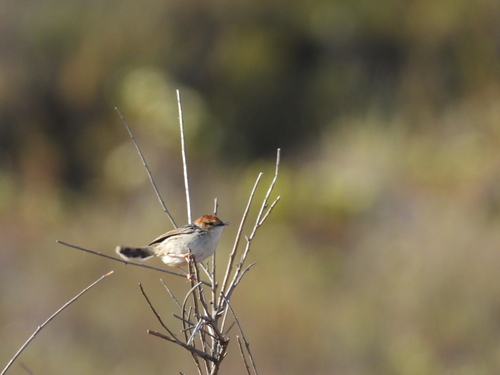
アカボウシセッカ (Cisticola tinniens) アカボウシセッカ
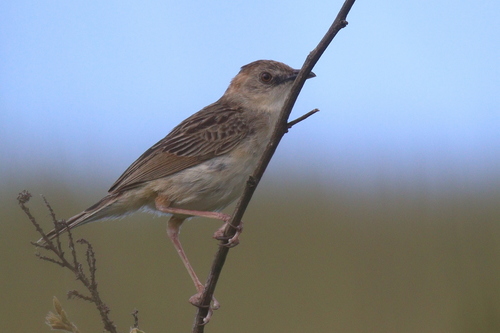
エリフセッカ (Cisticola natalensis) エリフセッカ

メディア

読み込み中…

要点

レヴァイヨールセッカとエリフセッカの最も信頼できるフィールドマークはサイズです:エリフセッカは最大のセッカで、レヴァイヨールセッカよりも明らかに大きく、重いです。フィールドでは、エリフセッカはしばしば flicked される広く、淡い先端の尾と重いくちばしを示し、一方レヴァイヨールセッカは小さく、赤みがかった帽子とより繊細で真っ直ぐなくちばしを持っています。両者は灰褐色で、重く縞模様のある上面と赤褐色の翼のパネルを持っていますが、レヴァイヨールセッカは淡い白い腹部と赤褐色の尾を持ち、エリフセッカの腹部はより白っぽいです。彼らの生息地は湿った草地で重なりますが、レヴァイヨールセッカは湿地や葦原により結びついており、エリフセッカは水の近くの草地を好みます。もし聞こえた場合、エリフセッカの特徴的な「ブリープ・ブリープ」という鳴き声は診断的です。

識別のコツ

  1. サイズが重要: エリフセッカは最大のセッカで、レヴァイヨールセッカよりも明らかに大きいです。もしその鳥がセッカとして大きくて頑丈に見えるなら、エリフセッカを疑ってください。
  2. 尾の形と行動: エリフセッカはしばしば flicked される広く、淡い先端の尾を持っています。レヴァイヨールセッカの尾は長めで、赤褐色で、あまり明らかに flicked されません。
  3. くちばしの構造: エリフセッカは重く、太いくちばしを示し、一方レヴァイヨールセッカは短く、真っ直ぐで、より繊細なくちばしを持っています。これは近距離または良い光の下で最もよく見られます。
  4. 冠の色: レヴァイヨールセッカは赤みがかった帽子を持ち、これは止まっているときや良い光の下でしばしば見えます。エリフセッカにはこの特徴がありません。
  5. 腹部の色: レヴァイヨールセッカの腹部は淡い白(成鳥)または黄色がかった(幼鳥)ですが、エリフセッカの腹部はより白っぽく、淡いまたは黄色のトーンが少ないです。
  6. 上面と縞模様: 両者は灰褐色で、上面は重く縞模様がありますが、これは二者の間で診断的ではありません。
  7. 翼のパネル: 両者は折りたたまれた翼に赤褐色のパネルを示しますが、これは信頼できる区別ではありません。
  8. スーパシリウムと顔: レヴァイヨールセッカは淡い白いスーパシリウムと顔を持ち、これは近くでの観察に役立ちます。エリフセッカの顔の模様はあまり明確ではありません。
  9. 目の色: レヴァイヨールセッカは明るい茶色の目を持っていますが、これは微妙で、フィールドではあまり診断的ではありません。
  10. 足と脚: 両者は淡い茶色の足と足を持っていますが、区別には役立ちません。
  11. 幼鳥の腹部: もしその鳥が黄色がかった腹部を持つ幼鳥であれば、レヴァイヨールセッカの可能性が高いです。
  12. 歌: もし「ブリープ・ブリープ」というカエルのような鳴き声が聞こえたら、それはエリフセッカです。レヴァイヨールセッカはより高い、きらきらしたまたは泣き声の歌を出します。
  13. 生息地の文脈: 密な葦原やセジの中では、特に高地の湿地ではレヴァイヨールセッカがより可能性が高いです。水の近くの開けた草地、特に広いサハラ以南のアフリカではエリフセッカがより可能性があります。
  14. 行動の手がかり: エリフセッカはより隠れる傾向があり、特に繁殖期以外では見られるよりも聞かれることが多いです。レヴァイヨールセッカは葦の中でより目立つことがあり、高いところに止まることもあります。
  15. 季節的な影響: レヴァイヨールセッカは非繁殖羽衣で上面がより茶色くなり、赤みがかった帽子と淡い腹部を保持しますが、エリフセッカの羽衣はあまり変動しません。

大きさ

エリフセッカは最大のセッカで、平均約14 cmの長さで、レヴァイヨールセッカよりも明らかに頑丈です。レヴァイヨールセッカは12–15 cmで小さく、エリフセッカはより重いくちばしと広い尾を持っていますが、レヴァイヨールセッカは全体的により細身です。直接比較すると、エリフセッカはより大きく、頑丈な鳥として際立ち、特に並んで見たり混合した群れで見たりするときに目立ちます。

羽色

行動

エリフセッカはしばしばその広く、淡い先端の尾を flicks しますが、この行動はレヴァイヨールセッカではあまり顕著ではありません。両種は隠れる傾向があり、密な植生の中で低く留まることが多いですが、エリフセッカは特に繁殖期以外では見られるよりも聞かれることが多いです。レヴァイヨールセッカは葦原やセジの中でより目立つことがあり、時には高いところに止まります。両種は昆虫食性で、似たような方法で餌を探しますが、エリフセッカの大きなサイズと重いくちばしはその動きをより頑丈に見せるかもしれません。

生息環境

レヴァイヨールセッカは湿地、葦原、セジ、水の近くの草地に密接に関連しています。特に赤道の南の高地地域ではそうです。エリフセッカも湿った地域を好みますが、湿地や水の近くの草地により典型的であり、その範囲はサハラ以南のアフリカ全体に広がります。両者が生息する場所では、レヴァイヨールセッカは密な葦やセジの中でより可能性が高く、エリフセッカは湿地に隣接する開けた草地を好みます。

声

エリフセッカはその特徴的なカエルのような「ブリープ・ブリープ」という鳴き声で最もよく識別され、これはセッカの中で際立っており、聞こえた場合の最も信頼できるフィールドマークです。レヴァイヨールセッカは音楽的な「チリップ・トゥルップ・トゥリー」、泣き声の「ティー・ティー・ティー」、および厳しい警報音を出します。歌はかなり異なります:エリフセッカの歌は低くてゴロゴロしており、レヴァイヨールセッカの歌は高音できらきらしています。

より良い説明を送る

比較と同じ項目を使ってください。文章はすぐに公開されます。

The most reliable field mark between Levaillant's Cisticola and Croaking Cisticola is size: Croaking is the largest cisticola, noticeably bigger and heavier than Levaillant's. In the field, Croaking Cisticola shows a broad, pale-tipped tail that is often flicked, and a heavier bill, while Levaillant's is smaller with a reddish cap and a more delicate, straight bill. Both have grey-brown, heavily streaked upperparts and rufous wing panels, but Levaillant's has buffy white underparts and a russet tail, whereas Croaking's underparts are more whitish. Their habitats overlap in wet grasslands, but Levaillant's is more tied to marshes and reedbeds, while Croaking prefers rank grassland near water. If heard, Croaking's distinctive 'breep-breep' croak is diagnostic.

  1. Size is key: Croaking Cisticola is the largest cisticola and noticeably bulkier than Levaillant's. If the bird appears large and robust for a cisticola, suspect Croaking.
  2. Tail shape and behavior: Croaking has a broad, pale-tipped tail that is flicked frequently. Levaillant's tail is longish, russet brown, and less obviously flicked.
  3. Bill structure: Croaking shows a heavy, thick bill, while Levaillant's has a shorter, straight, more delicate bill. This is best seen at close range or in good light.
  4. Crown color: Levaillant's has a reddish cap, which is often visible when perched or in good light. Croaking lacks this feature.
  5. Underparts color: Levaillant's underparts are buffy white (adults) or yellowish (juveniles), while Croaking's are more whitish with less buff or yellow tone.
  6. Upperparts and streaking: Both are grey-brown and heavily streaked above, but this is not diagnostic between the two.
  7. Wing panel: Both show a rufous/chestnut panel in the folded wing; this is not a reliable separator.
  8. Supercilium and face: Levaillant's has a buffy white supercilium and face, which can help in close views. Croaking's facial pattern is less distinct.
  9. Eye color: Levaillant's has a light brown eye, but this is subtle and rarely diagnostic in the field.
  10. Feet and legs: Both have pinkish-brown legs and feet; not useful for separation.
  11. Juvenile underparts: If the bird is a juvenile with yellowish underparts, Levaillant's is more likely.
  12. Song: If you hear a froglike 'breep-breep' croak, it's Croaking Cisticola. Levaillant's gives a higher, tinkling or wailing song.
  13. Habitat context: In dense reedbeds or sedges, especially in upland marshes, Levaillant's is more likely. In open, rank grassland near water, especially in broader sub-Saharan Africa, Croaking is more probable.
  14. Behavioral cues: Croaking is more skulking and often heard rather than seen, especially outside breeding season. Levaillant's may perch higher and be more visible in reeds.
  15. Seasonal effects: Levaillant's becomes browner above in non-breeding plumage but retains the reddish cap and buffy underparts; Croaking's plumage is less variable.

Croaking Cisticola is the largest cisticola, averaging about 14 cm in length, and is noticeably bulkier than Levaillant's Cisticola, which is smaller at 12–15 cm. Croaking also has a heavier bill and a broader tail, while Levaillant's is more slender overall. In direct comparison, Croaking will stand out as the bigger, more robust bird, especially when seen side by side or in mixed flocks.

  • Juvenile/immature birds: Levaillant's Cisticola juveniles have yellower underparts, while Croaking's are not specifically described but are likely paler below, matching adults. No distinctive upperwing pattern for either species in immature plumages is noted, so focus on underpart color for young birds.
  • Adults (breeding): Both species are grey-brown above with heavy black streaking and a rufous/chestnut wing panel. Levaillant's shows a reddish cap, buffy white underparts, and a russet brown tail. Croaking has a broader, pale-tipped tail, more whitish underparts, and a heavier bill. The supercilium and face are buffy white in Levaillant's; these features are less emphasized in Croaking.
  • Non-breeding: Levaillant's becomes browner above and loses some contrast, but still shows the reddish cap and buffy underparts. Croaking's plumage is less seasonally variable, remaining grey-brown and streaked.
  • Tail: Croaking's tail is broader and pale-tipped, often flicked; Levaillant's is longish and russet brown.

Croaking Cisticola frequently flicks its broad, pale-tipped tail, a behavior less pronounced in Levaillant's. Both species are skulking and often stay low in dense vegetation, but Croaking is more likely to be heard than seen, especially outside the breeding season. Levaillant's may be more visible in reedbeds and sedges, sometimes perching higher. Both species are insectivorous and forage in similar ways, but Croaking's larger size and heavier bill may make its movements appear more robust.

Levaillant's Cisticola is tightly associated with marshlands, reedbeds, sedges, and rank grass near water, especially in upland areas south of the equator. Croaking Cisticola also favors wet areas but is more typical of rank grassland near swamps or water, and its range extends more broadly across sub-Saharan Africa. Where both occur, Levaillant's is more likely in dense reeds or sedges, while Croaking prefers open, grassy patches adjacent to wetlands.

Croaking Cisticola is best identified by its distinctive, froglike 'breep-breep' croak, which stands out among cisticolas and is the most reliable field mark if heard. Levaillant's Cisticola gives a musical 'chrip-trrrup-trreee', a wailing 'tee tee tee', and harsh alarm notes. The songs are quite different: Croaking's is low and croaky, Levaillant's is higher-pitched and tinkling.

変更を破棄しますか?

保存していない編集があります。今離れると失われます。

アカボウシセッカ · エリフセッカ · 苦手な鳥