

Motmot

カリガネ 対 ヒシクイ

Anser erythropus 対 Anser serrirostris

カリガネとヒシクイのクイズ
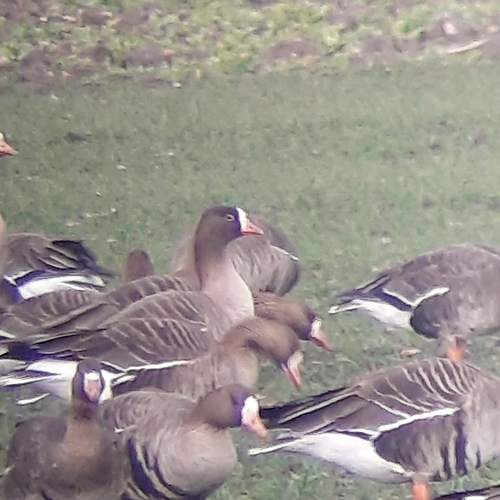
カリガネ (Anser erythropus) カリガネ
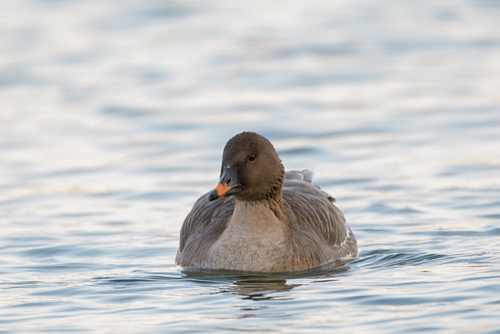
ヒシクイ (Anser serrirostris) ヒシクイ

メディア

読み込み中…

要点

レッサー・ホワイトフロント・ガチョウとヒシクイを区別する最も信頼できるフィールドマークは、レッサーの小さなサイズ、目立つ黄色のアイリング、そして白い顔のブレイズが頭頂部まで達していることの組み合わせです。両者はオレンジ色の脚と似た上翼の色調を持っていますが、ヒシクイははるかに大きく、体格が重く、独特のくちばしのパターンがあります:基部と先端が黒で、中間にオレンジのバンドがあります。飛行中または静止中は、顔の詳細やくちばしの構造に注意を払いましょう。全体の色合いや脚の色は重なることがあります。幼鳥と成鳥の羽毛は両者で大まかに似ていますので、構造的および顔のマークが重要です。

識別のコツ

  1. サイズは強力な手がかりです: レッサー・ホワイトフロント・ガチョウはヒシクイよりもはるかに小さく、繊細です。混合群れでは、短い首と小さなくちばしを持つ最も小さなガチョウを探してください。
  2. 黄色のアイリング(レッサー・ホワイトフロント): 成鳥(およびしばしば幼鳥)は、地域のガチョウの中でユニークな明るい黄色の眼窩リングを示します。これは良好な光の下で中程度の距離で見ることができます。
  3. 白い顔のブレイズ: レッサー・ホワイトフロント・ガチョウの顔の白は頭頂部まで達し、高く丸いブレイズを形成します。ヒシクイはこの特徴を完全に欠いています。
  4. くちばしのパターン: ヒシクイは独特のくちばしを持っています:基部と先端が黒で、中間にオレンジのバンドがあります。レッサー・ホワイトフロントのくちばしは小さく、ピンクがかっており、オレンジのバンドがありません。
  5. 脚の色: 両者はオレンジ色の脚を持っているため、これは信頼できる区別にはなりません。
  6. 上翼の覆い羽: 両種はマウスブラウンの上翼の覆い羽を持っていますが、ヒシクイの覆い羽には狭い白い縁があります(微妙で、近距離または写真で最もよく見えます)。強力なフィールドマークではありません。
  7. 腹部のバー: 両種は腹部に黒いバーを示しますが、レッサー・ホワイトフロントのものは通常より広く、より広範囲です。腹部が見える場合に役立ちます。
  8. 構造: レッサー・ホワイトフロント・ガチョウはコンパクトで、短い首と小さなくちばしを持ち、より繊細な印象を与えます。ヒシクイは重厚で、長い首と大きなくちばしを持っています。
  9. 頭の形: レッサー・ホワイトフロントは急な額と丸い頭頂を持ち、白いブレイズによって強調されています。ヒシクイの頭はより傾斜があり、あまり際立っていません。
  10. 飛行中の印象: レッサー・ホワイトフロントは迅速で敏捷に見え、翼を素早く羽ばたかせます;ヒシクイはより遅く、重々しいです。
  11. 生息地の文脈: 大量のヒシクイがいる地域にいる場合は注意してください—レッサー・ホワイトフロントは珍しく、通常は単独または小さな群れでしか存在しません。
  12. 幼鳥の混乱: 両種の幼鳥は構造と顔のパターンで成鳥に似ています;レッサー・ホワイトフロントの若い個体では黄色のアイリングが鈍くなることがありますが、通常はまだ見えます。
  13. 独特の上翼パターンはない: どちらの種も飛行中に診断的な上翼パターンを示さないため、サイズ、くちばし、顔に頼ってください。
  14. 声: 利用可能な情報では診断的ではありません。
  15. 季節: 両種は渡り鳥であり、越冬地で重なることがあるため、識別には季節だけを使用しないでください。

大きさ

レッサー・ホワイトフロント・ガチョウはかなり小さく、体重は約1797g [wikidata]で、マガモよりもわずかに大きいです。ヒシクイははるかに大きく、体格も重く、長さは68〜90cm、翼幅は140〜174cm [wikipedia]です。フィールドでは、ヒシクイは頑丈で重厚なガチョウとして際立ち、レッサー・ホワイトフロントはコンパクトで軽いくちばしに見えます。

羽色

両種はオレンジ色の脚とマウス色(茶色がかった)上翼の覆い羽を持っており、特に飛行中に混乱を引き起こす可能性があります。どちらの種も飛行中に診断的な幼鳥の上翼パターンを示さず、両者はマガンの黒い「W」を欠いています。すべての年齢のレッサー・ホワイトフロント・ガチョウは、頭頂部まで達する非常に目立つ白いブレイズを示し、成鳥は明確な黄色のアイリングを持っています—これはユニークで、近距離で見ることができます。両種は暗褐色の上翼の覆い羽を持っていますが、ヒシクイはこれらの羽に狭い白い縁を持ち、微妙で距離によっては常に見えるわけではありません。ヒシクイのくちばしは基部と先端が黒で、中間にオレンジのバンドがありますが、レッサー・ホワイトフロントのくちばしは小さく、ピンクがかっており、オレンジのバンドがありません。両種は黒い腹部のバーを持っていますが、これらはレッサー・ホワイトフロントの方が広く、より広範囲です。両種の幼鳥と未成熟の鳥は、これらの点で成鳥に似ています。

行動

両種は通常、群れで見られ、しばしば開けた野原や湿地で草を食べています。レッサー・ホワイトフロント・ガチョウはより活発で警戒心が強く、しばしば神経質で直立しているように見えますが、ヒシクイは重く、動きが遅いです。混合群れでは、レッサー・ホワイトフロント・ガチョウはより落ち着きがなく、突然の動きに出やすいです。

生息環境

レッサー・ホワイトフロント・ガチョウは北極圏の最北部で稀に繁殖し、ヨーロッパでは珍しく、孤立した再導入の試みしかありません。ヒシクイはシベリア北部で繁殖し、アジアの南部で越冬し、一般的により広範囲で数が多いです。ヨーロッパでは、多くのヒシクイがいる群れには、レッサー・ホワイトフロントよりもヒシクイが含まれる可能性が高く、レッサー・ホワイトフロントは常に注目すべき珍しさです。

より良い説明を送る

比較と同じ項目を使ってください。文章はすぐに公開されます。

The most reliable field mark to separate Lesser White-fronted Goose from Tundra Bean Goose is the combination of the Lesser's small size, prominent yellow eye-ring, and the extent of its white facial blaze reaching up to the crown. Both have orange legs and similar upperwing tones, but the Tundra Bean Goose is much larger, with a heavier build and a distinctive bill pattern: black at the base and tip with an orange band in the middle. In flight or at rest, pay close attention to facial details and bill structure, as overall coloration and leg color can overlap. Juvenile and adult plumages are broadly similar in both, so structural and facial marks are critical.

  1. Size is a strong clue: Lesser White-fronted Goose is much smaller and more delicate than Tundra Bean Goose. In mixed flocks, look for the smallest goose with a short neck and small bill.
  2. Yellow eye-ring (Lesser White-fronted): Adults (and often immatures) show a bright yellow orbital ring, unique among geese in the region. This is visible at moderate range in good light.
  3. White facial blaze: The white on the face of Lesser White-fronted Goose extends up to the crown, forming a high, rounded blaze. Tundra Bean Goose lacks this feature entirely.
  4. Bill pattern: Tundra Bean Goose has a distinctive bill: black at the base and tip, with an orange band in the middle. Lesser White-fronted's bill is smaller, pinkish, and lacks the orange band.
  5. Leg color: Both have orange legs, so this is not a reliable separator.
  6. Upperwing coverts: Both species have mouse-brown upperwing coverts, but Tundra Bean Goose's coverts have narrow white fringes (subtle, best seen at close range or in photos). Not a strong field mark.
  7. Belly bars: Both species show black bars across the belly, but Lesser White-fronted's are usually broader and more extensive. This is helpful if the belly is visible.
  8. Structure: Lesser White-fronted Goose is compact, short-necked, and small-billed, giving a daintier impression. Tundra Bean Goose is heavyset, long-necked, and big-billed.
  9. Head shape: Lesser White-fronted has a steep forehead and rounded crown, accentuated by the white blaze. Tundra Bean Goose's head is more sloping and less distinct.
  10. Jizz in flight: Lesser White-fronted appears quick and agile, with rapid wingbeats; Tundra Bean Goose is slower and more ponderous.
  11. Habitat context: If you are in an area with large numbers of Bean Geese, be cautious—Lesser White-fronted is rare and usually only present as singles or small groups.
  12. Juvenile confusion: Juveniles of both species are similar to adults in structure and facial pattern; the yellow eye-ring may be duller in young Lesser White-fronted but is still usually visible.
  13. No distinctive upperwing pattern: Neither species shows a diagnostic upperwing pattern in flight, so rely on size, bill, and face.
  14. Voice: Not diagnostic with available information.
  15. Season: Both species are migratory and may overlap in wintering areas, so do not use season alone for identification.

Lesser White-fronted Goose is significantly smaller, with a body mass around 1797 g [wikidata], and is only slightly larger than a Mallard. Tundra Bean Goose is much larger and bulkier, with lengths ranging from 68–90 cm and wingspans from 140–174 cm [wikipedia]. In the field, Tundra Bean Goose will stand out as a robust, heavyset goose, while Lesser White-fronted appears compact and light-billed.

Both species have orange legs and mouse-colored (brownish) upperwing coverts, which can cause confusion, especially in flight. Neither species shows a distinctive juvenile upperwing pattern that is diagnostic in flight; both lack the black 'W' of the Greater White-fronted Goose. The Lesser White-fronted Goose of all ages shows a very conspicuous white blaze extending up to the crown, and adults have a clear yellow eye-ring—this is unique and visible at close range. Both species have dark brown upperwing coverts, but Tundra Bean Goose has narrow white fringes to these feathers, which are subtle and not always visible at distance. The Tundra Bean Goose's bill is black at base and tip with an orange band, while Lesser White-fronted's bill is smaller and pinkish, lacking the orange band. Both species have black belly bars, but these are broader and more extensive in Lesser White-fronted. Juvenile and immature birds of both species are similar to adults in these respects.

Both species are typically seen in flocks, often grazing in open fields or wetlands. Lesser White-fronted Goose tends to be more active and alert, often appearing nervier and more upright, while Tundra Bean Goose is heavier and slower-moving. In mixed flocks, Lesser White-fronted Geese may be more restless and prone to sudden movements.

Lesser White-fronted Goose is a scarce breeder in the northernmost Palearctic and is rare in Europe, with only isolated reintroduction attempts. Tundra Bean Goose breeds in northern Siberia and winters further south in Asia, and is generally more widespread and numerous. In Europe, a flock with many Bean Geese is more likely to contain Tundra Bean than Lesser White-fronted, which is always a notable rarity.

変更を破棄しますか?

保存していない編集があります。今離れると失われます。

カリガネ · ヒシクイ · 苦手な鳥