

Motmot

ヒメバン 対 バン

Paragallinula angulata 対 Gallinula chloropus

ヒメバンとバンのクイズ
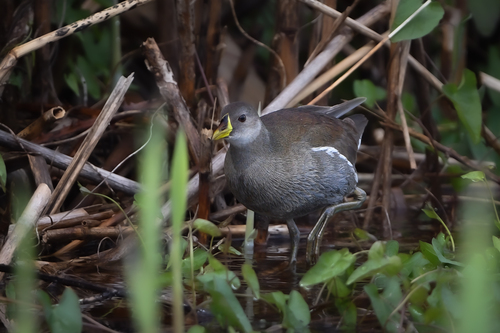
ヒメバン (Paragallinula angulata) ヒメバン

バン (Gallinula chloropus) バン

メディア

読み込み中…

要点

ヒメバンとバンの最も信頼できるフィールドでの識別はサイズです:バンはかなり大きく、重く、より頑丈な体型をしています。フィールドでは、バンは特徴的な赤い前頭シールドと黄色の先端を持つくちばし、黄色の足、目立つ白い尾羽と側面の縞模様を示しますが、ヒメバンはこれらの特徴をすべて持っていません。幼鳥のバンは全体的に茶色で赤いシールドがなく、混乱を招くことがありますが、彼らの大きなサイズと構造は依然として特徴的です。両種は特にアフリカで似たような湿地生息地に見られることがあるため、サイズ、くちばし、シールドの形に注意を払うことが重要です。

識別のコツ

  1. サイズは最も一貫したフィールドマークです: バンはヒメバンよりもはるかに大きく、重いです。特に鳥が一緒にいるときや近くの物からスケール感を得られるときにこれを利用してください。
  2. 前頭シールドとくちばし: 成熟したバンは、上部が丸く、側面が平行な目立つ赤い前頭シールドと、黄色の先端を持つ赤いくちばしを持っています。ヒメバンはこの完全な赤いシールドとくちばしのパターンを欠いています。幼鳥ではシールドが欠けているため、サイズと構造にもっと頼る必要があります。
  3. 白い側面の縞模様と尾羽: バンは側面に大胆な白い縞模様を示し、特に尾を振るときに目立つ白い尾羽を持っています。ヒメバンはこれらの領域でのコントラストが少ないです。
  4. 足の色: バンは黄色の足を持っており、よく見える場合は役立つマークになります。ヒメバンの足の色は指定されていませんが、これらのメモでは黄色とは記述されていません。
  5. 幼鳥の混乱: 若いバンは全体的に茶色で赤いシールドがなく、見た目がヒメバンに似ています。この場合、サイズ、構造、強い白い側面の縞模様の存在(または欠如)に頼ってください。
  6. 構造と印象: バンはより大きく、頑丈なくちばしと体を持っています。ヒメバンは小さく、見た目がより繊細です。
  7. 飛行時の視点: 診断的な上翼や飛行パターンの違いは記述されていないため、飛行中のサイズと全体的な形に焦点を当ててください。
  8. 生息地の重複: 両種はアフリカの同じ湿地に出現することがあります。生息地だけで彼らを分けないでください。
  9. 行動: バンは繁殖期により支配的で攻撃的に見えることがありますが、これは微妙で常に信頼できるわけではありません。
  10. 亜種の変異: 一部のバンの亜種(例:G. c. meridionalis)は小さく、青灰色の上翼の覆い羽を持っていますが、依然としてヒメバンよりも大きく、同じシールドとくちばしのパターンを持っています。
  11. 文脈的手がかり: アフリカ以外でバンを見た場合、それはほぼ確実にバンです。アフリカでは、すべてのマークを注意深く確認してください。
  12. 混合群れ: 両種が存在する場合、サイズの違いが一目で彼らを分ける最も簡単な方法です。
  13. 季節と性別: どちらの種にも識別に影響を与える重要な季節的または性的な羽毛の違いは記載されていません。
  14. 声: バンの鳴き声のみが記述されています。さらなる情報がない限り、鳴き声に頼って分けないでください。
  15. 疑問がある場合: 鳥が小さく、完全な赤いシールドとくちばしがなく、側面と尾羽でのコントラストが少ない場合、ヒメバンの可能性が高いです—特にバンの大きなサイズと大胆なマーキングが欠けている場合です。

大きさ

バンはかなり大きく、重く、成鳥の体重は平均約348g(192〜500gの範囲)です。ヒメバンは著しく小さく、軽いですが、正確な体重は資料には記載されていません。直接比較すると、バンはより大きく、長く、より頑丈なくちばしと体を持っているように見えます。このサイズの違いは、距離があっても混合群れの中でもしばしば明らかです。

羽色

行動

両種はレールであり、似たように行動します:彼らは密な湿地の植生の中を泳ぎ、歩き、しばしば尾羽を振って尾羽の覆い羽を見せます。バンは繁殖期に領土的であり、同種や他の水鳥と争うことがあります。ヒメバンの行動はこれらのメモには詳細に記載されていませんが、基本的な習性は似ている可能性があります。混合群れでは、バンのより積極的で支配的な行動がその大きなサイズのために目立つことがあります。

生息環境

両種はよく植生が生い茂った湿地、池、運河、湿地に生息しています。バンはアフリカ、ヨーロッパ、アジア全体に広範囲に分布しているのに対し、ヒメバンはサハラ以南のアフリカにより制限されています。アフリカでは、彼らの分布と生息地が重なっているため、生息地だけでは診断的ではありません。

声

バンは脅威を感じたときに多様なガーガー音や大きなシューという音を出します。ヒメバンに関する具体的な鳴き声の情報はこれらのメモには提供されていないため、現在の情報に基づいて声は信頼できる識別要因ではありません。

より良い説明を送る

比較と同じ項目を使ってください。文章はすぐに公開されます。

The most reliable field separation between Lesser Moorhen and Common Moorhen is size: Common Moorhen is substantially larger and heavier, with a more robust build. In the field, Common Moorhen shows a distinctive red frontal shield and bill with a yellow tip, yellow legs, and prominent white undertail and flank streaks, while Lesser Moorhen lacks the full suite of these features. Juvenile Common Moorhens are browner and lack the red shield, which can cause confusion, but their larger size and structure remain distinctive. Both species may be seen in similar wetland habitats, especially in Africa, so careful attention to size, bill, and shield shape is key.

  1. Size is the most consistent field mark: Common Moorhen is much larger and heavier than Lesser Moorhen. Use this especially when birds are together or when you have a good sense of scale from nearby objects.
  2. Frontal shield and bill: Adult Common Moorhen has a prominent red frontal shield with a rounded top and parallel sides, and a red bill with a yellow tip. Lesser Moorhen lacks this full red shield and bill pattern. In juveniles, the shield is absent, so rely more on size and structure.
  3. White flank streaks and undertail: Common Moorhen shows bold white streaks on the flanks and a striking white undertail, especially obvious when the bird flicks its tail. Lesser Moorhen is less contrasting in these areas.
  4. Leg color: Common Moorhen has yellow legs, which can be a helpful mark if seen well. Lesser Moorhen's leg color is not specified but is not described as yellow in these notes.
  5. Juvenile confusion: Young Common Moorhen are browner and lack the red shield, making them superficially similar to Lesser Moorhen. In these cases, rely on size, structure, and the presence (or absence) of strong white flank streaks.
  6. Structure and jizz: Common Moorhen is bulkier, with a more robust bill and body. Lesser Moorhen is smaller and more delicate in appearance.
  7. Flight views: No diagnostic upperwing or flight pattern differences are described, so focus on size and overall shape in flight.
  8. Habitat overlap: Both species can occur in the same wetlands in Africa. Do not use habitat alone to separate them.
  9. Behavior: Common Moorhen may appear more dominant and aggressive, especially during breeding season, but this is subtle and not always reliable.
  10. Subspecies variation: Some Common Moorhen subspecies (e.g., G. c. meridionalis) are smaller and have slaty blue-grey upperwing coverts, but still larger than Lesser Moorhen and with the same shield and bill pattern.
  11. Contextual clues: If you see a moorhen outside Africa, it is almost certainly Common Moorhen. In Africa, check all marks carefully.
  12. Mixed flocks: When both species are present, the size difference is often the easiest way to separate them at a glance.
  13. Season and sex: No significant seasonal or sexual plumage differences are noted for either species that would affect identification.
  14. Voice: Only Common Moorhen's calls are described; do not rely on vocalization for separation unless you have further information.
  15. When in doubt: If the bird is small, lacks a full red shield and bill, and is less contrasting on the flanks and undertail, Lesser Moorhen is more likely—especially if Common Moorhen's larger size and bold markings are absent.

Common Moorhen is much larger and heavier, with an adult body mass averaging around 348 g (and ranging from 192–500 g) [wikidata]. Lesser Moorhen is notably smaller and lighter, though precise mass is not given in the sources. In direct comparison, Common Moorhen appears bulkier and longer, with a more substantial bill and body. This size difference is often apparent even at a distance or in mixed flocks.

  • Adults: Common Moorhen has mostly black and brown plumage, with a striking red frontal shield and bill tipped yellow, yellow legs, white undertail, and bold white streaks on the flanks. Lesser Moorhen, while similar in general coloration, lacks the full red frontal shield and the same degree of white flank streaking and undertail contrast.
  • Juveniles/Immatures: Young Common Moorhens are browner overall and lack the red shield, making them more similar to Lesser Moorhen at a glance. However, the larger size and structure remain. No detailed juvenile plumage description is available for Lesser Moorhen in these notes, but it is implied to be less contrasting than adult Common Moorhen.
  • Upperwing/flight: No specific age-related upperwing or flight pattern differences are described in the notes for either species, so this is not a primary separation point here.

Both species are rails and behave similarly: they swim and walk in and around dense wetland vegetation, often flicking their tails to show undertail coverts. Common Moorhen is known to be territorial during breeding and may fight with conspecifics and other water birds. Lesser Moorhen's behavior is not detailed in these notes, but it is likely similar in basic habits. In mixed flocks, Common Moorhen's more assertive, dominant behavior may be noticeable due to its larger size.

Both species occur in well-vegetated marshes, ponds, canals, and wetlands. Common Moorhen has a much broader range, found across Africa, Europe, and Asia, while Lesser Moorhen is more restricted to sub-Saharan Africa. In Africa, their ranges and habitats overlap, so habitat alone is not diagnostic.

Common Moorhen gives a wide range of gargling calls and loud hisses when threatened. No specific vocalization information is provided for Lesser Moorhen in these notes, so voice is not a reliable separator based on current information.

変更を破棄しますか?

保存していない編集があります。今離れると失われます。

ヒメバン · バン · 苦手な鳥