

Motmot

メジロヒメモズモドキ 対 アカメモズモドキ

Pachysylvia decurtata 対 Vireo olivaceus

メジロヒメモズモドキとアカメモズモドキのクイズ
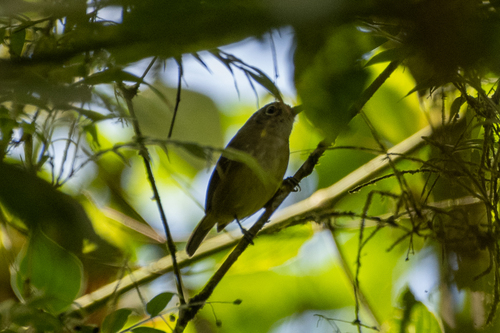
メジロヒメモズモドキ (Pachysylvia decurtata) メジロヒメモズモドキ
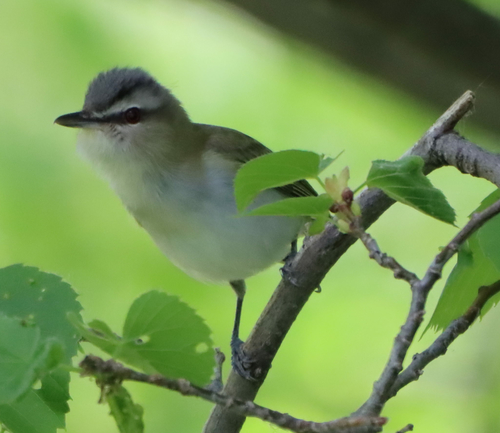
アカメモズモドキ (Vireo olivaceus) アカメモズモドキ

メディア

読み込み中…

要点

メジロヒメモズモドキとアカメモズモドキを区別する最も信頼できるフィールドマークは、メジロヒメモズモドキに見られる灰青色または灰色の冠と淡い顔、弱いアイリングの存在です。一方、アカメモズモドキは黒で縁取られた明確な灰色の冠、太い白いスーペルシリウム、強い黒っぽいアイストライプを持っています。アカメモズモドキはまた、かなり大きくてがっしりしており、翼幅が明らかに長く、体格も重いです。すべての羽色において、メジロヒメモズモドキはコンパクトで短い尾を持つ鳥で、緑がかった背中と黄色がかった腹部を持っていますが、アカメモズモドキはより大きく、尾が長く、腹部はきれいな白色で、側面にはわずかな黄色があるだけです。未熟な特定の翼や飛行パターンはどちらにも記載されていないため、頭のパターン、サイズ、構造に注目してください。両種は中米に生息することがありますが、アカメモズモドキは移動鳥としてのみ存在します。

識別のコツ

  1. 頭のパターンが最も決定的なマークです: アカメモズモドキは強い白いスーペルシリウム(眉毛)、黒っぽいアイストライプ、黒で縁取られた灰色の冠を持っています。この大胆なコントラストは、メジロヒメモズモドキには見られず、灰青色または灰色の冠が淡い顔と弱いアイリングに柔らかく溶け込んでいます。
  2. 目の色: 成熟したアカメモズモドキは赤い虹彩を持っていますが、これはフィールドでは見えにくいことがよくあります。メジロヒメモズモドキは常に暗い茶色の虹彩を持っています。
  3. サイズと構造: アカメモズモドキははるかに大きくてがっしりしており、翼幅と尾が長いです。メジロヒメモズモドキはコンパクトで短い尾を持ち、明らかに小さいです。他の小鳥と一緒に見られると、この違いは際立ちます。
  4. くちばし: アカメモズモドキはより太く、頑丈なくちばしを持っています。メジロヒメモズモドキのくちばしは細く、深さが少ないです。これは、よく見ないと微妙かもしれません。
  5. 上面: 両者はオリーブグリーンの背中を持っていますが、メジロヒメモズモドキは一般的に明るく均一で、アカメモズモドキのオリーブは鈍く、背中に制限され、灰色の冠を持っています。
  6. 下面: メジロヒメモズモドキは胸に淡いレモンイエロー、側面と肛門に緑がかった黄色を示します。アカメモズモドキは、側面と尾のカバーにわずかな黄色の洗い流しがあるきれいな白い下面を持っています。
  7. 顔とロア: メジロヒメモズモドキはロアの上に淡いストライプと白っぽいアイリングを示すことがありますが、決してvireoの大胆な黒と白の顔のパターンは持っていません。
  8. 尾: アカメモズモドキは相対的に長い尾を持っていますが、メジロヒメモズモドキの尾は短くて四角いです。
  9. 脚の色: 両者は青灰色から淡い灰色の脚を持っており、強いフィールドマークではありません。
  10. 行動: メジロヒメモズモドキはより活発で、しばしば混合群れの中にいて、葉の間を素早く移動します。アカメモズモドキはより孤独で慎重です。
  11. 生息地と季節: 中米では、アカメモズモドキは移動または冬の間のみ存在し、メジロヒメモズモドキは常駐しています。密林の中では、特に移動の外では、メジロヒメモズモドキの方が可能性が高いです。
  12. 亜種の変異: メジロヒメモズモドキの亜種は冠と背中の色が異なることがありますが、アカメモズモドキの鋭く定義された頭のパターンを持つものはいません。
  13. 幼鳥/未熟の混乱: どちらの種にも特有の上翼や飛行マークは記載されていないため、すべての年齢に対して頭のパターンとサイズに頼る必要があります。
  14. 声: メモには記載されていないため、ここでの区別には信頼できません。
  15. 落とし穴: 見え方が悪いと、アカメモズモドキの頭のパターンがあまり大胆に見えないことがありますが、鈍い光の中でも、スーペルシリウムとアイストライプは通常見えます。メジロヒメモズモドキは決して強い黒と白の顔を示しません。

大きさ

アカメモズモドキははるかに大きく、長さ12〜13 cm、体重12〜26 g、翼幅23〜25 cmです[wikipedia][avonet]。メジロヒメモズモドキは9.4〜10.2 cm、6.6〜10.3 gと著しく小さいです[wikipedia][avonet]。フィールドでは、アカメモズモドキはがっしりしていて翼が長く見えますが、メジロヒメモズモドキはコンパクトで優雅です。このサイズの違いは、通常、一緒に見たり、馴染みのある参照鳥と一緒に見たりすると明らかです。

羽色

どちらの種にも特有の幼鳥や未熟な上翼パターンは記載されていないため、頭と体の色合いが重要です。メジロヒメモズモドキ(すべての年齢、性別)は灰青色から灰色の冠と上顔、淡いまたは白っぽいアイリング、主にオリーブグリーンの背中と翼、緑がかった外側のウェブを示します。下面は胸に淡いレモンイエロー、腹に白っぽい色、側面と肛門に緑がかった黄色です。アカメモズモドキ(成鳥)は、黒いラインで明確に縁取られた灰色の冠、黒っぽいアイストライプの上に大胆な白いスーペルシリウム、オリーブグリーンの上面、側面と尾のカバーにわずかな黄色のある白い下面を持っています。成鳥の虹彩は赤ですが(フィールドでは常に見えるわけではありません)、メジロヒメモズモドキは強い顔のコントラストを欠き、より均一に淡い顔を持っていますが、アカメモズモドキの顔は鮮明にパターン化されています。メジロヒメモズモドキの亜種の変異は冠と背中の色合いをわずかに変えることがありますが、決してvireoの大胆な頭のパターンを生み出すことはありません。

行動

両種は樹冠で餌を探しますが、メジロヒメモズモドキは混合種の群れに参加し、葉の間を素早く移動する可能性が高く、しばしばペアや小さなグループで見られます。アカメモズモドキは一人で餌を探すか、緩やかな関連の中で動き、木の中を体系的に移動し、しばしば樹冠の高い位置にいます。アカメモズモドキは、より小さく、より活発なメジロヒメモズモドキよりも、より慎重で落ち着いているように見えることがあります。

生息環境

メジロヒメモズモドキはメキシコから南アメリカ北部にかけての湿った森林とその周辺に生息しており、しばしば低地や丘陵の森林に見られます。アカメモズモドキは中米と南米の移動鳥で、移動と冬の間のみ存在し、北米の開けた森林で繁殖します。中米では、アカメモズモドキは主に移動中に見られ、メジロヒメモズモドキは年間を通じて存在します。特に移動期間外の密林の内部で見られる場合、メジロヒメモズモドキの方がはるかに可能性が高いです。

より良い説明を送る

比較と同じ項目を使ってください。文章はすぐに公開されます。

The most reliable field mark to separate Lesser Greenlet from Red-eyed Vireo is the presence of a gray-blue or gray crown with a pale face and weak eye-ring in Lesser Greenlet, versus the Red-eyed Vireo's distinct gray crown edged with black, bold white supercilium, and strong blackish eye-stripe. Red-eyed Vireo is also significantly larger and bulkier, with a noticeably longer wingspan and heavier build. In all plumages, Lesser Greenlet is a compact, short-tailed bird with a greenish back and yellowish underparts, while Red-eyed Vireo is larger, longer-tailed, and has clean white underparts with only faint yellow on the flanks. Immature-specific wing or flight patterns are not described for either, so focus on head pattern, size, and structure. Both species can occur in Central America, but Red-eyed Vireo is only present as a migrant.

  1. Head pattern is the most decisive mark: Red-eyed Vireo has a strong white supercilium (eyebrow), a blackish eye-stripe, and a gray crown bordered by black—this bold contrast is never matched by Lesser Greenlet, which has a gray-blue or gray crown blending softly into a pale face and weak eye-ring.
  2. Eye color: Adult Red-eyed Vireo has a red iris, but this is often hard to see in the field. Lesser Greenlet always has a dark brown iris.
  3. Size and structure: Red-eyed Vireo is much larger and bulkier, with a longer wingspan and tail. Lesser Greenlet is compact, short-tailed, and noticeably smaller. If seen with other small birds, this difference can be striking.
  4. Bill: Red-eyed Vireo has a stouter, more robust bill; Lesser Greenlet's bill is finer and less deep. This can be subtle unless seen well.
  5. Upperparts: Both have olive-green backs, but Lesser Greenlet is generally brighter and more uniform, while Red-eyed Vireo's olive is duller and restricted to the back, with a gray crown.
  6. Underparts: Lesser Greenlet shows pale lemon-yellow on the breast and greenish-yellow flanks and vent; Red-eyed Vireo has clean white underparts with only faint yellowish wash on the flanks and undertail coverts.
  7. Face and lores: Lesser Greenlet may show a pale stripe above the lores and a whitish eye-ring, but never the vireo's bold black-and-white facial pattern.
  8. Tail: Red-eyed Vireo has a proportionally longer tail; Lesser Greenlet's tail is short and square.
  9. Leg color: Both have blue-gray to pale gray legs, not a strong field mark.
  10. Behavior: Lesser Greenlet is more active, often in mixed flocks, and moves quickly through foliage. Red-eyed Vireo is more solitary and deliberate.
  11. Habitat and season: In Central America, Red-eyed Vireo is only present on migration or winter; Lesser Greenlet is resident. In dense forest, especially outside migration, Lesser Greenlet is more likely.
  12. Subspecies variation: Lesser Greenlet subspecies may vary in crown and back color, but none develop the sharply defined head pattern of Red-eyed Vireo.
  13. Juvenile/immature confusion: No distinctive upperwing or flight marks are described for either species, so rely on head pattern and size for all ages.
  14. Voice: Not described in the notes, so not reliable for separation here.
  15. Pitfalls: Poor views may make Red-eyed Vireo's head pattern seem less bold, but even in dull light, the supercilium and eye-stripe are usually visible. Lesser Greenlet never shows a strong black-and-white face.

Red-eyed Vireo is much larger, measuring 12–13 cm in length and weighing 12–26 g, with a wingspan of 23–25 cm [wikipedia][avonet]. Lesser Greenlet is notably smaller at 9.4–10.2 cm and 6.6–10.3 g [wikipedia][avonet]. In the field, Red-eyed Vireo appears bulkier and longer-winged, while Lesser Greenlet is compact and dainty. This size difference is usually obvious if seen together or with familiar reference birds.

There are no distinctive juvenile or immature upperwing patterns described for either species, so head and body coloration are key. Lesser Greenlet (all ages, sexes) shows a gray-blue to gray crown and upper face, a pale or whitish eye-ring, and a mostly olive-green back and wings with greenish outer webs. Underparts are pale lemon-yellow on the breast, whitish on the belly, and greenish-yellow on the flanks and vent. Red-eyed Vireo (adult) has a gray crown sharply bordered by a black line, a bold white supercilium above a blackish eye-stripe, olive-green upperparts, and white underparts with only faint yellowish flanks and undertail coverts. The iris is red in adults (not always visible in the field). Lesser Greenlet lacks the strong facial contrast and has a more uniformly pale face, while Red-eyed Vireo's face is crisply patterned. Subspecific variation in Lesser Greenlet can slightly alter crown and back tones but never produces the vireo's bold head pattern.

Both species forage in the canopy, but Lesser Greenlet is more likely to join mixed-species flocks and move quickly among foliage, often in pairs or small groups. Red-eyed Vireo tends to forage alone or in loose association, moving methodically through trees, often higher in the canopy. Red-eyed Vireo may appear more deliberate and less restless than the smaller, more active Lesser Greenlet.

Lesser Greenlet is a resident of humid forests and edges from Mexico through northern South America, often in lowland and foothill forests. Red-eyed Vireo is a migrant in Central and South America, present only during migration and winter, and breeds in North America in open woodlands. In Central America, Red-eyed Vireo is seen mainly during migration, while Lesser Greenlet is present year-round. If seen in dense forest interior, especially outside migration periods, Lesser Greenlet is far more likely.

変更を破棄しますか?

保存していない編集があります。今離れると失われます。

メジロヒメモズモドキ · アカメモズモドキ · 苦手な鳥