

アメリカコアジサシ 対 アマゾンアジサシ
Sternula antillarum 対 Sternula superciliaris
アメリカコアジサシとアマゾンアジサシのクイズ
 アメリカコアジサシ
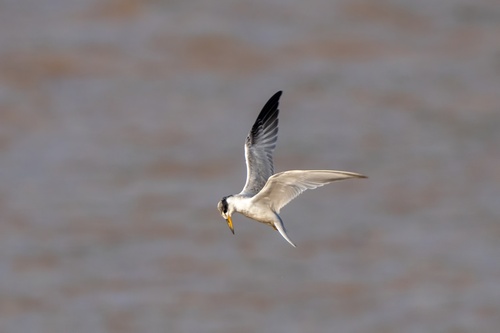 アマゾンアジサシ
要点
The most reliable way to separate Least Tern from Yellow-billed Tern is by the color pattern of the rump and tail: Least Tern has a gray rump and tail, while Yellow-billed Tern shows a white rump and tail. Both species are small, pale terns with yellow bills and black caps in breeding plumage, but subtle differences in bill pattern, upperpart tone, and seasonal changes in head pattern can help. Juvenile Yellow-billed Terns lack the black cap, appearing brown and white, while Least Tern juveniles are not described in detail here but should show a similar tern juvenile pattern. Bill color and cap extent change with season in both, but the Least Tern's bill gains a black tip in breeding plumage, which is absent in Yellow-billed Tern. Both species can overlap in northern South America but have mostly distinct ranges.
識別のコツ
- Rump and tail color: Least Tern has a gray rump and tail; Yellow-billed Tern's are white. This is the most reliable field mark in good light and is visible both perched and in flight.
- Bill color (breeding): Least Tern shows a yellow bill with a small black tip; Yellow-billed Tern's bill is all yellow. Check for the black tip at close range, especially in breeding adults.
- Bill color (non-breeding): Least Tern's bill turns blackish in winter, while Yellow-billed Tern's remains yellow year-round. In non-breeding plumage, a blackish bill points to Least Tern.
- Juvenile plumage: Juvenile Yellow-billed Terns are brown and white and lack the black cap. If you see a small tern with a brownish, capless head, it's likely a juvenile Yellow-billed Tern. Least Tern juveniles are not described in detail here but are unlikely to be as brown and white or as capless.
- Cap and forehead (breeding): Both have a black cap and white forehead in breeding plumage. The white forehead patch may be slightly larger in Least Tern, but this is subtle and variable.
- Cap and forehead (non-breeding): In winter, both species develop a more extensive white forehead and a reduced, less sharply defined black cap. This can make them harder to separate, so rely on rump/tail and bill color.
- Upperparts tone: Least Tern is described as paler gray above than Yellow-billed Tern, but this is a subtle difference and not always reliable in the field.
- Leg color: Both species have yellowish legs in breeding plumage; not a useful separator.
- Flight style: Least Tern has fast, jerky wingbeats and a hunchbacked posture with the bill angled downward. If you see this distinctive flight style, it suggests Least Tern, but Yellow-billed Tern's flight is not described as different.
- Wing pattern: Both have pale gray wings with black outer primaries. No unique upperwing pattern is described for either species, so this is not a separator.
- Size: Both are nearly identical in size and mass; do not use size to separate them.
- Habitat/context: In North America, any small Sternula tern is almost certainly Least Tern. In South America, check for both, but Yellow-billed Tern is more widespread. Overlap is possible in northern South America.
- Voice: Least Tern has a distinctive squeaking call, different from Yellow-billed Tern. If you know the call, this can help, but Yellow-billed Tern's call is not described here.
- Seasonal context: In the non-breeding season, Least Tern's bill turns blackish and the cap becomes less distinct, while Yellow-billed Tern keeps a yellow bill and black cap (except in juveniles). Use this to your advantage in winter.
- Juvenile confusion: If you see a brown and white, capless young tern, it's likely a juvenile Yellow-billed Tern. Least Tern juveniles are not described as being this brown or lacking a cap.
大きさ
Both species are very close in size and mass, with Least Tern measuring 22–24 cm in length and weighing 39–52 g, and Yellow-billed Tern at 23–25 cm and 40–57 g. In the field, size is not a reliable separator between these two, as any difference is negligible and easily masked by posture or distance.
羽色
-
Juveniles/immatures: Yellow-billed Tern juveniles are brown and white and lack the black cap, which is a strong contrast with adults. Least Tern juveniles are not described in detail here, but are likely to show a more typical tern juvenile pattern with some dark on the crown and upperparts, but not as distinctly brown and white as Yellow-billed Tern juveniles.
-
Adults (breeding): Both have a black cap, white forehead, and yellow bill, but Least Tern's bill has a black tip, while Yellow-billed Tern's is all yellow. Least Tern's rump and tail are gray, while Yellow-billed Tern's are white. Both have pale gray upperparts and white underparts, but Least Tern is described as paler above than Yellow-billed Tern.
-
Adults (non-breeding): Both species develop a more extensive white forehead and a less sharply defined black cap in winter. Least Tern's bill turns blackish in winter, while Yellow-billed Tern's remains yellow.
-
Wings: Both have silvery or pale gray wings with black markings on the outer primaries, but no unique upperwing pattern is described for either species in flight beyond this.
行動
Both species hunt by hovering and picking small fish or crustaceans from shallow waters, often with quick, agile flight. Least Tern is noted for fast, jerky wingbeats and a hunchbacked flight posture with the bill angled slightly downward. Yellow-billed Tern forages similarly, but no distinctive flight style is described. Both nest on open sandbanks or beaches, often in colonies; Yellow-billed Tern is noted for aggressive nest defense and sometimes nests among other species for added protection.
生息環境
Least Tern breeds in North America and locally in northern South America, favoring shallow estuaries, lagoons, and open sandy beaches. Yellow-billed Tern is widespread in South America, found along rivers, swamps, freshwater lakes, and coastal lagoons. Overlap is possible in northern South America, but in most of North America only Least Tern occurs. Both species nest on open ground, often on sandbanks or island beaches.
声
Least Tern has a distinctive, squeaking call, which is different from the Yellow-billed Tern, though the exact call of Yellow-billed Tern is not described here. Voice may be helpful if you know Least Tern's call, as it is said to differ from its South American relatives.