

Motmot

ラナーハヤブサ 対 ハヤブサ

Falco biarmicus 対 Falco peregrinus

ラナーハヤブサとハヤブサのクイズ
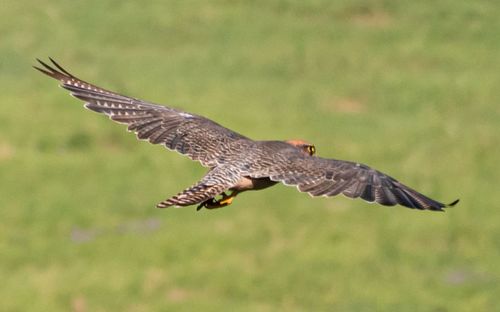
ラナーハヤブサ (Falco biarmicus) ラナーハヤブサ
ハヤブサ (Falco peregrinus) ハヤブサ

メディア

読み込み中…

要点

ラナーとハヤブサの間で最も信頼できるフィールドマークは頭部の模様です:成鳥のハヤブサは強いマラーストライプを持つ大胆な黒いヘルメットを示し、ラナーはより淡い赤みがかった後頭部と、あまり明確でない顔の模様を持っています。幼鳥のラナーはワキスジハヤブサに似て見えることがありますが、ハヤブサの鮮明な顔が欠けています。飛行中、両者は大きなハヤブサですが、ラナーはしばしば翼が長く、よりコンパクトではないように見えます。生息地も役立ちます:ラナーは開けたサバンナや草原を好み、ハヤブサは崖や海岸、都市部の近くで見られることが多いです。両者はサイズが似ているため、構造と頭部の模様に注目して自信を持って区別してください。

識別のコツ

  1. Head pattern is key: 成鳥のハヤブサは大胆な黒いヘルメットと強いマラーストライプを持ち、フードのような外観を与えます。ラナーは淡い頭部と赤みがかった後頭部、あまり明確でない顔の模様を持っており、これはすべての年齢で見られますが、特に成鳥で顕著です。
  2. Juvenile confusion: 幼鳥のラナーはより茶色で縞模様があり、ワキスジハヤブサに似ていますが、まだハヤブサの鮮明な黒いヘルメットとマラーストライプは欠けています。頭部が淡く、後頭部が赤みがかっている場合、それはラナーであり、ハヤブサではありません。
  3. Upperparts color: 成鳥のハヤブサは上面が青灰色で、下面はきれいな縞模様があります。ラナー(ユーラシア)はスレートまたは茶色灰色で、アフリカの鳥は淡い青灰色です。ラナーの上面は典型的なハヤブサほど暗くも、きれいな青灰色でもありません。
  4. Underparts: ハヤブサは白い縞模様のある下面を持ち、ラナー(特に北部の鳥)は胸に縞模様があります。縞模様と縞の違いは役立ちますが、幼鳥では変動があります。
  5. Facial contrast: ハヤブサの顔の強いコントラスト—暗いヘルメットとマラーストライプ—と、ラナーのより混ざり合った淡い顔の赤みのトーンを探してください。
  6. Structure in flight: ラナーは飛行中、特に上昇中にハヤブサよりも翼が長く、よりコンパクトではないように見えることがよくあります。ハヤブサはよりがっしりとした印象で、翼の基部が広いです。
  7. Perched jizz: ラナーは止まっているときにスリムで尾が長く見えることがありますが、ハヤブサはより頑丈で尾が短いように見えます。
  8. Habitat context: ラナーは開けたサバンナ、草原、または乾燥した国にいる可能性が高く、ハヤブサは崖、海岸、または都市の近くにいる可能性が高いです。都市部や海岸の崖で見られた場合、ハヤブサの可能性が高いです。
  9. Behavior: もしペアでの相互上昇や同期したパワーダイブが見られた場合、ラナーの可能性が高いです。もし高速のストゥープや空中での獲物の捕獲が見られた場合、ハヤブサの可能性が高いですが、両者とも空中狩猟を行うことができます。
  10. Voice: ラナーの厳しい「ワレイ」のみが記載されています;もし聞かれた場合、それはラナーを支持するかもしれませんが、声の欠如は役立ちません。
  11. Sexual dimorphism: ハヤブサのみが強く性的二形性があると記載されています(雌は雄よりもはるかに大きい)が、これは直接比較なしではフィールドで判断するのが難しいです。
  12. Seasonal movement: ラナーは主に居住しており、地域内の移動が多いですが、ハヤブサは特に北部地域ではより移動性が高いかもしれません。
  13. Pitfall—Saker confusion: 幼鳥のラナーはワキスジハヤブサに似て見えることがありますが、ワキスジハヤブサはラナーよりも淡い冠を持ち、顔もさらに明確ではありません;ハヤブサはこの組み合わせを示すことはありません。
  14. Plumage hybrids: ハヤブサの狩猟地域では、中間的な特徴を示すハイブリッド「ペリラナー」に注意してください。
  15. Size: 両者はサイズが似ています;区別のためにサイズだけに頼らないでください。

大きさ

両種は大きなハヤブサで、全体的なサイズが近いです。ラナーは長さ43〜50 cm、翼幅95〜105 cmです [wikipedia]。ハヤブサは「カラスサイズ」と記載され、性的二形性があり、雌は雄よりも大きいですが、直接比較のための正確な測定値はメモには記載されていません。フィールドでは、サイズだけではこれら二つの間で信頼できる区別にはなりません、特に距離がある場合や飛行中では。

羽色

幼鳥のラナーは上面がより茶色で、ワキスジハヤブサに似ており、頭の後ろが赤みがかっており、頭部の側面の模様があまりはっきりしていません。彼らの上面はスレート灰色または茶色灰色(ユーラシア)または淡い青灰色(アフリカ)で、北部の鳥では胸に縞模様があります。幼鳥のハヤブサ(ここでは詳細に説明されていません)は通常、茶色がかった色合いと縞模様のある下面を示しますが、常に強い暗いヘルメットとマラーストライプを保持しています。成鳥のハヤブサは青灰色の背中、白い縞模様のある下面、そして特徴的なマラーストライプを持つ黒い頭を持っています。ラナーはこの強い顔のコントラストが欠けており、より淡い赤みがかった後頭部とあまり明確でない顔の模様を示しています。すべての年齢において、ラナーの頭部はハヤブサよりも淡く、フードのような形状が少ないです。飛行中、両者は尖った翼を示しますが、ラナーは特に上昇中に翼が長く、よりコンパクトではないように見えることがあります。

行動

両種は鳥やコウモリを狩り、しばしば開けた国で見られます。ラナーは繁殖前に相互上昇や同期した飛行ディスプレイで知られています;ペアは一緒にパワーダイブを行うことがあります。ハヤブサはその高速ストゥープで有名で、しばしば夜明けや夕暮れに狩りを行い、強力なストライクで空中で獲物を捕らえることができます。ハヤブサは都市で夜行性の狩りを行うことも知られており、時にはコンター狩りを行ったり、獲物を地上で追いかけたりすることもありますが、これは稀です。両種は獲物を食べる前に羽毛を抜きます。ラナーはより居住的で、地域内の移動のみを行いますが、ハヤブサは地域によってより移動性が高いか、分散することがあります。

生息環境

ラナーは開けたサバンナ、草原、酸性草原で最も一般的で、森林の端から砂漠まで生息していますが、一般的には密な森林を避けます。南アフリカでは、季節ごとに草原とより乾燥した生息地の間を移動します。ハヤブサは狩りのために開けたスペースを必要とし、しばしば崖、海岸、湿地、畑、ツンドラ、そしてますます都市部の近くで見られます。ラナーはハヤブサに比べて都市や海岸の環境で見られる可能性が低いです。

声

記載されている唯一の声はラナーの厳しい「ワレイ」です。これらのメモにはハヤブサの鳴き声の詳細は記載されていないため、声はここでの信頼できる区別にはなりません。

より良い説明を送る

比較と同じ項目を使ってください。文章はすぐに公開されます。

The most reliable field mark between Lanner and Peregrine Falcons is the head pattern: adult Peregrines show a bold black helmet with a strong malar stripe, while Lanners have a paler, reddish nape and less defined facial markings. Juvenile Lanners can look quite like Sakers, but still lack the Peregrine's crisp face. In flight, both are large falcons, but the Lanner often appears longer-winged and less compact. Habitat can help: Lanners prefer open savannah and grasslands, while Peregrines are more often found near cliffs, coasts, or urban areas. Both are similar in size, so focus on structure and head pattern for confident separation.

  1. Head pattern is key: Adult Peregrine Falcons have a bold black helmet and strong malar stripe, giving a hooded look. Lanner Falcons have a paler head with a reddish nape and less defined facial markings; this is visible in all ages but especially in adults.
  2. Juvenile confusion: Juvenile Lanners are browner and streaked, resembling Saker Falcons, but still lack the Peregrine's crisp black helmet and malar stripe. If the head is pale and the nape is reddish, it's a Lanner, not a Peregrine.
  3. Upperparts color: Adult Peregrines are blue-grey above with clean barring below; Lanners (Eurasian) are slate or brown-grey, African birds paler blue-grey. Lanner's upperparts are never as dark or as cleanly blue-grey as typical Peregrines.
  4. Underparts: Peregrines have barred white underparts, while Lanners (especially northern birds) are streaked on the breast. Streaking vs. barring can help, but is variable in juveniles.
  5. Facial contrast: Look for the strong contrast of the Peregrine's face—dark helmet and malar stripe—versus the Lanner's more blended, paler face with reddish tones.
  6. Structure in flight: Lanner Falcons often appear longer-winged and less compact than Peregrines, especially when soaring. Peregrines look stockier and more powerful, with broader bases to the wings.
  7. Perched jizz: Lanners may look slimmer and longer-tailed when perched, while Peregrines appear more robust and short-tailed.
  8. Habitat context: Lanners are most likely in open savannah, grasslands, or arid country; Peregrines are more likely near cliffs, coasts, or cities. If seen in an urban area or on a coastal cliff, Peregrine is more likely.
  9. Behavior: If you see mutual soaring or synchronized power-dives by a pair, Lanner is more likely. If you see a high-speed stoop or prey taken in mid-air, Peregrine is more likely, though both can perform aerial hunts.
  10. Voice: Only the Lanner's harsh 'wray-e' is described; if heard, it may support Lanner, but lack of vocalization is not helpful.
  11. Sexual dimorphism: Only Peregrine is noted as strongly sexually dimorphic (females much larger), but this is hard to judge in the field without direct comparison.
  12. Seasonal movement: Lanners are mostly resident with local movements; Peregrines may be more migratory, especially in northern regions.
  13. Pitfall—Saker confusion: Juvenile Lanners can look like Sakers, but Sakers have a paler crown and even less defined face than Lanner; Peregrines never show this combination.
  14. Plumage hybrids: Beware of hybrid 'perilanners' in falconry areas, which may show intermediate features.
  15. Size: Both are similar in size; do not rely on size alone for separation.

Both species are large falcons, close in overall size. Lanner Falcon measures 43–50 cm in length with a wingspan of 95–105 cm [wikipedia]. Peregrine Falcon is described as 'crow-sized' and is sexually dimorphic, with females larger than males, but no precise measurements are given in the notes for direct comparison. In the field, size alone is not a reliable separator between these two, especially at a distance or in flight.

Juvenile Lanner Falcons are browner above and resemble Saker Falcons, with a reddish back to the head and less sharply defined head-side patterns. Their upperparts are slate grey or brown-grey (Eurasian) or paler blue-grey (African), and the breast is streaked in northern birds. Juvenile Peregrines (not described in detail here) typically show a brownish cast and streaked underparts but always retain the strong dark helmet and malar stripe. Adult Peregrines have a blue-grey back, barred white underparts, and a black head with a distinctive malar stripe. Lanners lack this strong facial contrast, showing a paler, reddish nape and less defined facial markings. In all ages, the Lanner's head is paler and less hooded than the Peregrine's. In flight, both show pointed wings, but Lanner can look longer-winged and less compact, especially when soaring.

Both species hunt birds and bats, often in open country. Lanners are noted for mutual soaring and synchronized flight displays before breeding; pairs may power-dive together. Peregrines are famous for their high-speed stoop, often hunting at dawn and dusk, and can take prey in mid-air with a powerful strike. Peregrines are also known to hunt nocturnally in cities and sometimes contour-hunt or even pursue prey on foot, though this is rare. Both species pluck prey before eating. Lanners are more resident, with only local dispersal, while Peregrines may be more migratory or dispersive depending on region.

Lanner Falcons are most common in open savannah, grasslands, and sour grasslands, ranging from forest edge to desert, but generally avoid dense forests. In South Africa, they shift between grasslands and more arid habitats seasonally. Peregrine Falcons require open space for hunting and are often found near cliffs, coasts, marshes, fields, tundra, and increasingly in urban areas. Lanners are less likely to be seen in urban or coastal environments compared to Peregrines.

The only vocalization described is the Lanner's harsh 'wray-e'. No details are given for Peregrine Falcon calls in these notes, so voice is not a reliable separator here.

変更を破棄しますか?

保存していない編集があります。今離れると失われます。

ラナーハヤブサ · ハヤブサ · 苦手な鳥