

Motmot

コブガモ 対 ナンキンオシ

Sarkidiornis melanotos 対 Nettapus coromandelianus

コブガモとナンキンオシのクイズ
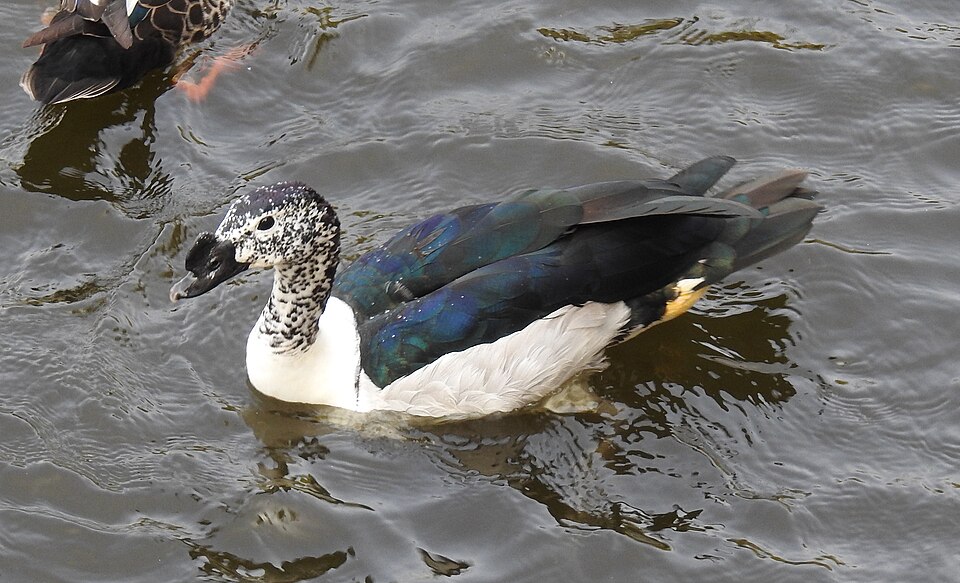
コブガモ (Sarkidiornis melanotos) コブガモ
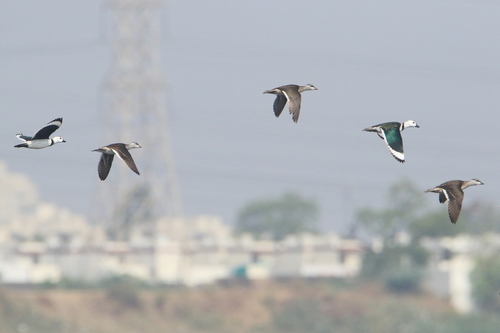
ナンキンオシ (Nettapus coromandelianus) ナンキンオシ

メディア

読み込み中…

要点

コブガモとナンキンオシを区別する最も信頼できる方法は、サイズと構造です:コブガモは非常に大きく、重く、ガチョウのような体型をしており(成鳥のオスは)くちばしに目立つ黒いこぶがありますが、ナンキンオシは小さく、コンパクトで、くちばしにこぶはありません。未熟なコブガモは、淡いバフ色の腹部と鈍い上面のために雌のナンキンオシと混同されることがありますが、サイズの違いは極端で、距離があってもしばしば決定的です。飛行中、コブガモは広く光沢のある暗い上翼を示し、強い青緑色の虹色を持っていますが、ナンキンオシは暗い翼に白い後縁(雌)または広い白い翼帯(雄)があります。両種は木に止まることがありますが、コブガモは通常、大きな群れで見られ、はるかに大きいです。

識別のコツ

  1. サイズは最も決定的なフィールドマークです: コブガモはガチョウサイズ(1.5 kg以上)ですが、ナンキンオシは小さく(約250 g)、距離や光が悪い場合でも、この違いは通常明らかです。
  2. くちばしの構造: 成熟したオスのコブガモは、遠くからでも見える大きな黒い膨らんだこぶを持っています。この特徴を示すナンキンオシは存在しません。雌と未熟な個体はこぶがありませんが、ナンキンオシの短く深いくちばしに比べて、重く広いくちばしを持っています。
  3. 飛行のシルエット: コブガモは飛行中、長い首と重い体に見え、広い翼を持っています;ナンキンオシはコンパクトで短い首、速く羽ばたきます。
  4. 上翼のパターン(飛行中): コブガモは青緑色の虹色を持つ広く光沢のある暗い上翼を示し、白いパネルはありません。オスのナンキンオシは広い白い翼帯を示し、雌は二次羽と内側の初列羽に白い後縁があります。これらのマークは、あらゆる年齢/性別の飛んでいる鳥を区別するのに信頼できます。
  5. 頭と首の羽毛: 成熟したコブガモは、暗い斑点のある白い頭と純白の首を持っています;ナンキンオシのオスは暗い冠と襟を持ち、雌は茶色の目のストライプと斑点のある顔を持っています。
  6. 腹部: コブガモ(成鳥)は純白の腹部を持っています;ナンキンオシは、特に幼鳥や雌において、より模様のあるまたはバフ色の腹部を持っています。
  7. 幼鳥の混同: 未熟なコブガモは、大きな灰色の雌のナンキンオシのように見えることがあります(鈍いバフ色の腹部、茶色の上面、淡い目のストライプ)。サイズ、くちばしの形、文脈(通常は成鳥と一緒)を使って区別してください。
  8. 群れのサイズと文脈: コブガモはしばしば大きな緩い群れにいます、特に乾季には;ナンキンオシは通常、ペアまたは小さな群れにいます。
  9. 止まり方: 両者は木に止まることができますが、これは診断的ではありませんが、コブガモは止まっているときにずっと大きく重く見えます。
  10. 生息地: コブガモは開放的な湿地や湖を好みます;ナンキンオシはより植生のある池や湿地に結びついています。
  11. 声: コブガモはほとんど静かですが;ナンキンオシは柔らかいクワック音を出しますが、これは主な手がかりになることは稀です。
  12. 性差: オスのコブガモは雌よりもはるかに大きく、くちばしのこぶを持っています;オスのナンキンオシは暗い襟と白い翼帯を持ち、雌は鈍く茶色の目のストライプを持っています。
  13. 虹色: 両者は上面に虹色がありますが、コブガモの方が良い光の中でより広範囲で明らかです。
  14. 驚かされたときの行動: ナンキンオシは潜ったり、頭だけが見えるように隠れたりすることがあります;コブガモは通常、重く騒々しく飛び立ちます。
  15. 地域の豊富さ: 南アジアの多くの地域で、両者が発生することがありますが、コブガモはより大きく開放的な湿地で見られる可能性が高く、ナンキンオシはより小さく植生のある池で一般的です。

大きさ

コブガモは最大のカモの一つで、平均体重は約1616 g、体長は56–76 cm、翼幅は116–145 cmです。ナンキンオシは地球上で最も小さな水鳥の一つで、平均約251 g、体長はわずか26 cmです。未熟なコブガモでさえ、成鳥のナンキンオシよりもはるかに大きいです。フィールドでは、このサイズのギャップは通常明らかです:コブガモはガチョウサイズに見え、ナンキンオシはティールサイズまたはそれ以下で、コンパクトで短い首の外観を持っています。

羽色

未熟なコブガモは、顔と首の下側が鈍いバフ色で、鈍い茶色の上面と淡い目のストライプを持ち、雌のナンキンオシの淡い斑点のある外観に似ることがあります。しかし、コブガモの未熟個体ははるかに大きく、通常成鳥と一緒に見られます。成鳥のコブガモは、暗い斑点のある白い頭、純白の首と腹部、強い虹色を持つ光沢のある青黒い上面を持っています。成鳥のオスのコブガモは、大きな黒いくちばしのこぶを持ち、これはすべてのナンキンオシにはありません。ナンキンオシのオスは暗い茶色の冠、黒っぽい緑の襟、緑/紫の光沢のある暗い背中を持ち、雌は鈍い帽子、茶色の目のストライプ、細かい縞模様のある首を持っています。飛行中、オスのナンキンオシは広い白い翼帯を示し、雌は二次羽と内側の初列羽に白い後縁を持っています。飛行中のコブガモは、虹色の広い暗い翼を示し、ナンキンオシの鮮やかな白いパネルはありません。

行動

両種は木に止まることがありますが、コブガモはしばしば大きな群れ(乾季には100羽以上)で見られ、ナンキンオシは通常ペアまたは小さな群れにいます。コブガモは開放的な湿地で草を食べたり、水面をついばんだりする可能性が高く、時には小魚や無脊椎動物を食べることがありますが、ナンキンオシは密に植生のある水域を好み、より秘密主義で、時には驚かされると潜ったり隠れたりします。コブガモの重く遅い飛行は、ナンキンオシの迅速で敏捷な飛行と対照的です。

生息環境

コブガモは、サハラ以南のアフリカ、マダガスカル、南アジア、インドシナの熱帯および亜熱帯の湿地、湖、河川を好み、しばしば開放的または半開放的な生息地にいます。ナンキンオシは南アジアおよび東南アジアからオーストラリア北部にかけて見られ、豊富な水生植物がある小さな水域から大きな水域を好みます。両者は湖や池に生息することがありますが、ナンキンオシは密に植生のある静かな水域により密接に結びついています。

声

コブガモは一般的に静かで、驚かされたときに時折低い鳴き声を出します。ナンキンオシは低いクワック音を出し、時には山羊の鳴き声に似ていると言われます。鳴き声は通常主なフィールドマークではありませんが、ナンキンオシは静かな環境でその柔らかく反復的な呼び声によって検出されることがあります。

より良い説明を送る

比較と同じ項目を使ってください。文章はすぐに公開されます。

The most reliable way to separate Knob-billed Duck from Cotton Pygmy-Goose is by size and structure: Knob-billed Duck is vastly larger, with a heavy, goose-like build and (in adult males) a prominent black knob on the bill, while Cotton Pygmy-Goose is tiny, compact, and lacks any bill knob. Immature Knob-billed Ducks can be confused with female Cotton Pygmy-Geese due to their pale, buffy underparts and duller upperparts, but the size difference is extreme and often decisive even at a distance. In flight, Knob-billed Duck shows broad, glossy dark upperwings with strong blue-green iridescence, while Cotton Pygmy-Goose has dark wings with a white trailing edge (female) or broad white wing band (male). Both species may perch in trees, but Knob-billed Duck is usually seen in larger flocks and is much bulkier.

  1. Size is the most decisive field mark: Knob-billed Duck is goose-sized (over 1.5 kg), while Cotton Pygmy-Goose is tiny (about 250 g). Even at a distance or in poor light, this difference is usually obvious.
  2. Bill structure: Adult male Knob-billed Ducks have a large, black, swollen knob on the bill, visible even at range. No Cotton Pygmy-Goose ever shows this feature. Females and immatures lack the knob but still have a heavy, broad bill compared to the pygmy-goose's short, deep bill.
  3. Flight silhouette: Knob-billed Duck appears long-necked and heavy-bodied in flight, with broad wings; Cotton Pygmy-Goose is compact, short-necked, and fast-flapping.
  4. Upperwing pattern (in flight): Knob-billed Duck shows broad, glossy dark upperwings with blue-green iridescence, lacking any white panel. Male Cotton Pygmy-Goose shows a broad white wing band; female has a white trailing edge on the secondaries and inner primaries. These marks are reliable for separating flying birds of any age/sex.
  5. Head and neck plumage: Adult Knob-billed Duck has a white head with dark spotting and a pure white neck; Cotton Pygmy-Goose males have a dark crown and collar, females have a brown eye-stripe and flecked face.
  6. Underparts: Knob-billed Duck (adult) has pure white underparts; Cotton Pygmy-Goose has more patterned or buffy underparts, especially in juveniles and females.
  7. Juvenile confusion: Immature Knob-billed Duck can look like a large, greyish female Cotton Pygmy-Goose (dull buff below, brown above, faint eye-stripe). Use size, bill shape, and context (usually with adults) to separate them.
  8. Group size and context: Knob-billed Duck is often in large, loose flocks, especially in the dry season; Cotton Pygmy-Goose is usually in pairs or small groups.
  9. Perching behavior: Both perch in trees, so this is not diagnostic, but Knob-billed Duck looks much larger and heavier when perched.
  10. Habitat: Knob-billed Duck prefers open wetlands and lakes; Cotton Pygmy-Goose is more tied to vegetated ponds and marshes.
  11. Voice: Knob-billed Duck is mostly silent; Cotton Pygmy-Goose gives a soft, quacky call, but this is rarely the main clue.
  12. Sexual dimorphism: Male Knob-billed Duck is much larger than female and has the bill knob; male Cotton Pygmy-Goose has a dark collar and white wing band, female is duller with a brown eye-stripe.
  13. Iridescence: Both have some iridescence on the upperparts, but Knob-billed Duck's is more extensive and obvious in good light.
  14. Behavior when flushed: Cotton Pygmy-Goose may dive or hide with only the head visible; Knob-billed Duck usually takes off heavily and noisily.
  15. Local abundance: In much of South Asia, both can occur, but Knob-billed Duck is more likely in larger, open wetlands, while Cotton Pygmy-Goose is more common in smaller, vegetated ponds.

Knob-billed Duck is one of the largest ducks, with an average body mass around 1616 g, length 56–76 cm, and wingspan 116–145 cm. Cotton Pygmy-Goose is among the smallest waterfowl on earth, averaging about 251 g and only 26 cm in length. Even immature Knob-billed Ducks are much larger than adult Cotton Pygmy-Geese. In the field, this size gap is usually obvious: Knob-billed Duck appears goose-sized, while Cotton Pygmy-Goose is teal-sized or smaller, with a compact, short-necked look.

Immature Knob-billed Ducks are dull buff below and on the face and neck, with dull brown upperparts and a faint eyestripe, which can resemble the pale, flecked look of female Cotton Pygmy-Goose. However, Knob-billed Duck immatures are much larger and usually seen with adults. Adult Knob-billed Ducks have a white head with dark spots, pure white neck and underparts, and glossy blue-black upperparts with strong iridescence on the secondaries. Adult male Knob-billed Ducks have a large black bill knob, absent in all Cotton Pygmy-Geese. Cotton Pygmy-Goose males have a dark brown crown, blackish green collar, and glossy dark back with green/purple gloss, while females have a duller cap, brown eye-stripe, and finely vermiculated neck. In flight, male Cotton Pygmy-Goose shows a broad white wing band, while females have a white trailing edge to the secondaries and inner primaries. Knob-billed Duck in flight shows broad, dark, iridescent wings without the crisp white panels of the pygmy-goose.

Both species may perch in trees, but Knob-billed Duck is often seen in larger flocks (sometimes over 100 in the dry season), while Cotton Pygmy-Goose is usually in pairs or small groups. Knob-billed Duck is more likely to graze or dabble in open wetlands, sometimes feeding on small fish and invertebrates, while Cotton Pygmy-Goose prefers densely vegetated waterbodies and is more secretive, sometimes diving or hiding when disturbed. Knob-billed Duck's heavy, slow flight contrasts with the rapid, agile flight of Cotton Pygmy-Goose.

Knob-billed Duck favors tropical and subtropical wetlands, lakes, and waterways across sub-Saharan Africa, Madagascar, South Asia, and Indochina, often in open or semi-open habitats. Cotton Pygmy-Goose is found in South and Southeast Asia to northern Australia, preferring small to large waterbodies with abundant aquatic vegetation, such as lily ponds and marshes. While both can occur on lakes and ponds, Cotton Pygmy-Goose is more closely tied to densely vegetated, quieter waters.

Knob-billed Duck is generally silent, occasionally giving a low croak when flushed. Cotton Pygmy-Goose produces a low, quacky call, sometimes likened to a bleating goat. Vocalizations are not usually the main field mark, but Cotton Pygmy-Goose may be detected by its soft, repetitive calls in quiet settings.

変更を破棄しますか?

保存していない編集があります。今離れると失われます。

コブガモ · ナンキンオシ · 苦手な鳥