

Motmot

Glanzente vs Koromandelzwergente

Sarkidiornis melanotos gegen Nettapus coromandelianus

Ein Quiz mit Glanzente und Koromandelzwergente spielen
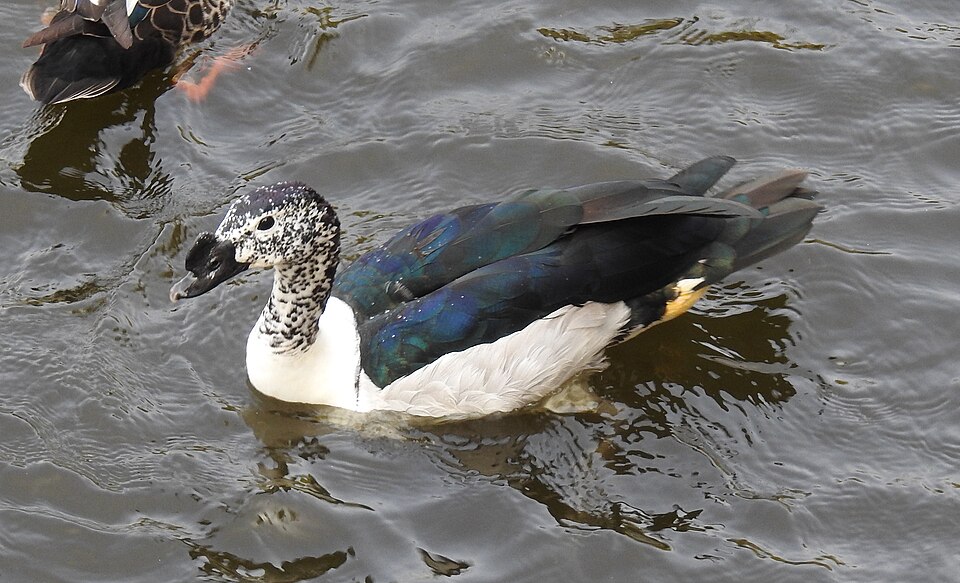
Glanzente (Sarkidiornis melanotos) Glanzente
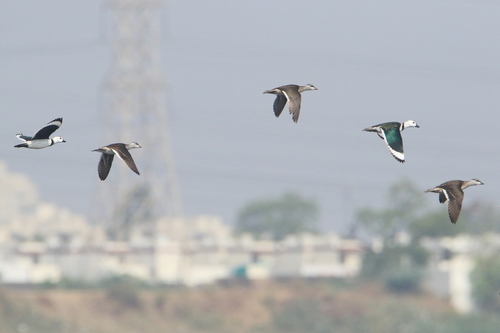
Koromandelzwergente (Nettapus coromandelianus) Koromandelzwergente

Medien

Laden…

Kurz gesagt

The most reliable way to separate Knob-billed Duck from Cotton Pygmy-Goose is by size and structure: Knob-billed Duck is vastly larger, with a heavy, goose-like build and (in adult males) a prominent black knob on the bill, while Cotton Pygmy-Goose is tiny, compact, and lacks any bill knob. Immature Knob-billed Ducks can be confused with female Cotton Pygmy-Geese due to their pale, buffy underparts and duller upperparts, but the size difference is extreme and often decisive even at a distance. In flight, Knob-billed Duck shows broad, glossy dark upperwings with strong blue-green iridescence, while Cotton Pygmy-Goose has dark wings with a white trailing edge (female) or broad white wing band (male). Both species may perch in trees, but Knob-billed Duck is usually seen in larger flocks and is much bulkier.

Bestimmungstipps

  1. Size is the most decisive field mark: Knob-billed Duck is goose-sized (over 1.5 kg), while Cotton Pygmy-Goose is tiny (about 250 g). Even at a distance or in poor light, this difference is usually obvious.
  2. Bill structure: Adult male Knob-billed Ducks have a large, black, swollen knob on the bill, visible even at range. No Cotton Pygmy-Goose ever shows this feature. Females and immatures lack the knob but still have a heavy, broad bill compared to the pygmy-goose's short, deep bill.
  3. Flight silhouette: Knob-billed Duck appears long-necked and heavy-bodied in flight, with broad wings; Cotton Pygmy-Goose is compact, short-necked, and fast-flapping.
  4. Upperwing pattern (in flight): Knob-billed Duck shows broad, glossy dark upperwings with blue-green iridescence, lacking any white panel. Male Cotton Pygmy-Goose shows a broad white wing band; female has a white trailing edge on the secondaries and inner primaries. These marks are reliable for separating flying birds of any age/sex.
  5. Head and neck plumage: Adult Knob-billed Duck has a white head with dark spotting and a pure white neck; Cotton Pygmy-Goose males have a dark crown and collar, females have a brown eye-stripe and flecked face.
  6. Underparts: Knob-billed Duck (adult) has pure white underparts; Cotton Pygmy-Goose has more patterned or buffy underparts, especially in juveniles and females.
  7. Juvenile confusion: Immature Knob-billed Duck can look like a large, greyish female Cotton Pygmy-Goose (dull buff below, brown above, faint eye-stripe). Use size, bill shape, and context (usually with adults) to separate them.
  8. Group size and context: Knob-billed Duck is often in large, loose flocks, especially in the dry season; Cotton Pygmy-Goose is usually in pairs or small groups.
  9. Perching behavior: Both perch in trees, so this is not diagnostic, but Knob-billed Duck looks much larger and heavier when perched.
  10. Habitat: Knob-billed Duck prefers open wetlands and lakes; Cotton Pygmy-Goose is more tied to vegetated ponds and marshes.
  11. Voice: Knob-billed Duck is mostly silent; Cotton Pygmy-Goose gives a soft, quacky call, but this is rarely the main clue.
  12. Sexual dimorphism: Male Knob-billed Duck is much larger than female and has the bill knob; male Cotton Pygmy-Goose has a dark collar and white wing band, female is duller with a brown eye-stripe.
  13. Iridescence: Both have some iridescence on the upperparts, but Knob-billed Duck's is more extensive and obvious in good light.
  14. Behavior when flushed: Cotton Pygmy-Goose may dive or hide with only the head visible; Knob-billed Duck usually takes off heavily and noisily.
  15. Local abundance: In much of South Asia, both can occur, but Knob-billed Duck is more likely in larger, open wetlands, while Cotton Pygmy-Goose is more common in smaller, vegetated ponds.

Größe

Knob-billed Duck is one of the largest ducks, with an average body mass around 1616 g, length 56–76 cm, and wingspan 116–145 cm. Cotton Pygmy-Goose is among the smallest waterfowl on earth, averaging about 251 g and only 26 cm in length. Even immature Knob-billed Ducks are much larger than adult Cotton Pygmy-Geese. In the field, this size gap is usually obvious: Knob-billed Duck appears goose-sized, while Cotton Pygmy-Goose is teal-sized or smaller, with a compact, short-necked look.

Gefieder

Immature Knob-billed Ducks are dull buff below and on the face and neck, with dull brown upperparts and a faint eyestripe, which can resemble the pale, flecked look of female Cotton Pygmy-Goose. However, Knob-billed Duck immatures are much larger and usually seen with adults. Adult Knob-billed Ducks have a white head with dark spots, pure white neck and underparts, and glossy blue-black upperparts with strong iridescence on the secondaries. Adult male Knob-billed Ducks have a large black bill knob, absent in all Cotton Pygmy-Geese. Cotton Pygmy-Goose males have a dark brown crown, blackish green collar, and glossy dark back with green/purple gloss, while females have a duller cap, brown eye-stripe, and finely vermiculated neck. In flight, male Cotton Pygmy-Goose shows a broad white wing band, while females have a white trailing edge to the secondaries and inner primaries. Knob-billed Duck in flight shows broad, dark, iridescent wings without the crisp white panels of the pygmy-goose.

Verhalten

Both species may perch in trees, but Knob-billed Duck is often seen in larger flocks (sometimes over 100 in the dry season), while Cotton Pygmy-Goose is usually in pairs or small groups. Knob-billed Duck is more likely to graze or dabble in open wetlands, sometimes feeding on small fish and invertebrates, while Cotton Pygmy-Goose prefers densely vegetated waterbodies and is more secretive, sometimes diving or hiding when disturbed. Knob-billed Duck's heavy, slow flight contrasts with the rapid, agile flight of Cotton Pygmy-Goose.

Lebensraum

Knob-billed Duck favors tropical and subtropical wetlands, lakes, and waterways across sub-Saharan Africa, Madagascar, South Asia, and Indochina, often in open or semi-open habitats. Cotton Pygmy-Goose is found in South and Southeast Asia to northern Australia, preferring small to large waterbodies with abundant aquatic vegetation, such as lily ponds and marshes. While both can occur on lakes and ponds, Cotton Pygmy-Goose is more closely tied to densely vegetated, quieter waters.

Stimme

Knob-billed Duck is generally silent, occasionally giving a low croak when flushed. Cotton Pygmy-Goose produces a low, quacky call, sometimes likened to a bleating goat. Vocalizations are not usually the main field mark, but Cotton Pygmy-Goose may be detected by its soft, repetitive calls in quiet settings.

Eine bessere Beschreibung senden

Nutze dieselben Abschnitte wie der Vergleich. Dein Text ist sofort veröffentlicht.

The most reliable way to separate Knob-billed Duck from Cotton Pygmy-Goose is by size and structure: Knob-billed Duck is vastly larger, with a heavy, goose-like build and (in adult males) a prominent black knob on the bill, while Cotton Pygmy-Goose is tiny, compact, and lacks any bill knob. Immature Knob-billed Ducks can be confused with female Cotton Pygmy-Geese due to their pale, buffy underparts and duller upperparts, but the size difference is extreme and often decisive even at a distance. In flight, Knob-billed Duck shows broad, glossy dark upperwings with strong blue-green iridescence, while Cotton Pygmy-Goose has dark wings with a white trailing edge (female) or broad white wing band (male). Both species may perch in trees, but Knob-billed Duck is usually seen in larger flocks and is much bulkier.

  1. Size is the most decisive field mark: Knob-billed Duck is goose-sized (over 1.5 kg), while Cotton Pygmy-Goose is tiny (about 250 g). Even at a distance or in poor light, this difference is usually obvious.
  2. Bill structure: Adult male Knob-billed Ducks have a large, black, swollen knob on the bill, visible even at range. No Cotton Pygmy-Goose ever shows this feature. Females and immatures lack the knob but still have a heavy, broad bill compared to the pygmy-goose's short, deep bill.
  3. Flight silhouette: Knob-billed Duck appears long-necked and heavy-bodied in flight, with broad wings; Cotton Pygmy-Goose is compact, short-necked, and fast-flapping.
  4. Upperwing pattern (in flight): Knob-billed Duck shows broad, glossy dark upperwings with blue-green iridescence, lacking any white panel. Male Cotton Pygmy-Goose shows a broad white wing band; female has a white trailing edge on the secondaries and inner primaries. These marks are reliable for separating flying birds of any age/sex.
  5. Head and neck plumage: Adult Knob-billed Duck has a white head with dark spotting and a pure white neck; Cotton Pygmy-Goose males have a dark crown and collar, females have a brown eye-stripe and flecked face.
  6. Underparts: Knob-billed Duck (adult) has pure white underparts; Cotton Pygmy-Goose has more patterned or buffy underparts, especially in juveniles and females.
  7. Juvenile confusion: Immature Knob-billed Duck can look like a large, greyish female Cotton Pygmy-Goose (dull buff below, brown above, faint eye-stripe). Use size, bill shape, and context (usually with adults) to separate them.
  8. Group size and context: Knob-billed Duck is often in large, loose flocks, especially in the dry season; Cotton Pygmy-Goose is usually in pairs or small groups.
  9. Perching behavior: Both perch in trees, so this is not diagnostic, but Knob-billed Duck looks much larger and heavier when perched.
  10. Habitat: Knob-billed Duck prefers open wetlands and lakes; Cotton Pygmy-Goose is more tied to vegetated ponds and marshes.
  11. Voice: Knob-billed Duck is mostly silent; Cotton Pygmy-Goose gives a soft, quacky call, but this is rarely the main clue.
  12. Sexual dimorphism: Male Knob-billed Duck is much larger than female and has the bill knob; male Cotton Pygmy-Goose has a dark collar and white wing band, female is duller with a brown eye-stripe.
  13. Iridescence: Both have some iridescence on the upperparts, but Knob-billed Duck's is more extensive and obvious in good light.
  14. Behavior when flushed: Cotton Pygmy-Goose may dive or hide with only the head visible; Knob-billed Duck usually takes off heavily and noisily.
  15. Local abundance: In much of South Asia, both can occur, but Knob-billed Duck is more likely in larger, open wetlands, while Cotton Pygmy-Goose is more common in smaller, vegetated ponds.

Knob-billed Duck is one of the largest ducks, with an average body mass around 1616 g, length 56–76 cm, and wingspan 116–145 cm. Cotton Pygmy-Goose is among the smallest waterfowl on earth, averaging about 251 g and only 26 cm in length. Even immature Knob-billed Ducks are much larger than adult Cotton Pygmy-Geese. In the field, this size gap is usually obvious: Knob-billed Duck appears goose-sized, while Cotton Pygmy-Goose is teal-sized or smaller, with a compact, short-necked look.

Immature Knob-billed Ducks are dull buff below and on the face and neck, with dull brown upperparts and a faint eyestripe, which can resemble the pale, flecked look of female Cotton Pygmy-Goose. However, Knob-billed Duck immatures are much larger and usually seen with adults. Adult Knob-billed Ducks have a white head with dark spots, pure white neck and underparts, and glossy blue-black upperparts with strong iridescence on the secondaries. Adult male Knob-billed Ducks have a large black bill knob, absent in all Cotton Pygmy-Geese. Cotton Pygmy-Goose males have a dark brown crown, blackish green collar, and glossy dark back with green/purple gloss, while females have a duller cap, brown eye-stripe, and finely vermiculated neck. In flight, male Cotton Pygmy-Goose shows a broad white wing band, while females have a white trailing edge to the secondaries and inner primaries. Knob-billed Duck in flight shows broad, dark, iridescent wings without the crisp white panels of the pygmy-goose.

Both species may perch in trees, but Knob-billed Duck is often seen in larger flocks (sometimes over 100 in the dry season), while Cotton Pygmy-Goose is usually in pairs or small groups. Knob-billed Duck is more likely to graze or dabble in open wetlands, sometimes feeding on small fish and invertebrates, while Cotton Pygmy-Goose prefers densely vegetated waterbodies and is more secretive, sometimes diving or hiding when disturbed. Knob-billed Duck's heavy, slow flight contrasts with the rapid, agile flight of Cotton Pygmy-Goose.

Knob-billed Duck favors tropical and subtropical wetlands, lakes, and waterways across sub-Saharan Africa, Madagascar, South Asia, and Indochina, often in open or semi-open habitats. Cotton Pygmy-Goose is found in South and Southeast Asia to northern Australia, preferring small to large waterbodies with abundant aquatic vegetation, such as lily ponds and marshes. While both can occur on lakes and ponds, Cotton Pygmy-Goose is more closely tied to densely vegetated, quieter waters.

Knob-billed Duck is generally silent, occasionally giving a low croak when flushed. Cotton Pygmy-Goose produces a low, quacky call, sometimes likened to a bleating goat. Vocalizations are not usually the main field mark, but Cotton Pygmy-Goose may be detected by its soft, repetitive calls in quiet settings.

Änderungen verwerfen?

Du hast ungespeicherte Änderungen. Wenn du jetzt gehst, gehen sie verloren.

Glanzente · Koromandelzwergente · Meine schwierigen Vögel