

Motmot

テリハウズラバト 対 オオテリハウズラバト

Geotrygon chrysia 対 Geotrygon mystacea

テリハウズラバトとオオテリハウズラバトのクイズ
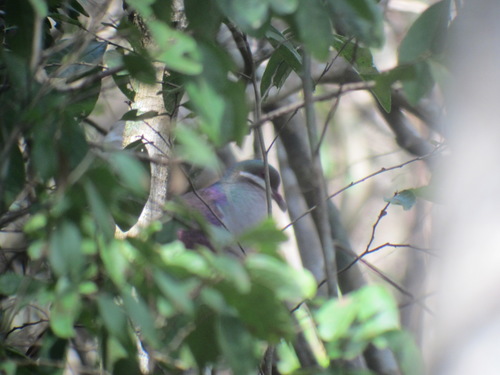
テリハウズラバト (Geotrygon chrysia) テリハウズラバト
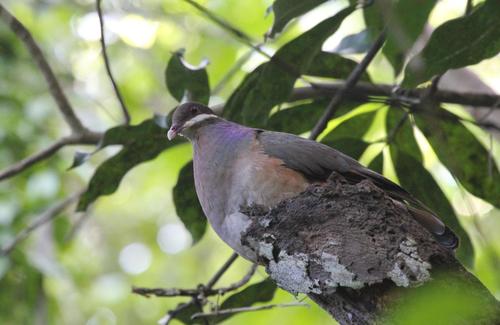
オオテリハウズラバト (Geotrygon mystacea) オオテリハウズラバト

メディア

読み込み中…

要点

キーウェストテリハウズラバトとオオテリハウズラバトを区別する最も信頼できるフィールドマークは全体の色合いです:キーウェストは豊かな暗い錆色の背中と翼を持ち、紫がかった赤の虹色が見られますが、オオテリハウズラバトは主に茶色で、虹色はあまり強くなく、シナモン色の折りたたまれた翼があります。両種は太い白い顔のストライプを持っていますが、オオテリハウズラバトには小さな白い喉の斑点とより対照的なクリーム色の腹部があります。フィールドでは、オオテリハウズラバトは明らかにずっしりとしています。未熟な羽毛と成鳥の羽毛は両者で似ていますので、全体の色、虹色、サイズに注目してください。両種は短時間または悪い光の中で見ると混同されることがありますが、これらの違いに注意を払うことで混乱を避けることができます。

識別のコツ

  1. Overall Coloration: キーウェストテリハウズラバトは背中と翼が暗い錆色ですが、オオテリハウズラバトは主に茶色です。これはすべての年齢で最も即時のフィールドマークです。
  2. Iridescence: キーウェストは肩、背中、尾、内側の翼の覆い羽に紫がかった赤の虹色を示し、頭部と首にはアメジストまたは青銅色の光沢があります。オオテリハウズラバトのオスは頭、首、上背に緑から紫の虹色を持っていますが、メスは鈍い色合いです。強い紫がかった赤のトーンが見られた場合はキーウェストを優先し、緑がかったまたは青がかった虹色、特に頭部に見られる場合はオオテリハウズラバトを示唆します(特にオス)。
  3. Facial Pattern: 両者は太い白い顔のストライプを持っていますが、オオテリハウズラバトだけが喉に小さな白い斑点を持っています。この喉の斑点を良い光の中で探してください。
  4. Belly Color: オオテリハウズラバトは対照的なクリーム色の腹部を持ち、キーウェストは下側がより均一です。腹部が淡い色として目立つ場合はオオテリハウズラバトを疑ってください。
  5. Folded Wing Markings: オオテリハウズラバトは折りたたまれた翼にシナモン色の斑点が見られ、これはよく見られた場合には微妙ですが役立つマークです。キーウェストにはこの特徴がありません。
  6. Tail Color: オオテリハウズラバトは暗い茶色がかった灰色の尾を持ち、これは羽毛の残りと対照的である可能性があります。キーウェストの尾は特に記述されていませんが、対照的でない可能性が高いです。
  7. Size and Structure: オオテリハウズラバトは重くてずっしりとしており(211 g対169 g)、特に頑丈に見える場合はオオテリハウズラバトである可能性が高いです。
  8. Sex Differences: オオテリハウズラバトのオスはメスよりも虹色が強いですが、両方の性別はキーウェストよりも茶色です。性別を判断するために虹色だけに頼らないでくださいが、非常に鈍いオオテリハウズラバトはメスである可能性があります。
  9. Age: 両種に特有の幼鳥または未熟なマークは記述されていません。すべての年齢は全体の色と虹色で最もよく区別されます。
  10. Voice: キーウェストは単音のうめき声を出します。これを聞いた場合はキーウェストを支持しますが、オオテリハウズラバトの鳴き声は記述されていないため、この鳴き声がないことはオオテリハウズラバトを確認するものではありません。
  11. In-flight Views: 両種に特有の上翼または飛行マークは記載されていないため、飛行中でも全体の色とサイズに頼ってください。
  12. Lighting Pitfalls: 悪い光の中では、両者は似て見えることがあります。虹色と腹部の色を評価するために複数の角度を試してください。
  13. Facial Stripe: 両種は太い白い顔のストライプを持っているため、識別のためにこのマークだけを使用しないでください。
  14. Geographic Range: 両者はカリブ海の種であり、ノートには範囲の違いが指定されていないため、分離のために位置だけを使用しないでください。
  15. Habitat and Behavior: 両種は似たような生息地と地面に住む行動を共有しており、これらは分離のために信頼できるものではありません。

大きさ

オオテリハウズラバトはかなり重く、平均約211 gで、キーウェストの169 gと比較されます。このサイズの違いはフィールドで明らかであり、オオテリハウズラバトはずっしりとして頑丈に見えます。両者は長さ(キーウェスト:27–31 cm)で似ていますが、オオテリハウズラバトの大きな質量はよりがっしりとした印象を与えます。一緒に見られた場合、オオテリハウズラバトは明らかに大きくて重い印象を与えます。

羽色

行動

これら二種の間に特有の行動の違いは記述されていません。両者は地面に住むテリハウズラバトで、似たような習性を持っているため、行動だけではフィールドでの診断は難しいでしょう。

生息環境

ノートには特定の生息地の違いは提供されていません。両種はカリブ海に生息し、似たような森林や茂みの生息地で重なる可能性があります。利用可能な情報に基づいて、生息地は信頼できる分離要因ではありません。

声

キーウェストテリハウズラバトはシロビタイシャコバトに似た単音のうめき声を持っています。オオテリハウズラバトの鳴き声に関する詳細は提供されていないため、現在の情報に基づいて声は信頼できる分離要因ではありません。

より良い説明を送る

比較と同じ項目を使ってください。文章はすぐに公開されます。

The most reliable field mark to separate Key West Quail-Dove from Bridled Quail-Dove is overall coloration: Key West shows a rich dark rust-colored back and wings with purplish-red iridescence, while Bridled is mostly brown with less intense iridescence and a cinnamon-tinged folded wing. Both species have a bold white facial stripe, but the Bridled Quail-Dove also has a small white throat patch and a more contrasting cream belly. In the field, Bridled is noticeably bulkier. Immature and adult plumages are similar in both, so focus on overall color, iridescence, and size. Both species can be confused when seen briefly or in poor light, but careful attention to these differences will help avoid mix-ups.

  1. Overall Coloration: Key West Quail-Dove is dark rust-colored on the back and wings, while Bridled Quail-Dove is mostly brown. This is the most immediate field mark at all ages.
  2. Iridescence: Key West shows purplish-red iridescence on the mantle, back, rump, and inner wing coverts, and amethyst or bronze-green gloss on the crown and nape. Bridled males have green to violet iridescence on the head, nape, and upper back, but females are duller. If you see strong purplish-red tones, favor Key West; greenish or bluish iridescence, especially on the head, suggests Bridled (especially males).
  3. Facial Pattern: Both have a bold white facial stripe, but only Bridled has a small white patch on the throat. Look for this throat patch in good light.
  4. Belly Color: Bridled has a contrasting cream belly, while Key West is more uniform below. If the belly stands out as pale, suspect Bridled.
  5. Folded Wing Markings: Bridled shows some cinnamon on the folded wing, which can be a subtle but helpful mark if seen well. Key West lacks this feature.
  6. Tail Color: Bridled has a dark brownish gray tail, which may contrast with the rest of the plumage. Key West's tail is not specifically described but is likely less contrasting.
  7. Size and Structure: Bridled is heavier and bulkier (211 g vs 169 g). If the bird looks especially robust, it is likely Bridled.
  8. Sex Differences: Bridled males are more iridescent than females, but both sexes are browner than Key West. Do not rely on iridescence alone for sexing, but note that a very dull Bridled may be a female.
  9. Age: No distinctive juvenile or immature marks are described for either species; all ages are best separated by overall color and iridescence.
  10. Voice: Key West gives a single-pitched moan; if you hear this, it supports Key West, but Bridled's call is not described, so absence of this call does not confirm Bridled.
  11. In-flight Views: No unique upperwing or flight marks are noted for either species, so rely on overall color and size even in flight.
  12. Lighting Pitfalls: In poor light, both can appear similar. Try to get multiple angles to assess iridescence and belly color.
  13. Facial Stripe: Both species have a bold white facial stripe, so do not use this mark alone for identification.
  14. Geographic Range: Both are Caribbean species, and the notes do not specify range differences, so do not use location alone for separation.
  15. Habitat and Behavior: Both species share similar habitats and ground-dwelling behavior; these are not reliable for separation.

Bridled Quail-Dove is significantly heavier, averaging about 211 g compared to Key West's 169 g. This size difference is often apparent in the field, with Bridled appearing bulkier and more robust. Both are similar in length (Key West: 27–31 cm), but Bridled's greater mass gives it a stockier impression. If seen together, Bridled will look noticeably larger and heavier-set.

  • Juvenile/Immature/First-year: No age-specific upperwing or flight marks are described for either species, so focus on overall color and iridescence at all ages.
  • Adults: Key West Quail-Dove has a dark rust-colored back and wings with purplish-red iridescence, and amethyst or bronze-green gloss on the crown and nape. Its white facial stripe is bold, but the rest of the face is relatively plain. Bridled Quail-Dove is mostly brown, with a bold white facial stripe below the eye and a small white throat patch. The male Bridled shows green to violet iridescence on the head, nape, and upper back (less in females), and the folded wing has cinnamon markings. The belly of Bridled is cream, contrasting with the darker upperparts, while Key West is more uniformly colored. The tail of Bridled is dark brownish gray, not described for Key West but likely less contrasting.

No distinctive behavioral differences are described between these two species. Both are ground-dwelling quail-doves with similar habits, so behavior alone is unlikely to be diagnostic in the field.

No specific habitat differences are provided in the notes. Both species occur in the Caribbean and may overlap in similar forested or brushy habitats. Habitat is not a reliable separator based on the available information.

Key West Quail-Dove has a single-pitched moaning call similar to White-tipped Dove. No vocalization details are provided for Bridled Quail-Dove, so voice is not a reliable separator based on current information.

変更を破棄しますか?

保存していない編集があります。今離れると失われます。

テリハウズラバト · オオテリハウズラバト · 苦手な鳥