

Motmot

ズキンガラス 対 ムナジロガラス

Corvus cornix 対 Corvus albus

ズキンガラスとムナジロガラスのクイズ
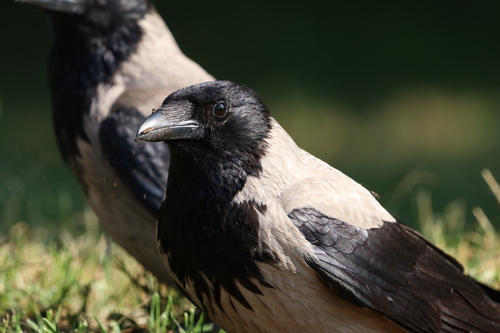
ズキンガラス (Corvus cornix) ズキンガラス
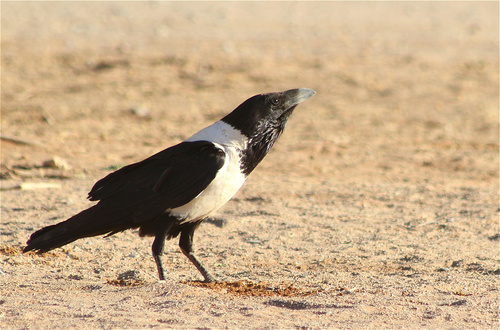
ムナジロガラス (Corvus albus) ムナジロガラス

メディア

読み込み中…

要点

ズキンガラスとムナジロガラスを区別する最も信頼できる方法は、淡い体羽の色と範囲によるものです。ズキンガラスは冷たい灰色の体を持ち、黒い頭、翼、尾、太ももと鮮やかに対比しています。一方、ムナジロガラスは肩から下の胸部にかけて目立つ白い斑点があり、残りの部分は光沢のある黒です。両種の幼鳥や未成熟の鳥は多少の変異を示すことがありますが、淡い部分と暗い部分のパターンは常に診断的です。くちばしの大きさと形も異なります。ムナジロガラスは相対的に大きく重いくちばしを持ち、脚と尾も長いです。飛行スタイルと構造も役立ちますが、羽毛のパターンは通常、遠くからでも自信を持って識別するのに十分です。

識別のコツ

  1. 体の色が重要な特徴です: ズキンガラスは冷たい灰色の体を持ち、黒い頭、翼、尾、太ももがあります。ムナジロガラスは肩から下の胸部にかけて大胆な白い斑点があり、残りは光沢のある黒です。これは非常に若い幼鳥を除いて、すべての年齢で信頼できます。
  2. 白と灰色: ムナジロガラスの白は常に純粋で広範囲であり、灰色がかったり縞模様があったりすることはありません。ズキンガラスの淡い部分は常に灰色で、白ではありません。
  3. 頭と首のパターン: ズキンガラスの黒は頭、喉、翼、尾、太ももに限られ、灰色の体との間に鋭い境界があります。ムナジロガラスの黒い頭は、首と胸を囲む白い「ビブ」によって中断されています。
  4. くちばしの大きさと形: ムナジロガラスはズキンガラスよりも明らかに大きく重いくちばしを持ち、特に横に並んで見たり近くで見ると、よりカラスのようなプロファイルを持っています。
  5. 脚と尾: ムナジロガラスの脚と尾は体のサイズに対して長く、止まっているときや飛んでいるときに、より細長い印象を与えます。
  6. 幼鳥の混乱: ズキンガラスの幼鳥は全体的に鈍く黒っぽいですが、体に白を示すことはありません。ムナジロガラスの未成熟な個体は白に黒が混ざることがありますが、白い斑点は常に存在します。
  7. 飛行中の視点: 飛行中、ズキンガラスは黒い翼と尾に対して灰色の体を示し、ムナジロガラスは黒い翼と尾に対して白い胸部と腹部を見せます。どちらの種にも特有の上翼パネルや年齢特有の飛行マークは確認されていません。
  8. 止まっている鳥: 鳥が止まって完全に見えるときに淡い部分の範囲と色を判断するのが最も簡単です。ズキンガラスの均一な灰色に対して、ムナジロガラスのきれいな白い「ビブ」を探してください。
  9. 生息地と範囲: ヨーロッパや中東で見られた場合、灰色の体を持つカラスはほぼ確実にズキンガラスです。サハラ以南のアフリカでは、白い胸を持つカラスはムナジロガラスです。
  10. 性別と季節: 両種は性別や季節による外見は似ています。サイズ(オスはわずかに大きい)だけが異なりますが、これは現場では役に立ちません。
  11. 虹彩、くちばし、脚: 両種は黒いくちばしと脚、暗い茶色の目を持っています。これらの特徴は区別には役立ちません。
  12. 声: 利用可能な情報源には声の診断的な違いは記載されていません。どちらも音の面では典型的なカラスです。
  13. 行動: 両種は知能が高く、機会主義的で、食べ物を隠すことがあります。行動だけでは診断的ではありませんが、ムナジロガラスは構造や動きにおいてよりカラスのように見えることがあります。
  14. 落とし穴: ズキンガラスの鈍く黒っぽい幼鳥をムナジロガラスと混同しないでください。体の白と灰色の有無を確認し、全体的な暗さだけで判断しないでください。
  15. ハイブリッドの混乱: ムナジロガラスはソマリガラスとハイブリッド化することができますが、ズキンガラスとはできません。ハイブリッドはこれら2種の範囲内では問題になりません。

大きさ

両種は全体の長さが似ています(ズキンガラス: 48–52 cm; ムナジロガラス: 46–52 cm)が、ムナジロガラスはわずかに重い傾向があります(平均520 g対510 g)で、相対的に大きなくちばし、長い尾、長い脚を持っています。翼の長さもムナジロガラスの方がわずかに大きいです(328–388 mm)。これらの違いは現場では微妙ですが、ムナジロガラスはしばしばより細長く、カラスのように見えます、特に止まっているときに。

羽色

行動

両種は機会主義的な雑食性で、しばしばペアや小グループで採餌しているのが見られます。ムナジロガラスは豊富な食料源でより多く集まることがあり、一部の地域では猛禽類を襲うことで知られています。ズキンガラスも非常に知能が高く、食べ物を隠したり道具を使ったりすることで知られています。両種は遅く、重く、通常は真っ直ぐに飛びますが、ムナジロガラスは長い尾と脚のために構造や動きにおいてよりカラスのように見えることがあります。

生息環境

ズキンガラスは北部、東部、南東部ヨーロッパや中東の一部で見られ、しばしば開けた田舎、沿岸地域、都市環境に生息しています。ムナジロガラスはサハラ以南のアフリカに広く分布し、開けた生息地、町、村を好みます。範囲の重複はほとんどないため、文脈が強力な手がかりになることがあります。アフリカで体に白を持つカラスはほぼ確実にムナジロガラスであり、ヨーロッパで灰色の体を持つカラスはズキンガラスです。

より良い説明を送る

比較と同じ項目を使ってください。文章はすぐに公開されます。

The most reliable way to separate Hooded Crow from Pied Crow is by the color and extent of pale body plumage: Hooded Crow shows a cold ashy-grey body with sharply contrasting black head, wings, tail, and thighs, while Pied Crow has a striking white patch from the shoulders down to the lower breast, with the rest of the bird glossy black. Juvenile and immature birds of both species may show some variation, but the pattern of pale vs dark is always diagnostic. Bill size and shape also differ: Pied Crow has a proportionately larger and heavier bill, as well as longer legs and tail. Flight style and structure can help, but plumage pattern is usually enough for confident ID, even at a distance.

  1. Body color is the key mark: Hooded Crow has a cold ashy-grey body with black head, wings, tail, and thighs; Pied Crow has a bold white patch from the shoulders to lower breast, with the rest glossy black. This is reliable in all ages except very young juveniles, which are rarely seen away from the nest.
  2. White vs grey: Pied Crow's white is always pure and extensive, never greyish or streaked; Hooded Crow's pale areas are always grey, never white.
  3. Head and neck pattern: Hooded Crow's black is confined to the head, throat, wings, tail, and thighs, with a sharp cutoff to the grey body. Pied Crow's black head is interrupted by the white 'bib' wrapping around the neck and chest.
  4. Bill size and shape: Pied Crow has a noticeably larger, heavier bill than Hooded Crow, giving it a more raven-like profile, especially when seen side-by-side or at close range.
  5. Legs and tail: Pied Crow's legs and tail are longer relative to body size, contributing to a rangier, more elongated look when perched or in flight.
  6. Juvenile confusion: Hooded Crow juveniles are duller and blacker overall but never show white on the body; Pied Crow immatures may have some black mixed into the white, but the white patch is always present.
  7. Flight views: In flight, Hooded Crow shows a grey body with black wings and tail; Pied Crow flashes a white breast and underparts against black wings and tail. No distinctive upperwing panels or age-specific flight marks are noted for either species.
  8. Perched birds: The extent and color of the pale area is easiest to judge when the bird is perched and fully visible; look for the clean white 'bib' of Pied Crow vs the uniform grey of Hooded Crow.
  9. Habitat and range: If seen in Europe or the Middle East, a grey-bodied crow is almost certainly Hooded Crow; in sub-Saharan Africa, a crow with a white breast is Pied Crow.
  10. Sex and season: Both species are similar in appearance between sexes and across seasons; only size (males slightly larger) varies, but this is not useful in the field.
  11. Iris, bill, and legs: Both species have black bills and legs and dark brown eyes; these features are not helpful for separation.
  12. Voice: No diagnostic differences in voice are noted in the available sources; both are typical crows in sound.
  13. Behavior: Both are intelligent, opportunistic, and may cache food; behavior alone is not diagnostic, but Pied Crow may appear more raven-like in structure and movement.
  14. Pitfalls: Do not confuse the duller, blacker juveniles of Hooded Crow for Pied Crow; check for the presence or absence of white vs grey on the body, not just overall darkness.
  15. Hybrid confusion: Pied Crow can hybridize with Somali Crow, but not with Hooded Crow; hybrids are not a concern in the ranges of these two species.

Both species are similar in overall length (Hooded Crow: 48–52 cm; Pied Crow: 46–52 cm), but Pied Crow tends to be slightly heavier (average 520 g vs 510 g) and has a proportionately larger bill, longer tail, and longer legs. Wing length is also a bit greater in Pied Crow (328–388 mm). These differences are subtle in the field, but Pied Crow often appears rangier and more raven-like, especially when perched.

  • Juveniles/Immatures: Hooded Crow juveniles are much blacker than adults, with duller overall plumage and bluish or greyish eyes; their body is still never white, but the contrast with black is less stark. Pied Crow immatures may have white plumage mixed with black, but always show some white from shoulder to lower breast, never the uniform ashy-grey of Hooded Crow.
  • Adults: Hooded Crow is ashy-grey on the body, with sharply defined glossy black on the head, throat, wings, tail, and thighs. Pied Crow is glossy black overall except for a large, pure white patch from the shoulders down the lower breast, forming a white 'bib' that wraps around the neck and chest. The white of Pied Crow is always clean and extensive, never greyish or streaked. Both species have black bills, legs, and dark brown eyes.
  • Flight views: In flight, the Hooded Crow's grey body and contrasting black wings/tail are obvious, while Pied Crow's white breast and underparts flash against the otherwise black plumage. No distinctive age-specific upperwing marks are noted for either species.

Both species are opportunistic omnivores and scavengers, often seen foraging in pairs or small groups. Pied Crow may gather in larger numbers at abundant food sources and is noted for mobbing raptors in some areas. Hooded Crow is also highly intelligent, known for caching food and using tools. Both species have slow, heavy, and usually straight flight, but Pied Crow may appear more raven-like in structure and movement due to its longer tail and legs.

Hooded Crow is found across Northern, Eastern, and Southeastern Europe, and parts of the Middle East, often in open countryside, coastal areas, and urban settings. Pied Crow is widespread in sub-Saharan Africa, favoring open habitats, towns, and villages. There is little range overlap, so context can be a strong clue: a crow with white on the body in Africa is almost certainly Pied Crow, while a grey-bodied crow in Europe is Hooded Crow.

変更を破棄しますか?

保存していない編集があります。今離れると失われます。

ズキンガラス · ムナジロガラス · 苦手な鳥