

Motmot

ハイイロチュウヒ 対 ヒメハイイロチュウヒ

Circus cyaneus 対 Circus pygargus

ハイイロチュウヒとヒメハイイロチュウヒのクイズ
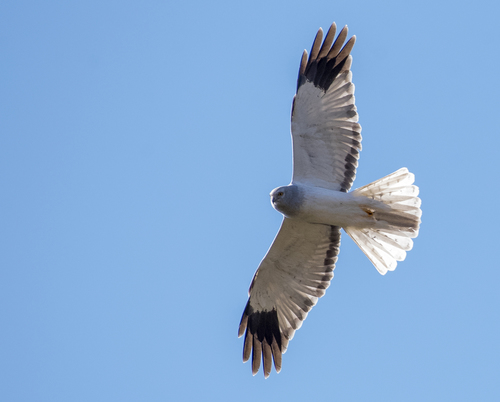
ハイイロチュウヒ (Circus cyaneus) ハイイロチュウヒ
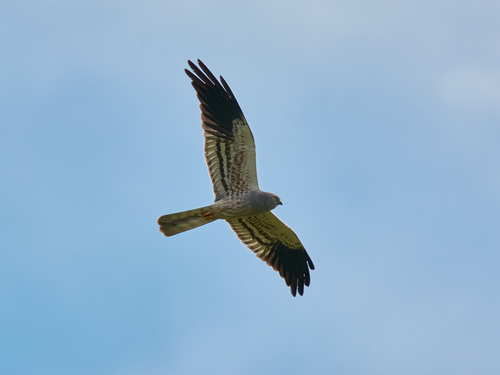
ヒメハイイロチュウヒ (Circus pygargus) ヒメハイイロチュウヒ

メディア

読み込み中…

要点

ハイイロチュウヒとヒメハイイロチュウヒをフィールドで区別する最も信頼できるフィールドマークは、全体的な構造と飛行スタイルです:ヒメハイイロチュウヒは明らかにスリムで、より長く、狭く、尖った翼を持ち、より浮遊感のある弾力のある飛行をします。成鳥のオスは明確です—ハイイロチュウヒのオスはより淡い灰色で、下側はクリーンですが、ヒメハイイロチュウヒのオスはより暗く、まだら模様です。メスと幼鳥(通常の混乱)はより難しいです:ヒメハイイロチュウヒのよりスリムで、トンビのような外観と飛行に注目し、ハイイロチュウヒのより重く、広い翼とより頑丈な印象に注目してください。両者とも白い尻がありますが、ヒメハイイロチュウヒは飛行中により長い尾とより尖った「手」を示します。微妙な羽毛の違いはありますが、構造と飛行は距離がある場合や光が悪い場合により信頼できます。

識別のコツ

  1. 飛行中の構造(すべての年齢/性別): ヒメハイイロチュウヒはスリムで、より長く、狭く、尖った翼を持ち、より長い尾があります;ハイイロチュウヒは広い翼を持ち、重い体で、より頑丈です。これは距離がある場合や光が悪い場合に最も信頼できるフィールドマークです。
  2. 飛行スタイル(すべての年齢/性別): ヒメハイイロチュウヒは浮遊感のある弾力のある、ほぼトンビのような飛行をし、滑らかで力強い翼の羽ばたきがあります;ハイイロチュウヒはより安定しており、重く、地面により近くを飛びます。
  3. 成鳥のオスの羽毛: ハイイロチュウヒのオスは上面が淡い灰色で、白が下面(灰色の上胸を除く)で、黒い翼先があります;ヒメハイイロチュウヒのオスはより暗い灰色で、よりまだら模様で、黒い副羽帯と腹部/側面に錆色の筋があります。
  4. メス/幼鳥の下側: ハイイロチュウヒのメス/幼鳥は茶色の横縞のあるバフ色の下側を持っています;ヒメハイイロチュウヒのメスは縦のストライプのある淡い黄褐色の下側を持ち、幼鳥は斑点なしでより均一な赤褐色です。
  5. 翼の覆羽(メス/幼鳥): ヒメハイイロチュウヒのメスは斑点のある翼の覆羽を持っています;ハイイロチュウヒのメス/幼鳥にはこの斑点がありません。
  6. 上翼の模様(幼鳥): ハイイロチュウヒの幼鳥は暗い茶色の副羽を持ち、腹部はあまり縞模様がありません;ヒメハイイロチュウヒの幼鳥はより均一な赤褐色で、同じ副羽のコントラストを示しません。
  7. 白い尻(すべての年齢): 両種とも白い尻を示しますが、ハイイロチュウヒのメス/幼鳥の方がしばしば目立ちます;単独では安全な区別にはなりません。
  8. メラニスティックな鳥: ヒメハイイロチュウヒだけが定期的なメラニスティック形態(非常に暗い鳥)を示します;ハイイロチュウヒは示しません。
  9. くちばしと頭: これらの情報源では診断的とは記載されていません。
  10. 鳴き声: ハイイロチュウヒは特にメスが非常に鳴くことで知られています;ヒメハイイロチュウヒはこれらの情報源では鳴くとは記載されていません。
  11. 生息地と季節: 冬の西ヨーロッパでは、ハイイロチュウヒの方が可能性が高いです;ヒメハイイロチュウヒは夏の訪問者で、冬には不在です。渡りや繁殖期には、両者が一緒に見られることがあります。
  12. サイズ: ハイイロチュウヒはより重く、より大きいです;ヒメハイイロチュウヒはより小さく、軽いですが、重なりや距離の影響に注意してください。
  13. 止まっている鳥: 構造は依然として役立ちます—ハイイロチュウヒはより頑丈で大きな頭に見え、ヒメハイイロチュウヒはよりスリムで長い尾に見えます。
  14. 混乱のリスク: メスと幼鳥が主な落とし穴です;鳥がよく見え、近距離で見られない限り、羽毛の詳細よりも構造と飛行スタイルを優先してください。
  15. 疑わしい場合: 鳥が特にスリムで長い尾を持ち、浮遊感のある弾力のある羽ばたきで飛ぶ場合はヒメハイイロチュウヒに傾き、より広く、重く、より計画的に見える場合はハイイロチュウヒに傾いてください。

大きさ

ハイイロチュウヒはヒメハイイロチュウヒよりも明らかに重く、頑丈です。成鳥のハイイロチュウヒは平均436.5g(オス約350g、メス約530g)で、ヒメハイイロチュウヒは平均315.5g(オス約265g、メス約345g)です [wikidata]。ハイイロチュウヒは翼幅もわずかに長く(97–122 cm対97–115 cm)、全体的に長い(41–52 cm対43–47 cm、ただし重なりに注意)。フィールドでは、ハイイロチュウヒはより広い翼とより頑丈に見え、ヒメハイイロチュウヒはよりスリムでより繊細です。

羽色

両種の幼鳥とメスは上面が茶色で白い尻とバフ色の下側を持ち、色だけで区別するのが難しいです。しかし、ハイイロチュウヒのメスと幼鳥は茶色の横縞のあるバフ色の下側を示し、幼鳥の副羽は暗い茶色で、縞模様があまり目立ちません。ヒメハイイロチュウヒのメスは縦のストライプのある淡い黄褐色の下側を持ち、斑点のある翼の覆羽を持っています;幼鳥はより均一な赤褐色で、メスの斑点がありません。成鳥のオスはより簡単です:ハイイロチュウヒのオスは上面が淡い灰色で、下面が白で黒い翼先を持ち、ヒメハイイロチュウヒのオスはより暗い灰色で、よりまだら模様で、黒い副羽帯と腹部と側面に錆色の筋があります。白い尻は両者に存在しますが、ハイイロチュウヒのメスと幼鳥の方がより明らかです。メラニスティックなヒメハイイロチュウヒ(稀)は非常に暗く、混乱を招く可能性がありますが、ハイイロチュウヒの形態とは一致しません。

行動

両種は翼を浅いVの形で持ち、開けた地面を低く狩りますが、ヒメハイイロチュウヒはより優雅で弾力のある浮遊感のある飛行をし、よりトンビのような羽ばたきをします。ハイイロチュウヒはより重く、より計画的に見え、地面により近くを飛びます。両者はフィールドを円を描いて飛びますが、ヒメハイイロチュウヒの飛行はより滑らかで軽やかです。ハイイロチュウヒは狩り中に特に鳴くことで知られています。

生息環境

両種は湿地、草原、荒地、農地などの開けた生息地で繁殖し、狩りをします。ハイイロチュウヒはより温暖な西ヨーロッパ(例:イギリス、フランス)に定住する可能性が高いですが、ヒメハイイロチュウヒは厳格な長距離の渡り鳥で、アフリカとアジアで冬を越します。冬には、ハイイロチュウヒはヒメハイイロチュウヒよりも北に見られることがあります。生息地だけでは診断的ではありませんが、文脈(例:季節、場所)が役立つことがあります。

声

ハイイロチュウヒは特にメスが非常に鳴くことで知られています。メスは食べ物を受け取るときに笛のような「ピーヘ」と、急速な「チットイットイットイットイット」を鳴らします。オスは「チェックチェックチェック」と、ディスプレイ中に弾む「チュクウクウクウ」を鳴らします。情報源ではヒメハイイロチュウヒの特徴的な鳴き声は記載されていないため、声は信頼できる区別にはなりません。

より良い説明を送る

比較と同じ項目を使ってください。文章はすぐに公開されます。

The most reliable field mark to separate Hen Harrier from Montagu's Harrier in the field is overall structure and flight style: Montagu's is noticeably slimmer, with longer, narrower, and more pointed wings, and a more buoyant, elastic flight. Adult males are straightforward—Hen Harrier males are paler grey and cleaner below, while Montagu's males are darker and more mottled. Females and juveniles (the usual confusion) are trickier: focus on the more slender, tern-like look and flight of Montagu's, and the heavier, broader-winged, and more robust jizz of Hen. Both have a white rump, but Montagu's shows a longer tail and more pointed 'hands' in flight. Subtle plumage differences exist, but structure and flight are more reliable at distance or in poor light.

  1. Structure in flight (all ages/sexes): Montagu's Harrier is slimmer, with longer, narrower, and more pointed wings, and a longer tail; Hen Harrier is broader-winged, heavier-bodied, and more robust. This is the most reliable field mark at distance or in poor light.
  2. Flight style (all ages/sexes): Montagu's has a buoyant, elastic, almost tern-like flight with smooth, powerful wingbeats; Hen Harrier is steadier, heavier, and hugs the ground more closely.
  3. Adult male plumage: Hen Harrier males are pale grey above, white below (except grey upper breast), with black wingtips; Montagu's males are darker grey, more mottled, with black secondary bands and rusty streaks on the belly/flanks.
  4. Female/juvenile underparts: Hen Harrier females/juveniles have buff underparts with brown barring; Montagu's females have pale yellow-brown underparts with longitudinal stripes, and juveniles are more uniform red-brown below without spotting.
  5. Wing coverts (female/juvenile): Montagu's females have spotted wing coverts; Hen Harrier females/juveniles lack this spotting.
  6. Upperwing pattern (juveniles): Hen Harrier juveniles have dark brown secondaries and less-barred bellies; Montagu's juveniles are more uniform red-brown below and do not show the same secondary contrast.
  7. White rump (all ages): Both species show a white rump, but it is often more prominent on Hen Harrier females/juveniles; not a safe separator alone.
  8. Melanistic birds: Only Montagu's Harrier shows regular melanistic morphs (very dark birds); Hen Harrier does not.
  9. Bill and head: Not described as diagnostic in these sources.
  10. Vocalizations: Hen Harrier is notably vocal, especially females; Montagu's is not described as vocal in these sources.
  11. Habitat and season: In western Europe in winter, Hen Harrier is more likely; Montagu's is a summer visitor and absent in winter. In migration or breeding season, both may occur together.
  12. Size: Hen Harrier is heavier and bulkier; Montagu's is smaller and lighter, but beware overlap and distance effects.
  13. Perched birds: Structure is still helpful—Hen Harrier looks more robust and larger-headed, Montagu's more slender and long-tailed.
  14. Confusion risk: Females and juveniles are the main pitfall; always prioritize structure and flight style over plumage details unless the bird is seen well and at close range.
  15. When in doubt: If the bird looks especially slim, long-tailed, and flies with buoyant, elastic wingbeats, lean Montagu's; if broader, heavier, and more methodical, lean Hen.

Hen Harrier is distinctly heavier and bulkier than Montagu's Harrier. Adult Hen Harriers average 436.5g (males ~350g, females ~530g), while Montagu's average 315.5g (males ~265g, females ~345g) [wikidata]. Hen Harrier also has a slightly longer wingspan (97–122 cm vs. 97–115 cm) and is longer overall (41–52 cm vs. 43–47 cm, but note overlap). In the field, Hen Harrier appears broader-winged and more robust, while Montagu's is slimmer and more delicate.

Juveniles and females of both species are brown above with a white rump and buffy underparts, making them hard to separate by color alone. However, Hen Harrier females and juveniles show buff underparts with brown barring, and their secondaries are dark brown with less distinct barring in juveniles. Montagu's Harrier females have pale yellow-brown underparts with longitudinal stripes and spotted wing coverts; juveniles are more uniform red-brown below and lack the spotting of females. Adult males are easier: Hen Harrier males are pale grey above and white below with black wingtips, while Montagu's males are darker grey, more mottled, and have black secondary bands and rusty streaks on the belly and flanks. The white rump is present in both, but more obvious in Hen Harrier females and juveniles. Melanistic Montagu's Harriers (rare) are very dark and can be confusing, but are not matched by any Hen Harrier morph.

Both species hunt low over open ground with wings held in a shallow V, but Montagu's Harrier has a more graceful, elastic, and buoyant flight, with more tern-like wingbeats. Hen Harrier appears heavier and more methodical, hugging the ground more closely. Both circle and quarter fields, but Montagu's flight is smoother and lighter. Hen Harrier is notably vocal while hunting.

Both species breed and hunt in open habitats such as marshes, grasslands, moorland, and farmland across Eurasia. Hen Harrier is more likely to be resident in milder western Europe (e.g., Britain, France), while Montagu's is a strict long-distance migrant, wintering in Africa and Asia. In winter, Hen Harrier may be found further north than Montagu's. Habitat alone is not diagnostic, but context (e.g., time of year, location) can help.

Hen Harrier is described as quite vocal, especially the female, who gives a whistled 'piih-eh' when receiving food and a rapid 'chit-it-it-it-it-et-it' alarm. The male gives a 'chek-chek-chek' and a bouncing 'chuk-uk-uk-uk' in display. No distinctive vocalizations are described for Montagu's Harrier in the sources, so voice is not a reliable separator.

変更を破棄しますか?

保存していない編集があります。今離れると失われます。

ハイイロチュウヒ · ヒメハイイロチュウヒ · 苦手な鳥