

Motmot

ハワイガン 対 アオバコバシガン

Branta sandvicensis 対 Cyanochen cyanoptera

ハワイガンとアオバコバシガンのクイズ
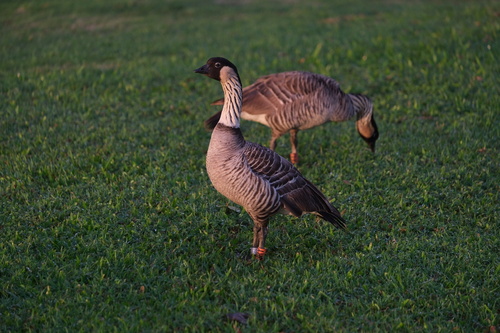
ハワイガン (Branta sandvicensis) ハワイガン
アオバコバシガン (Cyanochen cyanoptera) アオバコバシガン

メディア

読み込み中…

要点

ハワイガンとアオバコバシガンを区別する最も信頼できるフィールドマークは、ハワイガンの存在する太く、斜めにストライプの入った黒と白の首であり、対してアオバコバシガンは全体的に鈍い灰褐色の外観と淡い青の前羽(飛行中に見える)を持つことです。幼鳥のハワイガンはストライピングが減少し、鈍い色合いを示しますが、アオバコバシガンの未熟個体の青い翼パネルは依然として欠けています。止まっている姿では、首の模様と頭の色に注目してください。飛行中、アオバコバシガンは特徴的な淡い青の上前羽を見せますが、ハワイガンは翼に青色を持ちません。両種はずんぐりしていますが、アオバコバシガンはやや大きく、厚くてゆるい羽毛の質感を持っています。生息地は強い手がかりです:ハワイガンは厳密にハワイに生息し、アオバコバシガンはエチオピアに特有です。

識別のコツ

  1. Neck pattern (all ages): ハワイガンは首に太い黒と白の斜めストライプを示します(成鳥)または少なくともいくつかのストライピングと色のコントラストを持っています(幼鳥)。一方、アオバコバシガンは常に平坦で、やや淡い灰褐色の頭と首を持ち、ストライピングはありません。
  2. Head color (all ages): ハワイガンは黒い頭と後ろ首を持ち、バフ色の頬があります。アオバコバシガンは均一に鈍い、淡い頭と首を持ち、強いコントラストはありません。
  3. Wing panel in flight (all ages): アオバコバシガンは、飛行中または翼を伸ばしているときに、黒い一次羽と緑色の光沢のある二次羽に囲まれた淡い青の上前羽を示します。ハワイガンは翼に青色を示しません。
  4. Juvenile confusion: 幼鳥のハワイガンは成鳥よりも鈍く、明確にマークされていませんが、依然として翼に青色はなく、いくつかの首の模様を保持しています。幼鳥のアオバコバシガンは成鳥よりもさらに鈍く、青い翼パネルを保持しています。
  5. Bill and legs: 両種は黒いくちばしと脚を持っていますが、アオバコバシガンのくちばしは小さく、頑丈さに欠けます。非常に良く見ない限り、強いフィールドマークではありません。
  6. Plumage texture: アオバコバシガンは厚く、ゆるい羽毛を持ち、特に寒いまたは風の強い条件で明らかです。ハワイガンの羽毛はよりタイトで、ふわふわ感が少ないです。
  7. Feet: ハワイガンは溶岩の上を歩くために適応した、あまり広がっていない水かきがあります。これは近距離でのみ確認できます。
  8. Overall color impression: ハワイガンは特に頭と首の周りでより模様があり、コントラストが強いです。アオバコバシガンは全体的に鈍い灰褐色で、やや淡い頭と首を持っています。
  9. Flight jizz: アオバコバシガンは飛行中により大きく、遅く見えることがあり、青い前羽パネルが閃きます。ハワイガンはより敏捷で、翼に青色はありません。
  10. Habitat and range: ハワイで見られた場合、ほぼ確実にハワイガンです。エチオピアで見られた場合、アオバコバシガンです。他の場所で見られた場合は、飼育された鳥の可能性があります。
  11. Size: アオバコバシガンは大きく、ずんぐりしていますが、サイズの重なりがあるため、常に信頼できるわけではありません。
  12. Sex differences: 両種は羽毛において性差がほとんど見られず、サイズの違いは微妙で、強いフィールドマークではありません。
  13. Voice: アオバコバシガンは高音の口笛や吠える警報音を出すことがありますが、一般的には静かです。ハワイガンも静かで、特に目立つ鳴き声は知られていません。
  14. Perched vs. in flight: 停まっているときは首の模様と頭の色に頼り、飛行中は青い翼パネル(アオバコバシガン)と平坦な暗い翼(ハワイガン)を確認してください。
  15. Common pitfalls: 未熟なハワイガンは鈍く、マークが少ないように見えることがありますが、翼に青色は決して示しません。首のストライピングと青い翼パネルを主要な区別マークとして常に確認してください。

大きさ

アオバコバシガンは一般的に大きく、長さ約60〜75 cm、平均成鳥の質量は2180 gです [wikidata]。ハワイガンは約41 cmの高さで、オスは平均1695〜3050 g、メスは1525〜2560 gです [wikipedia]。フィールドでは、アオバコバシガンはしばしばよりずんぐりしていて頑丈に見えます、特に立っているとき。しかし、サイズの重なりがあるため、正確な同定には羽毛と構造にもっと頼るべきです。

羽色

幼鳥と未熟なハワイガンは成鳥よりも鈍い茶色で、頭/首の色のコントラストが少なく、首のストライピングが大幅に減少していますが、依然として翼に青色はありません。すべての年齢のアオバコバシガンは厚く、ゆるい灰褐色の羽毛を示し、淡い頭と首を持ち、飛行中には黒い一次羽と緑色の光沢のある二次羽に囲まれた目立つ淡い青の上前羽を持っています。下羽はほとんど黒で、白い内側の前羽があります。ハワイガンの成鳥は目を引く黒い頭と後ろ首、バフ色の頬、太く斜めの黒と白の首のストライプを持ち、翼には青色はありません。アオバコバシガンの成鳥と未熟個体はずっと地味で、小さな黒いくちばしと黒い脚を持ち、飛行中または翼を伸ばしているときにのみ青い翼パネルを示します。両種の未熟個体は成鳥よりも鈍いですが、青い翼パネルはアオバコバシガンに特有です。

行動

ハワイガンはほとんどの時間を地面で過ごしますが、巣作りと餌を探す場所の間を毎日飛ぶことができます。粗い火山地形を歩くために適応しており、足の水かきはあまり広がっていません。アオバコバシガンも地上性でずんぐりしており、厚くてゆるい羽毛を持ち、寒いエチオピアの高地に適応しています。両種は一般的に静かで、特に群れを成すことはありませんが、アオバコバシガンはハワイガンよりもずんぐりしていて、敏捷性が低いように見えることがあります。

生息環境

ハワイガンは厳密にハワイ諸島(マウイ、カウアイ、モロカイ、ハワイ)に特有であり、野生ではこの範囲の外には存在しません。火山の斜面、草原、低木地帯に生息しています。アオバコバシガンはエチオピアに特有で、高地の湖、湿地、湿地帯に生息しています。それぞれの特有地域の外で見られた場合、飼育された起源が疑われるべきです。生息地の文脈は区別のための強い手がかりです。

声

アオバコバシガンは静かな種で、めったに鳴かず、両性ともにフラッシュされたときに高音の口笛や吠える警報音を出すことがあります。真のガチョウのようにホーンやカッカッと鳴くことはありません。ハワイガンに関する特定の鳴き声の詳細はメモに記載されていませんが、フィールドで特に目立つまたは大きな鳴き声は知られていません。鳴き声はこれらの2種を区別するための強いフィールドマークではありません。

より良い説明を送る

比較と同じ項目を使ってください。文章はすぐに公開されます。

The most reliable field mark to separate Hawaiian Goose from Blue-winged Goose is the presence of a bold, diagonally-striped black-and-white neck on the Hawaiian Goose, versus the overall dull grey-brown appearance and pale blue forewing (visible in flight) of the Blue-winged Goose. Juvenile Hawaiian Geese show reduced striping and duller tones, but still lack the blue wing panel of Blue-winged Goose immatures. In perched views, focus on the neck pattern and head color; in flight, Blue-winged Goose reveals a distinctive pale blue upper forewing, while Hawaiian Goose lacks any blue in the wing. Both species are stocky, but the Blue-winged Goose is slightly larger and has a thick, loose plumage texture. Habitat is a strong clue: Hawaiian Goose is strictly Hawaiian, while Blue-winged Goose is endemic to Ethiopia.

  1. Neck pattern (all ages): Hawaiian Goose shows bold black-and-white diagonal striping on the neck (adults) or at least some striping and color contrast (juveniles), while Blue-winged Goose always has a plain, slightly paler grey-brown head and neck with no striping.
  2. Head color (all ages): Hawaiian Goose has a black head and hindneck with buff cheeks; Blue-winged Goose has a uniformly dull, pale head and neck, lacking strong contrast.
  3. Wing panel in flight (all ages): Blue-winged Goose reveals a pale blue upper forewing bordered by black primaries and green-glossed secondaries in flight or when stretching; Hawaiian Goose never shows blue in the wing.
  4. Juvenile confusion: Juvenile Hawaiian Geese are duller and less distinctly marked than adults, but still lack any blue in the wing and retain some neck patterning. Juvenile Blue-winged Goose is even duller than adults but retains the blue wing panel.
  5. Bill and legs: Both species have black bills and legs, but Blue-winged Goose's bill is smaller and less robust; not a strong field mark unless seen very well.
  6. Plumage texture: Blue-winged Goose has thick, loose plumage, especially obvious in cold or windy conditions; Hawaiian Goose's feathers are tighter and less fluffy.
  7. Feet: Hawaiian Goose has less extensive webbing, adapted for walking on lava; this is only visible at close range.
  8. Overall color impression: Hawaiian Goose is more patterned and contrasting, especially around the head and neck; Blue-winged Goose is overall dull grey-brown with a slightly paler head and neck.
  9. Flight jizz: Blue-winged Goose may appear bulkier and slower in flight, with the blue forewing panel flashing; Hawaiian Goose is more agile and lacks any blue in the wing.
  10. Habitat and range: If seen in Hawaii, it is almost certainly Hawaiian Goose; if in Ethiopia, Blue-winged Goose. Any other location suggests captive birds.
  11. Size: Blue-winged Goose is larger and bulkier, but size overlap means this is not always reliable.
  12. Sex differences: Both species show little sexual dimorphism in plumage; size difference is subtle and not a strong field mark.
  13. Voice: Blue-winged Goose may give a high-pitched whistle or barking alarm call, but is generally quiet; Hawaiian Goose is also quiet and not known for distinctive calls.
  14. Perched vs. in flight: Rely on neck pattern and head color when perched; in flight, check for blue wing panel (Blue-winged Goose) versus plain dark wings (Hawaiian Goose).
  15. Common pitfalls: Immature Hawaiian Geese may appear dull and less marked, but never show blue in the wing. Always check for neck striping and blue wing panel as primary separation marks.

Blue-winged Goose is generally larger, measuring about 60–75 cm in length and with an average adult mass of 2180 g [wikidata]. Hawaiian Goose stands about 41 cm tall, with males averaging 1695–3050 g and females 1525–2560 g [wikipedia]. In the field, Blue-winged Goose often appears bulkier and more robust, especially when standing. However, size overlap is possible, so rely more on plumage and structure for positive ID.

Juvenile and immature Hawaiian Geese are duller brown than adults, with less distinct head/neck color contrast and greatly reduced neck striping, but still lack any blue in the wing. Blue-winged Goose of all ages shows a thick, loose, grey-brown plumage with a paler head and neck, and in flight, a conspicuous pale blue upper forewing bordered by black primaries and green-glossed secondaries. The underwing is mostly black with a white inner forewing. Adults of Hawaiian Goose have a striking black head and hindneck, buff cheeks, and bold diagonal black-and-white neck stripes, with no blue in the wing. Blue-winged Goose adults and immatures are much plainer, with a small black bill and black legs, and only show the blue wing panel in flight or when stretching wings. Both species' immatures are duller than adults, but the blue wing panel is unique to Blue-winged Goose.

Hawaiian Goose spends most of its time on the ground but is capable of daily flights between nesting and feeding areas. It is adapted to walking on rough volcanic terrain, with less extensive webbing on the feet. Blue-winged Goose is also terrestrial and stocky, adapted for the cold Ethiopian highlands with thick, loose plumage. Both species are generally quiet and not particularly gregarious, but the Blue-winged Goose may appear bulkier and less agile than the Hawaiian Goose.

Hawaiian Goose is strictly endemic to the Hawaiian Islands (Maui, Kauaʻi, Molokaʻi, and Hawaiʻi) and is never found outside this range in the wild. It frequents volcanic slopes, grasslands, and shrublands. Blue-winged Goose is endemic to Ethiopia, inhabiting highland lakes, marshes, and wetlands. If seen outside their respective endemic regions, captive origin should be suspected. Habitat context is a strong clue for separation.

Blue-winged Goose is a quiet species, rarely vocalizing, but both sexes may give a high-pitched whistle and a barking alarm call when flushed. It does not honk or cackle like true geese. No specific vocalization details are given for Hawaiian Goose in the notes, but it is not known for a distinctive or loud call in the field. Voice is not a strong field mark for separating these two species.

変更を破棄しますか?

保存していない編集があります。今離れると失われます。

ハワイガン · アオバコバシガン · 苦手な鳥