

Motmot

ハイイロガン 対 カリガネ

Anser anser 対 Anser erythropus

ハイイロガンとカリガネのクイズ
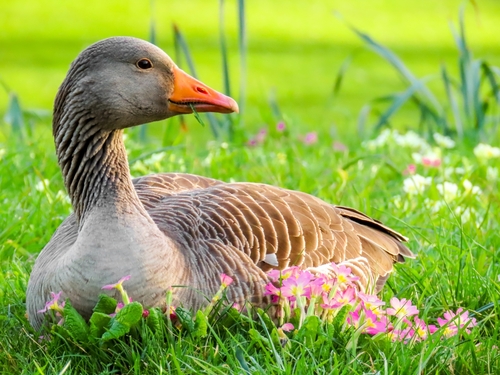
ハイイロガン (Anser anser) ハイイロガン
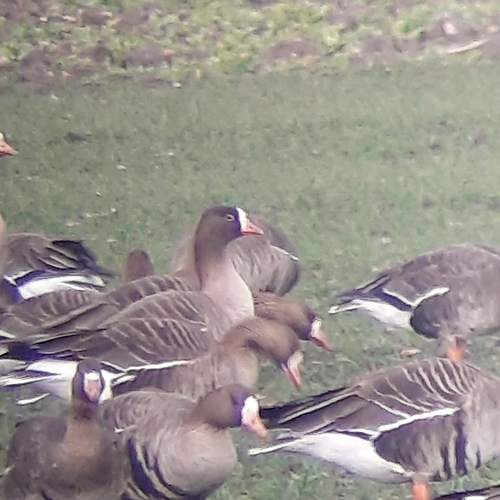
カリガネ (Anser erythropus) カリガネ

メディア

読み込み中…

要点

ハイイロガンとカリガネを区別する最も信頼できる方法は、サイズとくちばし/脚の色によるものです:ハイイロガンははるかに大きく、がっしりとした体型で、淡いオレンジ色のくちばしとピンク色の脚を持っています。一方、カリガネは明らかに小さく、短くて太いくちばし、明るいオレンジ色の脚、そして顔に白いブレーズがあり、頭頂まで達しています。飛んでいるときや休んでいるとき、ハイイロガンは淡い青灰色の上翼の覆い羽を示しますが、カリガネはマウスグレーの覆い羽を持っています。両種の幼鳥は完全な成鳥の腹部の縞模様を欠いていますが、カリガネは成鳥において白い顔のブレーズと黄色のアイリングを示します。これらの特徴は双眼鏡で遠くからでも見え、すべての年齢と季節で信頼できます。

識別のコツ

  1. サイズは最も即座の手がかり:ハイイロガンはカリガネのほぼ2倍の質量を持ち、はるかに長いです。直接比較すると、ハイイロガンは巨大で重そうに見え、カリガネはコンパクトでマガモよりわずかに大きいです。
  2. くちばしの形と色:ハイイロガンは長く、淡いオレンジ色のくちばしを持ち、緩やかなカーブがありますが、カリガネは短くて太い、ピンクがかったくちばしを持っています。これは特に近距離や良好な光学機器で明確です。
  3. 脚の色:ハイイロガンの脚はピンク色ですが、カリガネは明るいオレンジ色の脚を持っています。これは、鳥が陸上または泳いでいるときの信頼できるフィールドマークです。
  4. 顔のブレーズ:すべての年齢のカリガネは、成鳥では頭頂まで達する明るい白いブレーズを示します。ハイイロガンには白いブレーズがありません;その顔は単調な灰褐色です。
  5. アイリング:成鳥のカリガネは目立つ黄色のアイリングを持ち、ハイイロガンにはありません。これは良好な光の下で中程度の距離で見ることができます。
  6. 飛行中の上翼の覆い羽:ハイイロガンは淡い青灰色の上翼の覆い羽を示し、暗い飛行羽と淡い尾羽と対照的です。カリガネはマウスグレーの上翼の覆い羽を持ち、より暗く、対照が少ないように見えます。これは飛行中または翼を伸ばしているときに最もよく見えます。
  7. 腹部の縞模様:両種は成鳥として腹部に黒い縞模様を発達させますが、カリガネのものはより広く、より目立ちます。両方の幼鳥は強い縞模様を欠いているため、若い鳥ではこれだけに頼らないでください。
  8. 首の模様:ハイイロガンの成鳥は首に特徴的な「コンサーティーナ」模様の羽毛の折りたたみを持っていますが、カリガネにはありません。
  9. 一般的な羽毛:ハイイロガンは全体的に淡く、斑点のある灰褐色の外観と淡い胸部と腹部を持っています。カリガネはより暗く、よりコンパクトで、整った外観を持っています。
  10. 行動と群れ:ハイイロガンはしばしば大きくて騒がしい群れで開けた場所にいますが、カリガネはより稀で、より内気で、通常は小さなグループまたは混合群れの端にいます。
  11. 鳴き声:ハイイロガンの鳴き声は深く、大きく、ホンキングで、混合群れを支配します。カリガネはより静かで高音です。
  12. 生息地の文脈:ヨーロッパのほとんどで、ハイイロガンは一般的で広範囲に分布していますが、カリガネは稀で局所的です。都市公園や低地の農地にいる場合、ハイイロガンの方がはるかに可能性が高いです。
  13. 幼鳥の混乱:若いハイイロガンは黒い腹部の斑点がなく、灰色がかった脚を持っていますが、それでも大きなサイズと単調な顔を示します。若いカリガネは、たとえ薄くても白いブレーズを示し、はるかに小さいです。
  14. 混合群れ:ハイイロガンの中に白い顔を持つ小さくてコンパクトなガチョウを見たら、カリガネを確認してください。ただし、結論を出す前にサイズ、くちばし、脚の色を確認してください。
  15. 落とし穴:ハイイロガンの尾羽や側面の白い部分をカリガネの顔のブレーズと混同しないでください;後者だけが白い顔と黄色のアイリングを持っています。

大きさ

ハイイロガンはカリガネのほぼ2倍の重さ(平均質量3464.5g対1797g [wikidata])で、はるかに長い(74–91 cm対53–66 cm [wikipedia])です。ハイイロガンは大きく、がっしりとして重い体型に見えますが、カリガネはマガモよりわずかに大きいだけで、コンパクトで整った外観を持っています。混合群れでは、ハイイロガンは最も大きなAnserとして目立ち、カリガネは明らかに小さく、より繊細です。

羽色

幼鳥と未熟な鳥:両種は幼鳥として強い腹部の縞模様を欠いていますが、カリガネは常にくちばしの基部に白いブレーズを示し、成鳥には黄色のアイリングがあります。ハイイロガンの幼鳥は単調な灰褐色の頭を持ち、腹部に黒い斑点がなく、灰色がかった脚を持っています。飛行中、ハイイロガンは淡い青灰色の上翼の覆い羽を示し、暗い飛行羽と淡い尾羽と対照的です。一方、カリガネはマウスグレーの上翼の覆い羽と白い顔を持っています。成鳥:ハイイロガンは斑点のある灰褐色の羽毛、淡い灰色の前翼、上側の側面に白いラインを持ち、淡いオレンジ色のくちばしとピンク色の脚を持っています。カリガネの成鳥は、頭頂まで達する明るい白い顔のブレーズ、黄色のアイリング、明るいオレンジ色の脚、そして広い黒い腹部の縞模様を持っています。くちばしは短くて太く、ピンクがかっており、全体的な羽毛はより暗く、よりコンパクトです。両種は成鳥として腹部に黒い縞模様を持っていますが、カリガネのものはより広く、より目立ちます。

行動

ハイイロガンは一般的により信頼でき、しばしば大きくて騒がしい群れで、野原や湿地でオープンに草を食べています。カリガネはより内気で、より警戒心が強く、通常は小さなグループで見られ、他のガチョウと一緒にいることが多いですが、群れの端に留まります。ハイイロガンの動きは遅くて重く、その体重に合っていますが、カリガネはより敏捷で足が速いです。

生息環境

両種は湿地、湖、開けた野原で見られますが、ハイイロガンはヨーロッパ全体ではるかに広範囲に分布し、一般的で、しばしば低地の農業地域や都市公園にいます。カリガネはヨーロッパでは稀な繁殖者で、主に北極圏の遠くや稀な渡り鳥として見られ、渡りや冬のホットスポットの外では見られる可能性がはるかに低いです。農地で大きなガチョウの群れを見た場合、ハイイロガンの方がはるかに可能性が高いです;カリガネは稀で、通常は他の種と混ざっています。

声

ハイイロガンは大きく、カッカッという鳴き声を持ち、しばしば「アーン・ウン・ウン」と表現され、深くてホンキングで、家禽のガチョウに似ています。カリガネの鳴き声はノートに詳細に記載されていませんが、一般的にハイイロガンよりも高音で共鳴が少ないです。混合群れでは、ハイイロガンの声が支配的で、より聞こえる可能性が高いです。

より良い説明を送る

比較と同じ項目を使ってください。文章はすぐに公開されます。

The most reliable way to separate Greylag Goose from Lesser White-fronted Goose is by size and bill/leg color: Greylag is much larger, with a bulky build, pale orange bill, and pink legs, while Lesser White-fronted Goose is distinctly smaller, with a short, stubby bill, bright orange legs, and a conspicuous white blaze on the face reaching up to the crown. In flight or at rest, Greylag shows pale bluish-grey upperwing coverts, whereas Lesser White-fronted Goose has mouse-grey coverts. Juveniles of both lack the full adult belly barring, but Lesser White-fronted still shows the white facial blaze and yellow eye-ring in adults. These features are visible at distance with binoculars and are reliable across all ages and seasons.

  1. Size is the most immediate clue: Greylag Goose is nearly twice the mass of Lesser White-fronted Goose and much longer; in any direct comparison, Greylag will look huge and heavy, while Lesser White-fronted Goose is compact and only slightly larger than a Mallard.
  2. Bill shape and color: Greylag has a long, pale orange bill with a gentle curve, while Lesser White-fronted Goose has a short, stubby, pinkish bill. This is especially clear at close range or with good optics.
  3. Leg color: Greylag's legs are pink, while Lesser White-fronted Goose has bright orange legs. This is a reliable field mark when birds are on land or swimming.
  4. Facial blaze: Lesser White-fronted Goose of all ages shows a bright white blaze at the bill base, extending up to the crown in adults. Greylag never has a white blaze; its face is plain grey-brown.
  5. Eye-ring: Adult Lesser White-fronted Goose has a conspicuous yellow eye-ring, absent in Greylag. This can be seen at moderate range in good light.
  6. Upperwing coverts in flight: Greylag shows pale bluish-grey upperwing coverts, contrasting with darker flight feathers and a pale rump. Lesser White-fronted Goose has mouse-grey upperwing coverts, which appear darker and less contrasting. This is best seen in flight or when stretching wings.
  7. Belly barring: Both species develop black bars on the belly as adults, but Lesser White-fronted Goose's are broader and more striking. Juveniles of both lack strong barring, so do not rely on this alone in young birds.
  8. Neck pattern: Greylag adults have a distinctive 'concertina' pattern of feather folds on the neck, which Lesser White-fronted lacks.
  9. General plumage: Greylag is overall paler, with a mottled and barred grey-brown appearance and a pale breast and belly. Lesser White-fronted Goose is darker, more compact, and has a neater appearance.
  10. Behavior and flocking: Greylag is often in large, noisy flocks in open areas, while Lesser White-fronted Goose is scarcer, shyer, and usually in small groups or at the edge of mixed flocks.
  11. Vocalization: Greylag's call is deep, loud, and honking, dominating mixed flocks. Lesser White-fronted Goose is quieter and higher-pitched.
  12. Habitat context: In most of Europe, Greylag is common and widespread, while Lesser White-fronted Goose is rare and localized. If you are in an urban park or lowland farmland, Greylag is far more likely.
  13. Juvenile confusion: Young Greylag lack black belly spots and have greyish legs, but still show the large size and plain face. Young Lesser White-fronted Goose still shows the white blaze, even if faint, and is much smaller.
  14. Mixed flocks: If you see a small, compact goose with a white face among Greylags, check for Lesser White-fronted Goose, but confirm size, bill, and leg color before concluding.
  15. Pitfalls: Do not confuse the white on Greylag's rump or flank with the facial blaze of Lesser White-fronted Goose; only the latter has a white face and yellow eye-ring.

Greylag Goose is nearly twice as heavy as Lesser White-fronted Goose (average mass 3464.5g vs 1797g [wikidata]), and is much longer (74–91 cm vs 53–66 cm [wikipedia]). Greylag appears large, bulky, and heavy-bodied, while Lesser White-fronted is only slightly larger than a Mallard and looks compact and neat. In mixed flocks, Greylag stands out as the largest Anser, while Lesser White-fronted is noticeably smaller and more delicate.

Juvenile and immature birds: Both species lack strong belly barring as juveniles, but Lesser White-fronted Goose always shows a white blaze at the bill base, even in young birds, and has a yellow eye-ring in adults. Greylag juveniles have a plain, grey-brown head and lack black speckling on the underparts, with greyish legs. In flight, Greylag shows pale bluish-grey upperwing coverts contrasting with darker flight feathers and a pale rump, while Lesser White-fronted Goose has mouse-grey upperwing coverts and a white face. Adults: Greylag has mottled grey-brown plumage, a pale grey forewing, and a white line on the upper flanks, with a pale orange bill and pink legs. Lesser White-fronted Goose adults have a bright white face blaze extending to the crown, a yellow eye-ring, bright orange legs, and broad black belly bars. The bill is short and stubby, pinkish, and the overall plumage is darker and more compact. Both species have some black barring on the belly as adults, but it is broader and more striking in Lesser White-fronted Goose.

Greylag Goose is generally more confiding and often found in large, noisy flocks, grazing openly in fields or wetlands. Lesser White-fronted Goose is shyer, more wary, and usually found in smaller groups, often associating with other geese but keeping to the edges of flocks. Greylag's movements are slower and heavier, matching its bulk, while Lesser White-fronted Goose is more agile and quick-footed.

Both species are found in wetlands, lakes, and open fields, but Greylag Goose is far more widespread and common across Europe, often in lowland agricultural areas and urban parks. Lesser White-fronted Goose is a scarce breeder in Europe, mostly in the far north or as a rare migrant, and is much less likely to be seen outside migration or wintering hotspots. If you see a large flock of geese in farmland, Greylag is much more likely; Lesser White-fronted Goose is rare and usually mixed with other species.

Greylag Goose has a loud, cackling call, often described as 'aahng-ung-ung', which is deep and honking, similar to domestic geese. Lesser White-fronted Goose's calls are not described in detail in the notes, but are generally higher-pitched and less resonant than Greylag. In mixed flocks, Greylag's voice dominates and is more likely to be heard.

変更を破棄しますか?

保存していない編集があります。今離れると失われます。

ハイイロガン · カリガネ · 苦手な鳥