

Motmot

オオキアシシギ 対 アシナガシギ

Tringa melanoleuca 対 Calidris himantopus

オオキアシシギとアシナガシギのクイズ
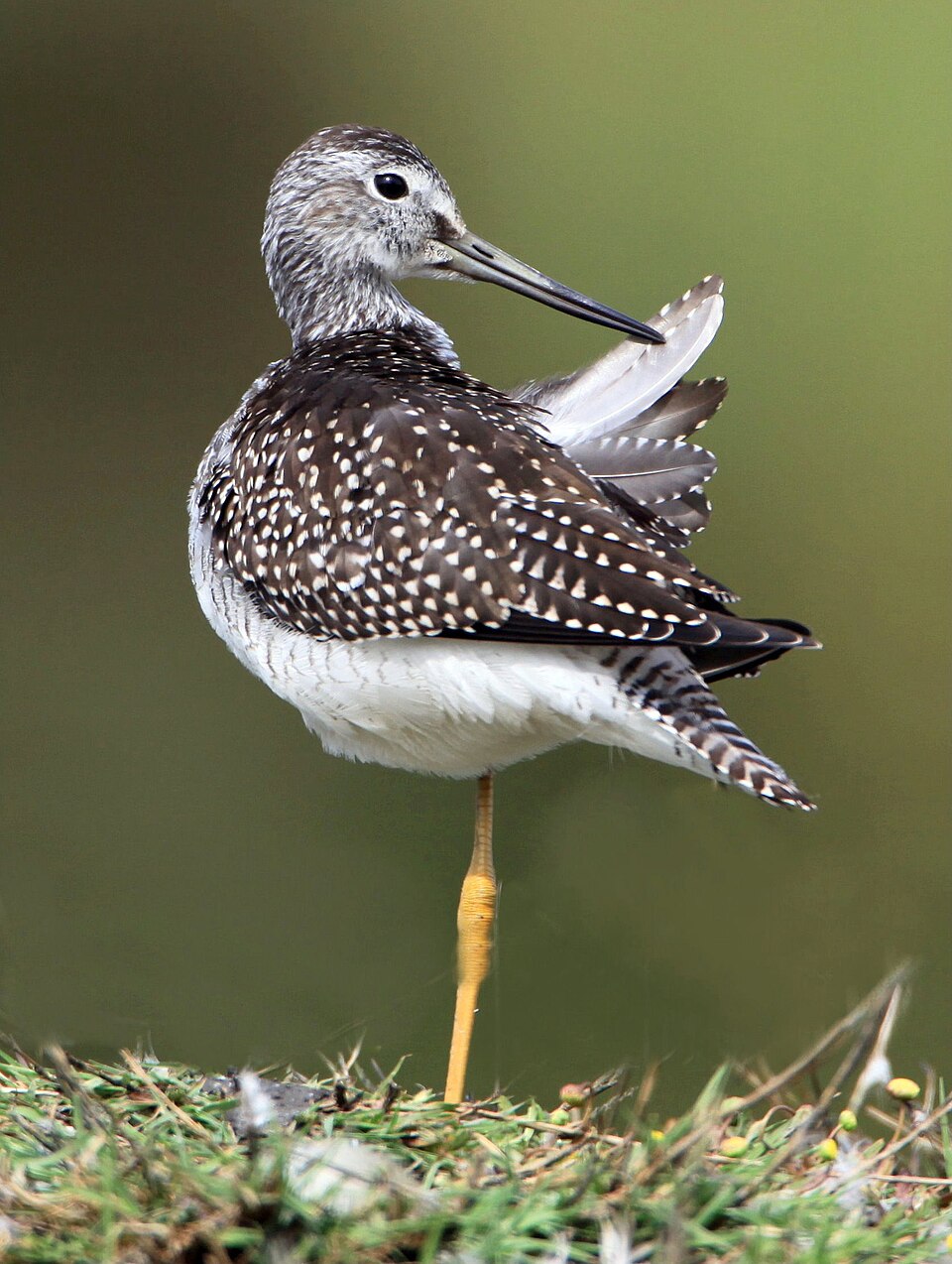
オオキアシシギ (Tringa melanoleuca) オオキアシシギ
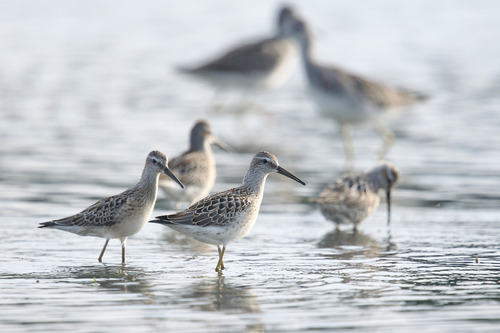
アシナガシギ (Calidris himantopus) アシナガシギ

メディア

読み込み中…

要点

オオキアシシギとアシナガシギを区別する最も信頼できる方法は、全体の構造とくちばしの形です:オオキアシシギは、長くてまっすぐでわずかに上向きのくちばしを持つ、はるかに大きくて細長い鳥ですが、アシナガシギは小さくてよりコンパクトで、短くてわずかに下向きのくちばしを持っています。飛んでいるとき、アシナガシギは翼帯がなく、白い尾羽を示しますが、オオキアシシギは無地の灰褐色の上翼と白い尾羽を持っています。幼鳥と非繁殖羽衣は混乱を招くことがありますが、オオキアシシギの長い脚と首と胸の大胆な縞模様が役立ちます。声も強い手がかりです:オオキアシシギは大きくて明瞭な三音の口笛を鳴らしますが、アシナガシギは静かです。

識別のコツ

  1. Size and structure: オオキアシシギはアシナガシギよりもはるかに大きくて背が高く、長くて明るい黄色の脚と細長い直立した姿勢を持っています。特に鳥が並んでいるときにこれを使用してください。
  2. Bill shape: オオキアシシギは頭よりも長い、長くてまっすぐからわずかに上向きのくちばしを持っています。アシナガシギのくちばしは短く、わずかに下向きで、明らかに上向きになることはありません。
  3. Leg color: 両種とも黄色がかった脚を持っていますが、オオキアシシギの脚は明るい黄色で、アシナガシギの脚は緑がかった黄色で通常は鈍いです。これは微妙で、遠くや暗い光の中では信頼性が低いです。
  4. Flight pattern: 両種とも白い尾羽を示しますが、アシナガシギは飛行中に翼帯がなく、オオキアシシギは無地の灰褐色の上翼を持っています。どちらも強い対照的な翼模様はないので、飛行中はサイズと構造に焦点を当ててください。
  5. Head pattern: アシナガシギ(すべての年齢)は強い白い眉斑を示し、特に幼鳥や冬の成鳥で明らかです。オオキアシシギはこれを欠き、細かい縞模様のあるより均一な頭を示します。
  6. Breast and belly: 繁殖期のアシナガシギは下部が重く縞模様があり、オオキアシシギは首と上胸に粗い暗い縞模様がありますが、下部は白です。幼鳥のアシナガシギは下部に縞模様がなく、きれいで縞模様のない腹部を持っています。
  7. Back and scapulars: 幼鳥のアシナガシギは白い縁取りのある背羽を示し、鱗状の外観を与えます。オオキアシシギはすべての羽衣で無地の灰褐色の背中を持っています。
  8. Posture and feeding: オオキアシシギは背筋を伸ばして立ち、しばしば深い水で餌を探し、時にはくちばしで水をかき混ぜます。アシナガシギはよりかがんで、体系的に探ります。
  9. Voice: 大きくて明瞭な三音の口笛が聞こえたら、それはオオキアシシギです。アシナガシギは静かで、目立って呼ぶことはめったにありません。
  10. Flock association: アシナガシギは通常、他の小さなシギ(「ピープ」)と一緒にいますが、オオキアシシギはしばしば孤独で、他のオオキアシシギと一緒にいます。
  11. Bill color: 両者とも暗いくちばしを持っていますが、オオキアシシギのくちばしは相対的に長くて頑丈です。
  12. Seasonal confusion: 非繁殖羽衣では、両種とも無地になりますが、オオキアシシギのサイズ、長い脚、縞模様のある首は良い手がかりです。
  13. Habitat overlap: 両者は移動中に似た湿地の生息地を使用するため、識別には文脈だけに頼らないでください。
  14. Juvenile confusion: 幼鳥のアシナガシギは遠くからオオキアシシギと間違えられることがありますが、より小さいサイズ、強い眉斑、短くてわずかに垂れ下がったくちばしに注意してください。
  15. When in doubt: サイズやくちばしの形が判断できない場合は、強い眉斑(アシナガシギ)と縞模様のある首と胸(オオキアシシギ)の組み合わせを探してください。

大きさ

オオキアシシギはアシナガシギよりもかなり大きくて重いです。オオキアシシギは体重が約170gで、長さは29〜40cm、翼幅は60cmです。アシナガシギははるかに小さく、体重はわずか50〜70g、長さは18〜23cm、翼幅は37〜42cmです。フィールドでは、オオキアシシギははるかに背が高く、脚が長く、より細長いシルエットを持っているのに対し、アシナガシギはよりコンパクトで地面に近く見えます。

羽色

幼鳥と非繁殖のアシナガシギは強い白い眉斑と白い尾羽を示し、飛行中は翼帯がありません—これは多くの他の shorebirds との重要な違いですが、ここでの両種は無地の上翼を持っています。幼鳥のアシナガシギは白い羽毛の縁取りのある茶色がかった背中と強い頭の模様を持っていますが、下部には縞模様がありません。繁殖期の成鳥のアシナガシギは下部が重く縞模様があり、眉斑の上と下に赤橙色の斑点があります。オオキアシシギはすべての羽衣で粗い縞模様のある首と胸を示し、主に無地の灰褐色の背中と白い腹部を持っています。両種とも白い尾羽を持っていますが、オオキアシシギは繁殖期のアシナガシギの強い頭の模様や下部の縞模様を示すことはありません。オオキアシシギのくちばしは頭よりも長く、しばしばわずかに上向きですが、アシナガシギのくちばしは短く、わずかに下向きです。脚の色はオオキアシシギが黄色で、アシナガシギが緑がかった黄色ですが、これは遠くからは微妙です。

行動

オオキアシシギはしばしば浅い水で活発に餌を探し、時にはくちばしで水をかき混ぜ、姿勢がより直立して警戒しています。アシナガシギは体系的に探りながら餌を探し、ほとんどの小さなシギよりも深い水で餌を探すことが多いですが、それでもオオキアシシギよりもかがんでいて直立しているようには見えません。混合群れの中で、オオキアシシギはその高さと深く足を浸ける傾向によって目立ち、アシナガシギは他の小さなシギとより混ざり合います。

生息環境

両種は移動中に浅い湿地、干潟、洪水のある田んぼで見られます。オオキアシシギはやや深い水で見られる可能性が高く、しばしば孤独であったり小さな群れで見られます。アシナガシギは通常、他の「ピープ」と混合群れで見られ、泥のある岸辺や浅い水を好みますが、かなり深く足を浸けることもできます。移動中の中継地点にはかなりの重複があるため、文脈だけでは診断が難しいことが多いです。

声

オオキアシシギははるかに声が大きく、大きくて明瞭な三音の口笛を鳴らし、三音目は音程が低くなります。この呼び声は特徴的で、よく響きます。アシナガシギは一般的に静かで、大きくて診断的な呼び声はなく、その声は柔らかく、フィールドでバーダーに気づかれる可能性が低いです。

より良い説明を送る

比較と同じ項目を使ってください。文章はすぐに公開されます。

The most reliable way to separate Greater Yellowlegs from Stilt Sandpiper is by overall structure and bill shape: Greater Yellowlegs is a much larger, lankier bird with a long, straight, slightly upturned bill, while Stilt Sandpiper is smaller and more compact, with a shorter, slightly decurved bill. In flight, Stilt Sandpiper lacks a wingbar and shows a white rump, while Greater Yellowlegs has a plain gray-brown upperwing and white rump. Juvenile and nonbreeding plumages can be confusing, but the yellowlegs' longer legs and bolder streaking on the neck and breast are helpful. Voice is also a strong clue: Greater Yellowlegs gives a loud, clear three-note whistle, while Stilt Sandpiper is quieter.

  1. Size and structure: Greater Yellowlegs is much larger and taller than Stilt Sandpiper, with long, bright yellow legs and a lanky, upright stance. Use this especially when birds are side by side.
  2. Bill shape: Greater Yellowlegs has a long, straight to slightly upturned bill that is longer than its head. Stilt Sandpiper's bill is shorter, only slightly decurved, and never obviously upturned.
  3. Leg color: Both species have yellowish legs, but Greater Yellowlegs' are bright yellow, while Stilt Sandpiper's are greenish-yellow and usually duller. This is subtle and unreliable at distance or in poor light.
  4. Flight pattern: Both species show a white rump, but Stilt Sandpiper lacks any wingbar in flight, while Greater Yellowlegs has plain gray-brown upperwings. Neither has a strong contrasting wing pattern, so focus on size and structure in flight.
  5. Head pattern: Stilt Sandpiper (all ages) shows a strong white supercilium, especially obvious in juveniles and winter adults. Greater Yellowlegs lacks this, showing a more uniform head with fine streaking.
  6. Breast and belly: Breeding Stilt Sandpiper is heavily barred below, while Greater Yellowlegs has coarse, dark streaking on the neck and upper breast but is otherwise white below. Juvenile Stilt Sandpiper lacks barring below but has a clean, unstreaked belly.
  7. Back and scapulars: Juvenile Stilt Sandpiper shows white-fringed back feathers, giving a scaly appearance. Greater Yellowlegs has a plain gray-brown back in all plumages.
  8. Posture and feeding: Greater Yellowlegs stands tall and often feeds in deeper water, sometimes stirring the water with its bill. Stilt Sandpiper is more crouched and probes methodically.
  9. Voice: If you hear a loud, clear, three-note whistle, it's Greater Yellowlegs. Stilt Sandpiper is quiet and rarely calls conspicuously.
  10. Flock association: Stilt Sandpiper is usually with other small sandpipers ('peeps'), while Greater Yellowlegs is often solitary or with other yellowlegs.
  11. Bill color: Both have dark bills, but Greater Yellowlegs' bill is proportionally longer and more robust.
  12. Seasonal confusion: In nonbreeding plumage, both species become plainer, but the yellowlegs' size, longer legs, and streaked neck remain good clues.
  13. Habitat overlap: Both use similar wetland habitats on migration, so do not rely on context alone for identification.
  14. Juvenile confusion: Juvenile Stilt Sandpiper can be mistaken for yellowlegs at a distance, but note the smaller size, strong supercilium, and shorter, slightly drooping bill.
  15. When in doubt: If you cannot judge size or bill shape, look for the combination of strong supercilium (Stilt Sandpiper) versus streaked neck and breast (Greater Yellowlegs).

Greater Yellowlegs is substantially larger and heavier than Stilt Sandpiper. Greater Yellowlegs averages about 170 g in body mass and measures 29–40 cm in length with a 60 cm wingspan. Stilt Sandpiper is much smaller, weighing only 50–70 g, with a length of 18–23 cm and a wingspan of 37–42 cm. In the field, Greater Yellowlegs stands much taller, with longer legs and a more elongated silhouette, while Stilt Sandpiper appears more compact and lower to the ground.

Juvenile and nonbreeding Stilt Sandpipers show a strong white supercilium and a white rump, and in flight, they lack any wingbar—this is a key difference from many other shorebirds, but both species here have plain upperwings. Juvenile Stilt Sandpipers have a brownish back with white feather fringes and a strong head pattern, but no barring below. Adult breeding Stilt Sandpipers are heavily barred below and have reddish-orange patches above and below the supercilium. Greater Yellowlegs, in all plumages, shows a coarsely streaked neck and breast, with a mostly plain gray-brown back and white underparts. Both species have white rumps, but Greater Yellowlegs never shows the strong head pattern or barring below of breeding Stilt Sandpiper. The yellowlegs' bill is longer than the head and often slightly upturned, while Stilt Sandpiper's is shorter and only slightly decurved. Leg color is yellow in Greater Yellowlegs and greenish-yellow in Stilt Sandpiper, but this can be subtle at a distance.

Greater Yellowlegs often forages actively in shallow water, sometimes stirring the water with its bill, and tends to be more upright and alert in posture. Stilt Sandpiper feeds by probing methodically, often in deeper water than most small sandpipers, but still appears more crouched and less upright than yellowlegs. In mixed flocks, Greater Yellowlegs stands out by its height and tendency to wade deeper, while Stilt Sandpiper blends in more with other small sandpipers.

Both species can be found in shallow wetlands, mudflats, and flooded fields during migration. Greater Yellowlegs is more likely to be seen in slightly deeper water and is often solitary or in small groups. Stilt Sandpiper is typically found in mixed flocks with other 'peeps' and prefers muddy edges and shallow water, but can also wade fairly deep. There is considerable overlap in migration stopover sites, so context alone is rarely diagnostic.

Greater Yellowlegs is much more vocal, giving a loud, clear, three-syllable whistle, with the third note lower in pitch. This call is distinctive and carries well. Stilt Sandpiper is generally quiet, with no loud, diagnostic call; its vocalizations are softer and less likely to be noticed by birders in the field.

変更を破棄しますか?

保存していない編集があります。今離れると失われます。

オオキアシシギ · アシナガシギ · 苦手な鳥