
Archibebe Patigualdo Grande vs Correlimos Zancolín
Tringa melanoleuca frente a Calidris himantopus
Juega un quiz con Archibebe Patigualdo Grande y Correlimos Zancolín
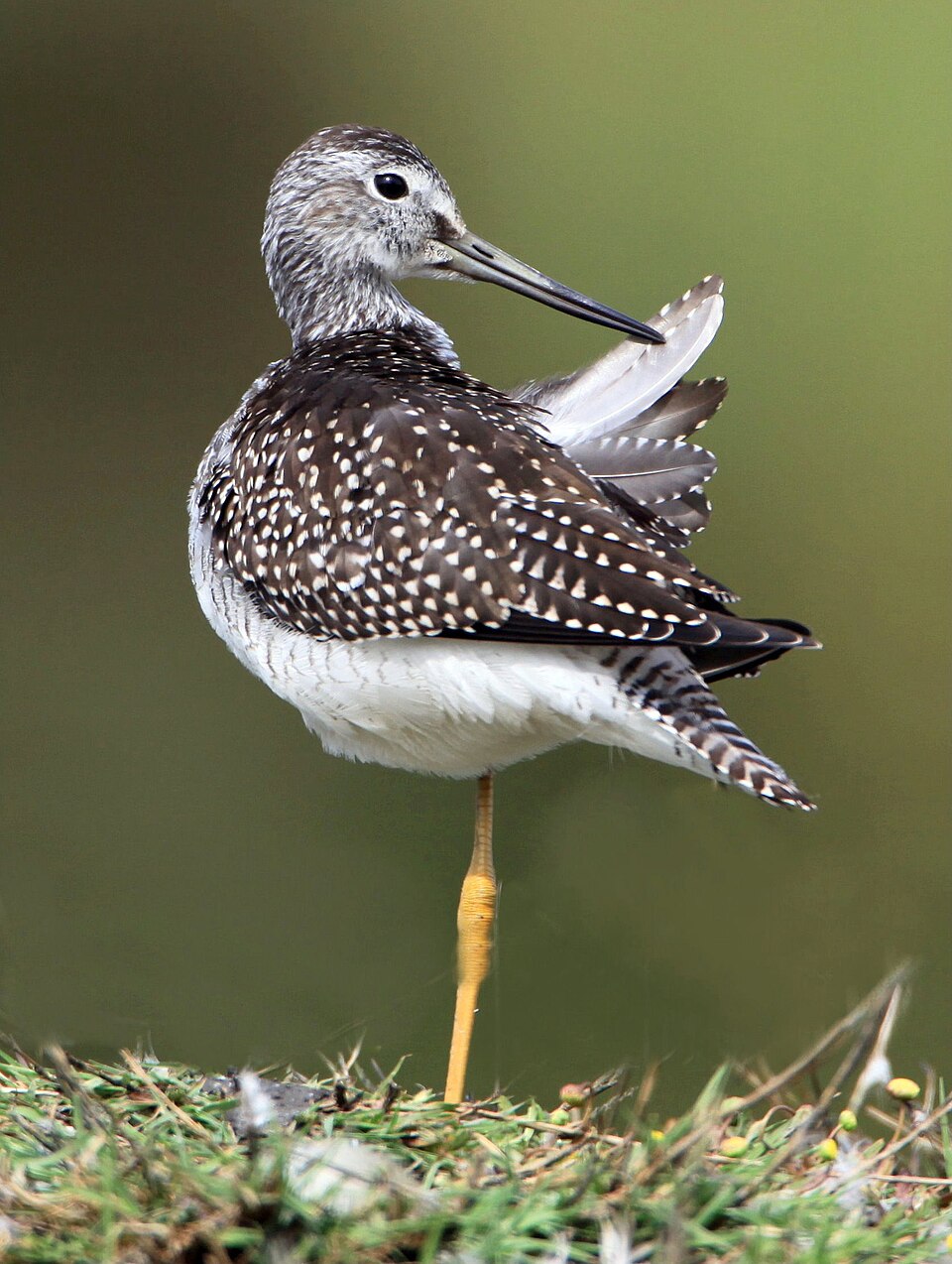 Archibebe Patigualdo Grande
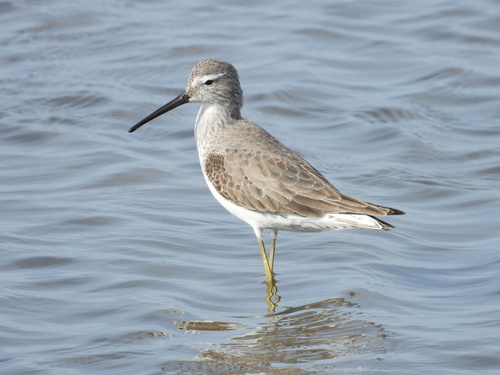 Correlimos Zancolín
En breve
La forma más confiable de separar el Archibebe Patigualdo Grande del Correlimos Zancolín es por la estructura general y la forma del pico: el Archibebe Patigualdo Grande es un ave mucho más grande y delgada con un pico largo, recto y ligeramente hacia arriba, mientras que el Correlimos Zancolín es más pequeño y compacto, con un pico más corto y ligeramente curvado hacia abajo. En vuelo, el Correlimos Zancolín carece de una barra alar y muestra una rabadilla blanca, mientras que el Archibebe Patigualdo Grande tiene un ala superior gris-marrón lisa y una rabadilla blanca. Las plumajes juveniles y no reproductivas pueden ser confusas, pero las patas más largas del archibebe y las rayas más marcadas en el cuello y el pecho son útiles. La voz también es una pista fuerte: el Archibebe Patigualdo Grande emite un silbido fuerte y claro de tres notas, mientras que el Correlimos Zancolín es más silencioso.
Consejos de identificación
- Tamaño y estructura: El Archibebe Patigualdo Grande es mucho más grande y alto que el Correlimos Zancolín, con largas patas amarillas brillantes y una postura delgada y erguida. Usa esto especialmente cuando las aves están una al lado de la otra.
- Forma del pico: El Archibebe Patigualdo Grande tiene un pico largo, recto y ligeramente hacia arriba que es más largo que su cabeza. El pico del Correlimos Zancolín es más corto, solo ligeramente curvado hacia abajo, y nunca está visiblemente hacia arriba.
- Color de las patas: Ambas especies tienen patas amarillentas, pero las del Archibebe Patigualdo Grande son de un amarillo brillante, mientras que las del Correlimos Zancolín son de un amarillo verdoso y generalmente más apagadas. Esto es sutil y poco confiable a distancia o en mala luz.
- Patrón de vuelo: Ambas especies muestran una rabadilla blanca, pero el Correlimos Zancolín carece de cualquier barra alar en vuelo, mientras que el Archibebe Patigualdo Grande tiene alas superiores gris-marrón lisas. Ninguna tiene un patrón de alas fuertemente contrastante, así que enfócate en el tamaño y la estructura en vuelo.
- Patrón de la cabeza: El Correlimos Zancolín (todas las edades) muestra un fuerte supercilio blanco, especialmente obvio en juveniles y adultos de invierno. El Archibebe Patigualdo Grande carece de esto, mostrando una cabeza más uniforme con finas rayas.
- Pecho y vientre: El Correlimos Zancolín reproductor tiene muchas barras en la parte inferior, mientras que el Archibebe Patigualdo Grande tiene rayas oscuras y gruesas en el cuello y la parte superior del pecho, pero es blanco en la parte inferior. El Correlimos Zancolín juvenil carece de barras en la parte inferior pero tiene un vientre limpio y sin rayas.
- Espalda y escapulares: El Correlimos Zancolín juvenil muestra plumas de la espalda con bordes blancos, dando una apariencia escamosa. El Archibebe Patigualdo Grande tiene una espalda gris-marrón lisa en todas las plumajes.
- Postura y alimentación: El Archibebe Patigualdo Grande se mantiene erguido y a menudo se alimenta en aguas más profundas, a veces removiendo el agua con su pico. El Correlimos Zancolín está más encorvado y sondea metódicamente.
- Voz: Si escuchas un silbido fuerte, claro y de tres notas, es el Archibebe Patigualdo Grande. El Correlimos Zancolín es silencioso y rara vez llama de manera conspicua.
- Asociación en bandadas: El Correlimos Zancolín suele estar con otros pequeños playeros ('peeps'), mientras que el Archibebe Patigualdo Grande a menudo es solitario o está con otros archibebes.
- Color del pico: Ambos tienen picos oscuros, pero el pico del Archibebe Patigualdo Grande es proporcionalmente más largo y robusto.
- Confusión estacional: En plumaje no reproductivo, ambas especies se vuelven más simples, pero el tamaño del archibebe, sus patas más largas y su cuello rayado siguen siendo buenas pistas.
- Superposición de hábitats: Ambas utilizan hábitats de humedales similares durante la migración, así que no confíes solo en el contexto para la identificación.
- Confusión juvenil: El Correlimos Zancolín juvenil puede ser confundido con el archibebe a distancia, pero nota el tamaño más pequeño, el fuerte supercilio y el pico más corto y ligeramente caído.
- Cuando tengas dudas: Si no puedes juzgar el tamaño o la forma del pico, busca la combinación de un fuerte supercilio (Correlimos Zancolín) frente a un cuello y pecho rayados (Archibebe Patigualdo Grande).
Tamaño
El Archibebe Patigualdo Grande es sustancialmente más grande y pesado que el Correlimos Zancolín. El Archibebe Patigualdo Grande promedia alrededor de 170 g en masa corporal y mide de 29 a 40 cm de longitud con una envergadura de 60 cm. El Correlimos Zancolín es mucho más pequeño, pesando solo de 50 a 70 g, con una longitud de 18 a 23 cm y una envergadura de 37 a 42 cm. En el campo, el Archibebe Patigualdo Grande se mantiene mucho más alto, con patas más largas y una silueta más alargada, mientras que el Correlimos Zancolín parece más compacto y más bajo al suelo.
Plumaje
Los Correlimos Zancolín juveniles y no reproductivos muestran un fuerte supercilio blanco y una rabadilla blanca, y en vuelo, carecen de cualquier barra alar—esta es una diferencia clave de muchas otras aves playeras, pero ambas especies aquí tienen alas superiores lisas. Los Correlimos Zancolín juveniles tienen una espalda marrón con bordes de plumas blancas y un fuerte patrón en la cabeza, pero sin barras en la parte inferior. Los Correlimos Zancolín adultos en reproducción están fuertemente barrados en la parte inferior y tienen manchas de color rojo-naranja arriba y abajo del supercilio. El Archibebe Patigualdo Grande, en todas las plumajes, muestra un cuello y pecho con rayas gruesas, con una espalda gris-marrón lisa y partes inferiores blancas. Ambas especies tienen rabadillas blancas, pero el Archibebe Patigualdo Grande nunca muestra el fuerte patrón de cabeza o las barras en la parte inferior del Correlimos Zancolín en reproducción. El pico del archibebe es más largo que la cabeza y a menudo ligeramente hacia arriba, mientras que el del Correlimos Zancolín es más corto y solo ligeramente curvado hacia abajo. El color de las patas es amarillo en el Archibebe Patigualdo Grande y verde-amarillo en el Correlimos Zancolín, pero esto puede ser sutil a distancia.
Comportamiento
El Archibebe Patigualdo Grande a menudo forrajea activamente en aguas poco profundas, a veces removiendo el agua con su pico, y tiende a estar más erguido y alerta en postura. El Correlimos Zancolín se alimenta sondeando metódicamente, a menudo en aguas más profundas que la mayoría de los pequeños playeros, pero aún parece más encorvado y menos erguido que el archibebe. En bandadas mixtas, el Archibebe Patigualdo Grande se destaca por su altura y tendencia a vadear más profundo, mientras que el Correlimos Zancolín se mezcla más con otros pequeños playeros.
Hábitat
Ambas especies se pueden encontrar en humedales poco profundos, llanuras de barro y campos inundados durante la migración. El Archibebe Patigualdo Grande es más probable que se vea en aguas ligeramente más profundas y a menudo es solitario o está en pequeños grupos. El Correlimos Zancolín se encuentra típicamente en bandadas mixtas con otros 'peeps' y prefiere bordes fangosos y aguas poco profundas, pero también puede vadear bastante profundo. Hay una considerable superposición en los sitios de parada migratoria, por lo que el contexto solo rara vez es diagnóstico.
Voz
El Archibebe Patigualdo Grande es mucho más vocal, emitiendo un silbido fuerte, claro y de tres sílabas, con la tercera nota más baja en tono. Este llamado es distintivo y se escucha bien. El Correlimos Zancolín es generalmente silencioso, sin un llamado fuerte y diagnóstico; sus vocalizaciones son más suaves y menos propensas a ser notadas por los observadores de aves en el campo.
Archibebe Patigualdo Grande · Correlimos Zancolín · Mis aves difíciles