

Motmot

マガン 対 コクガン

Anser albifrons 対 Branta bernicla

マガンとコクガンのクイズ
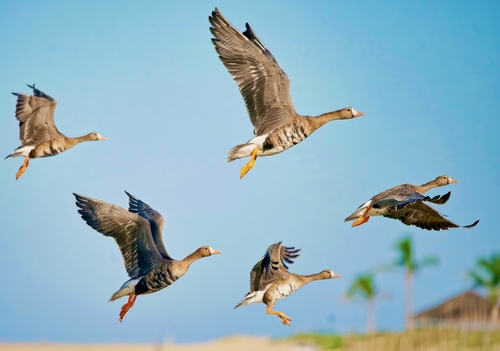
マガン (Anser albifrons) マガン
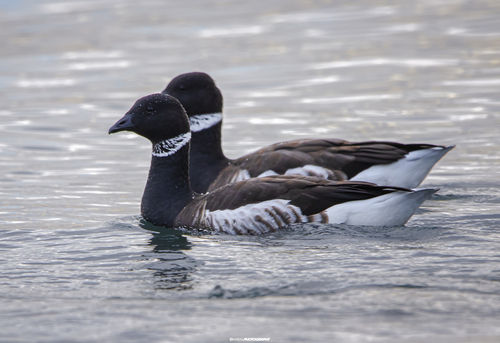
コクガン (Branta bernicla) コクガン

メディア

読み込み中…

要点

コクガンとマガンの間で最も信頼できるフィールドマークは、くちばしの色と顔のパターンの組み合わせです:マガンは、基部に白いブレイズがあるピンクがかったまたはオレンジのくちばしを示し、コクガンは短くて暗いくちばしを持ち、顔に白い部分はなく、代わりに首に小さな白い斑点を示します。飛んでいるときや休んでいるとき、マガンは大きく、首が長く、体ががっしりしており、オレンジの脚を持っていますが、コクガンはコンパクトで、首が短く、黒い脚を持っています。幼鳥と成鳥の翼のパターンは二者間で強く対照的ではありませんが、全体的な印象と構造的特徴は独特です。両種は冬の沿岸生息地で一緒に見られますが、コクガンはより厳密に沿岸および海洋に生息しています。

識別のコツ

  1. くちばしの色と形: マガンはピンクがかったまたはオレンジのくちばし(時々暗い爪がある)を持ち、コクガンの短くて太い全暗いくちばしよりも長くて頑丈です。これはすべての年齢と距離で良い光の下で信頼できます。
  2. 顔のパターン: マガンはくちばしの基部に白いブレイズがあり、額にまで伸びており、幼鳥を除いてすべてに存在します。コクガンは顔に白い部分がなく、代わりに首の側に小さな白い斑点(成鳥とほとんどの亜種)を示し、ブレイズはありません。幼鳥のコクガンは首の斑点がないかもしれませんが、まだ無地の暗い顔を持っています。
  3. 脚の色: マガンは明るいオレンジの脚を持ち、コクガンは黒い脚を持っています。これは脚が見えるときの強いフィールドマークです。
  4. 全体的な構造: マガンは大きく、首が長く、体ががっしりしており、より直立した姿勢を持っています。コクガンはコンパクトで、首が短く、比較するとほぼ「ずんぐり」と見えます。飛んでいるとき、マガンの首と体はより伸びており、コクガンはコンパクトです。
  5. 上翼のパターン: マガン(特に A. a. albifrons)は、上翼の覆羽に明るい縁取りと目立つ白い先端を示し、すべての年齢で翼に条紋のある外観を作ります。コクガンの上翼は均一に暗く、明るい条紋や翼の条はありません。
  6. 尾のパターン: マガンは暗い灰色の尾を持ち、広い白い先端と側面を持ち、コクガンは非常に短い全黒の尾を持ち、純白の下尾を持っています。コクガンの尾の短さと黒さは、ガンの中で独特です。
  7. 腹部の条紋: 成鳥のマガンは変動する暗い腹部の条紋や斑点を持ち、時には広範囲にわたりますが、これは個体差のために常に信頼できるわけではなく、幼鳥には存在しないこともあります。コクガンは腹部の条紋を示しません。
  8. 頭と首の色: マガンは茶色がかった頭と首(白いブレイズ付き)を持ち、コクガンは黒い頭と首を持ち、白い首の斑点があります。このコントラストは、黒いブランタ亜種で特に強いです。
  9. 生息地: コクガンは冬にほぼ常に沿岸に生息し、塩湿地や干潟を食べます;マガンは内陸や淡水の湿地や農地にいる可能性が高いです。海から遠くで見られた場合、コクガンはunlikelyです。
  10. 群れの構造: マガンの群れはしばしば緩く、他の灰色のガンと混ざっています;コクガンの群れは密で、通常は純粋です。
  11. 鳴き声: マガンの高音で笑っているような「へへ」というカッカと、コクガンの柔らかく喉の奥から出る「ロンク」や「クロンク」を聞いてください。
  12. 幼鳥の混乱: 幼鳥のマガンは白いブレイズがなく、腹部の条紋が少ないかもしれませんが、まだオレンジの脚と淡い先端のくちばしを持っています。幼鳥のコクガンは首の斑点がなく、暗く、コンパクトで、短いくちばしを持っています。
  13. 亜種の変異: グリーンランドマガン(A. a. flavirostris)は、よりオレンジがかった黄色のくちばしとあまり明白でない翼の条を持っていますが、白いブレイズとオレンジの脚を示します。コクガンの亜種は腹部と側面の色が異なりますが、白いブレイズやオレンジの脚を示すことはありません。
  14. 落とし穴: 遠距離や悪い光の中では、サイズやくちばしの色を判断するのが難しい場合があります。最良の結果を得るためには、構造、脚の色、顔のパターンの組み合わせを使用してください。
  15. 性別と季節: 両種は性別的に単形(オスとメスは似ている)であるため、性別は区別に役立ちません。ほとんどのフィールドマークは年間を通じて適用されますが、幼鳥のマガンは秋に白いブレイズがないかもしれません。

大きさ

マガンはかなり大きいです:長さ64–81 cm、翼幅130–165 cm、体重1.93–3.31 kg [wikipedia][avonet][wikidata]。コクガンは小さくてコンパクトで、長さ55–66 cm、翼幅106–121 cm、体重0.88–2.2 kgです。フィールドでは、マガンは首が長く、体が重いように見え、コクガンは短い首で、ずんぐりしていて、はるかに軽く見えます。サイズだけでも、両者が一緒に見られた場合は強い手がかりです。

羽色

幼鳥と未成熟の翼のパターンは、これらの種の重要な区別点として強調されていませんが、上翼と体の羽毛にはいくつかの違いがあります。マガン(特にヨーロッパの A. a. albifrons 亜種)は、マントル、肩羽、上翼の覆羽に明らかな淡い縁取りを示し、すべての年齢で条紋または翼の条紋のある効果を作り、より大きな覆羽の目立つ白い先端を持っています。コクガンは、すべての亜種と年齢において、これらの淡い縁取りや翼の条を欠いています;その上面と上翼の覆羽は均一に暗い灰色がかった茶色からすすけた黒までで、淡い条紋や翼の条はありません。マガンの尾は暗い灰色で、広い白い先端と側面を持ち、コクガンは非常に短い全黒の尾を持ち、純白の下尾を持っています。成鳥のマガンはくちばしの基部に白い顔のブレイズを持ち、変動する暗い腹部の条紋(いくつかの亜種ではより広範囲)を持っていますが、コクガンは黒い頭と首を持ち、小さな白い首の斑点(ブレイズではない)を持ち、体の残りは亜種に応じて暗い灰色がかった茶色から黒っぽいです。幼鳥のコクガンは白い首の斑点がありませんが、全体的に暗く、コンパクトな外観を示します。くちばしの色も診断的です:マガンはピンクがかったまたはオレンジのくちばし(いくつかの変異あり)を持ち、コクガンは常に短くて暗いくちばしを持っています。

行動

マガンはしばしば開けた野原、湿地、または湿った草地で草を食べているのが見られ、通常は大きく、緩く間隔をあけた群れでいます。彼らは安定した直立した歩き方をし、他の灰色のガンと混ざることがあります。コクガンは冬に厳密に沿岸に生息し、塩湿地、干潟、河口で餌を食べ、しばしば密でタイトな群れでいます。彼らの餌の取り方はより前かがみでコンパクトであり、塩水から遠くに出ることはほとんどありません。飛んでいるとき、マガンは首が長く、より伸びて見え、コクガンはコンパクトで短い首を持ち、急速で浅い羽ばたきをします。

生息環境

生息地は強い手がかりです:マガンは内陸の湖、湿地、農地など、幅広い湿地生息地に見られ、特に冬に見られます。コクガンは冬にほぼ完全に沿岸に生息し、塩湿地、干潟、河口を好みます。鳥が内陸に遠く見られた場合、マガンである可能性が高いです。沿岸地域では重複が発生することがありますが、コクガンは海から遠く離れて見られることは稀です。

声

マガンは高音で笑っているようなカッカを出し、しばしば「へへ」と書き取られ、音符の間に特徴的なブレイクがあります。コクガンは一般的に静かですが、鳴くときは柔らかく、喉の奥から出る「ロンク」や「クロンク」を出し、マガンの高音のカッカはありません。群れが飛び立ったり、飛行中に鳴いているときに呼び声は役立ちます。

より良い説明を送る

比較と同じ項目を使ってください。文章はすぐに公開されます。

The most reliable field mark between Greater White-fronted Goose and Brent Goose is the combination of bill color and facial pattern: Greater White-fronted Goose shows a pinkish or orange bill with a white blaze at the base, while Brent Goose has a short, dark bill and lacks any white on the face, instead showing a small white patch on the neck. In flight or at rest, Greater White-fronted Goose is larger, longer-necked, and bulkier, with orange legs, while Brent Goose is compact, short-necked, and has black legs. Juvenile and adult wing patterns are not strongly contrasting between the two, but the overall jizz and structural features are distinctive. Both species can be found together in winter coastal habitats, but Brent Goose is more strictly coastal and marine.

  1. Bill color and shape: Greater White-fronted Goose has a pinkish or orange bill (sometimes with a dark nail), which is longer and stouter than the Brent Goose's short, stubby, all-dark bill. This is reliable at all ages and distances with good light.
  2. Facial pattern: White-fronted Goose shows a white blaze at the base of the bill, extending up onto the forehead, present in all but juveniles. Brent Goose lacks any white on the face, instead showing a small white patch on the side of the neck (adults and most subspecies), never a blaze. Juvenile Brent Geese may lack the neck patch but still have a plain dark face.
  3. Leg color: White-fronted Goose has bright orange legs, while Brent Goose has black legs. This is a strong field mark when legs are visible.
  4. Overall structure: White-fronted Goose is larger, longer-necked, and bulkier, with a more upright stance. Brent Goose is compact, short-necked, and appears almost 'dumpy' by comparison. In flight, White-fronted's neck and body are more stretched, Brent's are compact.
  5. Upperwing pattern: White-fronted Goose (especially A. a. albifrons) shows pale fringes and prominent white tips to upperwing coverts, creating a wing-barred appearance in all ages. Brent Goose's upperwing is uniformly dark, lacking any pale barring or wing bars.
  6. Tail pattern: White-fronted Goose has a dark grey tail with a broad white tip and sides; Brent Goose has a very short, all-black tail with a pure white under-tail. The shortness and blackness of Brent's tail is unique among geese.
  7. Belly barring: Adult White-fronted Geese have variable dark belly bars or blotches, sometimes extensive, but this is not always reliable due to individual variation and can be absent in juveniles. Brent Goose never shows belly barring.
  8. Head and neck color: White-fronted Goose has a brownish head and neck (with white blaze), while Brent Goose has a black head and neck with a white neck patch. This contrast is especially strong in the black brant subspecies.
  9. Habitat: Brent Goose is almost always coastal in winter, feeding on saltmarshes and tidal flats; White-fronted Goose is more likely inland or in freshwater wetlands and fields. If seen far from the sea, Brent Goose is unlikely.
  10. Flock structure: White-fronted Goose flocks are often loose and mixed with other grey geese; Brent Goose flocks are tight, dense, and usually pure.
  11. Vocalizations: Listen for the high-pitched, laughing 'he-he' cackle of White-fronted Goose versus the softer, guttural 'rronk' of Brent Goose.
  12. Juvenile confusion: Juvenile White-fronted Geese lack the white blaze and may show less belly barring, but still have orange legs and a pale-tipped bill. Juvenile Brent Geese lack the neck patch but remain dark, compact, and short-billed.
  13. Subspecies variation: Be aware that Greenland White-fronted Geese (A. a. flavirostris) have a more orange-yellow bill and less obvious wing bars, but still show the white blaze and orange legs. Brent Goose subspecies vary in belly and flank color, but none ever show a white blaze or orange legs.
  14. Pitfalls: At long range or in poor light, the size and bill color may be hard to judge. Use a combination of structure, leg color, and facial pattern for best results.
  15. Sex and season: Both species are sexually monomorphic (males and females look alike), so sex is not useful for separation. Most field marks apply year-round, but juvenile White-fronted Geese may lack the white blaze in autumn.

Greater White-fronted Goose is substantially larger: 64–81 cm in length, 130–165 cm wingspan, and 1.93–3.31 kg in weight [wikipedia][avonet][wikidata]. Brent Goose is smaller and more compact, at 55–66 cm length, 106–121 cm wingspan, and 0.88–2.2 kg in weight. In the field, White-fronted Goose appears longer-necked and heavier-bodied, while Brent Goose looks short-necked, stubby, and much lighter. Size alone is a strong clue if both are seen together.

Juvenile and immature wing patterns are not highlighted as key separation points in these species, but some differences exist in upperwing and body plumage. Greater White-fronted Goose (especially the European A. a. albifrons subspecies) shows obvious pale fringes on the mantle, scapulars, and upperwing coverts, creating a barred or wing-barred effect in all ages, with prominent white tips to greater coverts. Brent Goose, in all subspecies and ages, lacks these pale fringes and wing bars; its upperparts and upperwing coverts are uniformly dark grey-brown to sooty-black, with no pale barring or wing bars. The tail of Greater White-fronted Goose is dark grey with a broad white tip and sides, while Brent Goose has a very short, all-black tail with a pure white under-tail. Adult Greater White-fronted Geese have a white facial blaze at the bill base and variable dark belly barring (more extensive in some subspecies), while Brent Goose has a black head and neck with a small white neck patch (not a blaze), and the rest of the body is dark grey-brown to blackish, depending on subspecies. Juvenile Brent Geese lack the white neck patch but still show the overall dark, compact look. Bill color is also diagnostic: Greater White-fronted Goose has a pinkish or orange bill (with some variation), while Brent Goose always has a short, dark bill.

Greater White-fronted Goose is often seen grazing in open fields, marshes, or wet grasslands, usually in large, loosely spaced flocks. They walk with a steady, upright gait and may mix with other grey geese. Brent Goose is strictly coastal in winter, feeding on saltmarshes, tidal flats, and estuaries, often in dense, tight flocks. Their feeding is more hunched and compact, and they rarely venture far from saltwater. In flight, Greater White-fronted Goose appears longer-necked and more stretched, while Brent Goose is compact and short-necked, with rapid, shallow wingbeats.

Habitat is a strong clue: Greater White-fronted Goose is found in a wide range of wetland habitats, including inland lakes, marshes, and agricultural fields, especially in winter. Brent Goose is almost exclusively coastal in winter, favoring saltmarshes, tidal flats, and estuaries. If the bird is far inland, it is much more likely to be Greater White-fronted Goose. Overlap can occur in coastal areas, but Brent Goose is rarely seen away from the sea.

Greater White-fronted Goose gives a high-pitched, laughing cackle, often transcribed as 'he-he', with a distinctive break between notes. Brent Goose is generally quieter, but when vocal, gives a soft, guttural 'rronk' or 'cronk', lacking the high-pitched cackle of White-fronted. Calls are useful if a flock is flushed or calling in flight.

変更を破棄しますか?

保存していない編集があります。今離れると失われます。

マガン · コクガン · 苦手な鳥