

Motmot

ズアカコシアカツバメ 対 コズアカコシアカツバメ

Cecropis cucullata 対 Cecropis abyssinica

ズアカコシアカツバメとコズアカコシアカツバメのクイズ
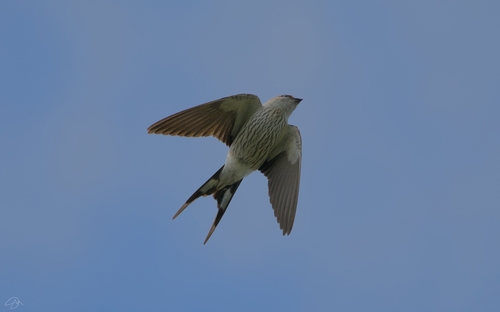
ズアカコシアカツバメ (Cecropis cucullata) ズアカコシアカツバメ
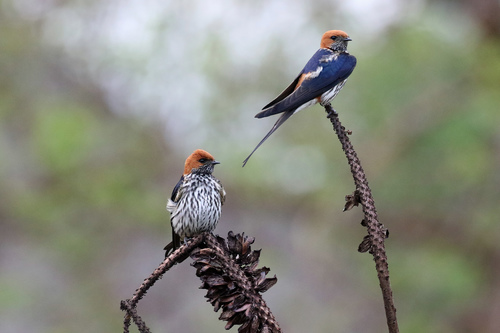
コズアカコシアカツバメ (Cecropis abyssinica) コズアカコシアカツバメ

メディア

読み込み中…

要点

グレーター・ストライプド・スワロウとレスター・ストライプド・スワロウの最も信頼できるフィールドマークは、尻の色です:グレーターは淡いオレンジ色の尻を持ち、レスターはより深い赤色の尻を示します。下部の縞模様も重要です—レスターは下により重く、暗い縞を持ち、グレーターのものはより細かく、目立たないです。頭の色は微妙に異なります:グレーターの冠と後頭部は栗色で、レスターのものはより明るい赤褐色です。両種の幼鳥は鈍く、茶色がかっていますが、同じ対比が適用されます。両種は長い外尾羽を持っていますが、グレーターは明らかに大きく、より開けた丘陵地帯を好みます。

識別のコツ

  1. 尻の色: 飛んでいる時や止まっている時に尻を見てください—グレーターは淡いオレンジ色、レスターはより深く、豊かな赤です。これはしばしば最も迅速なフィールドマークです。
  2. 下部の縞模様: レスターは胸と腹により重く、暗い縞を持ち、グレーターのものはより細かく、目立たないです。これは止まっている鳥と飛んでいる鳥の両方で見られますが、特に下から見る時に有用です。
  3. 頭の色: グレーターの冠、後頭部、頭の側面は栗色です;レスターのものはより明るく、より赤褐色です。これは微妙で照明の影響を受けることがありますが、近距離で有用です。
  4. 翼の覆い羽: グレーターのものはクリーミーな白、レスターのものは黄褐色です。これは微妙なマークで、良い光や写真で見るのが最適です。
  5. 尾の長さと形: 両種は長く、深く分かれた尾を持ち、非常に長い外羽があります。オスの方がわずかに長い外尾羽を示します。グレーターの尾はその大きさのために相対的に長いですが、これは横に並べて比較しないと明らかではありません。
  6. 幼鳥の羽毛: 両種の幼鳥は鈍く、茶色がかっていますが、尻と縞模様の違いは持続します。幼鳥のレスターは依然としてより重い縞模様とより深い赤の尻を示します。
  7. サイズ: グレーターはレスターよりも大きい(18–20 cm)ですが、両方が一緒でないと判断が難しいことがあります。
  8. 飛行スタイル: グレーターの飛行は遅く、浮遊感があります;レスターの飛行はより不規則です。これは補助的なマークで、単独では診断的ではありません。
  9. 生息地: グレーターは開けた丘陵地帯や山地を好み、森林を避けます;レスターはより広範囲の開けた生息地で見られ、時にはグレーターが好むよりも開けていない場所でも見られます。
  10. 鳴き声: グレーターのツイッター音の「チシック」とレスターの鼻声の「ゼーゼーゼー」を聞いてください。これは微妙な助けで、他のマークと一緒に使用するのが最適です。
  11. 耳の覆い羽: レスターのものは赤褐色、グレーターのものは淡い色です。これは細かい詳細で、フィールドでは診断的ではありませんが、近くで見る時や写真で役立つことがあります。
  12. 文脈: 南アフリカでは、両種が存在する可能性がありますが、グレーターは開けた丘陵地帯にいる可能性が高く、レスターはより広範囲で見られ、より広い範囲の開けた生息地で見つかることがあります。
  13. 巣の場所: 両方が人工の構造物を使用するため、巣の場所だけでは区別できません。
  14. 落とし穴: 照明は尻と頭の色の認識に影響を与えることがあります;常に複数のマークを確認してください。幼鳥は特に難しい—尻の色と下部の縞模様に焦点を当ててください。
  15. 亜種の変異: レスターには変動する縞模様を持ついくつかの亜種がありますが、すべてがグレーターよりも重い縞を持っています。

大きさ

グレーター・ストライプド・スワロウは大きな種で、長さは18–20 cmで、レスターは15–19 cmです。このサイズの違いはフィールドでは微妙ですが、直接比較や混成群れで明らかになることがあります。両方とも長く、深く分かれた尾を持ち、両種のオスはわずかに長い外尾羽を示します。嘴と翼の比率は似ており、遠くからは信頼できる診断にはなりません。

羽色

行動

両種は主に飛んでいる昆虫を食べ、小さな果物を取ることもあります。グレーター・ストライプド・スワロウの飛行は遅く、浮遊感があると説明され、レスターの飛行はより不規則です。両方とも人間の居住地の周りで快適で、巣作りのために人工の構造物を喜んで使用します。両種は人間を恐れず、ワイヤーに止まったり、開けた地面の上を低く飛んだりするのが見られます。

生息環境

グレーター・ストライプド・スワロウは乾燥した開けた国を好み—特に草原、丘、山を好み、森林を避けます。人間の居住地の近くで見られることが多く、人工の巣の場所から恩恵を受けています。レスター・ストライプド・スワロウはサハラ以南のアフリカ全体に広がっており、比較的定住的ですが、開けた国や人工の構造物も使用します。レスターはグレーターと比較して開けていない生息地で見つかる可能性が高いですが、両方は南アフリカで広く重なります。

声

グレーター・ストライプド・スワロウはツイッター音の「チシック」を出します。レスター・ストライプド・スワロウの鳴き声は鼻声の「ゼーゼーゼーゼーゼー」です。これらの鳴き声の違いは微妙で、経験がないとフィールドで区別するのが難しいことがありますが、はっきり聞こえれば識別をサポートできます。

より良い説明を送る

比較と同じ項目を使ってください。文章はすぐに公開されます。

The most reliable field mark between Greater and Lesser Striped Swallow is the rump color: Greater has a pale orange rump, while Lesser shows a deeper red rump. Underpart streaking is also key—Lesser has heavier, darker streaks below, while Greater’s are finer and less pronounced. Head color differs subtly: Greater’s crown and nape are chestnut, Lesser’s are a brighter rufous-chestnut. Juveniles of both are duller and browner, but the same contrasts apply. Both species have long outer tail feathers, but Greater is distinctly larger and prefers more open, hilly habitats.

  1. Rump color: Look for the rump in flight or when perched—Greater’s is pale orange, Lesser’s is a deeper, richer red. This is often the quickest field mark.
  2. Underpart streaking: Lesser has much heavier and darker streaks on the breast and belly, while Greater’s are finer and less pronounced. This is visible in both perched and flying birds, but especially useful when viewing from below.
  3. Head color: Greater’s crown, nape, and sides of the head are chestnut; Lesser’s are a brighter, more rufous-chestnut. This can be subtle and affected by lighting, but is useful at close range.
  4. Underwing coverts: Greater’s are creamy white, Lesser’s are tawny. This is a subtle mark, best seen in good light or photos.
  5. Tail length and shape: Both species have long, deeply forked tails with very long outer feathers, slightly longer in males. Greater’s tail is proportionally longer due to its larger size, but this is not always obvious unless comparing side by side.
  6. Juvenile plumage: Juveniles of both are duller and browner, but the rump and streaking differences persist. Juvenile Lesser still shows heavier streaking and a deeper red rump.
  7. Size: Greater is larger (18–20 cm) than Lesser (15–19 cm), but this can be hard to judge unless both are together.
  8. Flight style: Greater’s flight is slow and buoyant; Lesser’s is more erratic. This is a supporting mark, not diagnostic on its own.
  9. Habitat: Greater prefers open, hilly or mountainous areas and avoids woodland; Lesser can be found in a wider range of open habitats, sometimes less open than Greater prefers.
  10. Vocalizations: Listen for Greater’s twittering 'chissick' versus Lesser’s nasal 'zeh zeh zeh.' This is a subtle aid, best used with other marks.
  11. Ear coverts: Lesser’s are rufous, Greater’s are buffy. This is a fine detail, rarely diagnostic in the field but may help in close views or photos.
  12. Context: In southern Africa, both species may be present, but Greater is more likely in open, hilly country, while Lesser is more widespread and can be found in a broader range of open habitats.
  13. Nest sites: Both use man-made structures, so nest location alone does not separate them.
  14. Pitfalls: Lighting can affect perception of rump and head color; always check multiple marks. Juveniles are especially tricky—focus on rump color and underpart streaking.
  15. Subspecies variation: Lesser has several subspecies with variable streaking, but all have heavier streaks than Greater.

Greater Striped Swallow is the larger species, measuring 18–20 cm in length, compared to Lesser’s 15–19 cm. This size difference is subtle in the field but can be apparent with direct comparison or in mixed flocks. Both have long, deeply forked tails, with males of both species showing slightly longer outer tail feathers. Bill and wing proportions are similar and not reliably diagnostic at a distance.

  • Juveniles/immatures: Both species’ juveniles are duller and browner overall, with less contrast and shorter outer tail feathers than adults. The same rump and underpart streaking differences apply: Greater’s rump remains pale orange, Lesser’s is deeper red; Lesser’s streaking below is always heavier and darker.
  • Adults: Greater has dark blue upperparts, a pale orange rump, and a chestnut crown/nape/sides of head. Underparts and underwing coverts are creamy white with fine dark streaking. Lesser has dark blue upperparts, a red rump, and a brighter rufous-chestnut crown/nape/sides of head. Underparts are white with heavy, dark streaking, and underwing coverts are tawny. Both have blackish-brown upper and underwing flight feathers and a long, blackish forked tail.

Both species feed mainly on flying insects, sometimes taking small fruits. Greater Striped Swallow’s flight is described as slow and buoyant, while Lesser’s is more erratic. Both are comfortable around human habitation and readily use man-made structures for nesting. Both species are unafraid of humans and may be seen perching on wires or flying low over open ground.

Greater Striped Swallow favors dry, open country—especially grassland, hills, and mountains—and avoids wooded areas. It is often found near human habitation and has benefited from artificial nest sites. Lesser Striped Swallow is more widespread across Sub-Saharan Africa and is relatively sedentary, but also uses open country and man-made structures. Lesser is more likely to be found in less open habitats compared to Greater, but both overlap broadly in southern Africa.

Greater Striped Swallow gives a twittering 'chissick' call. Lesser Striped Swallow’s call is a nasal 'zeh zeh zeh zeh zeh.' These vocal differences are subtle and may be hard to separate in the field without experience, but can support identification if heard clearly.

変更を破棄しますか?

保存していない編集があります。今離れると失われます。

ズアカコシアカツバメ · コズアカコシアカツバメ · 苦手な鳥