

Motmot

ニシヒメコウテンシ 対 Mediterranean Short-toed Lark

Calandrella brachydactyla 対 Alaudala rufescens

ニシヒメコウテンシとMediterranean Short-toed Larkのクイズ
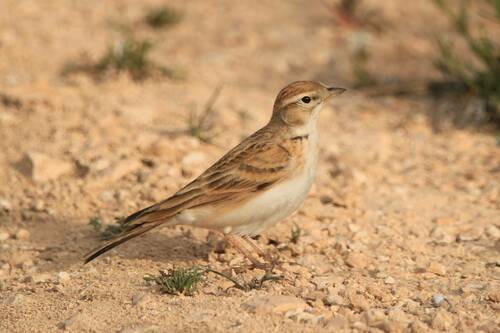
ニシヒメコウテンシ (Calandrella brachydactyla) ニシヒメコウテンシ
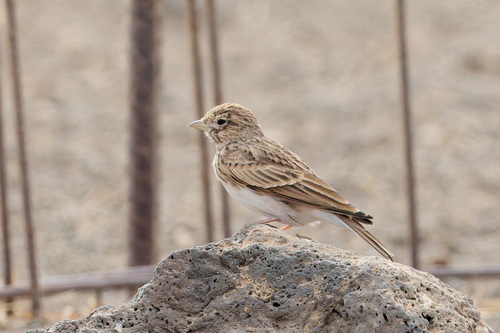
Mediterranean Short-toed Lark (Alaudala rufescens) Mediterranean Short-toed Lark

メディア

読み込み中…

要点

ニシヒメコウテンシとMediterranean Short-toed Larkの最も信頼できるフィールドマークは、暗い首の斑点の有無です:ニシヒメコウテンシは首の側面に明確な暗い斑点を示しますが、Mediterranean Short-toed Larkにはこれがありません。Mediterranean Short-toed Larkはまた、より細かいストライプのある胸と、明らかに短く鈍いくちばし、丸みを帯びた頭を持っています。どちらも小さく、淡い色のヒメコウテンシで、全体的な色合いや構造は似ていますが、特に変動する光の下や遠くから見る場合には、頭のパターン、くちばしの形、胸のストライプに注意を払うことが重要です。歌や群れ行動の微妙な違いが役立つ場合もありますが、羽毛や構造的な手がかりほど信頼性はありません。

識別のコツ

  1. Check for dark neck patches: ニシヒメコウテンシは常に首の側面に明確な暗い斑点を示します;Mediterranean Short-toed Larkにはこれがありません。これはすべての年齢と季節において最も信頼できるフィールドマークです。
  2. Assess breast streaking: Mediterranean Short-toed Larkは胸により細かく、広範囲にわたるストライプがありますが、ニシヒメコウテンシの胸はよりクリーンで白く、ストライプが少ないです。これはすべての羽毛において有用です。
  3. Examine bill shape: ニシヒメコウテンシは強く、尖った、やや長いくちばし(灰色のクルメンを持つピンク色)を持っていますが、Mediterranean Short-toed Larkのくちばしは短く、鈍く、円錐形ではありません。くちばしの色は診断的ではありませんが、形と長さはそうです。
  4. Look at head shape: Mediterranean Short-toed Larkは、ニシヒメコウテンシのやや大きく、角ばった頭に比べて、より丸く小さい頭を持っています。これは微妙ですが、直接比較する際に役立つことがあります。
  5. Supercilium: 両種は淡いスーパシリウムを持っているため、これは分離には役立ちません。
  6. Crown color: 一部のニシヒメコウテンシ(特に西部の個体)は赤褐色の冠を示すことがありますが、これはMediterraneanと重なり、単独では信頼できません。
  7. Tail pattern: 両方とも暗い尾を持っています;尾のパターンは分離には役立ちません。
  8. Flocking behavior: 冬に、ニシヒメコウテンシはMediterraneanよりも大きく、より同期した群れを形成することがありますが、これは弱い手がかりに過ぎません。
  9. Flight views: これらの種に特有の上翼や飛行パターンの違いは確認されていないため、翼のパネルや後縁に頼らないでください。
  10. Song: Mediterranean Short-toed Larkの歌はより豊かで多様ですが、両方とも模倣的で変動する可能性があります;注意して使用してください。
  11. Habitat: 両方とも似たような開けた乾燥した生息地に生息しています;生息地だけで識別しないでください。
  12. Size: 両方ともサイズが似ています;サイズを分離の手がかりとして使用しないでください。
  13. Sex and age: 両種の性別は似ており、一般的な胸のストライプと首の斑点を超えた年齢特有のマークは確認されていません。
  14. Plumage variability: 両種はその分布域においてかなりの変異を示します;常にマークの組み合わせを使用し、単一の特徴に頼らないでください。
  15. Pitfalls: 首の斑点や胸のストライプを隠す可能性のある擦り切れたまたは汚れた鳥に注意してください;可能であれば、複数の視点を得て、群れの中のいくつかの個体を確認してください。

大きさ

両種はサイズが非常に似ており、Mediterranean Short-toed Larkは長さ13〜14 cmで測定されます。フィールドでの強いサイズの違いはなく、両性はサイズと外見が似ています。これら二つを分けるためにサイズに頼らないでください。

羽色

すべての年齢と季節において、重要な羽毛の違いは、ニシヒメコウテンシの首の側面に暗い斑点が存在することで、Mediterranean Short-toed Larkにはこれがありません。両種は上面が暗いストライプのある灰褐色で、下面は白ですが、Mediterranean Short-toed Larkは全体的に一般的に鈍い色合いで、胸により細かく広範囲にわたるストライプがあります。冠の色は一部のニシヒメコウテンシで赤褐色になることがありますが、特に西部の個体では変動があり、Mediterraneanと重なります。両方とも淡いスーパシリウムと暗い尾を持っていますが、胸のストライプはMediterraneanでより顕著で細かく、ニシヒメコウテンシはよりクリーンで白い胸を持ち、ストライプが少ない傾向があります。情報源には年齢特有の上翼や飛行パターンの違いは確認されていないため、すべての羽毛において頭と胸のパターンに焦点を当ててください。

行動

ニシヒメコウテンシは、冬に大きく、コンパクトな群れを形成し、同期して飛ぶことで知られています。朝には水に向かって一緒に移動し、夕方には開けた地面に止まります。Mediterranean Short-toed Larkの行動は詳細には記述されていませんが、両種は群れを成す傾向があり、グループで見ることができます。群れ行動だけでは診断的ではありませんが、冬のニシヒメコウテンシの密集した同期した群れは微妙な手がかりになるかもしれません。

生息環境

両種は南ヨーロッパ、北アフリカ、中東の一部にわたる開けた乾燥した生息地に生息しています。Mediterranean Short-toed Larkは地中海盆地全体、カナリア諸島、イベリア、北アフリカに広く分布しています。ニシヒメコウテンシは南および東ヨーロッパ、北アフリカ、アジアの一部で繁殖し、一部の亜種はアフリカと南アジアで越冬します。生息地の重複は広範囲にわたるため、文脈は信頼できる分離要因ではありません。

声

歌は似ていますが、Mediterranean Short-toed Larkの歌はニシヒメコウテンシの歌よりも豊かで多様で模倣的であると説明されています。両方とも変動的で模倣的である可能性があるため、歌は主な分離要因ではなく、補助的な手がかりとして使用するのが最適です。

より良い説明を送る

比較と同じ項目を使ってください。文章はすぐに公開されます。

The most reliable field mark between Greater Short-toed Lark and Mediterranean Short-toed Lark is the presence or absence of dark neck patches: Greater Short-toed Lark shows distinct dark patches on the sides of its neck, while Mediterranean Short-toed Lark lacks these. Mediterranean Short-toed Lark also has a more finely streaked breast and a noticeably shorter, blunter bill with a rounder head. Both are small, pale larks with similar overall coloration and structure, but careful attention to head pattern, bill shape, and breast streaking is essential, especially in variable light or at a distance. Subtle differences in song and flocking behavior may help, but are less reliable than plumage and structural cues.

  1. Check for dark neck patches: Greater Short-toed Lark always shows distinct dark patches on the sides of the neck; Mediterranean Short-toed Lark lacks these. This is the most reliable field mark for all ages and seasons.
  2. Assess breast streaking: Mediterranean Short-toed Lark has finer, more extensive streaking across the breast, while Greater Short-toed Lark's breast is cleaner and whiter with less streaking. This is useful in all plumages.
  3. Examine bill shape: Greater Short-toed Lark has a strong, pointed, and slightly longer bill (pinkish with a grey culmen), while Mediterranean Short-toed Lark's bill is shorter, blunter, and less conical. Bill color is not diagnostic, but shape and length are.
  4. Look at head shape: Mediterranean Short-toed Lark has a more rounded, smaller head compared to the slightly larger and more angular head of Greater Short-toed Lark. This is subtle but can be helpful in direct comparison.
  5. Supercilium: Both species have a pale supercilium, so this is not useful for separation.
  6. Crown color: Some Greater Short-toed Larks (especially western birds) may show a rufous crown, but this overlaps with Mediterranean and is not reliable alone.
  7. Tail pattern: Both have a dark tail; tail pattern is not a separator.
  8. Flocking behavior: In winter, Greater Short-toed Lark may form larger, more synchronized flocks than Mediterranean, but this is only a weak clue.
  9. Flight views: No distinctive upperwing or flight pattern differences are noted for these species, so do not rely on wing panels or trailing edges.
  10. Song: Mediterranean Short-toed Lark's song is richer and more varied, but both can be imitative and variable; use with caution.
  11. Habitat: Both occur in similar open, dry habitats; do not use habitat alone for identification.
  12. Size: Both are similar in size; do not use size as a separator.
  13. Sex and age: Sexes are similar in both species, and no age-specific marks are noted beyond general breast streaking and neck patches.
  14. Plumage variability: Both species show considerable variation across their ranges; always use a combination of marks, not a single feature.
  15. Pitfalls: Beware of worn or dirty birds, which may obscure neck patches or breast streaking; always try to get multiple views and check several individuals in a flock if possible.

Both species are very similar in size, with Mediterranean Short-toed Lark measured at 13–14 cm in length. There is no strong size difference in the field, and both sexes are alike in size and appearance. Do not rely on size to separate these two.

For all ages and seasons, the key plumage distinction is the presence of dark patches on the sides of the neck in Greater Short-toed Lark, which are absent in Mediterranean Short-toed Lark. Both species are dark-streaked greyish-brown above and white below, but Mediterranean Short-toed Lark is generally duller overall, with finer and more extensive streaking across the breast. Crown color can be rufous in some Greater Short-toed Larks, especially in western populations, but this is variable and overlaps with Mediterranean. Both have a pale supercilium and a dark tail, but the breast streaking is more pronounced and finer in Mediterranean, while Greater Short-toed Lark tends to have a cleaner, whiter breast with less streaking. No age-specific upperwing or flight pattern differences are noted in the sources, so focus on head and breast pattern for all plumages.

Greater Short-toed Lark is noted for forming large, compact flocks in winter that fly in synchrony, often moving together to water in the mornings and roosting in open ground in the evenings. Mediterranean Short-toed Lark's behavior is not described in detail, but both species are gregarious and can be seen in groups. Flocking behavior alone is not diagnostic, but the tight, synchronized flocks of Greater Short-toed Lark may be a subtle clue in winter.

Both species occupy open, dry habitats across southern Europe, North Africa, and parts of the Middle East. Mediterranean Short-toed Lark is widespread around the Mediterranean Basin, including the Canary Islands, Iberia, and North Africa. Greater Short-toed Lark breeds in southern and eastern Europe, North Africa, and parts of Asia, with some subspecies wintering in Africa and South Asia. Habitat overlap is extensive, so context is not a reliable separator.

The songs are similar, but Mediterranean Short-toed Lark's song is described as richer, more varied, and more imitative than Greater Short-toed Lark's, which ranges from a dry twittering to a more varied melody. Both can be variable and imitative, so song is best used as a supporting clue rather than a primary separator.

変更を破棄しますか?

保存していない編集があります。今離れると失われます。

ニシヒメコウテンシ · Mediterranean Short-toed Lark · 苦手な鳥