

Motmot

スズガモ 対 コスズガモ

Aythya marila 対 Aythya affinis

スズガモとコスズガモのクイズ
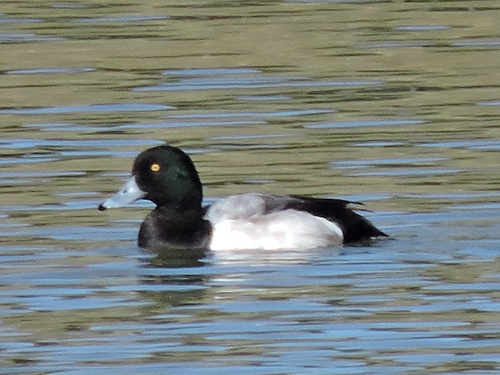
スズガモ (Aythya marila) スズガモ
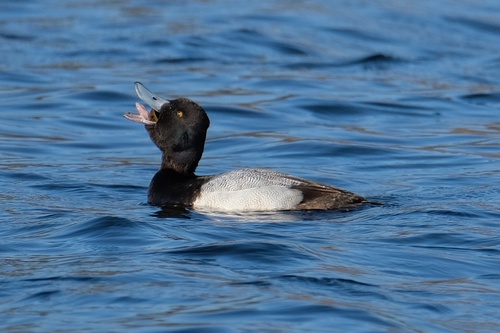
コスズガモ (Aythya affinis) コスズガモ

メディア

読み込み中…

要点

グレーター スズガモとコスズガモを区別する最も信頼できるフィールドマークは、飛行中の白い翼のストライプの広がりです:グレーター スズガモは、セカンダリーからプライマリーにかけて白いストライプが広がっており、コスズガモはセカンダリーにのみ白があり、プライマリーはずっと灰色に見えます。このマークは、飛行中の成鳥や古い幼鳥に最も効果的です。静止時には、グレーター スズガモはより大きく、丸くてふっくらした頭と、より広くてスプーン状のくちばしを持ち、コスズガモはよりコンパクトで、尖ったまたは角ばった後頭部と狭いくちばしを持っています。雌と幼鳥は特に難しいですが、頭の形、くちばしの幅、くちばしの基部の白の量に注意を払うことで助けになります。両種は大きな群れで一緒に見られることがあるため、直接比較が可能です。

識別のコツ

  1. 白い翼のストライプの広がり: 上翼の白の広がりを探してください。グレーター スズガモはセカンダリーからプライマリー(ほぼ翼先端まで)に白を示し、コスズガモはセカンダリーにのみ白があり、プライマリーは灰色がかっています。これは、すべての年齢の飛行中に最も良いマークです。
  2. 静止時の頭の形: グレーター スズガモは、滑らかに丸みを帯びたふっくらとした頭を持ち、高い額と滑らかに傾斜した後頭部があります。コスズガモは、より角ばったまたは尖った後頭部を持ち、小さな房を形成することがあり、額はあまり目立ちません。可能であれば、鳥を並べて比較してください。
  3. くちばしの形: グレーター スズガモは、特に先端に向かって、より広くてスプーン状のくちばしを持っています。コスズガモのくちばしは狭くてまっすぐです。これは微妙ですが、近距離または写真で見るとわかります。
  4. くちばしの爪: くちばしの先端にある黒い爪は通常、グレーター スズガモの方が広いですが、非常に近くでないと判断が難しいです。
  5. 体の大きさ: グレーター スズガモは、特にコスズガモの隣に見られるときに、目に見えて大きく、体重が重いです。ただし、サイズの重複や姿勢が誤解を招くことがあるため、他のマークと組み合わせて使用してください。
  6. 腹部と背中の色(成鳥のオス): グレーター スズガモのオスは明るい白い腹部と、より淡い、よりウネリのある背中を持っています。コスズガモのオスはより暗い背中と腹部にオリーブ色が見られます。照明や羽毛の摩耗がこれを隠すことがあります。
  7. 頭の光沢(成鳥のオス): グレーター スズガモの頭は緑または紫の光沢を示すことがありますが、コスズガモはしばしば紫と表現されます。ただし、光沢の色は光によって変わり、遠くからは信頼できません。
  8. 雌と幼鳥の顔のパターン: 両者はくちばしの基部に白い斑点がありますが、コスズガモの雌と幼鳥は通常、白が少なく、時にはほとんどありません。これは変動があり、常に信頼できるわけではありません。
  9. 幼鳥/幼鳥の混同: 両種の幼鳥と初冬の鳥は非常に似ています。羽毛よりも飛行中の翼のストライプと構造的なマークに依存してください。
  10. 混合群れ: 北アメリカでは、両種が一緒に見られることがよくあります。最良の結果を得るために、個体を並べて比較してください。
  11. 生息地の文脈: ユーラシアでは、スズガモはほぼ常にグレーターです。北アメリカでは、両者が可能で、特に大きな湖や沿岸の水域で見られます。
  12. 行動: 両者は食べ物を求めて潜水し、大きな筏を形成します。行動は強い区別要因ではありません。
  13. 声: 分離のための実用的なフィールドマークではありません。
  14. 重複に注意: 多くのマークは微妙で変動があります。特に雌と幼鳥の正しい識別のためには、翼のパターン、頭の形、くちばしの構造の組み合わせを使用してください。
  15. 後での研究のために写真を撮る: 疑わしい場合は、飛行中の翼と横からの頭/くちばしを示す写真を撮って、後で比較できるようにしてください。

大きさ

グレーター スズガモは一般的にコスズガモよりも大きく、体が重く、長さは39〜56 cm、翼幅は71〜84 cmで、コスズガモは38〜48 cmの長さと68〜78 cmの翼幅です。グレーター スズガモは平均して約20%重く、10%長いですが、重複があります。フィールドでは、グレーター スズガモは特に混合群れの中で目に見えてより頑丈に見えますが、サイズだけでは重複や姿勢のために常に信頼できるわけではありません。

羽色

行動

両種は潜水するカモであり、大きな群れ(「筏」)を形成することが多く、時には混合します。グレーター スズガモは非常に大きく、密な筏を形成することがあり、時には数千羽に達します。両者は食べ物を求めて潜水しますが、遠くからは採餌や群れの行動に強い違いは見られません。求愛行動は両者において複雑ですが、通常はフィールドマークではありません。

生息環境

両種は冬に大きな湖、沿岸の入り江、河口で一緒に見られます。グレーター スズガモはユーラシアの塩水沿岸で見られる可能性が高く、コスズガモはより厳密に北アメリカに分布し、内陸部でも見られます。生息地は混合北アメリカの群れでは強い区別要因ではありませんが、ユーラシアではスズガモはほぼ常にグレーターです。

より良い説明を送る

比較と同じ項目を使ってください。文章はすぐに公開されます。

The most reliable field mark to separate Greater and Lesser Scaup is the extent of the white wing stripe in flight: Greater Scaup show a white stripe running from the secondaries well out onto the primaries, while Lesser Scaup have white only on the secondaries, with the primaries appearing much grayer. This mark works best on adults and older immatures in flight. At rest, Greater Scaup are bulkier with a rounder, fuller head and a broader, more spatulate bill, while Lesser Scaup look more compact with a peaked or angular hindcrown and a narrower bill. Females and immatures are especially tricky, but careful attention to head shape, bill width, and the amount of white at the bill base can help. Both species can occur together in large flocks, so direct comparison is often possible.

  1. White wing stripe in flight: Look for the extent of white on the upperwing. Greater Scaup show white from the secondaries onto the primaries (almost to the wingtip); Lesser Scaup have white only on the secondaries, with primaries grayish. This is the single best mark for all ages in flight.
  2. Head shape at rest: Greater Scaup have a smoothly rounded, full head with a high forehead and smoothly sloping nape. Lesser Scaup have a more angular or peaked hindcrown, sometimes forming a small tuft, and a less prominent forehead. Compare birds side by side if possible.
  3. Bill shape: Greater Scaup have a broader, more spatulate bill, especially toward the tip. Lesser Scaup's bill is narrower and straighter. This is subtle but visible at close range or in photos.
  4. Bill nail: The black nail at the tip of the bill is usually wider on Greater Scaup, but this is hard to judge unless very close.
  5. Body bulk: Greater Scaup are noticeably bulkier and heavier-bodied, especially when seen next to Lesser Scaup. However, size overlap and posture can mislead, so use in combination with other marks.
  6. Flank and back color (adult males): Greater Scaup males have bright white flanks and a paler, more vermiculated back. Lesser Scaup males have darker backs and flanks with olive tones. Lighting and feather wear can obscure this.
  7. Head sheen (adult males): The head of Greater Scaup can show green or purple gloss; Lesser Scaup is often described as purple. However, sheen color varies with light and is unreliable at distance.
  8. Female and immature face pattern: Both have a white patch at the bill base, but Lesser Scaup females and immatures usually have less white, and sometimes almost none. This is variable and not always reliable.
  9. Juvenile/immature confusion: Juveniles and first-winter birds of both species are very similar. Rely on wing stripe in flight and structural marks rather than plumage.
  10. Mixed flocks: In North America, both species often occur together. Compare individuals side by side for best results.
  11. Habitat context: In Eurasia, scaup are almost always Greater; in North America, both are possible, especially on large lakes and coastal waters.
  12. Behavior: Both dive for food and form large rafts; behavior is not a strong separator.
  13. Voice: Not a practical field mark for separation.
  14. Beware of overlap: Many marks are subtle and variable. Use a combination of wing pattern, head shape, and bill structure for the best chance of correct ID, especially in females and immatures.
  15. Photograph for later study: When in doubt, take photos showing the wing in flight and the head/bill in profile for later comparison.

Greater Scaup are generally larger and bulkier than Lesser Scaup, with a length of 39–56 cm and a wingspan of 71–84 cm, compared to Lesser Scaup's 38–48 cm length and 68–78 cm wingspan. Greater Scaup are about 20% heavier and 10% longer on average, though there is overlap. In the field, Greater Scaup often appear noticeably more robust, especially in mixed flocks, but size alone is not always reliable due to overlap and posture.

  • In flight (all ages): The most diagnostic mark is the white wing stripe. Greater Scaup show a white stripe that extends from the secondaries well onto the primaries, reaching close to the wingtip. Lesser Scaup have white only on the secondaries; the primaries are grayish, so the white stripe stops short of the wingtip. This is most visible in good light and on birds with fresh plumage.
  • Adult males: Both have dark heads with iridescence, but Greater Scaup's head is rounder and the sheen can be green or purple depending on light, while Lesser Scaup's head is more peaked with a small hindcrown tuft and the sheen is often described as purple (but this is unreliable in the field). Greater Scaup males have a paler, more vermiculated back and brighter white flanks; Lesser Scaup males have a darker back and more olive on the flanks.
  • Females and immatures: Both are brown with a white patch at the bill base, but Lesser Scaup females and immatures tend to have less white around the bill and a duller appearance overall. Juveniles of both species resemble adult females, but Lesser Scaup juveniles often have almost no white at the bill base. Greater Scaup females are bulkier with a rounder head and broader bill.
  • Eclipse/plumage variation: Drakes in eclipse plumage of both species look more like females, but Greater Scaup retain a slightly paler and bulkier look.

Both species are diving ducks and often form large flocks ('rafts'), sometimes mixed. Greater Scaup can form very large, dense rafts, sometimes numbering in the thousands. Both dive for food, but there are no strong behavioral differences in foraging or flocking visible at a distance. Courtship displays are complex in both, but not usually a field mark.

Both species occur together in winter on large lakes, coastal bays, and estuaries. Greater Scaup are more likely to be found on saltwater coasts in Eurasia, while Lesser Scaup are more strictly North American and can be found farther inland. Habitat is not a strong separator in mixed North American flocks, but in Eurasia, scaup are almost always Greater.

変更を破棄しますか?

保存していない編集があります。今離れると失われます。

スズガモ · コスズガモ · 苦手な鳥