

Motmot

ノドグロミツオシエ 対 アカガシラモリハタオリ

Indicator indicator 対 Anaplectes rubriceps

ノドグロミツオシエとアカガシラモリハタオリのクイズ
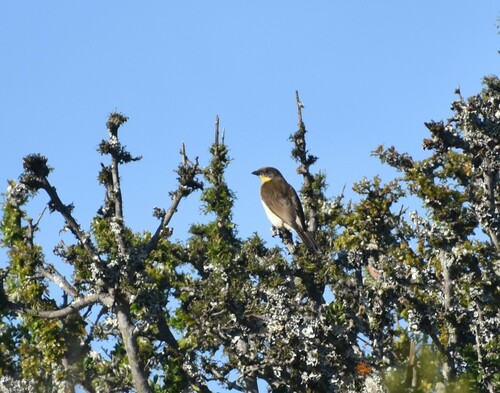
ノドグロミツオシエ (Indicator indicator) ノドグロミツオシエ
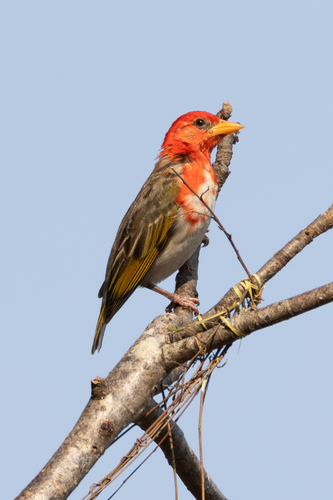
アカガシラモリハタオリ (Anaplectes rubriceps) アカガシラモリハタオリ

メディア

読み込み中…

要点

ノドグロミツオシエとアカガシラモリハタオリを区別する最も信頼できるフィールドマークは、ハニガイドの大胆な白い尾の斑点で、飛んでいるときや止まっているときに見え、オスの黒い喉とピンクのくちばしが特徴です。アカガシラモリハタオリのオスは、目を引く赤い頭(北部の亜種)または黄色い頭(南部の雌)を持ち、白い腹部と茶色の翼を持ち、尾には白がありません。幼鳥のGreater Honeyguidesは、上面がオリーブブラウンで、黄色い喉と白い尾羽を持ち、雌または未成熟のハタオリと混同されることがありますが、ハニガイドの尾の模様とくちばしの形は独特です。構造的には、ノドグロミツオシエは体が重く、頑丈なくちばしを持ち、ハタオリはより細身で尖ったくちばしと強い爪を持っています。両種は木の中で餌を探しているのが見られますが、餌を探す行動や社会的文脈は大きく異なります。

識別のコツ

  1. 白い尾の斑点(ノドグロミツオシエ): すべての年齢と性別のハニガイドの尾の側面に大胆な白い斑点を探してください。特に飛んでいるときや尾が広がっているときに見えます。アカガシラモリハタオリは尾に白を示しません。
  2. 頭の色(アカガシラモリハタオリ): 北部のオスのハタオリは明るい赤い頭を持ち、南部の雌は黄色い頭と黄色い翼のアクセントを持っています。ハニガイドは決して赤または黄色の頭を示しません。
  3. 喉とくちばし(ノドグロミツオシエ): オスとメスのハニガイドは黒い喉を持ち(オスの方が目立つ)、オスはピンクのくちばしを持ち、メスは黒っぽいくちばしを持っています。ハタオリは尖った中程度の長さのくちばしを持ち、黒い喉はありません。
  4. 肩の斑点(ノドグロミツオシエ): オスは黄色の肩の斑点を示し、ハタオリにはありません。
  5. 腹部: ハニガイドの腹部は白いです。ハタオリの腹部も白いので、これは信頼できる区別にはなりません。
  6. 上面: ハニガイドの上面は暗い灰色の茶色(成鳥)またはオリーブブラウン(未成熟)で、ハタオリの上面は茶色ですが、ハニガイドの縞模様の翼と白い尾の斑点は独特です。
  7. 幼鳥の混乱: 未成熟のハニガイドは黄色い喉と白い尾羽を持ち、雌または未成熟のハタオリと混同されることがありますが、ハニガイドの尾の模様とくちばしの形がそれらを区別するのに役立ちます。
  8. くちばしの形: ハニガイドのくちばしは頑丈でより強固です。ハタオリのくちばしは尖っていて細身で、探るのに適しています。
  9. 足と爪: ハタオリは逆さにぶら下がるための短くて強い爪を持っていますが、ハニガイドはこのアクロバティックな行動を示しません。
  10. 行動: ハニガイドは人間を導いたり、蜂の巣で餌を探したりするのが見られます。ハタオリはアクロバティックに餌を探しているのが見られたり、独特の棒の巣の近くで見られることが多いです。
  11. 巣: アカガシラモリハタオリは、時には長い入口トンネルを持つ、棒から作られた吊り下げられた雨滴型の巣を作ります。ハニガイドはそのような巣を作りません。
  12. 社会的文脈: ハタオリは1羽のオスと数羽の雌で小さな群れを作ることがありますが、ハニガイドは通常、孤独であるか、蜂の巣で他のハニガイドと一緒にいます。
  13. 鳴き声: ハニガイドの導きの呼び声のみが記述されています—揺れる、チャタリングの音。ハタオリの呼び声はここでは詳細に記述されていないため、注意して使用してください。
  14. サイズと印象: ハニガイドは重くてがっしりしており、ハタオリは軽くて細身で、動きが機敏です。
  15. 落とし穴: 雌や未成熟のハタオリは明るい頭の色を欠き、地味に見えることがありますが、ハニガイドの白い尾の斑点や黒い喉を示すことはありません。未成熟のハニガイドは強いコントラストを欠くことがありますが、診断的な尾の模様は示します。

大きさ

ノドグロミツオシエは約47gの体重を持ち、約20cmの長さです。アカガシラモリハタオリの質量は提供されていませんが、一般的に軽くて細身の体型です。ハニガイドはよりがっしりとしており、ハタオリはより繊細で機敏に見え、特に枝の間でアクロバティックに餌を探すときにそう見えます。

羽色

行動

ノドグロミツオシエは、人間を蜂の巣に導く相利共生行動で有名で、蜂の巣に関連する蜜蝋、幼虫、昆虫を食べます。蜂の巣で他のハニガイドと一緒にいることが多く、巣が乱された後に蜜蝋を食べているのが見られます。アカガシラモリハタオリはアクロバティックに餌を探し、しばしば逆さにぶら下がって樹皮、枯れ葉、クモの巣を探して昆虫を探し、果物や蜜も取ります。ハタオリは通常、単独またはペアで見られ、時には1羽のオスと数羽の雌で小さな群れを作り、棒から作られた吊り下げられた雨滴型の巣を作ります。ハニガイドは群れで見られることは稀で、複雑な巣を作りません。

生息環境

両種はアフロトロピクスに広く分布し、しばしば森林の生息地にいます。ノドグロミツオシエは蜂のコロニーの近くで最もよく見られ、蜂が存在するさまざまな森林やサバンナの生息地で見られることがあります。アカガシラモリハタオリは、若木から大きな木までの木や茂みの中に見られ、しばしば樹冠や枝の先端で餌を探しているのが観察されます。ハタオリの存在は、その独特の吊り下げられた巣によって示されることが多く、ハニガイドの存在はその導きの行動や呼び声によって検出されることが多いです。

声

ノドグロミツオシエは、特に導くときや攻撃的なときに、揺れる、チャタリングの「tya」音を混ぜた一連の音を出します。アカガシラモリハタオリの鳴き声はノートには記述されていないため、提供された情報に基づいて区別するための診断にはなりません。

より良い説明を送る

比較と同じ項目を使ってください。文章はすぐに公開されます。

The most reliable field mark to separate Greater Honeyguide from Red-headed Weaver is the honeyguide’s bold white tail patches, visible in flight and when perched, and the male’s black throat and pink bill. Red-headed Weaver males have a striking red head (northern races) or yellow head (southern females), a white belly, and brown wings, lacking any white in the tail. Juvenile Greater Honeyguides are olive-brown above with a yellow throat and white rump, which can be confused with female or immature weavers, but the honeyguide’s tail pattern and bill shape remain distinctive. Structurally, Greater Honeyguide is heavier-bodied with a stouter bill, while the weaver is more slender with a pointed beak and strong claws. Both species may be seen foraging in trees, but their feeding behavior and social context differ markedly.

  1. White tail patches (Greater Honeyguide): Look for bold white patches on the sides of the tail in all ages and sexes of honeyguide, especially visible in flight or when the tail is spread. Red-headed Weaver never shows white in the tail.
  2. Head color (Red-headed Weaver): Northern male weavers have a bright red head; southern females have a yellow head and yellow wing accents. No honeyguide ever shows a red or yellow head.
  3. Throat and bill (Greater Honeyguide): Male and female honeyguides have a black throat (male more pronounced), and males have a pink bill; females have a blackish bill. Weavers have a pointed, moderately long bill and never a black throat.
  4. Shoulder patch (Greater Honeyguide): Males show a yellow shoulder patch, which is absent in weavers.
  5. Underparts: Honeyguide underparts are white; weaver underparts are also white, so this is not a reliable separator.
  6. Upperparts: Honeyguide upperparts are dark grey-brown (adult) or olive-brown (immature); weaver upperparts are brown, but the honeyguide’s streaked wings and white tail patches are distinctive.
  7. Juvenile confusion: Immature honeyguides have a yellow throat and white rump, which can be confused with female/immature weavers, but the honeyguide’s tail pattern and bill shape help separate them.
  8. Bill shape: Honeyguide’s bill is stouter and more robust; weaver’s bill is pointed and slender, suited for probing.
  9. Feet and claws: Weavers have short, strong claws for hanging upside-down; honeyguides do not show this acrobatic behavior.
  10. Behavior: Honeyguides may be seen guiding humans or feeding at bee nests; weavers are more likely to be seen foraging acrobatically or near their distinctive stick nests.
  11. Nest: Red-headed Weaver builds a suspended, raindrop-shaped nest from sticks, sometimes with a long entrance tunnel. Honeyguides do not build such nests.
  12. Social context: Weavers may be in small flocks with one male and several females; honeyguides are usually solitary or with other honeyguides at bee nests.
  13. Vocalizations: Only the honeyguide’s guiding call is described—wavering, chattering notes. Use with caution, as weaver calls are not detailed here.
  14. Size and jizz: Honeyguide is heavier and bulkier; weaver is lighter, more slender, and agile in movement.
  15. Pitfalls: Female and immature weavers lack bright head color and can look drab, but will never show the honeyguide’s white tail patches or black throat. Immature honeyguides may lack strong contrast but still show the diagnostic tail pattern.

Greater Honeyguide is heavier, with a body mass of about 47 g [wikidata], and is about 20 cm long [wikipedia]. Red-headed Weaver’s mass is not provided, but it is generally lighter and more slender in build. The honeyguide appears bulkier and more robust, while the weaver is more delicate and agile, especially when foraging acrobatically among branches.

  • Juvenile/immature Greater Honeyguide: Olive-brown upperparts, white rump, yellow throat and upper breast. No red or yellow on the head. Bold white tail patches are present from a young age and are a key mark in flight or when the tail is spread.
  • Adult male Greater Honeyguide: Black throat, pink bill, dark grey-brown upperparts, white underparts, yellow shoulder patch, streaked whitish wings, and bold white tail patches. Female is duller, with a blackish bill and black throat.
  • Red-headed Weaver (adult male, northern): Distinct red head, white belly, brown wings. No white in tail. Females (north) have brown heads; southern females have yellow heads and yellow wing accents. All have a pointed beak and lack the honeyguide’s black throat or tail patches.
  • Juvenile Red-headed Weaver: Not described in detail, but lacks the honeyguide’s white tail patches and yellow throat. Head color is less vivid than adult males, and underparts are white.
  • Key contrast: Only the honeyguide shows bold white tail patches and a black throat (male/female); only the weaver (northern male) has a bright red head, and only southern female weavers have yellow heads.

Greater Honeyguide is famous for its mutualistic behavior of guiding humans to bee nests, and for feeding on beeswax, larvae, and insects associated with hives. It often associates with other honeyguides at bee nests and can be seen feeding on wax after the nest is disturbed. Red-headed Weaver forages acrobatically, often hanging upside-down to probe bark, dead leaves, and spider nests for insects, and also takes fruit and nectar. The weaver is usually seen alone or in pairs, sometimes in small flocks with one male and several females, and builds suspended, raindrop-shaped nests from sticks. The honeyguide is rarely seen in flocks and does not build elaborate nests.

Both species occur widely in the Afrotropics, often in wooded habitats. Greater Honeyguide is most often found near bee colonies and may be seen in a variety of woodland or savanna habitats where bees are present. Red-headed Weaver is found in trees and bushes, from saplings to large trees, and is often observed foraging in the canopy or at the tips of branches. The weaver’s presence is often indicated by its distinctive suspended nest, while the honeyguide’s presence is more likely detected by its guiding behavior or calls.

Greater Honeyguide gives a series of wavering, chattering 'tya' notes mixed with peeps or pipes, especially when guiding or in aggression. Red-headed Weaver’s vocalizations are not described in the notes, so are not diagnostic for separation based on the provided information.

変更を破棄しますか?

保存していない編集があります。今離れると失われます。

ノドグロミツオシエ · アカガシラモリハタオリ · 苦手な鳥