

ダイサギ 対 オオアオサギ
Ardea alba 対 Ardea herodias
ダイサギとオオアオサギのクイズ
 ダイサギ
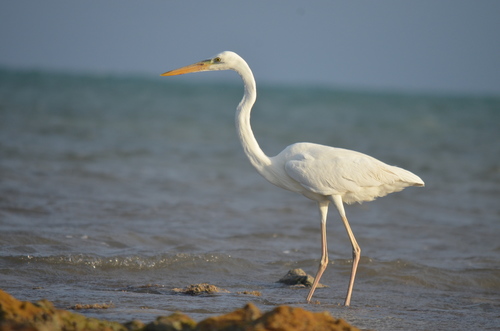 オオアオサギ
要点
The most reliable field mark between Great White Egret and Great Blue Heron is overall plumage color: adult Great White Egret is entirely white, while adult Great Blue Heron is mostly blue-gray with a white face and dark crown. However, confusion arises in Florida and the Caribbean, where the all-white 'Great White Heron' morph of Great Blue Heron occurs. In these cases, leg color is key: Great White Egret has black legs and feet, while Great Blue Heron (including the white morph) has yellowish or gray legs. Size is also helpful—Great Blue Heron is bulkier and heavier, though not dramatically taller. Bill color and structure, as well as subtle differences in head and neck markings, further help separate these two, especially in flight or at a distance.
識別のコツ
- Plumage color (all ages): Adult Great White Egret is always pure white; adult Great Blue Heron is blue-gray with a white face and dark crown plumes. If you see any gray or rufous on the body, it's a Great Blue Heron.
- White morph confusion: In South Florida, Keys, and Caribbean, the all-white 'Great White Heron' morph of Great Blue Heron is possible. Elsewhere, a large all-white heron is almost always a Great White Egret.
- Leg color (all ages): Great White Egret has black legs and feet. Great Blue Heron (including white morph) has yellowish or gray legs, never solid black. This is the best mark for separating white birds at a distance.
- Bill color and structure: Great White Egret has a long, slender, yellow bill (may darken in breeding season). Great Blue Heron has a heavier, thicker, dull yellowish bill (briefly orange in breeding season). The heron's bill is noticeably more robust.
- Size and structure: Great Blue Heron is much heavier and bulkier, with a thicker neck and larger head. Great White Egret is more slender and graceful. If both are present, the heron dwarfs the egret.
- Head and neck pattern: Great Blue Heron (normal morph) shows a white face with a black or slate crown stripe and plumes; Great White Egret's head is entirely white, no plumes or dark markings.
- Juvenile/immature confusion: Juvenile Great Blue Herons are duller but still grayish, never pure white. Juvenile Great White Egrets are identical to adults (pure white). No distinctive wing patterns are described for either species at any age.
- Flight style: Both fly with necks retracted, but Great Blue Heron appears heavier and more lumbering, with broader wings. Great White Egret is more buoyant and slender in flight.
- Breeding plumes: Both species develop ornamental plumes in breeding season, but the egret's are delicate and on the back, while the heron's are on the lower neck and back.
- Gape line: Not usually visible in the field, but Great White Egret's gape extends well beyond the back of the eye; Great Blue Heron's does not.
- Habitat context: Outside southern Florida and the Caribbean, a large all-white heron is almost certainly a Great White Egret. In the overlap zone, check leg color and bill thickness.
- Voice: Not a reliable field mark, but both give harsh croaks; egret's is lower and less frequent.
- Feet color: Great White Egret's feet are black; Great Blue Heron's are yellowish or gray, matching the legs.
- Sex and season: Both sexes are similar in both species; seasonal changes mostly affect bill and leg color (slightly darker in breeding), but not enough to cause confusion.
- Common pitfalls: Do not rely on size alone unless both species are present. Beware of white morph Great Blue Heron in Florida/Caribbean—always check leg and bill color.
大きさ
Great Blue Heron is significantly heavier and bulkier than Great White Egret, with an average adult mass of about 2295 g compared to the egret's average of around 1000 g. While both can be similar in standing height (Great Blue Heron: 115–138 cm; Great White Egret: up to 100 cm), the heron is generally more robust, with a thicker neck and bill. Wingspan also favors the heron (167–201 cm vs. egret's 131–170 cm), but this can be hard to judge unless the birds are side by side. In the field, Great Blue Heron often appears heavier-bodied and longer-necked.
羽色
Adult Great White Egret is pure white at all ages and seasons, with no dark markings on the body, wings, or head. Juveniles are identical to nonbreeding adults. In contrast, adult Great Blue Heron is mostly blue-gray with a white face, black or slate crown plumes, and red-brown thighs and flank stripes; its neck is rusty gray with black-and-white streaking. Immature Great Blue Herons are duller, with a grayish crown and weakly defined flank pattern, but still show grayish overall coloration and lack the pure white of the egret. The main confusion arises with the all-white 'Great White Heron' morph of Great Blue Heron, which is also entirely white; here, leg color (yellowish/gray in heron, black in egret) and bill thickness are critical. In flight, both species retract their necks, but the Great Blue Heron shows broader wings and a heavier, more lumbering flight style. No distinctive juvenile or immature upperwing patterns are described for either species, so separation relies on overall color and structure.
行動
Both species are wading birds often seen stalking prey in shallow water. In flight, both retract their necks into an S-shape, unlike cranes. Great Blue Heron tends to appear more deliberate and heavy in its movements, both when walking and in flight, due to its larger size and bulkier build. Great White Egret is more graceful and slender. Both species perch and hunt in similar postures, but the heron's heavier jizz and thicker neck can be apparent with experience.
生息環境
Both species frequent similar wetland habitats—marshes, lakeshores, estuaries, and slow-moving rivers. Great Blue Heron is common throughout North and Central America, while Great White Egret is widespread globally, including the Americas, Europe, Africa, and Asia. In North America, both can be found together, especially in the southeast. The white morph of Great Blue Heron is restricted to South Florida, the Keys, and the Caribbean, so outside this region, any large all-white heron is almost certainly a Great White Egret.
声
Both species are generally quiet, but when vocal, Great White Egret gives a low, hoarse croak or a loud 'cuk cuk cuk' at colonies. Great Blue Heron gives a harsh croak, but vocalizations are not a reliable field mark for separating these two, especially at a distance.