

Airone bianco maggiore vs Great Blue Heron
Ardea alba contro Ardea herodias
Fai un quiz con Airone bianco maggiore e Great Blue Heron
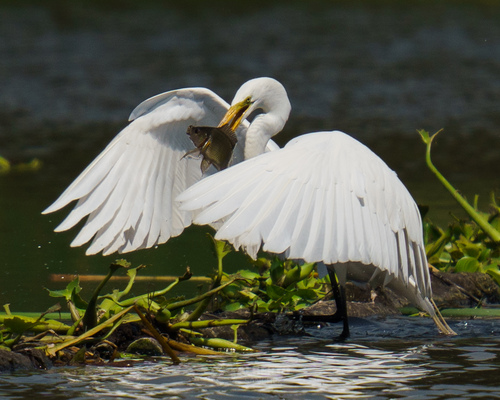 Airone bianco maggiore
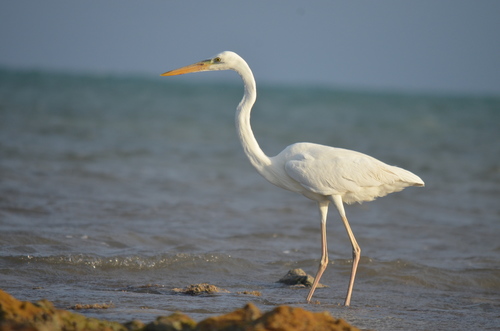 Great Blue Heron
In breve
Il segno di campo più affidabile tra Airone bianco maggiore e Great Blue Heron è il colore complessivo del piumaggio: l'adulto Airone bianco maggiore è completamente bianco, mentre l'adulto Great Blue Heron è per lo più blu-grigio con un volto bianco e una corona scura. Tuttavia, la confusione sorge in Florida e nei Caraibi, dove si verifica la morfologia completamente bianca 'Great White Heron' di Great Blue Heron. In questi casi, il colore delle gambe è fondamentale: l'Airone bianco maggiore ha gambe e piedi neri, mentre il Great Blue Heron (inclusa la morfologia bianca) ha gambe giallastre o grigie. Anche le dimensioni sono utili: il Great Blue Heron è più robusto e pesante, anche se non è drammaticamente più alto. Il colore e la struttura del becco, così come le sottili differenze nei segni sulla testa e sul collo, aiutano ulteriormente a separare questi due, specialmente in volo o a distanza.
Consigli di identificazione
- Plumage color (all ages): L'adulto Airone bianco maggiore è sempre di un bianco puro; l'adulto Great Blue Heron è blu-grigio con un volto bianco e piume di corona scure. Se vedi del grigio o del ruggine sul corpo, è un Great Blue Heron.
- White morph confusion: In Florida meridionale, Keys e Caraibi, è possibile la morfologia completamente bianca 'Great White Heron' di Great Blue Heron. Altrove, un grande airone completamente bianco è quasi sempre un Airone bianco maggiore.
- Leg color (all ages): L'Airone bianco maggiore ha gambe e piedi neri. Il Great Blue Heron (inclusa la morfologia bianca) ha gambe giallastre o grigie, mai completamente nere. Questo è il segno migliore per separare gli uccelli bianchi a distanza.
- Bill color and structure: L'Airone bianco maggiore ha un becco lungo, snello e giallo (può scurirsi durante la stagione di riproduzione). Il Great Blue Heron ha un becco più pesante, spesso e giallastro opaco (brevemente arancione durante la stagione di riproduzione). Il becco dell'airone è visibilmente più robusto.
- Size and structure: Il Great Blue Heron è molto più pesante e robusto, con un collo più spesso e una testa più grande. L'Airone bianco maggiore è più snello e aggraziato. Se entrambi sono presenti, l'airone sovrasta l'airone.
- Head and neck pattern: Il Great Blue Heron (morfologia normale) mostra un volto bianco con una striscia di corona nera o ardesia e piume; la testa dell'Airone bianco maggiore è completamente bianca, senza piume o segni scuri.
- Juvenile/immature confusion: I giovani Great Blue Heron sono più opachi ma ancora grigi, mai completamente bianchi. I giovani Aironi bianchi maggiori sono identici agli adulti (bianchi puri). Non sono descritti schemi distintivi delle ali per nessuna delle due specie a qualsiasi età.
- Flight style: Entrambi volano con il collo retratto, ma il Great Blue Heron appare più pesante e più goffo, con ali più ampie. L'Airone bianco maggiore è più galleggiante e snello in volo.
- Breeding plumes: Entrambe le specie sviluppano piume ornamentali durante la stagione di riproduzione, ma quelle dell'airone sono delicate e sulla schiena, mentre quelle dell'airone sono sul collo inferiore e sulla schiena.
- Gape line: Non è solitamente visibile sul campo, ma l'apertura dell'Airone bianco maggiore si estende ben oltre la parte posteriore dell'occhio; quella del Great Blue Heron no.
- Habitat context: Fuori dalla Florida meridionale e dai Caraibi, un grande airone completamente bianco è quasi certamente un Airone bianco maggiore. Nella zona di sovrapposizione, controlla il colore delle gambe e lo spessore del becco.
- Voice: Non è un segno di campo affidabile, ma entrambi emettono grida aspre; quella dell'airone è più bassa e meno frequente.
- Feet color: I piedi dell'Airone bianco maggiore sono neri; quelli del Great Blue Heron sono giallastri o grigi, corrispondenti alle gambe.
- Sex and season: Entrambi i sessi sono simili in entrambe le specie; i cambiamenti stagionali influenzano principalmente il colore del becco e delle gambe (leggermente più scuri durante la riproduzione), ma non abbastanza da causare confusione.
- Common pitfalls: Non fare affidamento solo sulle dimensioni a meno che entrambe le specie non siano presenti. Fai attenzione alla morfologia bianca del Great Blue Heron in Florida/Caraibi: controlla sempre il colore delle gambe e del becco.
Taglia
Il Great Blue Heron è significativamente più pesante e robusto dell'Airone bianco maggiore, con una massa media adulta di circa 2295 g rispetto a quella dell'airone di circa 1000 g. Sebbene entrambi possano essere simili in altezza in piedi (Great Blue Heron: 115–138 cm; Airone bianco maggiore: fino a 100 cm), l'airone è generalmente più robusto, con un collo e un becco più spessi. L'apertura alare favorisce anche l'airone (167–201 cm contro 131–170 cm dell'airone), ma questo può essere difficile da giudicare a meno che gli uccelli non siano affiancati. Sul campo, il Great Blue Heron appare spesso con un corpo più pesante e un collo più lungo.
Piumaggio
L'adulto Airone bianco maggiore è di un bianco puro a tutte le età e stagioni, senza segni scuri sul corpo, sulle ali o sulla testa. I giovani sono identici agli adulti non in riproduzione. Al contrario, l'adulto Great Blue Heron è per lo più blu-grigio con un volto bianco, piume di corona nere o ardesia e cosce e strisce laterali rosso-brune; il suo collo è grigio ruggine con striature bianche e nere. I giovani Great Blue Heron sono più opachi, con una corona grigia e un modello laterale debolmente definito, ma mostrano ancora una colorazione grigia complessiva e mancano del bianco puro dell'airone. La principale confusione sorge con la morfologia completamente bianca 'Great White Heron' di Great Blue Heron, che è anch'essa completamente bianca; qui, il colore delle gambe (giallastro/grigio nell'airone, nero nell'airone bianco maggiore) e lo spessore del becco sono critici. In volo, entrambe le specie ritirano i loro colli, ma il Great Blue Heron mostra ali più ampie e uno stile di volo più pesante e goffo. Non sono descritti schemi distintivi delle ali superiori per nessuna delle due specie, quindi la separazione si basa sul colore e sulla struttura complessiva.
Comportamento
Entrambe le specie sono uccelli di palude spesso visti mentre cacciano prede in acque poco profonde. In volo, entrambe ritirano i loro colli in una forma a S, a differenza delle gru. Il Great Blue Heron tende ad apparire più deliberato e pesante nei suoi movimenti, sia quando cammina che in volo, a causa delle sue dimensioni maggiori e della sua corporatura più robusta. L'Airone bianco maggiore è più aggraziato e snello. Entrambe le specie si posano e cacciano in posture simili, ma il peso maggiore e il collo più spesso dell'airone possono essere evidenti con l'esperienza.
Habitat
Entrambe le specie frequentano habitat umidi simili: paludi, rive di laghi, estuari e fiumi a lento movimento. Il Great Blue Heron è comune in tutto il Nord e Centro America, mentre l'Airone bianco maggiore è diffuso a livello globale, comprese le Americhe, l'Europa, l'Africa e l'Asia. In Nord America, entrambi possono essere trovati insieme, specialmente nel sud-est. La morfologia bianca del Great Blue Heron è limitata alla Florida meridionale, ai Keys e ai Caraibi, quindi al di fuori di questa regione, qualsiasi grande airone completamente bianco è quasi certamente un Airone bianco maggiore.
Voce
Entrambe le specie sono generalmente silenziose, ma quando vocalizzano, l'Airone bianco maggiore emette un grido basso e rauco o un forte 'cuk cuk cuk' nelle colonie. Il Great Blue Heron emette un grido aspro, ma le vocalizzazioni non sono un segno di campo affidabile per separare questi due, specialmente a distanza.
Airone bianco maggiore · Great Blue Heron · I miei uccelli difficili