

Motmot

ニシオオヨシキリ 対 チュウヨシキリ

Acrocephalus arundinaceus 対 Acrocephalus stentoreus

ニシオオヨシキリとチュウヨシキリのクイズ
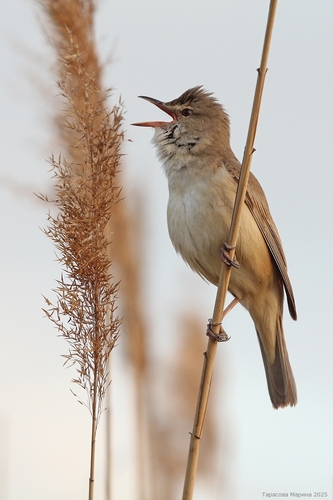
ニシオオヨシキリ (Acrocephalus arundinaceus) ニシオオヨシキリ
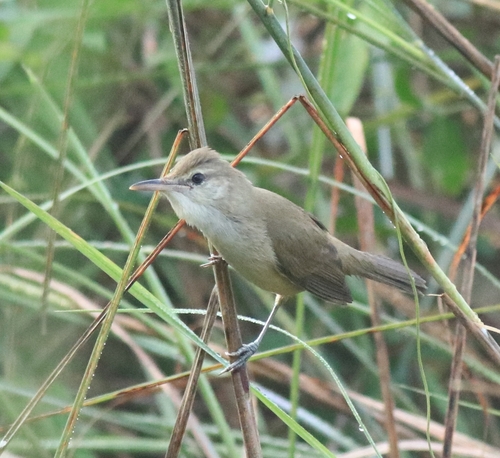
チュウヨシキリ (Acrocephalus stentoreus) チュウヨシキリ

メディア

読み込み中…

要点

ニシオオヨシキリとチュウヨシキリの最も信頼できるフィールドマークは、腹部の色です:ニシオオヨシキリはより豊かでバフ色の腹部を示し、チュウヨシキリは下側がより淡く白いです。どちらも大きく、縞模様のない茶色のウグイスで、構造は似ていますが、ニシオオヨシキリは一般的によりがっしりしていてやや大きいです。彼らの歌は異なり、ニシオオヨシキリの歌はより大きく、より騒々しいです。フィールドでは、羽毛のトーンや声の微妙な違いが最良の手がかりとなります。構造やジズは非常に似ています。

識別のコツ

  1. Underparts color: ニシオオヨシキリは特に顎と胸でより豊かでバフ色の腹部を示し、チュウヨシキリは下側がより淡く白いです。これはすべての年齢において最も一貫したフィールドマークです。
  2. Upperparts tone: どちらも上は縞模様のない茶色ですが、チュウヨシキリ(特に北方の移動個体)は上でやや豊かな茶色に見えることがありますが、ニシオオヨシキリはより均一です。
  3. Juvenile/immature underparts: 若いニシオオヨシキリは成鳥よりもさらにバフ色の腹部を持ち、チュウヨシキリの幼鳥との腹部の違いを誇張しますが、チュウヨシキリの幼鳥は淡いままです。
  4. Size and bulk: ニシオオヨシキリは一般的により大きく、がっしりしており、より重い体格と長い翼幅(16–21 cm対18–20 cmですが、全体的により重くて頑丈です)。ただし、サイズの重複はかなりあり、両方が一緒に見られない限り、常に信頼できるわけではありません。
  5. Bill and head structure: どちらも強く尖ったくちばしと平らな額を持っています。これらの特徴は分離には役立ちません。
  6. Song: ニシオオヨシキリの歌は非常に大きく、厳しく、騒々しく、しばしばおしゃべりや鳴き声の質を持っています。チュウヨシキリの歌はより遅く、あまり厳しくなく、よりおしゃべりで、より明確な口笛が含まれています。明確で直接的な比較ができるときにのみ歌を使用してください。
  7. Song context: ニシオオヨシキリのオスは、メスを引き寄せるために長く複雑な歌を使用し、テリトリー防衛のために短く単純な歌を使用します。チュウヨシキリの歌はあまり変動しませんが、模倣を含むことがあります。
  8. Geographic context: ヨーロッパまたは西パレアリックにいる場合、ニシオオヨシキリが期待されます。チュウヨシキリはエジプトから東へ南アジアを通って見られます。重複ゾーン(中東)では、羽毛と声に依存してください。
  9. Habitat: どちらもヨシの生息地の専門家です。両方が存在する場所では生息地は分離要因ではありません。
  10. Sex and season: 両種は性別において単形であり、オスとメスは年間を通じて似ています。季節的な羽毛の違いは記載されていません。
  11. Flight and jizz: 両種はツグミサイズと記述され、ヨシの中で似たように振る舞います。飛行スタイルとジズは信頼できる分離要因ではありません。
  12. Subspecies variation: チュウヨシキリにはいくつかの亜種があり、スリランカの形態が最も暗いですが、これらの違いは微妙で、フィールドでは通常役立ちません。
  13. Pitfalls: 構造や行動だけに依存しないでください。腹部の色と歌に焦点を当ててください。サイズは直接比較にのみ役立ちます。
  14. When in doubt: 鳥が歌っていて、その歌を録音または比較できる場合、これはしばしば最良の分離要因です。そうでない場合は、良い光の中で腹部のトーンを優先してください。
  15. Immature birds in flight: どちらの種についても、特に上翼や飛行パターンの違いは記載されていません。よく見られた場合は、腹部の色と全体のサイズに焦点を当ててください。

大きさ

ニシオオヨシキリは最大のアクロセファルスウグイスで、全長16–21 cm、翼幅25–30 cm、体重22–38 gです [wikipedia]。チュウヨシキリも大きく、18–20 cmですが、一般的にやや小さく、がっしりしていない傾向があります [wikipedia]。どちらもツグミサイズと記述されますが、ニシオオヨシキリは特に直接比較においてより重く、頑丈に見える傾向があります。

羽色

どちらの種についても、特に幼鳥や未熟な上翼のパターンは記載されていません。どちらも縞模様がなく、すべての年齢で平坦な茶色の上部を示します [wikipedia]。成鳥と未熟な個体にとって、主な違いは下にあります:ニシオオヨシキリは特に顎と胸でより豊かでバフ色の腹部を持ち、チュウヨシキリは下側が明らかに淡く白いです。どちらも縞模様のない茶色の背中、平らな額、強く尖ったくちばしを持っています。チュウヨシキリは地理的な変異を示し、移動する北方の亜種が上で最も豊かな茶色であり、スリランカの亜種が全体的に最も暗いですが、これらの違いは微妙で、フィールドでは常に役立つわけではありません。幼いニシオオヨシキリはより豊かなバフ色の腹部を持つと記述されており、これは新鮮な若い鳥の腹部の違いを誇張する可能性があります。

行動

どちらの種も似たように振る舞い、通常はヨシの中で隠れたり歌ったりします。フィールドでの分離に関する情報源には大きな行動の違いは記載されていません。どちらも高いところに止まって歌うことがあり、動きよりも声で検出されることが多いです。

生息環境

どちらの種も繁殖期にはヨシの生息地の専門家です。ニシオオヨシキリはヨーロッパ全体と西パレアリックで繁殖し、チュウヨシキリはエジプトから東へ南アジアを通って東南アジアまで繁殖します [wikipedia]。両方とも冬はヨシの生息地や類似の湿地生息地で過ごしますが、彼らの分布は中東の一部を除いてあまり重複しません。両方が存在する場所では生息地は信頼できる分離要因ではありません。

声

ニシオオヨシキリは非常に大きく、遠くまで届く騒々しい歌を持ち、しばしばおしゃべりや鳴き声、厳しい音(キャリキャリクリクリクリジェットジェット)を含み、模倣を含むことが多いです [wikipedia]。その歌は変動があり、短い(テリトリー)と長い(メイトを引き寄せる)タイプの両方があります。チュウヨシキリの歌も大きく、遠くまで届きますが、騒々しさは少なく、遅く、よりおしゃべりで(ケレートケレートケレート)、典型的なアクロセファルスの口笛と模倣が含まれています [wikipedia]。直接比較では、ニシオオヨシキリの歌はより厳しく、より力強いです。

より良い説明を送る

比較と同じ項目を使ってください。文章はすぐに公開されます。

The most reliable field mark between Great Reed Warbler and Clamorous Reed Warbler is the color of the underparts: Great Reed Warbler shows richer, buffier underparts, while Clamorous Reed Warbler is paler and whiter below. Both are large, unstreaked brown warblers with similar structure, but Great Reed Warbler is generally bulkier and slightly larger. Their songs differ, with Great Reed Warbler's being louder and more raucous. In the field, subtle differences in plumage tone and voice are your best clues, as structure and jizz are very similar.

  1. Underparts color: Great Reed Warbler shows richer, buffier underparts, especially on the chin and breast; Clamorous Reed Warbler is paler and whiter below. This is the most consistent field mark for all ages.
  2. Upperparts tone: Both are unstreaked brown above, but Clamorous Reed Warbler (especially northern migrants) can appear slightly richer brown above, while Great Reed Warbler is more uniform.
  3. Juvenile/immature underparts: Young Great Reed Warblers are even more buffy below than adults, exaggerating the underparts difference with Clamorous Reed Warbler juveniles, which remain pale.
  4. Size and bulk: Great Reed Warbler is generally larger and bulkier, with a heavier build and longer wingspan (16–21 cm vs. 18–20 cm, but heavier and more robust overall). However, size overlap is considerable and not always reliable unless both are seen together.
  5. Bill and head structure: Both have strong, pointed bills and flattened foreheads; these features are not useful for separation.
  6. Song: Great Reed Warbler's song is much louder, harsher, and more raucous, often with a chattering and croaking quality. Clamorous Reed Warbler's song is slower, less harsh, and more chattering, with more pronounced whistles. Use song only when you have a clear, direct comparison.
  7. Song context: Great Reed Warbler males use long, complex songs to attract females and short, simple songs for territory defense. Clamorous Reed Warbler's song is less variable but still includes mimicry.
  8. Geographic context: If in Europe or the Western Palearctic, Great Reed Warbler is expected; Clamorous Reed Warbler is found from Egypt eastwards through South Asia. In overlap zones (Middle East), rely on plumage and voice.
  9. Habitat: Both are reed bed specialists; habitat is not a separator where both occur.
  10. Sex and season: Both species are sexually monomorphic; males and females look alike year-round. No seasonal plumage differences are described.
  11. Flight and jizz: Both species are described as thrush-sized and behave similarly in reeds. Flight style and jizz are not reliable separators.
  12. Subspecies variation: Clamorous Reed Warbler has several races, with the Sri Lanka form being the darkest, but these differences are subtle and not usually helpful in the field.
  13. Pitfalls: Do not rely on structure or behavior alone; focus on underparts color and song. Size is only helpful in direct comparison.
  14. When in doubt: If the bird is singing and you can record or compare the song, this is often the best separator. Otherwise, prioritize underparts tone in good light.
  15. Immature birds in flight: No distinctive upperwing or flight pattern differences are described for either species; focus on underparts color and overall size if seen well.

Great Reed Warbler is the largest Acrocephalus warbler, measuring 16–21 cm in length with a wingspan of 25–30 cm and mass of 22–38 g [wikipedia]. Clamorous Reed Warbler is also large, at 18–20 cm, but generally averages slightly smaller and less bulky [wikipedia]. Both are described as thrush-sized, but Great Reed Warbler tends to look heavier and more robust, especially in direct comparison.

No distinctive juvenile or immature upperwing patterns are described for either species; both lack streaking and show plain brown upperparts at all ages [wikipedia]. For adults and immatures, the key difference is below: Great Reed Warbler has richer, buffier underparts, especially on the chin and breast, while Clamorous Reed Warbler is noticeably paler and whiter below. Both have unstreaked brown backs, flattened foreheads, and strong, pointed bills. Clamorous Reed Warbler shows some geographic variation, with the migratory northern race being the richest brown above, and the Sri Lanka race being darkest overall, but these differences are subtle and not always useful in the field. Juvenile Great Reed Warblers are described as richer buff below, which may exaggerate the underparts difference in fresh young birds.

Both species behave similarly, typically skulking or singing from reed beds. No major behavioral differences are noted in the sources for field separation. Both may perch high to sing and are more often detected by voice than by movement.

Both species are reed bed specialists during the breeding season. Great Reed Warbler breeds throughout Europe and the Western Palearctic, while Clamorous Reed Warbler breeds from Egypt east through South Asia to Southeast Asia [wikipedia]. Both winter in reed beds and similar wetland habitats, but their ranges do not overlap much except in parts of the Middle East. Habitat is not a reliable separator where both occur.

Great Reed Warbler has a very loud, far-carrying, and raucous song, with chattering, croaking, and harsh notes (carr-carr-cree-cree-cree-jet-jet), often including mimicry [wikipedia]. Its song is variable, with both short (territorial) and long (mate-attracting) types. Clamorous Reed Warbler's song is also loud and far-carrying, but is less raucous, slower, and more chattering (kereet-kereet-kereet), with typical Acrocephalus whistles and mimicry [wikipedia]. In direct comparison, Great Reed Warbler's song is harsher and more forceful.

変更を破棄しますか?

保存していない編集があります。今離れると失われます。

ニシオオヨシキリ · チュウヨシキリ · 苦手な鳥