

Motmot

オオキリハシ 対 エクアドルヒメキツツキ

Jacamerops aureus 対 Picumnus sclateri

オオキリハシとエクアドルヒメキツツキのクイズ
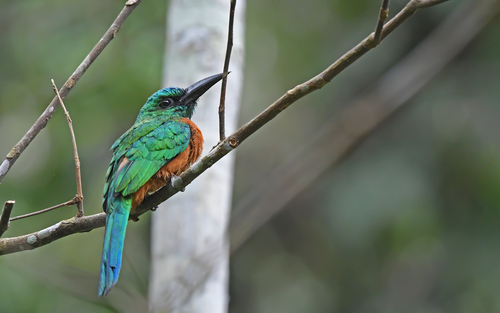
オオキリハシ (Jacamerops aureus) オオキリハシ
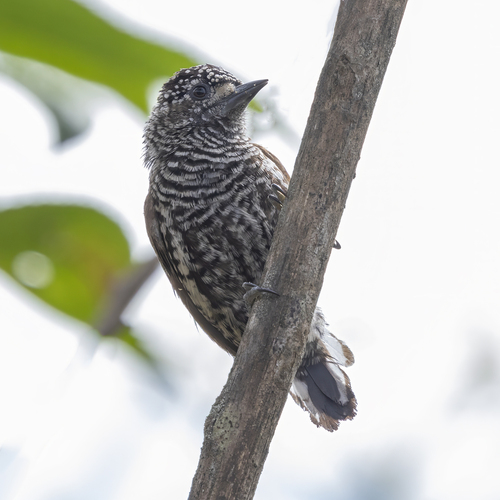
エクアドルヒメキツツキ (Picumnus sclateri) エクアドルヒメキツツキ

メディア

読み込み中…

要点

オオキリハシとエクアドルヒメキツツキを区別する最も信頼できる方法は、サイズと構造によるものです:オオキリハシはその科の中で非常に大きく、がっしりとした鳥であり、一方エクアドルヒメキツツキは木のくり抜きにしては小さく、繊細です。フィールドでは、オオキリハシの長く真っ直ぐなくちばしと金属的な緑と赤褐色の羽毛が、エクアドルヒメキツツキの短くノミのようなくちばし、縞模様の茶色と白の腹部、黒っぽい帽子と対照的に目立ちます。幼鳥や未熟な特有の翼の模様はどちらの種にも記載されていないため、全体的な印象、くちばしの形、羽毛に注目してください。両種は樹冠やエッジに生息しますが、オオキリハシは中層で動かずに止まっているのが見られる可能性が高く、エクアドルヒメキツツキは細い枝で活発に餌を探します。

識別のコツ

  1. Size is the most immediate clue: オオキリハシはエクアドルヒメキツツキと比べて非常に大きいです—もし鳥がロビンサイズかそれ以上に見えるなら、それはヒメキツツキではありません。
  2. Bill shape and length: オオキリハシは長く真っ直ぐで尖ったくちばしを持ち、ほぼカワセミのようで、昆虫を捕まえるために使用されます。エクアドルヒメキツツキのくちばしは短く、ノミのようで、木のくり抜きに適応しています。
  3. Perched posture: オオキリハシは露出した中層の枝に直立して動かずに座り、しばしば同じ止まり木に戻ります。エクアドルヒメキツツキは落ち着きがなく、細い枝を這ったり跳ねたりし、ほとんどじっとしていません。
  4. Plumage gloss and color: オオキリハシは上面が金属的な緑で、赤褐色の腹部と白い喉の斑点(オス)を持ち、鮮やかで光沢のある外観をしています。エクアドルヒメキツツキは上面が鈍い灰褐色で、微細な縞模様と筋があり、金属的または赤褐色の色調はありません。
  5. Cap pattern: エクアドルヒメキツツキは小さな黄色(オス)または白(メス)の斑点がある黒っぽい帽子を持っています;オオキリハシの頭は金属的な緑で、青みがかった銅色の色調を持ち、斑点のある冠はありません。
  6. Underparts: オオキリハシの腹部は深い赤褐色(白い喉を除く)ですが、エクアドルヒメキツツキの腹部は白っぽく、黒または暗い縞模様と筋があり、決して赤褐色ではありません。
  7. Tail: オオキリハシの尾は長く、青黒く、エクアドルヒメキツツキの短い黒っぽい尾よりも相対的にずっと長いです。
  8. Flight style: オオキリハシは止まり木から強く、直接的に飛び出します;エクアドルヒメキツツキの飛び方は弱く、波打ち、通常は短い距離を飛びます。
  9. Habitat context: 成熟した熱帯雨林の中層で静止しているのが見られた場合、オオキリハシを疑ってください。特にエッジや二次成長で細い枝で活発に餌を探している場合は、エクアドルヒメキツツキを疑ってください。
  10. Sex differences: メスのオオキリハシは白い喉の斑点がありませんが、その他はオスに似ています;メスのエクアドルヒメキツツキは全体の冠に白い斑点があり、黄色ではありません。
  11. No age-specific wing patterns: どちらの種も飛行中に特有の幼鳥や未熟な上翼のマークを示さないため、翼のパネルや後縁に頼らないでください。
  12. Leg color: オオキリハシは暗い角質の脚を持っていますが、これはフィールドではほとんど見えず、迅速な区別には役立ちません。
  13. Behavioral cues: オオキリハシはしばしば獲物を枝に叩きつけてから食べます;エクアドルヒメキツツキは昆虫を捕まえるために飛び出すのは見られず、常にくちばしでつついて餌を探します。
  14. Range overlap: オオキリハシはエクアドル/ペルーの北にのみ生息し、エクアドルヒメキツツキはエクアドルとペルーに限定されています。
  15. If in doubt, use a combination: サイズ、くちばしの形、全体の色のパターンを組み合わせることで、距離があってもこれら二つを常に区別できます。

大きさ

オオキリハシは劇的に大きいです:長さは25〜30 cmで、約63 gの重さがあり、これまでで最大のオオキリハシであり、どのヒメキツツキや小さなキツツキよりもずっとがっしりしています。それに対して、エクアドルヒメキツツキはわずか9〜10 cmの長さで、重さは10〜12 gで、オオキリハシの質量のわずか6分の1です。距離があっても、オオキリハシのサイズと頑丈な体型は明らかであり、エクアドルヒメキツツキは小さく、コンパクトで、ほとんど優雅です。

羽色

どちらの種にも年齢特有の上翼や飛行パターンの違いは記載されていないため、成鳥の羽毛と構造に頼ってください。オオキリハシの成鳥のオスは、金属的な緑の上面に金色と青みがかった色調、白い下喉、豊かな赤褐色の腹部を持つ印象的な組み合わせを持っています。メスは似ていますが、白い喉の斑点がありません。翼は黒く、尾は青黒いです。エクアドルヒメキツツキの成鳥はずっと控えめで、灰褐色の上面に微かな縞模様、黒っぽい帽子に小さな黄色(オス)または白(メス)の斑点、黒または暗い縞模様と筋のある白っぽい腹部を持っています。尾は黒っぽく、内側と外側の羽に白い斑点があります。ヒメキツツキの羽毛は隠蔽的で細かい模様があり、オオキリハシは大胆な色合いで光沢があります。どちらの種にも幼鳥特有のマークは記載されていません。

行動

オオキリハシは通常、中層の樹冠や日陰の森林のエッジに静かに止まり、飛んでいる昆虫を捕まえるために飛び出し、同じ止まり木に戻ります。しばしば動かずに直立して見え、長いくちばしを使って獲物を捕まえます。エクアドルヒメキツツキはずっと活発で、細い枝をつついたり叩いたりして餌を探し、しばしば下層の樹冠やエッジの植生を素早くアクロバティックに移動します。オオキリハシの行動は大きなフライキャッチャーを思わせる一方、エクアドルヒメキツツキは小さく落ち着きのないキツツキのように振る舞います。

生息環境

オオキリハシは亜熱帯および熱帯の湿った低地森林に生息し、特に中層や日陰の森林のエッジに多く、水の近くや森林の岸にしばしば見られます。その分布は中央および南アメリカ北部に広がっています。エクアドルヒメキツツキはエクアドルとペルーに見られ、同様の低地または丘の森林に生息しますが、二次成長、エッジ、または乱れた生息地で見られる可能性が高いです。両種は森林地域に生息することができますが、オオキリハシは成熟した森林の内部や中層に厳密に結びついているのに対し、エクアドルヒメキツツキは柔軟で、しばしばエッジや茂みの生息地に見られます。

より良い説明を送る

比較と同じ項目を使ってください。文章はすぐに公開されます。

The most reliable way to separate Great Jacamar from Ecuadorian Piculet is by size and structure: Great Jacamar is an exceptionally large, heavyset bird for its family, while Ecuadorian Piculet is tiny and delicate, even for a woodpecker. In the field, the jacamar’s long, straight bill and metallic green-and-rufous plumage stand out against the piculet’s short, chisel-like bill, barred brown-and-white underparts, and blackish cap. Juvenile or immature-specific wing patterns are not described for either species, so focus on overall jizz, bill shape, and plumage. Both species are canopy or edge dwellers, but the jacamar is much more likely to be seen perched motionless in mid-levels, while the piculet actively forages on thin branches.

  1. Size is the most immediate clue: Great Jacamar is enormous compared to Ecuadorian Piculet—if the bird looks robin-sized or bigger, it cannot be a piculet.
  2. Bill shape and length: Jacamar has a long, straight, pointed bill, almost kingfisher-like, used for sallying after insects. Piculet’s bill is short, chisel-tipped, and woodpecker-like, adapted for pecking and tapping.
  3. Perched posture: Jacamar sits upright and motionless on exposed mid-canopy branches, often returning to the same perch. Piculet is restless, creeping and hopping along thin branches, rarely staying still.
  4. Plumage gloss and color: Jacamar is metallic green above with rufous underparts and a white throat patch (male), giving a bold, glossy look. Piculet is dull gray-brown above, with fine barring and streaking, and lacks any metallic or rufous tones.
  5. Cap pattern: Piculet has a blackish cap with tiny yellow (male) or white (female) spots; jacamar’s head is metallic green with blueish and coppery tones, lacking any spotted crown.
  6. Underparts: Jacamar’s underparts are deep rufous (except for the white throat), while piculet’s are whitish with black/dusky barring and streaks—never rufous.
  7. Tail: Jacamar’s tail is long, blue-black, and proportionally much longer than the piculet’s short, blackish tail with white patches.
  8. Flight style: Jacamar flies with strong, direct sallies from a perch; piculet’s flight is weak, undulating, and usually over short distances.
  9. Habitat context: If seen in the mid-canopy of mature rainforest, especially sitting still, suspect jacamar. If foraging actively on thin branches, especially in edge or secondary growth, suspect piculet.
  10. Sex differences: Female jacamar lacks the white throat spot but is otherwise similar to the male; female piculet has white spots across the entire crown, not yellow.
  11. No age-specific wing patterns: Neither species shows distinctive juvenile or immature upperwing marks in flight, so do not rely on wing panels or trailing edges.
  12. Leg color: Jacamar has dark horn-colored legs, but this is rarely visible in the field and not useful for quick separation.
  13. Behavioral cues: Jacamar often beats prey against a branch before eating; piculet is never seen sallying for insects, always forages by pecking.
  14. Range overlap: Only Great Jacamar occurs north of Ecuador/Peru; Ecuadorian Piculet is restricted to Ecuador and Peru.
  15. If in doubt, use a combination: Size, bill shape, and overall color pattern together will always separate these two, even at a distance.

Great Jacamar is dramatically larger: it measures 25–30 cm in length and weighs about 63 g, making it the largest jacamar by far and much bulkier than any piculet or small woodpecker. In contrast, Ecuadorian Piculet is only 9–10 cm long and weighs 10–12 g, barely a sixth of the jacamar’s mass. Even at a distance, the jacamar’s size and robust build are obvious, while the piculet is tiny, compact, and almost dainty.

No age-specific upperwing or flight pattern differences are described for either species, so rely on adult plumage and structure. Great Jacamar adult males have a striking combination: metallic green upperparts with gold and blueish tones, white lower throat, and rich rufous underparts. Females are similar but lack the white throat spot. The wings are black, and the tail is blue-black. Ecuadorian Piculet adults are much more subdued: gray-brown upperparts with faint bars, a blackish cap with tiny yellow (male) or white (female) spots, and whitish underparts with black/dusky barring and streaks. The tail is blackish with white patches on the inner and outer feathers. The piculet’s plumage is cryptic and finely patterned, while the jacamar is boldly colored and glossy. No juvenile-specific marks are noted for either species.

Great Jacamar typically perches quietly in the mid-canopy or shaded forest edges, sallying out to catch insects in flight and returning to the same perch. It often appears motionless and upright, using its long bill to snatch prey. Ecuadorian Piculet is much more active, foraging by picking and tapping on thin branches, often moving quickly and acrobatically through the lower canopy or edge vegetation. The jacamar’s behavior is reminiscent of a large flycatcher, while the piculet acts like a tiny, restless woodpecker.

Great Jacamar inhabits subtropical and tropical moist lowland forests, especially in the mid-levels and shaded forest edges, often near water or along forest banks. Its range is broad across Central and northern South America. Ecuadorian Piculet is found in Ecuador and Peru, in similar lowland or foothill forests, but is more likely to be seen in secondary growth, edges, or disturbed habitats. While both can occur in forested areas, the jacamar is more strictly tied to mature forest interiors and mid-canopy, whereas the piculet is flexible and often found in edge or scrubby habitats.

変更を破棄しますか?

保存していない編集があります。今離れると失われます。

オオキリハシ · エクアドルヒメキツツキ · 苦手な鳥