

Motmot

オオサイチョウ 対 キタカササギサイチョウ

Buceros bicornis 対 Anthracoceros albirostris

オオサイチョウとキタカササギサイチョウのクイズ
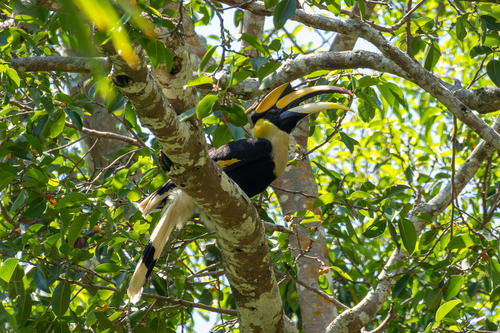
オオサイチョウ (Buceros bicornis) オオサイチョウ
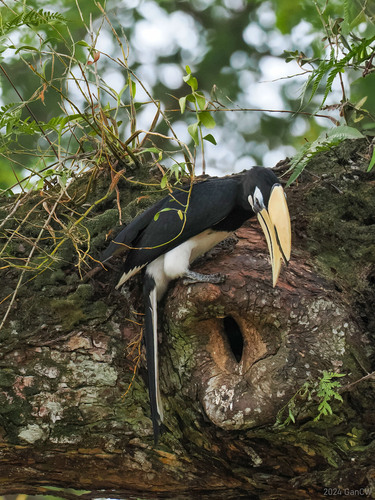
キタカササギサイチョウ (Anthracoceros albirostris) キタカササギサイチョウ

メディア

読み込み中…

要点

最も信頼できるフィールドマークはサイズとくちばしの構造です:オオサイチョウは巨大で重い体を持ち、巨大で深く曲がったくちばしの上に大きなU字型の黄色と黒のカスケがあります。一方、キタカササギサイチョウははるかに小さく、軽量で、より細長いくちばしと横に圧縮された円筒形のカスケを持っています。飛んでいるときや止まっているとき、オオサイチョウの圧倒的な体格、広い翼、目を引く黄色と黒の模様が際立ち、キタカササギサイチョウはよりコンパクトで、印象的な模様が少ないように見えます。雌の目の色(オオサイチョウは赤、キタカササギサイチョウは灰褐色)やカスケの詳細は近距離で役立ちます。両種の幼鳥は成鳥に似ていますが、カスケが小さく、発達が不十分であり、サイズの差はすべての年齢で明らかです。

識別のコツ

  1. サイズは最も迅速な区別要因です: オオサイチョウは巨大で、キタカササギサイチョウのほぼ2倍の長さと3倍の重さです。距離があっても、オオサイチョウの体格は間違いなくわかります。これはすべての年齢と性別に当てはまります。
  2. くちばしとカスケの構造: オオサイチョウは巨大で深く曲がったくちばしを持ち、黒と黄色の色合いの大きなU字型の凹型カスケがあります。キタカササギサイチョウのくちばしははるかに細く、横に圧縮された円筒形のカスケを持ち、雄の基部は黒で、主に黄色です。両種の幼鳥は小さなカスケを持っていますが、形の違いは残ります。
  3. カスケの色と模様(性別特有): 雄のオオサイチョウはカスケの裏側が黒です;雌はカスケの背中が赤みがかっています。キタカササギサイチョウの雄は黄色のくちばしとカスケを持ち、基部が黒です;雌は部分的に黒いくちばしとカスケを持っています。これは近距離でのみ使用してください。
  4. 目の色(性別特有): 雌のオオサイチョウは青白い目を持ち;雄は赤い目を持っています。キタカササギサイチョウの雄は明るい赤い目を持ち、雌は灰褐色です。これは微妙で、近距離でのみ見ることができます。
  5. 羽毛の模様: オオサイチョウは白い首と腹部、黒い背中と翼、広い黒い帯のある白い尾を持つ大胆な白黒模様です。キタカササギサイチョウは上面が黒で緑がかった光沢があり、白い腹部、太もも、翼の下、中央の羽を除く白い尾羽を持っています。尾の模様はキタカササギサイチョウではあまり目立ちません。
  6. 翼と飛行スタイル: オオサイチョウは遅く重い翼の拍動と聞こえる機械音で飛び、しばしば広げた初級羽で滑空します。キタカササギサイチョウは軽く、より速く、力強さが少ない翼の拍動とより浮遊感のある飛行を持っています。オオサイチョウの翼の音に注意してください。
  7. 止まっている姿勢: オオサイチョウは巨大で、上重心で威圧的に見え、大きなくちばしとカスケを持っています。キタカササギサイチョウはより細長く、上重心ではありません。
  8. 幼鳥の混乱: 両種の幼鳥は成鳥に似ていますが、カスケとくちばしが小さくなっています。サイズの違いが最良の手がかりであり、どちらの幼鳥の翼の模様も特に記述されていません。
  9. 生息地の文脈: オオサイチョウはほぼ常に大きな出現木のある成熟した原生林にいます。キタカササギサイチョウは二次林、エッジ、さらには公園やプランテーションにいる可能性が高いです。
  10. 群れのサイズ: オオサイチョウは通常、ペアまたは小さな群れで見られます;キタカササギサイチョウは繁殖期以外に大きな群れを形成することがあります。
  11. 声: オオサイチョウは繁殖期に特に大きなデュエットを行い、「コク」という音を繰り返し、雄が始め、その後両性が急速な一連の咆哮や吠え声に参加します。キタカササギサイチョウはカラスのような、鳴き声、ひづめの音、粗い音、悲鳴を発します。デュエットを聞いたら、オオサイチョウを疑ってください。
  12. 尾の模様: オオサイチョウの尾は白で、太い黒い帯があります;キタカササギサイチョウの尾は中央の羽を除いて白い先端を持つ黒です。
  13. くちばしの縁: オオサイチョウのくちばしは黒い鋸歯状の縁を持ち、年齢とともに摩耗します;キタカササギサイチョウのくちばしは滑らかです。
  14. 巣での行動: オオサイチョウの雌は巣作りの際に木の空洞に封印されます;キタカササギサイチョウも空洞に巣を作りますが、非常に大きな木に厳密に結びついているわけではありません。
  15. 色の光沢: キタカササギサイチョウの成鳥は黒い羽毛に緑がかった光沢があります;幼鳥はこれを欠いています。オオサイチョウの黒はあまり光沢がありません。

大きさ

オオサイチョウははるかに大きな種です:成鳥は95〜130 cmの長さで、翼幅は最大152 cm、雄は平均3 kgの重さです [wikipedia]。キタカササギサイチョウははるかに小さく、長さ55〜60 cm、翼幅23〜36 cm、雄は平均900 gです [wikipedia]。この違いは劇的です:オオサイチョウは2倍以上の重さで、ほぼ2倍の長さです。距離があっても、または飛んでいるときでも、両種がその地域で知られている場合、サイズの対比は明確です。

羽色

行動

オオサイチョウは重く力強い飛行をし、遅く深い翼の拍動の後に滑空し、蒸気機関車が始動する音に似た大きな機械音を発生させます [wikipedia]。その飛行は重く直接的で、広い翼と広げた初級羽を持っています。キタカササギサイチョウはより敏捷で、翼の上で軽く、より速く、力強さが少ない翼の拍動とより浮遊感のある姿勢を持っています。両種は直立して止まり、しばしば樹冠で見られますが、オオサイチョウの体格と巨大なくちばしは上重心で威圧的に見え、キタカササギサイチョウはより細長く活動的です。両者は果実食性ですが、小動物を捕食することもあります;オオサイチョウはペアまたは小さな群れで見られることが多く、キタカササギサイチョウは繁殖期以外に大きな群れを形成することがあります。

生息環境

オオサイチョウは特に巣作りのために大きな出現木のある成熟した高い森林を好み、通常はあまり干渉されていない原生林に見られます [wikipedia]。キタカササギサイチョウはより適応性があり、二次林、森林のエッジ、時にはプランテーションや公園を含むより広範な森林生息地に生息しています [wikipedia]。劣化したまたはエッジの生息地で見られる場合、キタカササギサイチョウの方が可能性が高いです;オオサイチョウは広範な古い森林から遠くに見つかることはめったにありません。

声

オオサイチョウは繁殖期に非常に声が大きく、雄からの繰り返される「コク」で始まる大きなデュエットを行い、その後両性が急速な一連の咆哮や吠え声に参加します [wikipedia]。翼の拍動も非常に騒がしいです。キタカササギサイチョウはカラスのような鳴き声、ひづめの音、粗い音、悲鳴を発します [wikipedia]。その呼び声はオオサイチョウよりも響きが少なく、デュエットに基づくことも少ないです、また翼の拍動もそれほど大きくありません。

より良い説明を送る

比較と同じ項目を使ってください。文章はすぐに公開されます。

The most reliable field mark is size and bill structure: Great Hornbill is an enormous, heavy-bodied bird with a massive, deeply curved bill topped by a huge, U-shaped yellow-and-black casque, while Oriental Pied-Hornbill is much smaller, lighter, and has a more slender bill with a laterally compressed, cylindrical casque. In flight or perched, Great Hornbill's sheer bulk, broad wings, and striking yellow-and-black patterning stand out, while Oriental Pied-Hornbill appears more compact and less dramatically marked. Female eye color (red in Great, greyish-brown in Oriental Pied) and casque details can help at close range. Juveniles of both species resemble adults but with smaller, less developed casques, and the size gap remains obvious at all ages.

  1. Size is the quickest separator: Great Hornbill is enormous, nearly twice the length and three times the weight of Oriental Pied-Hornbill. Even at a distance, Great Hornbill's bulk is unmistakable. This works for all ages and sexes.
  2. Bill and casque structure: Great Hornbill has a huge, deeply curved bill with a massive, U-shaped, concave casque with black and yellow coloring; Oriental Pied's bill is much slimmer, with a laterally compressed, cylindrical casque, mostly yellow with black at the base in males. Juveniles of both have smaller casques, but the shape difference remains.
  3. Casque color and pattern (sex-specific): Male Great Hornbill has a black underside to the casque; female has a reddish back to the casque. Oriental Pied males have a yellow bill and casque with black at the base; females have a partly black bill and casque. Use this only at close range.
  4. Eye color (sex-specific): Female Great Hornbill has bluish-white eyes; male has red eyes. Oriental Pied males have bright red eyes, females greyish-brown. This is subtle and only visible at close range.
  5. Plumage pattern: Great Hornbill is boldly pied with a white neck and underparts, black back and wings, and a white tail with a broad black band. Oriental Pied is black above with a greenish sheen, white underparts, and white-tipped tail feathers (except the central pair). The tail pattern is less bold in Oriental Pied.
  6. Wing and flight style: Great Hornbill flies with slow, heavy wingbeats and audible mechanical sounds, often gliding with splayed primaries. Oriental Pied is lighter, with quicker, less forceful wingbeats and a more buoyant flight. Listen for the wing noise in Great Hornbill.
  7. Perched jizz: Great Hornbill appears massive, top-heavy, and imposing, with a huge bill and casque. Oriental Pied is more slender and less top-heavy.
  8. Juvenile confusion: Juveniles of both species resemble adults but have smaller casques and bills. Size difference remains the best clue; no distinctive juvenile wing patterns are described for either.
  9. Habitat context: Great Hornbill is almost always in mature, primary forest with large emergent trees. Oriental Pied is more likely in secondary forest, edge, or even parks and plantations.
  10. Group size: Great Hornbill is usually in pairs or small groups; Oriental Pied can form larger flocks, especially outside the breeding season.
  11. Voice: Great Hornbill gives loud duets of 'kok' notes, roars, and barks, especially in breeding season. Oriental Pied gives crowlike, braying, or screeching calls. If you hear a duet, suspect Great Hornbill.
  12. Tail pattern: Great Hornbill's tail is white with a bold black band; Oriental Pied's tail is black with white tips except for the central feathers.
  13. Bill commissure: Great Hornbill's bill has a black, serrated edge that becomes worn with age; Oriental Pied's bill is smooth.
  14. Behavior at nest: Great Hornbill females are sealed in tree cavities during nesting; Oriental Pied also nests in cavities but is less strictly tied to very large trees.
  15. Color gloss: Oriental Pied adults have a greenish gloss on black feathers; juveniles lack this. Great Hornbill's black is less glossy.

Great Hornbill is by far the larger species: adults measure 95–130 cm in length, with a wingspan up to 152 cm, and males average 3 kg in weight [wikipedia]. Oriental Pied-Hornbill is much smaller, at 55–60 cm long, wingspan 23–36 cm, and males average 900 g [wikipedia]. The difference is dramatic: Great Hornbill is more than twice as heavy and nearly twice as long. Even at a distance or in flight, the size contrast is unmistakable if both species are known from the area.

  • Juveniles/Immatures: Both species' juveniles resemble adults but have smaller, less developed casques and bills. Great Hornbill juveniles are still large and heavy-bodied, while Oriental Pied juveniles are smaller and lack the green gloss on black feathers seen in adults [wikipedia]. No distinctive age-specific upperwing pattern is described for either species, so size and bill/casque shape remain the best clues at all ages.
  • Adults: Great Hornbill is boldly pied with a massive yellow-and-black bill and casque, white neck and underparts, black back and wings, and a white tail with a broad black band. Oriental Pied-Hornbill is black above with a greenish sheen, white belly, thighs, underwing, and white-tipped tail feathers except the central pair. The casque in Great Hornbill is U-shaped and concave, with black and reddish areas depending on sex; in Oriental Pied, the casque is a laterally flattened cylinder, sometimes forming a horn, and is mostly yellow with black at the base in males. Female Great Hornbill has a reddish back to the casque and bluish-white eyes; female Oriental Pied has a partly black bill and casque and greyish-brown eyes.

Great Hornbill is heavy and powerful in flight, with slow, deep wingbeats followed by glides, producing a loud, mechanical sound likened to a steam locomotive starting up [wikipedia]. Its flight is ponderous and direct, with broad wings and splayed primaries. Oriental Pied-Hornbill is more agile and lighter on the wing, with quicker, less forceful wingbeats and a more buoyant jizz. Both species perch upright and are often seen in the canopy, but Great Hornbill's bulk and massive bill make it appear top-heavy and imposing, while Oriental Pied is more slender and active. Both are frugivorous but may take small animals; Great Hornbill is more often seen in pairs or small groups, Oriental Pied can form larger flocks outside breeding season.

Great Hornbill prefers mature, tall forests with large emergent trees, especially for nesting, and is typically found in less disturbed, primary forests [wikipedia]. Oriental Pied-Hornbill is more adaptable, occurring in a wider range of wooded habitats, including secondary forest, forest edge, and sometimes plantations or parks [wikipedia]. If seen in degraded or edge habitats, Oriental Pied is more likely; Great Hornbill is rarely found far from extensive, old-growth forest.

Great Hornbill is very vocal during the breeding season, with loud duets beginning with a repeated 'kok' from the male, then both sexes joining in a rapid series of roars and barks [wikipedia]. The wingbeats are also very noisy. Oriental Pied-Hornbill gives crowlike calls, braying sounds, harsh crackles, and screeches [wikipedia]. The calls are less booming and less duet-based than Great Hornbill, and the wingbeat is not as loud.

変更を破棄しますか?

保存していない編集があります。今離れると失われます。

オオサイチョウ · キタカササギサイチョウ · 苦手な鳥