

Motmot

オオムジアマツバメ 対 ハイゴシハリオアマツバメ

Cypseloides senex 対 Chaetura cinereiventris

オオムジアマツバメとハイゴシハリオアマツバメのクイズ
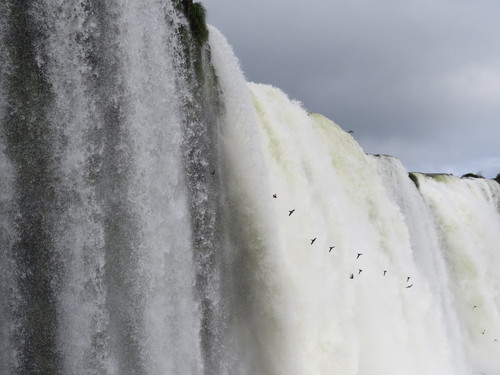
オオムジアマツバメ (Cypseloides senex) オオムジアマツバメ
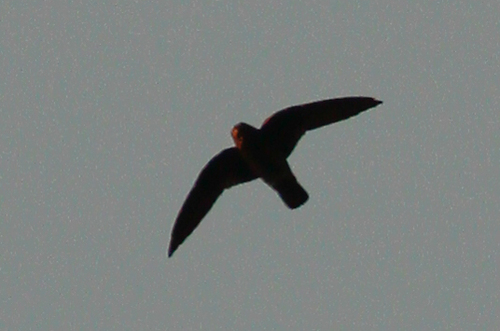
ハイゴシハリオアマツバメ (Chaetura cinereiventris) ハイゴシハリオアマツバメ

メディア

読み込み中…

要点

オオムジアマツバメとハイゴシハリオアマツバメを区別する最も信頼できる方法は、サイズと尾羽の色です:オオムジアマツバメははるかに大きく、ハイゴシハリオアマツバメの特徴的な淡い尾羽がありません。両種の幼鳥は翼の羽毛に淡い縁取りがありますが、ハイゴシハリオアマツバメだけがすべての年齢で広く対照的な灰色の尾羽と上尾羽を示します。飛行中、オオムジアマツバメは上も下も均一に暗褐色に見え、ハイゴシハリオアマツバメは光沢のある黒い上面に対して鋭い淡い尾羽の帯を示します。構造的な違いも重要です:オオムジアマツバメはより大きく、翼幅が長いのに対し、ハイゴシハリオアマツバメはコンパクトで短く四角い尾と膨らんだ翼を持っています。これらの違いはすべての羽色において保持され、特に両種が一緒に見られる場合や混合アマツバメの群れの中で役立ちます。

識別のコツ

  1. サイズは最も信頼できるフィールドマークです: オオムジアマツバメはハイゴシハリオアマツバメの2倍以上の長さと数倍の質量を持っています。もし大きく、重い、またはクビワアマツバメに匹敵するように見えるアマツバメを見たら、それはハイゴシハリオアマツバメではありません。
  2. 尾羽の色はすべての年齢で診断的です: ハイゴシハリオアマツバメは常に広い淡い灰色の尾羽と上尾羽を示し、光沢のある黒い背中と翼と鋭く対照的です。オオムジアマツバメは淡い尾羽を示すことはなく、その尾羽は頭と背中の中間の茶色で、上面の残りと混ざります。
  3. 幼鳥の翼の縁取り: 両種の幼鳥は翼の羽毛に淡い縁取りがありますが、これは区別にはなりません。若い鳥の尾羽の色とサイズに焦点を当ててください。
  4. 上面の光沢: ハイゴシハリオアマツバメは上面が光沢のある黒ですが、オオムジアマツバメはチョコレート色から暗褐色で、顔は霜が降りたように見えます。良い光の下では、光沢の違いが見えます。
  5. 下面: オオムジアマツバメは上面よりも下面が淡い茶色ですが、依然として均一です。ハイゴシハリオアマツバメはより明るい灰色の下面を持ち、一部の亜種は淡い尾羽の覆いを示しますが、どれもオオムジアマツバメほど暗く均一ではありません。
  6. 尾の形: ハイゴシハリオアマツバメは短く四角い尾を持ち、飛行中はしばしば短く見えます。オオムジアマツバメはより長く、より比例の取れた尾を持ち、黒褐色です。
  7. 翼の形: ハイゴシハリオアマツバメの翼は中央が膨らみ、先端でフック状になっており、独特のシルエットを与えます。オオムジアマツバメの翼は広いですが、明らかにフック状ではありません。
  8. 飛行スタイル: オオムジアマツバメは遅く重い翼の拍動と力強く直接的な飛行で飛びます。ハイゴシハリオアマツバメは迅速で敏捷であり、しばしば素早い動きで密集して旋回します。
  9. 顔の外観: オオムジアマツバメの顔は、頭頂と喉の淡い灰色の羽毛の縁取りのために霜が降りたように見えます。ハイゴシハリオアマツバメはこの霜の効果を示しません。
  10. 止まっている姿勢: オオムジアマツバメは止まっているときに頑丈で大きな頭に見えますが、ハイゴシハリオアマツバメはよりコンパクトで、比例的に大きな頭と短い尾を持っています。
  11. 生息地の文脈: オオムジアマツバメは南アメリカ南東部の滝や崖の近くにいる可能性が高いです。ハイゴシハリオアマツバメは広範囲に分布し、都市部や森林を含むさまざまな開けた生息地で見られます。
  12. 群れの構成: 混合アマツバメの群れの中に、より大きく暗い鳥が数羽、小さな淡い尾羽のアマツバメの中にいるのを見た場合、大きなものはおそらくオオムジアマツバメです。
  13. 声: ハイゴシハリオアマツバメの鳴き声のみが記述されています(「ツィップ」とぼやけた「トゥリュー」音)。これを聞いた場合、ハイゴシハリオアマツバメを支持しますが、声がないことは診断的ではありません。
  14. 地理的範囲: アルゼンチン、ブラジル、パラグアイ、ボリビアの外にいる場合、オオムジアマツバメはあり得ません。中米やカリブ海にいる場合、ほぼ確実にハイゴシハリオアマツバメを見ています。
  15. 落とし穴: 下翼の色や微妙な茶色のトーンの違いに頼らないでください;尾羽の色とサイズの方がはるかに信頼できます。幼鳥の淡い翼の縁取りは両種に見られ、区別にはなりません。

大きさ

オオムジアマツバメは劇的に大きく、長さ約18 cm、重さ約80 g([wikidata])で、最大のCypseloidesです。それに対して、ハイゴシハリオアマツバメは約10.5 cmの長さで、重さは約17 g([wikipedia])です。このサイズの差は現場で明らかで、特に両種が存在する場合に顕著です。オオムジアマツバメは重く、広い翼を持っているように見え、一方でハイゴシハリオアマツバメは小さく、コンパクトで、はるかに軽い体格です。距離があっても、オオムジアマツバメの遅く重い翼の拍動とハイゴシハリオアマツバメの迅速で敏捷な飛行によってサイズの違いがしばしば明らかになります。

羽色

行動

両種は空中の昆虫食者ですが、オオムジアマツバメはしばしば大きな群れで餌を食べ、時にはクビワアマツバメと一緒にいます。その飛行はより重く、より力強く、より大きなサイズに見合っています。ハイゴシハリオアマツバメははるかに敏捷で、迅速でひらひらした翼の拍動を持ち、密集したグループで旋回したり急に動いたりする傾向があります。止まっているとき、オオムジアマツバメは頑丈で大きな頭に見えますが、ハイゴシハリオアマツバメはよりコンパクトで、比例的に大きな頭と短い尾を持っています。オオムジアマツバメは滝や崖の近くで見られることがありますが、ハイゴシハリオアマツバメは開けた場所や時には都市構造の近くで見られる可能性が高いです。

生息環境

オオムジアマツバメはアルゼンチン、ブラジル、パラグアイ、そしておそらくボリビアで見られ、しばしば滝や岩の露頭の近くにいます。ハイゴシハリオアマツバメははるかに広い範囲に分布し、ホンジュラスから南アメリカのほとんど(チリ、フランス領ギアナ、スリナム、ウルグアイを除く)およびいくつかのカリブ海の島々に生息しています。ハイゴシハリオアマツバメは中米や南アメリカの北半分で見られる可能性が高く、オオムジアマツバメは南東部に制限されています。ブラジル南東部や隣接地域での重複は可能ですが、一般的にオオムジアマツバメはより局所的で生息地特異的です。

声

ハイゴシハリオアマツバメは明るく繰り返される「ツィップ」と3〜4のぼやけた引き伸ばされた音(「トゥリュー-トゥリュー-トゥリュー」)を出します。オオムジアマツバメに関する鳴き声の詳細はメモに提供されていないため、この情報に基づいて声は信頼できる区別要因ではありません。

より良い説明を送る

比較と同じ項目を使ってください。文章はすぐに公開されます。

The most reliable way to separate Great Dusky Swift from Grey-rumped Swift is by size and rump color: Great Dusky is much larger and lacks the Grey-rumped's distinctive pale rump. Juvenile birds of both species have pale fringes on the wing feathers, but only Grey-rumped shows a wide, contrasting gray rump and uppertail coverts at all ages. In flight, Great Dusky appears uniformly dark brown above and below, while Grey-rumped shows a sharp pale rump band against otherwise glossy black upperparts. Structural differences are also important: Great Dusky is bulkier with a longer wingspan, while Grey-rumped is compact with a short, square tail and bulging wings. These differences hold in all plumages and are especially useful when birds are seen together or in mixed swift flocks.

  1. Size is the single most reliable field mark: Great Dusky Swift is more than twice the length and several times the mass of Grey-rumped Swift. If you see a swift that looks large, heavy, or comparable to a White-collared Swift, it is not a Grey-rumped.
  2. Rump color is diagnostic at all ages: Grey-rumped Swift always shows a wide, pale gray rump and uppertail coverts, which contrast sharply with the glossy black back and wings. Great Dusky Swift never shows a pale rump; its rump is brown, intermediate between the head and back, and blends with the rest of the upperparts.
  3. Juvenile wing fringes: Both species' juveniles have pale fringes to the wing feathers, but this is not a separator. Focus on rump color and size for young birds.
  4. Upperparts gloss: Grey-rumped Swift is glossy black above, while Great Dusky is chocolate to dark brown with a frosted face. In good light, the difference in sheen is visible.
  5. Underparts: Great Dusky Swift is paler brown below than above, but still uniform. Grey-rumped Swift has lighter gray underparts, with some subspecies showing pale undertail coverts; none are as dark or uniform as Great Dusky.
  6. Tail shape: Grey-rumped Swift has a short, square tail, often appearing stubby in flight. Great Dusky Swift has a longer, more proportionate tail that is blackish brown.
  7. Wing shape: Grey-rumped Swift's wings bulge in the middle and hook at the end, giving a distinctive silhouette. Great Dusky's wings are broad but less obviously hooked.
  8. Flight style: Great Dusky Swift flies with slower, heavier wingbeats and a powerful, direct flight. Grey-rumped Swift is rapid, agile, and often wheels tightly with quick flicks.
  9. Facial appearance: Great Dusky Swift's face appears frosted due to pale gray feather edges on the crown and throat. Grey-rumped Swift does not show this frosted effect.
  10. Perched posture: Great Dusky Swift appears robust and large-headed when perched; Grey-rumped Swift is more compact with a proportionally large head and short tail.
  11. Habitat context: Great Dusky Swift is most likely near waterfalls or cliffs in southeastern South America. Grey-rumped Swift is widespread and can be found in a variety of open habitats, including urban areas and forests.
  12. Flock composition: If you see a mixed swift flock with a few much larger, darker birds among smaller, pale-rumped swifts, the large ones are likely Great Dusky.
  13. Voice: Only Grey-rumped Swift's calls are described ('tsip' and burry 'trrreeew' notes). If you hear these, it supports Grey-rumped, but absence of vocalization is not diagnostic.
  14. Geographic range: If you are outside Argentina, Brazil, Paraguay, or Bolivia, Great Dusky Swift is unlikely. If in Central America or the Caribbean, you are almost certainly seeing Grey-rumped Swift.
  15. Pitfall: Do not rely on underwing color or subtle differences in brown tones; rump color and size are much more reliable. Juvenile pale wing fringes occur in both and are not a separator.

Great Dusky Swift is dramatically larger, measuring about 18 cm in length and weighing around 80 g ([wikidata]), making it the largest Cypseloides. In contrast, Grey-rumped Swift is only about 10.5 cm long and weighs about 17 g ([wikipedia]). This size gap is obvious in the field, especially if both species are present. Great Dusky appears heavy and broad-winged, while Grey-rumped is small, compact, and much lighter in build. Even at a distance, the size difference is often apparent by the slower, heavier wingbeats of Great Dusky versus the rapid, agile flight of Grey-rumped.

  • Juveniles: Both species' juveniles have pale fringes to the wing feathers, but only Grey-rumped Swift (all ages) shows a wide, pale gray rump and uppertail coverts, which is a key field mark. Great Dusky juveniles are otherwise like adults: dark brown overall with a slightly frosted face, but no pale rump.

  • Adults: Great Dusky Swift is chocolate to dark brown above and below, with a frosted gray face and no contrasting rump. The back is darker than the rump, but the rump is never pale or sharply demarcated. Grey-rumped Swift adults are glossy black above with a broad, pale gray rump and uppertail coverts, and lighter gray underparts. The undertail coverts vary by subspecies but are never as uniformly dark as Great Dusky. The upperwing of Great Dusky is brown, while Grey-rumped is glossy black; in flight, the pale rump of Grey-rumped stands out against the dark body and wings.

  • Subspecies: Some Grey-rumped subspecies have darker rumps or underparts, but all retain at least a paler rump than the rest of the upperparts, never matching the uniformity of Great Dusky.

Both species are aerial insectivores, but Great Dusky Swift often feeds in large flocks, sometimes with White-collared Swifts. Its flight is heavier and more powerful, matching its larger size. Grey-rumped Swift is much more agile, with rapid, flickering wingbeats and a tendency to wheel and dart in tight groups. Perched, Great Dusky appears robust and large-headed, while Grey-rumped is compact with a proportionally larger head and short tail. Great Dusky may be seen near waterfalls or cliffs, while Grey-rumped is more likely to be found near open areas and sometimes urban structures.

Great Dusky Swift is found in Argentina, Brazil, Paraguay, and possibly Bolivia, often near waterfalls or rocky outcrops. Grey-rumped Swift has a much broader range, occurring from Honduras through most of South America (except Chile, French Guiana, Suriname, Uruguay), and on several Caribbean islands. Grey-rumped is more likely in Central America and the northern half of South America, while Great Dusky is restricted to the southeast. Overlap is possible in southeastern Brazil and adjacent areas, but generally, Great Dusky is more localized and habitat-specific.

Grey-rumped Swift gives a bright, repeated 'tsip' and a series of 3–4 burry, drawn-out notes ('trrreeew-trrreeew-trrreeew'). No vocalization details are provided for Great Dusky Swift in the notes, so voice is not a reliable separator based on this information.

変更を破棄しますか?

保存していない編集があります。今離れると失われます。

オオムジアマツバメ · ハイゴシハリオアマツバメ · 苦手な鳥