

Motmot

キゴシキンパラ 対 オグロタカネキンパラ

Lonchura grandis 対 Lonchura montana

キゴシキンパラとオグロタカネキンパラのクイズ

キゴシキンパラ (Lonchura grandis) キゴシキンパラ
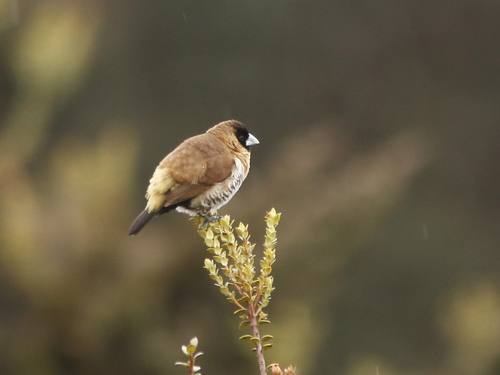
オグロタカネキンパラ (Lonchura montana) オグロタカネキンパラ

メディア

読み込み中…

要点

キゴシキンパラとオグロタカネキンパラを区別する最も信頼できる方法は、特に腹部と顔に焦点を当てて羽毛のパターンに注目することです。オグロタカネキンパラは特徴的な黒い顔、クリーム色の胸、黒い縞模様の白い腹を示しますが、キゴシキンパラはこれらの強いコントラストが欠けています。幼鳥のオグロタカネキンパラも黒いくちばしとクリーム色の腹部を持っており、より均一な色合いのキゴシキンパラとは異なります。生息地は強力な手がかりです:キゴシキンパラは低地の湿地に生息し、オグロタカネキンパラはスノー山とスター山の高山草原に限定されています。サイズは似ていますが、キゴシキンパラはわずかに重いかもしれません。

識別のコツ

  1. 顔のパターン: オグロタカネキンパラは成鳥に特徴的な黒い顔を持っており、キゴシキンパラはこの特徴が欠けています。明確な黒いマスクが見えたら、それはオグロタカネキンパラです。
  2. 腹部のコントラスト: 成鳥のオグロタカネキンパラはクリーム色の胸と黒い縞模様の白い腹を示し、暗い上面との強いコントラストを生み出します。キゴシキンパラは下部がより均一な茶色で、クリーム色と白の縞模様がありません。
  3. 幼鳥のくちばしの色: 幼鳥のオグロタカネキンパラは黒いくちばしを持ち、クリーム色の腹部に対して際立っています。若いキゴシキンパラは色がより均一で、この鋭いくちばし/腹部のコントラストが欠けています。
  4. 幼鳥の腹部: 若いオグロタカネキンパラの下部にクリーム色を探してください;キゴシキンパラの幼鳥はそのような淡い腹を持っているとは記述されていません。
  5. 生息地の文脈: 鳥が樹木の上の高山草原にいる場合、特にスノー山やスター山では、ほぼ確実にオグロタカネキンパラです。湿地や低地の湿地はキゴシキンパラを示します。
  6. 群れのサイズ: オグロタカネキンパラはしばしば大きな群れ(6〜20羽)を形成しますが、キゴシキンパラはより小さなグループで見られることが多いですが、これは常に診断的ではありません。
  7. サイズと構造: キゴシキンパラはわずかにがっしりして見えるかもしれませんが、どちらも小さなエストリルディドフィンチです。サイズはあくまで補助的な手がかりとして使用してください。
  8. 性差: 両種は羽毛において性差がほとんどないため、同定に性別を頼らないでください。
  9. 飛行時の視点: 特徴的な上翼や飛行パターンの違いは記載されていないため、飛行中でも顔と腹部のパターンに焦点を当ててください。
  10. くちばしの構造: 詳細には記載されていませんが、幼鳥のオグロタカネキンパラの黒いくちばしは良いフィールドマークです;キゴシキンパラのくちばしの色は特に記載されていませんが、若い個体で黒いとは記述されていません。
  11. 地理的範囲: オグロタカネキンパラはニューギニア西部の小さな高山地域に特有であり、キゴシキンパラはニューギニア北部および東部に広く分布しています。範囲を文脈の手がかりとして使用してください。
  12. 羽毛の落とし穴: 摩耗したり換羽中の鳥には注意してください。これによりオグロタカネキンパラの腹部の縞模様や顔のパターンが隠れることがありますが、一般的なコントラストは視認できるはずです。
  13. 声: メモには音声の違いは記載されていないため、分離のために鳴き声や歌に頼らないでください。
  14. 季節: 両種は常駐しており、強い季節的な羽毛の変化はないため、年の時期は大きな要因ではありません。
  15. 照明: 照明が悪い場合、オグロタカネキンパラの黒い顔と腹部のコントラストがあまり明白でないかもしれません;これらの特徴を確認するために良い光の中で鳥を観察してください。

大きさ

キゴシキンパラの記録された体重は14.0 g [wikidata]であり、オグロタカネキンパラの直接的な体重は記載されていませんが、約11.5 cmの小さなエストリルディドフィンチとして記述されています [wikipedia]。どちらも小さいですが、キゴシキンパラは特に直接比較においてわずかにがっしりして見えるかもしれません。しかし、フィールドでは、サイズだけでは微妙であり、主要な区別要因として頼るべきではありません。

羽色

行動

オグロタカネキンパラはしばしば6〜20羽の群れで見られ、開けた高山草原で種子や草を食べています。キゴシキンパラの行動はメモにおいてあまり詳細ではありませんが、湿地の種として、葦原や湿った地域で小さなグループやペアで見られる可能性が高いです。採餌スタイルや群れのサイズは文脈を提供するかもしれませんが、羽毛や生息地ほど診断的ではありません。

生息環境

生息地は重要な区別要因です:キゴシキンパラはニューギニア北部および東部の湿地に生息し、しばしば低地の湿地や葦原に見られます。対照的に、オグロタカネキンパラはニューギニア西部のスノー山とスター山の高山草原に限定されており、はるかに高い標高に生息しています。もしあなたが樹木の上の開けた草原の高山環境でムニアに出会った場合、それはほぼ確実にオグロタカネキンパラです。湿地や低地の生息地はキゴシキンパラを示します。

より良い説明を送る

比較と同じ項目を使ってください。文章はすぐに公開されます。

The most reliable way to separate Grand Munia from Snow Mountain Munia is by focusing on plumage pattern, especially the underparts and face. Snow Mountain Munia shows a distinctive black face, buff chest, and black-barred white belly, while Grand Munia lacks these strong contrasts. Juvenile Snow Mountain Munias also have a black bill and buffy-white underparts, unlike the more uniformly colored Grand Munia. Habitat is a strong supporting clue: Grand Munia is found in lowland wetlands, while Snow Mountain Munia is restricted to alpine grasslands of the Snow and Star Mountains. Size is similar, but Grand Munia may be slightly heavier.

  1. Face pattern: Snow Mountain Munia has a distinctive black face in adults, while Grand Munia lacks this feature. If you see a clear black mask, it's Snow Mountain Munia.
  2. Underpart contrast: Adult Snow Mountain Munia shows a buff chest and a black-barred white belly, creating a strong contrast with the dark upperparts. Grand Munia is more uniformly brown below, without the buff and white barring.
  3. Juvenile bill color: Juvenile Snow Mountain Munia has a black bill, which stands out against its buffy-white underparts. Young Grand Munia are more uniform in color and lack this sharp bill/underpart contrast.
  4. Juvenile underparts: Look for buffy-white below in young Snow Mountain Munia; Grand Munia juveniles are not described as having such pale bellies.
  5. Habitat context: If the bird is in alpine grassland above the treeline, especially in the Snow or Star Mountains, it is almost certainly Snow Mountain Munia. Wetland or lowland marshes indicate Grand Munia.
  6. Flock size: Snow Mountain Munia often forms larger flocks (6–20 birds), while Grand Munia may be found in smaller groups, though this is not always diagnostic.
  7. Size and structure: Grand Munia may appear slightly bulkier, but both are small estrildid finches. Use size only as a supporting clue.
  8. Sex differences: Both species show little sexual dimorphism in plumage, so do not rely on sex for identification.
  9. Flight views: No distinctive upperwing or flight pattern differences are noted, so focus on face and underpart pattern even in flight.
  10. Bill structure: While not described in detail, Snow Mountain Munia's black bill in juveniles is a good field mark; Grand Munia's bill color is not specifically noted but is not described as black in young.
  11. Geographic range: Snow Mountain Munia is endemic to a small alpine region in western New Guinea, while Grand Munia is more widespread in northern and eastern New Guinea. Use range as a context clue.
  12. Plumage pitfalls: Beware of worn or molting birds, which may obscure some of the underpart barring or face pattern in Snow Mountain Munia, but the general contrast should remain visible.
  13. Voice: No vocal differences are described in the notes, so do not rely on calls or song for separation.
  14. Season: Both species are resident and do not have strong seasonal plumage changes, so time of year is not a major factor.
  15. Lighting: In poor light, the black face and underpart contrast of Snow Mountain Munia may be less obvious; try to view birds in good light to confirm these features.

Grand Munia has a recorded body mass of 14.0 g [wikidata], while no direct mass is given for Snow Mountain Munia, but it is described as a small estrildid finch about 11.5 cm in length [wikipedia]. Both are small, but Grand Munia may appear slightly bulkier, especially in direct comparison. However, in the field, size alone is subtle and should not be relied on as the primary separator.

  • Juvenile/immature birds: Juvenile Snow Mountain Munia has a black bill, dark brown upperparts, and buffy-white underparts, which contrasts with the more uniformly colored young Grand Munia. This pale belly and dark bill combination is a strong clue for Snow Mountain Munia in the field.
  • Adults: Adult Snow Mountain Munia is dark brown above, with a black face, buff chest, and a black-barred white abdomen. Grand Munia lacks the black face and the sharply contrasting underparts; its plumage is more uniform brown without the distinct buff and white barring seen in Snow Mountain Munia. Both sexes of Snow Mountain Munia share this pattern, so sex is not a confounding factor.
  • Wing pattern: No specific upperwing or flight pattern differences are described for either species, so focus on underpart and face pattern for both perched and flying birds.

Snow Mountain Munia is often seen in flocks of six to twenty birds, feeding on seeds and grasses in open alpine grassland. Grand Munia's behavior is less detailed in the notes, but as a wetland species, it is likely to be found in smaller groups or pairs in reedbeds or marshy areas. Foraging style and flock size may provide context, but are not as diagnostic as plumage and habitat.

Habitat is a key separator: Grand Munia is found in wetlands of northern and eastern New Guinea, often in lowland marshes and reedbeds. In contrast, Snow Mountain Munia is restricted to alpine grassland in the Snow and Star Mountains of western New Guinea, at much higher elevations. If you encounter a munia in an open, grassy alpine setting well above the treeline, it is almost certainly Snow Mountain Munia. Wetland or lowland habitats point to Grand Munia.

変更を破棄しますか?

保存していない編集があります。今離れると失われます。

キゴシキンパラ · オグロタカネキンパラ · 苦手な鳥