

Motmot

オオハチドリ 対 オアシスハチドリ

Patagona gigas 対 Rhodopis vesper

オオハチドリとオアシスハチドリのクイズ
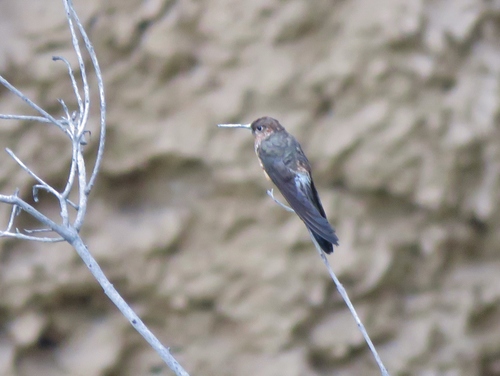
オオハチドリ (Patagona gigas) オオハチドリ
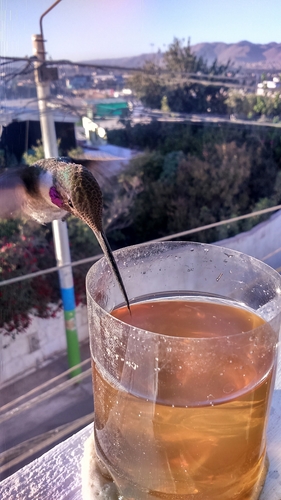
オアシスハチドリ (Rhodopis vesper) オアシスハチドリ

メディア

読み込み中…

要点

オオハチドリとオアシスハチドリをフィールドで区別する最も信頼できる方法はサイズです:オオハチドリは巨大で、オアシスのほぼ2倍の長さで、最大8倍の重さがあります。また、典型的なハチドリよりも小さなスイフトやツバメに似ています。飛行中に見られる場合、オオハチドリの遅くて重い羽ばたきと広い翼は特徴的ですが、オアシスははるかに小さく、より敏捷で、オスは深く分かれた尾を持っています。羽毛は遠くからはあまり役に立ちませんが、成鳥のオスのオアシスは明るい虹色のゴルゲットと白い顔のストライプを示し、オオハチドリは全体的に地味な茶色またはオリーブ色で、虹色はありません。両種はペルーとチリの類似したアンデスおよび沿岸の生息地に出現する可能性があるため、構造とサイズに注意を払うことが重要です。

識別のコツ

  1. サイズは最も信頼できる特徴です:オオハチドリはハチドリとしては巨大で、オアシスのほぼ2倍の長さで、最大8倍の重さがあります。もしあなたの鳥が典型的なハチドリよりもわずかに大きいだけなら、それはオオではありません。
  2. 飛行スタイル:オオハチドリは遅くて深い羽ばたきで飛び、時には滑空し、小さなスイフトやツバメに似ています。オアシスハチドリははるかに敏捷で、小さなハチドリに典型的な速く連続した羽ばたきを持っています。
  3. くちばしの構造:両種は長く、曲がった黒いくちばしを持っていますが、オアシスハチドリのものは名義亜種において相対的に長くて太いです。くちばしの形はフィールドでの主要な区別要因ではありません。
  4. 尾の形:成鳥のオスのオアシスハチドリは、紫がかった茶色の外羽を持つ深く分かれた尾を持ち、特にディスプレイ中や尾を広げて止まっているときに明らかです。雌のオアシスは、黒い亜端バーと白い先端を持つ短く、わずかに分かれた尾を持っています。オオハチドリの尾は直線的で、強い模様がありません。
  5. ゴルゲットと顔の模様:成鳥のオスのオアシスハチドリは、鮮やかな虹色のゴルゲット(バラ色の紫からターコイズの後ろを持つ紫色)と目の後ろに長い白いストライプを示します。雌のオアシスは目の後ろに小さな白い点があります。オオハチドリは虹色のゴルゲットや強い顔の模様がなく、地味な茶色またはオリーブ色に見えます。
  6. 腹部:オアシスハチドリのオスは、側面に緑がかった洗いがかかった鈍い白い腹部を持ち、雌は淡い灰色からバフで、側面が暗いです。オオハチドリは、P. g. peruvianaが顎と喉に白を示すことがありますが、全体的に均一な茶色またはオリーブ色で、オアシスの鮮やかな淡い腹部はありません。
  7. 尾の色:オアシスハチドリはシナモン色の尾と上尾覆羽を持ち、良い光の中で見ることができます。オオハチドリの尾は対照的ではありません。
  8. 飛行中の翼の模様:両種に特有の幼鳥や年齢特有の上翼模様は記載されていないため、サイズと構造に頼ってください。
  9. 生息地の文脈:2600 m以上の高いアンデスの低木や森林の端では、特に開けた国ではオオハチドリがより可能性があります。2600 m以下の沿岸のオアシス、庭、または農業地域では、特に北チリとペルーではオアシスハチドリがより可能性があります。
  10. ディスプレイ行動:U字型のシャトル飛行を行い、明るいゴルゲットを広げたり、尾で鋭い笛の音を出したりするハチドリを見たら、それはオアシスハチドリのオスです。オオハチドリはそのようなディスプレイを行いません。
  11. 止まっている姿勢:オオハチドリは長い体型で重く見え、しばしば太い首と大きな頭で直立して座っています。オアシスハチドリはより繊細で、オスは相対的に長い尾を持っています。
  12. 性差:オアシスハチドリのオスだけが明るいゴルゲットと長い白い顔のストライプを示します。雌は地味ですが、依然として小さな白い後眼点と尾の模様を示します。オオハチドリの両性は地味で、虹色はありません。
  13. 季節的な移動:オオハチドリは高度を変えることがあり、冬に降下します。オアシスハチドリは一部の地域で年間を通じて巣を作ることがありますが、大規模な移動は知られていません。
  14. 豊富さ:両種は好ましい生息地で地域的に一般的である可能性がありますが、オアシスハチドリは庭や人間が改変した風景でより一般的です。
  15. 迷ったときは、サイズと尾の形に焦点を当ててください:色を判断できない場合やゴルゲットが見えない場合は、全体的な体格と尾の分岐/深さを使用してこれらの種を区別してください。

大きさ

オオハチドリはハチドリとしては本当に巨大です:長さ23 cm(9.1インチ)、翼幅21.5 cm(8.5インチ)、体重17〜31 gです。これはオアシスハチドリの約2倍の長さで、最大8倍の質量です。オアシスハチドリはわずか11〜13.5 cm(4.3〜5.3インチ)の長さで、体重は約4 gです。雌のオアシスでさえ、最大の性別であってもオオハチドリにはかないません。フィールドでは、オオハチドリは小さなツバメやスイフトのサイズにほぼ見え、オアシスは典型的なハチドリのサイズです。

羽色

両種に特有の幼鳥や年齢特有の上翼の飛行マークは記載されていないため、成鳥の羽毛に焦点を当てます。オオハチドリは全体的に地味で、2つの亜種があります:P. g. peruvianaは顎と喉に白を持つ黄褐色で、P. g. gigasはよりオリーブ色の茶色で、顎/喉に白がありません。虹色の色や強い顔の模様はありません。対照的に、オアシスハチドリは上面がオリーブグリーンで、シナモン色の尾と上尾覆羽を持っています。成鳥のオスは目を引く虹色のゴルゲット(バラ色の紫からターコイズの後ろを持つ紫色)、長い白い顔のストライプ、紫がかった茶色の外羽を持つ深く分かれた尾を持っています。雌はゴルゲットがなく、目の後ろに小さな白い点があり、黒いバーと白い先端を持つ短く、わずかに分かれた尾を持っています。雌の腹部は淡い灰色からバフで、オスは鈍い白で側面が緑がかっています。尾の模様は、特に雌にとって止まっているまたは尾を広げたビューでの重要な特徴です。

行動

オオハチドリは遅くて重い羽ばたきで飛び、しばしば羽ばたきの間に滑空し、ツバメやスイフトのような印象を与えます。特に縄張りを持たず、開けた生息地を安定して移動しながら単独で見られることが多いです。オアシスハチドリははるかに活発で敏捷で、速く規則的な羽ばたきを持っています。オスは非常に縄張りが強く、複雑な求愛行動を行います:尾を広げてゴルゲットを広げるU字型のシャトル飛行や、尾で生成された笛の音を伴う劇的なダイブディスプレイを行います。オアシスは特に繁殖期に花の上でホバリングしたり、追いかけたりするのが見られる可能性が高いです。

生息環境

両種はペルーと北チリで重なりますが、オオハチドリは主に高い標高(海面から4600 m、しばしば2600 m以上)でアンデスの低木や森林の端に見られ、時には冬に降下します。オアシスハチドリは、オアシス、河川域、庭、農業地域を含む低い標高の乾燥した沿岸および近沿岸の生息地を好み、通常はペルーで2600 m以下ですが、地域によっては3800 mまで見られます。密集した都市地域で見られる場合、オアシスの方が可能性が高く、オオハチドリは都市化が進んだ地域を避けます。

より良い説明を送る

比較と同じ項目を使ってください。文章はすぐに公開されます。

The most reliable way to separate Giant Hummingbird from Oasis Hummingbird in the field is by size: Giant Hummingbird is enormous, nearly twice as long and up to eight times heavier than Oasis, and looks more like a small swift or swallow than a typical hummingbird. If seen in flight, Giant Hummingbird’s slow, heavy wingbeats and broad wings are distinctive, while Oasis is much smaller, more agile, and has a deeply forked tail in males. Plumage is less helpful at a distance, but adult male Oasis shows a bright iridescent gorget and a white face stripe, while Giant Hummingbird is overall plain brownish or olive with no iridescence. Both species can occur in similar Andean and coastal habitats in Peru and Chile, so careful attention to structure and size is essential.

  1. Size is the single most reliable mark: Giant Hummingbird is enormous for a hummingbird, nearly twice as long and up to eight times heavier than Oasis. If your bird looks only slightly larger than a typical hummingbird, it is not a Giant.
  2. Flight style: Giant Hummingbird flies with slow, deep wingbeats and sometimes glides, resembling a small swift or swallow. Oasis Hummingbird is much more agile, with rapid, continuous wingbeats typical of small hummingbirds.
  3. Bill structure: Both species have long, decurved black bills, but Oasis Hummingbird's is proportionally longer and stouter in the nominate subspecies. Bill shape is not a primary separator in the field unless seen very well.
  4. Tail shape: Adult male Oasis Hummingbird has a deeply forked tail with purplish brown outer feathers, especially obvious during display or when perched with tail spread. Female Oasis has a shorter, only slightly forked tail with a black subterminal bar and white tips. Giant Hummingbird’s tail is straight-edged and lacks strong pattern.
  5. Gorget and face pattern: Adult male Oasis Hummingbird shows a brilliant iridescent gorget (rosy violet to purple with turquoise rear) and a long white stripe behind the eye. Female Oasis has a small white dot behind the eye. Giant Hummingbird lacks any iridescent gorget or strong facial markings, appearing plain brownish or olive.
  6. Underparts: Oasis Hummingbird males have dull white underparts with a greenish wash on the flanks; females are pale gray to buff with darker flanks. Giant Hummingbird is uniformly brownish or olive below, with P. g. peruviana showing some white on the chin and throat, but never the crisp pale underparts of Oasis.
  7. Rump color: Oasis Hummingbird has a cinnamon rump and uppertail coverts, which can be seen in good light. Giant Hummingbird’s rump is not contrasting.
  8. Wing pattern in flight: No distinctive juvenile or age-specific upperwing patterns are described for either species, so rely on size and structure.
  9. Habitat context: In high Andean scrub or forest edge above 2,600 m, especially in open country, Giant Hummingbird is more likely. In coastal oases, gardens, or agricultural areas below 2,600 m, especially in northern Chile and Peru, Oasis Hummingbird is more likely.
  10. Display behavior: If you see a hummingbird performing U-shaped shuttle flights, flaring a bright gorget, or making a sharp whistling sound with the tail, it is an Oasis Hummingbird male. Giant Hummingbird does not perform such displays.
  11. Perched posture: Giant Hummingbird appears long-bodied and heavy, often sitting upright with a thick neck and large head. Oasis Hummingbird is more delicate, with a proportionally longer tail in males.
  12. Sex differences: Only male Oasis Hummingbird shows the bright gorget and long white face stripe. Females are plainer but still show the small white post-ocular dot and tail pattern. Both sexes of Giant Hummingbird are plain and lack iridescence.
  13. Seasonal movement: Giant Hummingbird may move altitudinally, descending in winter. Oasis Hummingbird may nest year-round in some areas, but is not known for major migrations.
  14. Abundance: Both species can be locally common in their preferred habitats, but Oasis Hummingbird is more likely in gardens and human-modified landscapes.
  15. When in doubt, focus on size and tail shape: If you cannot judge color or see the gorget, use overall bulk and tail fork/depth to separate these species.

Giant Hummingbird is truly gigantic for a hummingbird: 23 cm (9.1 in) long, with a wingspan of 21.5 cm (8.5 in), and weighing 17–31 g. This is roughly double the length and up to eight times the mass of Oasis Hummingbird, which is only 11–13.5 cm (4.3–5.3 in) long and weighs about 4 g. Even a female Oasis, the largest sex, is dwarfed by a Giant Hummingbird. In the field, Giant Hummingbird appears almost the size of a small swallow or swift, while Oasis is typical hummingbird-sized.

No age-specific upperwing or juvenile flight marks are described for either species, so focus is on adult plumage. Giant Hummingbird is plain overall, with two subspecies: P. g. peruviana is yellowish brown with white on the chin and throat, while P. g. gigas is more olive-brown and lacks white on the chin/throat. It lacks any iridescent colors or strong facial markings. Oasis Hummingbird, by contrast, is olive green above with a cinnamon rump and uppertail coverts. Adult males have a striking iridescent gorget (rosy violet to purple with turquoise rear), a long white face stripe, and a deeply forked tail with purplish brown outer feathers. Females lack the gorget, have a small white dot behind the eye, and a shorter, only slightly forked tail with a black bar and white tips. Underparts are pale gray to buff in females, dull white with greenish flanks in males. Tail pattern is a key mark in perched or spread-tail views, especially for females.

Giant Hummingbird flies with slow, heavy wingbeats and often glides between flaps, giving a swallow- or swift-like impression. It is not particularly territorial and is often seen alone, moving steadily through open habitats. Oasis Hummingbird is much more active and agile, with rapid, regular wingbeats. Males are highly territorial and perform elaborate courtship displays: U-shaped shuttle flights with tail fanning and gorget flaring, and dramatic dive displays with tail-generated whistling. Oasis is more likely to be seen hovering at flowers or engaged in chases, especially in breeding season.

Both species overlap in Peru and northern Chile, but Giant Hummingbird is mostly found at higher elevations (sea level to 4,600 m, often above 2,600 m) in Andean scrub and forest edges, sometimes descending in winter. Oasis Hummingbird prefers lower elevation arid coastal and near-coastal habitats, including oases, riparian zones, gardens, and agricultural areas, usually below 2,600 m in Peru but up to 3,800 m locally. If seen in dense city areas, Oasis is more likely, as Giant Hummingbird avoids heavily urbanized zones.

変更を破棄しますか?

保存していない編集があります。今離れると失われます。

オオハチドリ · オアシスハチドリ · 苦手な鳥