

Motmot

パナマヒメエメラルドハチドリ 対 ドウイロハチドリ

Chlorostilbon assimilis 対 Chalybura urochrysia

パナマヒメエメラルドハチドリとドウイロハチドリのクイズ
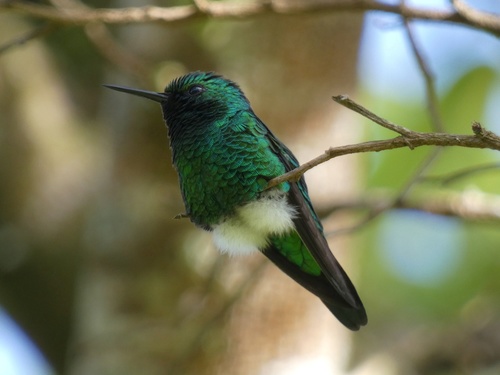
パナマヒメエメラルドハチドリ (Chlorostilbon assimilis) パナマヒメエメラルドハチドリ
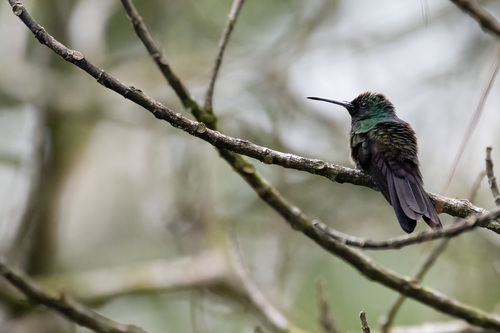
ドウイロハチドリ (Chalybura urochrysia) ドウイロハチドリ

メディア

読み込み中…

要点

ガーデンエメラルドとドウイロハチドリを区別する最も信頼できるフィールドマークはサイズと構造です:ドウイロハチドリははるかに大きく、ずんぐりしており、重く、わずかに下向きのくちばしと、より長く幅広い尾を持っています。一方、ガーデンエメラルドは小さく、コンパクトで、より短くまっすぐなくちばしを持っています。成鳥のオスのガーデンエメラルドは鮮やかな金属的な緑色で、青黒い分岐した尾を持っていますが、オスのドウイロハチドリは青銅色の尾と長くふわふわした白い尾羽の覆いを持っています。メスや幼鳥は混乱を招くことがありますが、ドウイロハチドリは常に目立って大きく、より広範な白または灰色の尾羽の覆いを示します。飛んでいるときや止まっているときは、ドウイロハチドリのサイズと幅広い尾を確認し、ガーデンエメラルドのより繊細な体型とより深く分岐した尾と比較してください。

識別のコツ

  1. サイズは最も即座にわかる手がかりです:ドウイロハチドリはガーデンエメラルドのほぼ2倍の質量を持ち、明らかに長くずんぐりしています。鳥が小さくて繊細に見える場合はガーデンエメラルドを考え、頑丈で重そうに見える場合はドウイロハチドリを疑ってください。
  2. くちばしの構造:ドウイロハチドリは、黒い上顎と赤またはピンクがかった下顎の基部を持つ、重くわずかに下向きのくちばしを持っていますが、ガーデンエメラルドのくちばしは短く、まっすぐで、すべて暗いです。
  3. 尾の形と色:ガーデンエメラルドは青黒く、深く分岐した尾を持ち、青みがかった光沢があります(中央の羽);ドウイロハチドリの尾は幅広く、分岐が少なく、青銅色または紫がかった色(亜種によって異なる)で、青い光沢がありません。
  4. 尾羽の覆い:オスのドウイロハチドリは長くふわふわした白い(またはメラノロアではすすけた)尾羽の覆いを持ち、これはガーデンエメラルドの小さな白い太もも羽毛よりもはるかに目立ちます。メスもガーデンエメラルドよりも広範な灰色がかった白い尾羽の覆いを示します。
  5. 腹部(オス):ガーデンエメラルドのオスは明るい金属的な緑色で、時々青い光沢があります。ドウイロハチドリのオスは輝く緑色ですが、イサウラエは青い喉と胸を持ち、メラノロアは暗い青銅色の腹部を持っています。
  6. 腹部(メス):ガーデンエメラルドのメスは淡い灰色で、緑の斑点はほとんどありません;ドウイロハチドリのメスは灰色で、側面に緑の斑点があります(メラノロアでは多く、イサウラエでは少ない)。
  7. 顔の模様(メス/幼鳥):ガーデンエメラルドのメスは目の後ろに白または灰色がかった斑点と暗い頬を持ち、これはドウイロハチドリのメスには記載されていません。
  8. 幼鳥/未熟なマーク:未熟なドウイロハチドリは頭、うなじ、尾羽の羽毛に淡いまたはシナモン色の縁取りがあります;ガーデンエメラルドの幼鳥はこれを示しません。
  9. 止まっているときの印象:ガーデンエメラルドはより直立して止まり、コンパクトに見えます;ドウイロハチドリはより重く、より水平に見えます。
  10. 飛行スタイル:ガーデンエメラルドは迅速で敏捷で、オープンエリアの花の上でホバリングすることがよくあります;ドウイロハチドリはより安定しており、より力強く、他のハチドリを追いかけているのがよく見られます。
  11. 生息地の文脈:密な森林や成熟した二次成長の中ではドウイロハチドリを期待し、オープンな庭や茂みの端ではガーデンエメラルドがより可能性があります。
  12. 地理的範囲:両者はコスタリカとパナマで重なりますが、ドウイロハチドリはニカラグア北部とエクアドル南部に広がります;ガーデンエメラルドはコスタリカとパナマに制限されています。
  13. 鳴き声:信頼できる診断にはなりません;両者とも一般的に静かで、似たような目立たない鳴き声を持っています。
  14. 亜種の変異:青い喉と胸を持つオスを見た場合、それはドウイロハチドリ(イサウラエ)です;ガーデンエメラルドはこれを示しません。
  15. 尾の先端の色(メス):ガーデンエメラルドのメスは外側の尾羽に淡い灰色の先端を持っています;ドウイロハチドリのメスは灰色の先端を持っていますが、より広範な灰色がかった尾羽の覆いがあります。

大きさ

ガーデンエメラルドは本当に小さなハチドリで、7.8〜8.5 cmの大きさで、3〜4.1 gの重さです。ドウイロハチドリははるかに大きく、10.5〜12 cmの長さで、オスは約7.1 g、メスは6.1 gで、ガーデンエメラルドのほぼ2倍の質量です。この違いはフィールドで明らかで、特に両種が同じフィーダーや花のパッチで見られるときに顕著です。ドウイロハチドリはずんぐりして見え、より頑丈な体と比例的に長い尾を持っています。

羽色

行動

両種は活発な蜜を吸う鳥ですが、ドウイロハチドリはより攻撃的で、特にヘリコニアのパッチでは餌場を支配することがよくあります。ガーデンエメラルドはオープンな庭や端で見られることが多く、素早く飛び回り、露出した小枝に止まります。ドウイロハチドリは下層から中層で採餌する傾向があり、完全にオープンなエリアで見られることは少なく、しばしば森林の端の中または近くに留まります。混成種の状況では、ドウイロハチドリの大きなサイズと積極的な行動が明らかです。

生息環境

ガーデンエメラルドはコスタリカとパナマで見られ、通常は庭、オープンエリア、端に生息しています。ドウイロハチドリはより広い範囲(ニカラグアからエクアドル)を持ち、湿った森林の内部や端、成熟した二次森林、バナナプランテーションのような半オープンエリアを好みますが、一般的には完全にオープンな生息地を避けます。密な森林の内部にいる場合、ドウイロハチドリがより可能性があります;オープンな庭や茂みではガーデンエメラルドが期待されます。

声

ガーデンエメラルドの鳴き声はあまり知られていませんが、カニベットエメラルドに似ていると考えられています:無限に繰り返される、細い「ツィー ツェリー」と乾いた、ざらざらした「チュット」または「チット」です。ドウイロハチドリの声は提供されたメモには記載されていないため、この場合、鳴き声は信頼できる区別にはなりません。

より良い説明を送る

比較と同じ項目を使ってください。文章はすぐに公開されます。

The most reliable field mark to separate Garden Emerald from Bronze-tailed Plumeleteer is size and structure: the Plumeleteer is much larger and bulkier, with a heavier, slightly decurved bill and a longer, broader tail, while the Garden Emerald is tiny and compact with a shorter, straighter bill. Adult male Garden Emeralds are a vivid metallic green with a blue-black forked tail, while male Plumeleteers have a bronze-green tail and long, fluffy white undertail coverts. Females and immatures can be confusing, but the Plumeleteer is always noticeably larger and shows more extensive white or gray undertail coverts. In flight or perched, check for the Plumeleteer's size and broad tail versus the Garden Emerald's daintier build and more deeply forked tail.

  1. Size is the most immediate clue: Plumeleteer is nearly twice the mass of Garden Emerald and noticeably longer and bulkier. If the bird looks small and delicate, think Garden Emerald; if it looks robust and heavy, suspect Plumeleteer.
  2. Bill structure: Plumeleteer has a heavier, slightly decurved bill with a black maxilla and red or pinkish base to the mandible, while Garden Emerald’s bill is shorter, straighter, and all dark.
  3. Tail shape and color: Garden Emerald has a blue-black, deeply forked tail with a bluish gloss (central feathers); Plumeleteer’s tail is broader, less forked, and bronze-green or purplish (depending on subspecies), lacking the blue gloss.
  4. Undertail coverts: Male Plumeleteers have long, fluffy white (or sooty in melanorrhoa) undertail coverts, which are much more prominent than the small white thigh tufts of Garden Emerald. Females also show more extensive grayish white undertail coverts than Garden Emerald.
  5. Underparts (males): Garden Emerald males are bright, metallic green below, sometimes with a blue sheen. Plumeleteer males are glittering green below, but isaurae has a blue throat and breast, and melanorrhoa has a darker, dusky bronze belly.
  6. Underparts (females): Garden Emerald females are pale gray below with little or no green flecking; Plumeleteer females are gray below with green flecks on the sides (more in melanorrhoa, less in isaurae).
  7. Face pattern (females/immatures): Garden Emerald females have a white or grayish spot behind the eye and dusky cheeks, a mark not described for Plumeleteer females.
  8. Juvenile/immature marks: Immature Plumeleteers have buffy or cinnamon fringing on crown, nape, and rump feathers; Garden Emerald juveniles do not show this.
  9. Perched jizz: Garden Emerald perches more upright and looks compact; Plumeleteer appears heavier and more horizontal.
  10. Flight style: Garden Emerald is quick and agile, often hovering at flowers in open areas; Plumeleteer is steadier and more powerful, often seen chasing other hummingbirds.
  11. Habitat context: In dense forest or mature secondary growth, expect Plumeleteer; in open gardens or scrubby edges, Garden Emerald is more likely.
  12. Geographic range: Both overlap in Costa Rica and Panama, but Plumeleteer extends north to Nicaragua and south to Ecuador; Garden Emerald is restricted to Costa Rica and Panama.
  13. Vocalization: Not reliably diagnostic; both are generally quiet and have similar, unremarkable calls.
  14. Subspecies variation: If you see a male with a blue throat and breast, it is Plumeleteer (isaurae); Garden Emerald never shows this.
  15. Tail tip color (females): Garden Emerald females have pale gray tips on the outer tail feathers; Plumeleteer females have gray tips but with more extensive grayish undertail coverts.

Garden Emerald is a truly small hummingbird, measuring 7.8–8.5 cm and weighing 3–4.1 g. Bronze-tailed Plumeleteer is much larger: 10.5–12 cm long, with males weighing about 7.1 g and females 6.1 g—nearly double the mass of a Garden Emerald. This difference is obvious in the field, especially when both species are seen at the same feeder or flowering patch. The Plumeleteer appears bulkier, with a more robust body and a proportionally longer tail.

  • Juveniles/Immatures: Juvenile Garden Emerald males resemble adult females but are darker gray below; no distinctive upperwing or flight pattern is described for either species at this age. Immature Plumeleteers look like adults but have buffy to cinnamon fringing on the crown, nape, and rump feathers, which is absent in Garden Emerald.
  • Adult Males: Garden Emerald males are metallic green above, brighter green below, with a blue-black forked tail and white thigh tufts. Plumeleteer males (nominate and melanorrhoa) are metallic green above with glittering green underparts, but their tail is bronze-green (or purplish black in melanorrhoa), and they have long, fluffy white undertail coverts (shorter and sooty in melanorrhoa). The isaurae subspecies has a blue throat and breast, bluish green belly, and a brighter bronze tail.
  • Adult Females: Garden Emerald females are bright metallic green to bronze green above, with bluish green uppertail coverts, blue-black tail with pale gray tips on outer feathers, dusky cheeks, a white spot behind the eye, and pale gray underparts. Plumeleteer females are metallic green above, gray below with green flecks on the sides (darker gray in melanorrhoa, paler in isaurae), and have grayish white undertail coverts with gray-tipped outer tail feathers. The undertail coverts are always more extensive and fluffier in Plumeleteer.
  • Tail: Garden Emerald has a more deeply forked tail with blue-black and bluish gloss; Plumeleteer has a broader, less forked tail with a bronze or purplish cast.

Both species are active nectar feeders, but the Plumeleteer is more aggressive and often dominates feeding territories, especially at Heliconia patches. Garden Emeralds are more likely to be seen in open gardens and edges, flitting quickly and perching on exposed twigs. Plumeleteers tend to forage from the understory to mid-strata and are less likely to be seen in fully open areas, often remaining within or near forest edge. In mixed-species situations, the Plumeleteer’s larger size and assertive behavior are apparent.

Garden Emerald is found in Costa Rica and Panama, typically in gardens, open areas, and edges. Bronze-tailed Plumeleteer has a broader range (Nicaragua to Ecuador) and prefers the interior and edges of humid forest, mature secondary forest, and semi-open areas like banana plantations, but generally avoids fully open habitats. If you are in a dense forest interior, Plumeleteer is more likely; in open gardens or scrub, Garden Emerald is expected.

Garden Emerald’s vocalizations are not well known but are thought to resemble Canivet’s Emerald: an endlessly repeated, wiry 'tseee tseeree' and a dry, scratchy 'chut' or 'chit.' Bronze-tailed Plumeleteer’s voice is not described in the provided notes, so vocalization is not a reliable separator in this case.

変更を破棄しますか?

保存していない編集があります。今離れると失われます。

パナマヒメエメラルドハチドリ · ドウイロハチドリ · 苦手な鳥