

Motmot

ヨツオビサケイ 対 ニシカンムリショウノガン

Pterocles quadricinctus 対 Lophotis savilei

ヨツオビサケイとニシカンムリショウノガンのクイズ
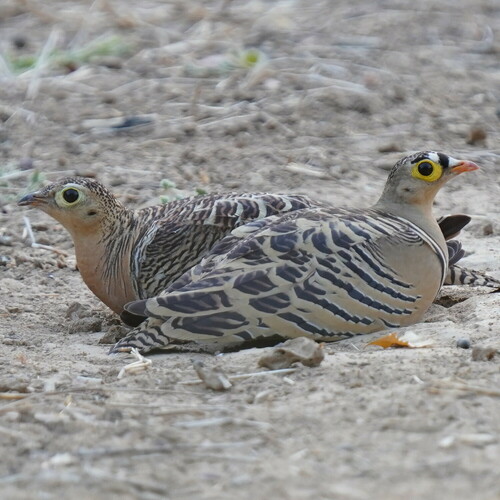
ヨツオビサケイ (Pterocles quadricinctus) ヨツオビサケイ
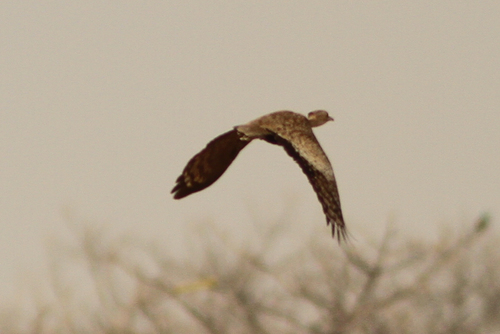
ニシカンムリショウノガン (Lophotis savilei) ニシカンムリショウノガン

メディア

読み込み中…

要点

ヨツオビサケイとニシカンムリショウノガンを区別する最も信頼できる方法は、全体的な構造と飛行スタイルによるものです。サケイはコンパクトでハトのような鳥で、長く尖った翼と速く直接的な飛行を持っています。一方、ショウノガンは頭が大きく、脚が長く、重くて遅い飛行をします。止まっている時や近くから見ると、オスのヨツオビサケイは頭と胸に大胆な白黒の帯を示し、これはニシカンムリショウノガンにはありません。メスのサケイはより隠れた色合いですが、ショウノガンの特徴的な頭の模様や縞模様の上面は欠けています。両種は似たような乾燥した生息地に生息することがあるため、形状と羽毛に注意を払うことが重要です。

識別のコツ

  1. Flight shape and style: ヨツオビサケイは長く尖った翼とコンパクトでハトのような体を持ち、速く直接的に飛びます。ニシカンムリショウノガンはより大きく、翼が広く、頭が大きく、遅く重い飛行をします。これは特に遠くからや飛行中に最も迅速に区別できる方法です。
  2. Head and neck structure: サケイは小さく丸い頭と短い首を持っています。ショウノガンは相対的に大きな頭、太い首、長い脚を持ち、歩くときや立っているときにより高く、直立した姿勢を示します。
  3. Male plumage (close views): オスのヨツオビサケイは額と胸に大胆な白黒の帯を示し、重く縞模様の腹部を持っています。オスのニシカンムリショウノガンはこれらの帯がなく、灰色の頭に中央の黒い顎のストライプと、ディスプレイ時にルフス色の後頭部の房を持ち、腹部は完全に黒です。
  4. Female plumage: メスのサケイは頭と胸の帯が欠けていますが、背中と側面に重く縞模様があります。メスのショウノガンは白い喉を持ち、黒は腹部に制限され、オスの青灰色と黒の頭の模様は欠けています。
  5. Upperwing in flight: サケイは無地の灰色の下翼と長く尖った翼を持っています。ショウノガンは淡いベージュの終端部分、黒っぽい飛行羽根に細いベージュの帯と黒い先端を持ち、飛行中により対照的な外観を示します。
  6. Tail and legs: サケイは短い尾と脚を持ち、飛行中はしばしば隠れています。ショウノガンは長い尾と目立つ長い脚を持ち、飛行中に引きずったり、歩いているときに明らかになることがあります。
  7. Back pattern: サケイの上面は黄緑色で重い茶色の縞模様があります。ショウノガンは淡い上面に黒い縞模様と矢じりのマークがあります。
  8. Behavior on the ground: サケイは群れで行動し、しばしば一緒に飛び立つことがあります。ショウノガンは孤独またはペアで行動し、直立してゆっくり歩き、飛ぶ前にしゃがんだり走ったりすることがあります。
  9. Habitat context: 両種は乾燥した開けた土地に生息することがありますが、サケイは散在する木がある地域で見られる可能性が高く、ショウノガンはより開けた草地や低木地に生息します。
  10. Bill color: ショウノガンは黄味がかったくちばしを持ち、茶色のクルメンがあります。サケイのくちばしの色は指定されていませんが、あまり特徴的ではありません。
  11. Iris and feet: ショウノガンは淡い粘土の斑点のある虹彩と黄味がかった粘土の足を持っています。これらの詳細は微妙で、フィールドでは診断的であることはまれです。
  12. Sexual dimorphism: 両種は性的な違いを示しますが、サケイの違いは帯に関するものであり、ショウノガンの違いは頭と腹部の色に関するものです。
  13. Display behavior: オスのニシカンムリショウノガンだけがディスプレイ中にルフス色の後頭部の房を示し、サケイにはありません。
  14. Contextual clues: 水たまりでの群れや速く直接的に飛んでいるのはサケイの可能性が高いです。開けた草地でゆっくり歩いている孤独な直立した鳥はショウノガンの可能性が高いです。
  15. When in doubt: 全体的な形状(サケイはコンパクトで尖っており、ショウノガンは直立して重い)と飛行スタイルに焦点を当てて、主なフィールドマークとしてください。

大きさ

ヨツオビサケイは中型のコンパクトな鳥(25–28 cmの長さ)で、小さなハトのような頭と短い尾を持っています。対照的に、ニシカンムリショウノガンは見た目の体積がわずかに大きく、相対的に大きな頭、長い首、長い脚を持ち、より高く直立した姿勢を示します。ショウノガンの翼幅は約25 cm(翼幅は指定されていませんが、翼はヨツオビサケイの長く尖った翼に比べて比較的広いです)。フィールドでは、サケイは著しくコンパクトで流線型に見え、ショウノガンはより大きくて直立しているように見えます。

羽色

どちらの種にも年齢特有の上翼パターンは記載されていませんが、羽毛の違いは依然として強いです。オスのヨツオビサケイは額と胸に白黒の帯を持ち、重く縞模様の腹部を持っています。メスは頭と胸の帯が欠けていますが、背中と側面に重く縞模様があります。両性のサケイは黄緑色の上面に茶色の模様と灰色の下翼を持っています。ニシカンムリショウノガンの成鳥は淡い上面に黒い縞模様と矢じりのマークを持ち、灰色の頭に中央の黒い顎のストライプと白い肩のストラップがあります。オスは完全に黒い腹部とディスプレイ時のルフス色の後頭部の房を持ち、メスは白い喉と黒は腹部に制限され、オスの頭の模様は欠けています。ショウノガンの翼は淡いベージュの終端部分と黒っぽい飛行羽根に細いベージュの帯と黒い先端を持ち、サケイのより無地の灰色の下翼に比べて飛行中により模様のある外観を作り出します。

行動

ヨツオビサケイは群れで行動し、しばしばフロックで見られ、速く直接的なハトのような飛行をします。彼らは通常、地面にいるか、餌や水を求めて急速に飛び回っています。ニシカンムリショウノガンはより孤独であるか、ペアで見られ、草地や開けた低木をゆっくりと直立して歩きます。彼らの飛行は重くて遅く、広い翼とより労力のかかる離陸を持っています。ショウノガンは遠くからフラッシュする可能性が低く、飛ぶ前にしゃがんだり走ったりすることがあります。

生息環境

両種は西アフリカと中央アフリカの乾燥した開けた生息地に生息しており、サバンナ、低木地、軽い森林を含みます。ヨツオビサケイは木が散在する開けた地域を好み、ニシカンムリショウノガンは乾燥した草地、低木、軽い森林により結びついており、しばしば干上がった池や平らな低木の近くにいます。生息地の重複は可能ですが、特にサヘルや隣接地域では、サケイは散在する木がある地域に見られる可能性が高く、ショウノガンはより開けた草地や低木のある場所に見られます。

より良い説明を送る

比較と同じ項目を使ってください。文章はすぐに公開されます。

The most reliable way to separate Four-banded Sandgrouse from Savile's Bustard is by overall structure and flight style: sandgrouse are compact, pigeon-like birds with long pointed wings and fast, direct flight, while bustards are larger-headed, longer-legged, and have a heavier, slower flight. In perched or close views, male Four-banded Sandgrouse show bold black-and-white bands on the head and breast, absent in Savile's Bustard. Female sandgrouse are more cryptic but still lack the bustard's distinctive head pattern and streaked upperparts. Both species can occur in similar dry habitats, so careful attention to shape and plumage is essential.

  1. Flight shape and style: Four-banded Sandgrouse have long, pointed wings and a compact, pigeon-like body, flying fast and directly; Savile's Bustard is bulkier, with broader wings, a larger head, and slower, heavier flight. This is the quickest field separation, especially at a distance or in flight.
  2. Head and neck structure: Sandgrouse have a small, rounded head and short neck; bustards have a proportionally larger head, thicker neck, and longer legs, giving a taller, more upright posture when walking or standing.
  3. Male plumage (close views): Male Four-banded Sandgrouse show bold black-and-white bands on the forehead and breast, and a heavily barred belly. Male Savile's Bustard lacks these bands but has a grey head with a central black chin stripe and a rufous nape tuft when displaying; underparts are entirely black.
  4. Female plumage: Female sandgrouse lack the head and breast bands but are heavily barred on the back and flanks, with yellowish-green upperparts. Female bustards have a white throat, black restricted to the belly, and lack the blue-grey and black head markings of the male.
  5. Upperwing in flight: Sandgrouse show plain grey underwings and long pointed wings; bustards show more patterned wings with pale beige terminal thirds, blackish flight feathers with slender beige bars, and black tips, giving a more contrasting look in flight.
  6. Tail and legs: Sandgrouse have a short tail and legs, often hidden in flight; bustards have a longer tail and visible long legs, which may trail in flight or be obvious when walking.
  7. Back pattern: Sandgrouse upperparts are yellowish-green with heavy brown barring; bustards have pale upperparts with black streaks and arrowhead marks.
  8. Behavior on the ground: Sandgrouse are gregarious, often in flocks, and may flush together; bustards are solitary or in pairs, walk upright, and may crouch or run before flying.
  9. Habitat context: Both can occur in dry open country, but sandgrouse are more likely in areas with scattered trees, bustards in more open grassland or bushland.
  10. Bill color: Bustards have a yellowish bill with a brownish culmen; sandgrouse bill color is not specified but is less distinctive.
  11. Iris and feet: Bustards have a pale, clay-specked iris and yellowish clay feet; these details are subtle and rarely diagnostic in the field.
  12. Sexual dimorphism: Both species show sexual differences, but the sandgrouse's are more about banding, while the bustard's are about head and underpart color.
  13. Display behavior: Only male Savile's Bustard shows a rufous nape tuft during display, which is absent in sandgrouse.
  14. Contextual clues: Flocks at waterholes or flying fast and direct are likely sandgrouse; solitary, upright birds walking slowly in open grassland are likely bustards.
  15. When in doubt: Focus on overall shape (compact and pointed for sandgrouse, upright and heavy for bustard) and flight style as your primary field marks.

Four-banded Sandgrouse is a medium-sized, compact bird (25–28 cm long), with a small pigeon-like head and short tail. In contrast, Savile's Bustard is slightly larger in apparent bulk, with a proportionally larger head, longer neck, and longer legs, giving it a taller, more upright stance. The bustard's wingspan is about 25 cm per wing (wingspan not given, but wings are relatively broad compared to the sandgrouse's long, pointed wings). In the field, sandgrouse look notably more compact and streamlined, while bustards appear bulkier and more upright.

No age-specific upperwing pattern is described for either species, but plumage differences are still strong. Male Four-banded Sandgrouse have black-and-white bands on the forehead and breast, and a heavily barred belly; females lack the head and breast bands but are heavily barred above and on the flanks. Both sexes of sandgrouse have yellowish-green upperparts with brown markings and grey underwings in flight. Savile's Bustard adults have pale upperparts with black streaks and arrowhead marks, a grey head with a central black chin stripe, and a white shoulder strap. Males have completely black underparts and a rufous nape tuft in display; females have a white throat and black restricted to the belly, lacking the male's head pattern. The bustard's wings show pale beige terminal thirds and blackish flight feathers with slender beige bars and black tips, creating a more patterned look in flight compared to the sandgrouse's plainer grey underwings.

Four-banded Sandgrouse are gregarious, often seen in flocks, and fly with fast, direct, pigeon-like flight. They are typically seen on the ground or flying rapidly between feeding and watering sites. Savile's Bustard is more solitary or seen in pairs, walking slowly and upright through grassland or open scrub. Their flight is heavier and slower, with broad wings and a more labored takeoff. Bustards are less likely to flush at a distance and may crouch or run before flying.

Both species can be found in dry open habitats in West and Central Africa, including savanna, scrubland, and light woodland. Four-banded Sandgrouse prefers open areas with some trees, while Savile's Bustard is more tied to arid and semi-arid grasslands, bush, and light woodland, often near dried pools or flat shrubs. Overlap in habitat is possible, especially in the Sahel and adjacent regions, but sandgrouse are more likely in areas with scattered trees, and bustards in more open, grassy or shrubby patches.

変更を破棄しますか?

保存していない編集があります。今離れると失われます。

ヨツオビサケイ · ニシカンムリショウノガン · 苦手な鳥