

Motmot

チャバネシャコ 対 マダラシャコ

Scleroptila finschi 対 Pternistis hartlaubi

チャバネシャコとマダラシャコのクイズ

チャバネシャコ (Scleroptila finschi) チャバネシャコ
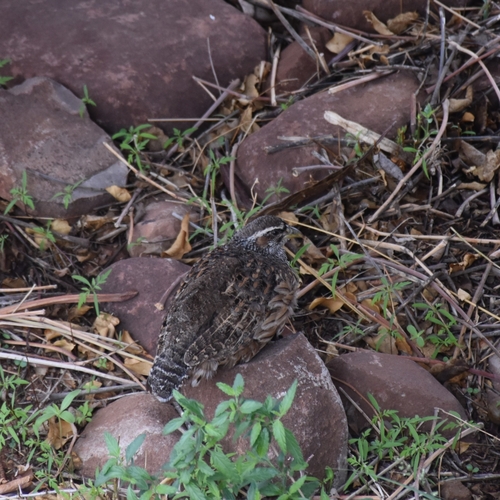
マダラシャコ (Pternistis hartlaubi) マダラシャコ

メディア

読み込み中…

要点

チャバネシャコとマダラシャコを区別するための最も信頼できるフィールドマークは、マダラシャコの強い性的二形性と独特の頭部パターンです。特にオスの太い白いアイストライプと赤褐色の耳羽毛は、チャバネシャコにはありません。マダラシャコはまた、著しく小さく、不釣り合いに大きなくちばしと黄色い脚を持ち、チャバネシャコはより大きく、目立った模様が少ないです。幼鳥と雌のマダラシャコはチャバネシャコと混同されることがありますが、サイズ、くちばしの形、そして生息地の好みの組み合わせが識別を明確にします。常に文脈を考慮してください:マダラシャコは乾燥したナミビアとアンゴラの岩の突起に限定されているのに対し、チャバネシャコは中央アフリカのより湿った草地に見られます。

識別のコツ

  1. Head pattern (adult males): マダラシャコのオスは太い白いアイストライプと赤褐色の耳羽毛を持ち、目を引く顔のコントラストを生み出します。チャバネシャコはこれを欠き、より地味な頭部を示します。
  2. Sexual dimorphism: マダラシャコは非常に性的二形性が強いです。雌は下部と頭部が鈍い赤褐色で、オスのストライピングや大胆な顔が欠けています。チャバネシャコはほとんど性的二形性を示さず、両性は似ています。
  3. Bill structure: マダラシャコは不釣り合いに大きく重いくちばしを持ち、特に雌では上顎が茶色がかり、下顎が黄色です。チャバネシャコのくちばしはそれほど大きくなく、この二色の色合いがありません。
  4. Leg color: マダラシャコは平らなスパーを持つ黄色い脚を持っています。チャバネシャコの脚の色は指定されていませんが、マダラシャコの生息域では黄色い脚が良いマークです。
  5. Underpart pattern: オスのマダラシャコは強い暗いストライプのある淡い灰色の下部を持ち、雌は下部が単調な赤褐色です。チャバネシャコは下部がより均一な色合いで、このコントラストが欠けています。
  6. Juvenile confusion: 幼鳥のオスのマダラシャコは成鳥のオスに似ていますが、上部のストライピングが細かいです。幼鳥の雌は成鳥の雌に似ており、鈍い赤褐色で単調です。チャバネシャコの幼鳥は成鳥と大きく異なるとは記述されていないため、暗い光の中で鈍い若いHartlaub'sの雌に注意してください。
  7. Size: マダラシャコはチャバネシャコよりも明らかに小さいです。スケール感があれば、これは強い手がかりです。
  8. Habitat: マダラシャコは乾燥した/半砂漠のナミビアとSWアンゴラの岩の突起に限定されています。チャバネシャコは中央アフリカの湿った草地に見られます。生息地だけで識別ができることがよくあります。
  9. Behavior: マダラシャコは非常に内気で、岩の中に隠れ、近づくとしか飛び立ちません。チャバネシャコはこの岩に縛られた、逃げるような行動では知られていません。
  10. Foraging behavior: 雌のマダラシャコは塊根を掘りますが、オスはより広範な食事と採餌スタイルを持っています。このような行動はチャバネシャコには記述されていません。
  11. Group size: マダラシャコは通常ペアまたは小さな家族グループ(最大4羽)で見られ、大きな群れには滅多にいません。チャバネシャコの社会構造は指定されていませんが、大きな群れはどちらにもありそうにありません。
  12. Vocalization: 飛び立つと、マダラシャコは急速でおしゃべりな「クラック」という鳴き声を出します。チャバネシャコの鳴き声は記述されていないため、これはスパーファウルの独特な音を聞いた場合にのみ役立ちます。
  13. Range: ナミビアまたはSWアンゴラの外にいる場合、マダラシャコは除外されます。その範囲内の岩の突起の生息地にいる場合、チャバネシャコは非常にありそうにありません。
  14. Overlap with other francolins: マダラシャコの生息地では、他のフランコリン(サザナミシャコ、ニセアカハネシャコ)が隣接するが異なるミクロ生息地に存在します。チャバネシャコは生息地や範囲でマダラシャコと重なりません。
  15. Pitfalls: 雌と幼鳥のマダラシャコは地味に見えることがあり、特に暗い光や距離でチャバネシャコと混同されることがあります。くちばしのサイズ、脚の色、生息地を追加のチェックとして使用してください。

大きさ

マダラシャコは最小のアフリカのスパーファウルで、オスは平均28 cm、245–290 g、雌は約25 cm、210–240 gです。チャバネシャコはより大きい(正確な測定値は提供されていませんが、典型的なScleroptilaフランコリンはマダラシャコよりも明らかに大きいです)。サイズの違いは、鳥が一緒に見られるときやスケール感があるときに最も明らかです。マダラシャコはまた、特に雌では頭のサイズに対して不釣り合いに大きく重いくちばしを持っています。

羽色

どちらの種にも特徴的な幼鳥や未熟な上翼パターンは記述されていないため、成人および性別特有の羽毛に焦点が当てられます。成鳥のオスのマダラシャコは暗い茶色がかった額、太い白いアイストライプ、赤褐色の耳羽毛、強い暗いストライプのある淡い灰色の下部を示します。雌は鈍く、赤褐色の下部と頭を持ち、オスのストライピングや顔のコントラストが欠けています。幼鳥のオスは成鳥のオスに似ていますが、上部のストライピングが細かいです。若い雌は成鳥の雌に似ています。チャバネシャコはマダラシャコの強い顔のパターンや性的二形性が欠けており、より均一でコントラストの少ない外観を示します。チャバネシャコの両性は似ており、マダラシャコに見られる大胆な頭部パターンや色の違いはありません。

行動

マダラシャコは非常に目立たず、岩の中に隠れることを好み、近づくとしか飛び立ちません。彼らは通常ペアまたは小さな家族グループで見られ、簡単には飛び立ちません。彼らの採餌は性的に差別化されており、雌は塊根を掘り、オスはより広範な技術を使用します。チャバネシャコの行動はあまり具体的に記述されていませんが、マダラシャコほど岩に縛られたり秘密主義的であるとは言われていません。

生息環境

生息地は強力な区別要因です。マダラシャコはナミビアの北中央部/北西部と南西アンゴラの小さな地域に特有で、半砂漠の草原に囲まれた岩の花崗岩と砂岩の突起に厳密に結びついています。チャバネシャコはアンゴラ、コンゴ共和国、コンゴ民主共和国、カメルーン、ガボンのより湿った草地に生息し、岩の突起には結びついていません。ナミビアやSWアンゴラの岩が多く乾燥した突起の支配する地形でフランコリンを見つけた場合、それはほぼ確実にマダラシャコです。

声

マダラシャコは飛び立つと急速でおしゃべりな「クラック」という鳴き声を出します。提供されたメモにはチャバネシャコの特定の鳴き声は記述されていないため、声はスパーファウルの独特な鳴き声を聞いた場合にのみ診断的です。

より良い説明を送る

比較と同じ項目を使ってください。文章はすぐに公開されます。

The most reliable field mark for separating Finsch's Francolin from Hartlaub's Spurfowl is the strong sexual dimorphism and distinctive head pattern of Hartlaub's Spurfowl, especially the male's bold white eyestripe and rufous ear coverts, which Finsch's Francolin lacks. Hartlaub's Spurfowl is also notably smaller, with a disproportionately large bill and yellow legs, while Finsch's Francolin is larger and less strikingly marked. Juvenile and female Hartlaub's Spurfowl can be confused with Finsch's Francolin, but the combination of size, bill shape, and habitat preference helps clarify identification. Always consider the context: Hartlaub's Spurfowl is restricted to rocky outcrops in arid Namibia and Angola, while Finsch's Francolin is found in more humid, grassy regions of central Africa.

  1. Head pattern (adult males): Hartlaub's Spurfowl males have a bold white eyestripe and rufous ear coverts, creating a striking facial contrast. Finsch's Francolin lacks this, showing a plainer head.
  2. Sexual dimorphism: Hartlaub's Spurfowl is highly sexually dimorphic. Females are dull rufous below and on the head, lacking the male's streaking and bold face. Finsch's Francolin shows little to no sexual dimorphism; both sexes look similar.
  3. Bill structure: Hartlaub's Spurfowl has a disproportionately large, heavy bill, especially in females, with a brownish upper mandible and yellow lower mandible. Finsch's Francolin's bill is less massive and lacks this two-tone color.
  4. Leg color: Hartlaub's Spurfowl has yellow legs with flattened spurs. Leg color in Finsch's Francolin is not specified, but yellow legs are a good mark for Hartlaub's in its range.
  5. Underpart pattern: Male Hartlaub's Spurfowl has pale grey underparts with strong dark streaks; females are plain rufous below. Finsch's Francolin is more uniformly colored below, lacking this contrast.
  6. Juvenile confusion: Juvenile male Hartlaub's Spurfowl resembles adult males but with finer upperpart streaking. Juvenile females are like adult females—dull rufous and plain. Finsch's Francolin juveniles are not described as differing markedly from adults, so beware of dull young Hartlaub's females in poor light.
  7. Size: Hartlaub's Spurfowl is distinctly smaller than Finsch's Francolin. If you have a sense of scale, this is a strong clue.
  8. Habitat: Hartlaub's Spurfowl is restricted to rocky outcrops in arid/semidesert Namibia and SW Angola. Finsch's Francolin is found in humid, grassy habitats in central Africa. Habitat alone can often clinch the ID.
  9. Behavior: Hartlaub's Spurfowl is extremely shy, hiding among rocks and only flushing at close range. Finsch's Francolin is not noted for this rock-bound, elusive behavior.
  10. Foraging behavior: Female Hartlaub's Spurfowl dig for corms, while males have a broader diet and foraging style. Such behavior is not described for Finsch's Francolin.
  11. Group size: Hartlaub's Spurfowl is usually in pairs or small family groups (up to four), rarely in larger flocks. Finsch's Francolin's social structure is not specified, but large groups are unlikely for either.
  12. Vocalization: If flushed, Hartlaub's Spurfowl gives a rapid, chattering 'krak' call. Finsch's Francolin's call is not described, so this is only useful if you hear the spurfowl's distinctive sound.
  13. Range: If you are outside Namibia or SW Angola, Hartlaub's Spurfowl is ruled out. If you are in rocky outcrop habitat within its range, Finsch's Francolin is very unlikely.
  14. Overlap with other francolins: In Hartlaub's Spurfowl habitat, other francolins (Red-billed Spurfowl, Orange River Francolin) occur in adjacent but different microhabitats. Finsch's Francolin does not overlap with Hartlaub's Spurfowl in habitat or range.
  15. Pitfalls: Female and juvenile Hartlaub's Spurfowl can appear plain and may be confused with Finsch's Francolin, especially in poor light or at a distance. Use bill size, leg color, and habitat as additional checks.

Hartlaub's Spurfowl is the smallest African spurfowl, with males averaging 28 cm and 245–290 g, and females around 25 cm and 210–240 g. Finsch's Francolin is larger (exact measurements not provided, but typical Scleroptila francolins are notably bigger than Hartlaub's Spurfowl). The size difference is most apparent when birds are seen together or with a sense of scale. Hartlaub's Spurfowl also has a disproportionately large, heavy bill relative to head size, especially in females.

No distinctive juvenile or immature upperwing pattern is described for either species, so focus falls on adult and sex-specific plumage. Adult male Hartlaub's Spurfowl shows a dark brownish forehead, bold white eyestripe, rufous ear coverts, and pale grey underparts with strong dark streaks. The female is duller, with rufous underparts and head, lacking the male's streaking and facial contrast. Juvenile males resemble adult males but with finer upperpart streaking; young females are similar to adult females. Finsch's Francolin lacks the strong facial pattern and sexual dimorphism of Hartlaub's Spurfowl, presenting a more uniform and less contrasting appearance. Both sexes of Finsch's Francolin look similar, without the bold head pattern or color differences seen in Hartlaub's Spurfowl.

Hartlaub's Spurfowl is highly inconspicuous, preferring to hide among rocks and only flushing when closely approached, often flying rapidly with a chattering call. They are usually found in pairs or small family groups and are not easily flushed. Their foraging is sexually differentiated: females dig for corms, while males use a wider range of techniques. Finsch's Francolin's behavior is less specifically described, but it is not noted as being as rock-bound or as secretive as Hartlaub's Spurfowl.

Habitat is a strong separator. Hartlaub's Spurfowl is endemic to northcentral/northwestern Namibia and a small area of southwestern Angola, strictly tied to rocky granite and sandstone outcrops surrounded by semidesert steppe at 800–1,600 m elevation. Finsch's Francolin occupies more humid, grassy habitats in Angola, Republic of the Congo, Democratic Republic of the Congo, Cameroon, and Gabon, and is not tied to rocky outcrops. If you find a francolin in rocky, arid, outcrop-dominated terrain in Namibia or SW Angola, it is almost certainly Hartlaub's Spurfowl.

Hartlaub's Spurfowl, when flushed, gives a rapid, chattering 'krak' call. No specific vocalization is described for Finsch's Francolin in the provided notes, so voice is only diagnostic if you hear the distinctive spurfowl call.

変更を破棄しますか?

保存していない編集があります。今離れると失われます。

チャバネシャコ · マダラシャコ · 苦手な鳥