

Motmot

コキジバト 対 キジバト

Streptopelia turtur 対 Streptopelia orientalis

コキジバトとキジバトのクイズ
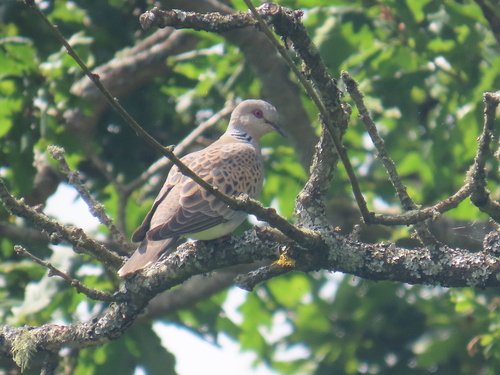
コキジバト (Streptopelia turtur) コキジバト
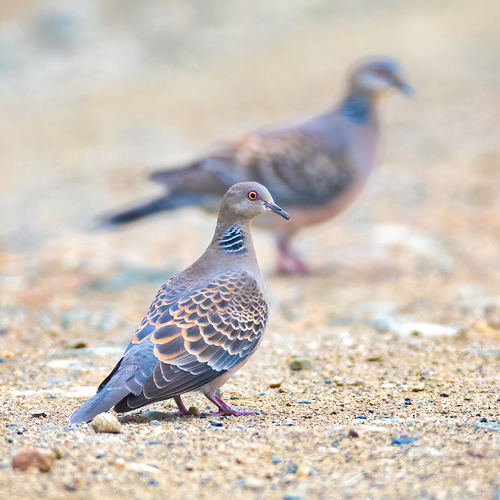
キジバト (Streptopelia orientalis) キジバト

メディア

読み込み中…

要点

ヨーロッパコキジバトとキジバトを区別する最も信頼できるフィールドマークは、ヨーロッパコキジバトに見られる裸の赤いアイリングの存在であり、キジバトにはこれがありません。飛行中、両者は白い先端を持つくさび形の尾を示しますが、尾のパターンや翼の色合いに微妙な違いがあり、特に成鳥では役立ちます。ヨーロッパコキジバトは小さくて細身で、青灰色の頭と首、豊かなシナモン色の翼を持ち、キジバトはより大きく、茶色がかった鱗状の翼とあまりピンクがかった胸を持っています。幼鳥のヨーロッパコキジバトは鈍い色合いで、成鳥の首のパッチが欠けているため、幼鳥のキジバトと混同される可能性が高くなります。特に混成群や移動中にこれら二種を区別する際には、構造、顔のパターン、尾の詳細に注意を払うことが重要です。

識別のコツ

  1. 裸の赤いアイリング: ヨーロッパコキジバトはすべての年齢で目立つ裸の赤いアイリングを示し、キジバトにはこれがありません。これは中程度の距離でも双眼鏡でよく見えます。
  2. サイズと構造: ヨーロッパコキジバトは小さくて細身で、軽い体格と繊細な印象を持っています。キジバトは大きく、ずんぐりしており、重いくちばしを持ち、シラコバトと同じくらいの大きさです。
  3. 首のパッチ: 両種は成鳥の首の側に黒と白のストライプのパッチを持っていますが、キジバトの羽毛は銀色の先端を持っています。幼鳥のヨーロッパコキジバトはこのパッチが完全に欠けているため、欠如は幼鳥のキジバトを確認するものではありません。
  4. 翼の色合い: ヨーロッパコキジバトは黒いまだら模様のある豊かなシナモン色の翼を持ち、キジバトの翼はより茶色で中心が暗く、鱗状またはチェック模様の外観を与えます。これは止まっている鳥や良好な飛行視界で最も明らかです。
  5. 胸の色: ヨーロッパコキジバトはワイン色(ピンクがかった)胸を持ち、キジバトの胸はあまりピンクがかっておらず、より暗い色合いです。
  6. 飛行中の尾のパターン: 両種は白い先端を持つくさび形の尾を持っていますが、キジバトでは先端が亜種によって灰色または白になることがあり、外側の尾羽の黒の量が異なります。ヨーロッパコキジバトの尾はより一貫して白い先端を持ち、暗い中心があります。
  7. 尾の下のパターン: 下から見ると、ヨーロッパコキジバトは白い背景に黒っぽいシェブロンを示し、白い尾羽の覆いが暗い基部を隠しています。キジバトの尾はより変動があり、一部の亜種は青灰色の尾羽の覆いと尾の帯を示します。
  8. 顔のパターン: ヨーロッパコキジバトの青灰色の頭と首は温かみのある翼と対照的です。キジバトの頭はより茶色がかっており、特に一部の亜種では同じ鮮明な対照が欠けています。
  9. 脚の色: ヨーロッパコキジバトは成鳥で赤い脚を持ちますが、幼鳥は茶色の脚を持っています。キジバトの脚の色はあまり強調されていませんが、同じ赤いアイリングは示しません。
  10. 飛行スタイル: ヨーロッパコキジバトの飛行は矢のようで敏捷ですが、キジバトの飛行はよりリラックスして直接的です。これは微妙で、他のマークと組み合わせて使用するのが最適です。
  11. 幼鳥の混同: 幼鳥のヨーロッパコキジバトは鈍く、茶色がかっており、首のパッチが欠けているため、幼鳥のキジバトと混同されやすいです。全体の構造とアイリングの有無を確認してください。
  12. 生息地と範囲: ヨーロッパでは、これらの特徴を持つタートルダブはほぼ常にヨーロッパコキジバトです。アジア、特にウラルの東では、キジバトの方がはるかに可能性が高いです。迷鳥も発生するため、常に複数の特徴を確認してください。
  13. 亜種の変異: キジバトの亜種は尾と尾の下のパターンが異なります。S. o. meenaは尾のパターン(白い先端)がヨーロッパコキジバトに最も似ていますが、S. o. orientalisはしばしば尾の先端がより灰色で、外側の尾羽により多くの黒があります。これらの違いは常に一貫しているわけではないので、注意して使用してください。
  14. 止まっている時と飛行中: 多くのフィールドマーク(アイリング、首のパッチ、翼のパターン)は止まっている鳥で見る方が簡単です。飛行中は、尾の形、尾の先端の色、全体の構造に焦点を当ててください。
  15. 落とし穴: 首のパッチだけに頼らないでください。両種の幼鳥はこれが欠けている場合があります。特に秋や混成群では、常に複数の特徴を組み合わせてください。

大きさ

ヨーロッパコキジバトは明らかに小さくて細身で、平均体重は約136gです。キジバトは大きく、ユーラシアシラコバトと同じくらいの大きさで、全体的にずんぐりして見えます。並んで止まっていると、キジバトの大きな体格と重い体つきが明らかですが、孤立した鳥では重なりに注意してください。飛行中、ヨーロッパコキジバトのより流線型の外観は微妙な手がかりになることがありますが、距離があると信頼性が低くなります。

羽色

成鳥のヨーロッパコキジバトは青灰色の頭、首、側面、尾を示し、特徴的な黒と白のストライプの首のパッチと黒でまだら模様のある豊かなシナモン色の翼を持っています。胸はワイン色で、下部は白です。キジバトも黒と白の首のパッチを持っていますが、銀色の先端の羽毛を持ち、翼はより茶色で中心が暗く、ヨーロッパのより均一なシナモンとは異なる鱗状の外観を作り出します。胸はあまりピンクがかっておらず、全体のトーンはより暗いです。両者の尾は白い先端を持つくさび形ですが、キジバトでは先端が亜種によって灰色または白になることがあり、外側の尾羽の黒の量が異なります。幼鳥のヨーロッパコキジバトはより茶色がかって鈍く、首のパッチが欠けており、茶色の脚を示します。これにより、幼鳥のキジバトに似ることがありますが、後者は依然として翼の覆い羽でよりずんぐりして見える傾向があります。裸の赤いアイリングはすべての年齢のヨーロッパコキジバトの重要なマークです。キジバトにはこれがありません。

行動

ヨーロッパコキジバトはより細身で、動きがより繊細に見えることが多く、主に地面で餌を食べ、特に狩猟圧のある地域では非常に臆病です。その飛行は矢のように描写されますが、特に速くはなく、高く円を描く求愛行動をします。キジバトはずんぐりしており、飛行はよりリラックスして直接的で、矢のような特性が欠けています。ディスプレイでは、キジバトのオスは騒がしく羽ばたき、上に飛び上がってから尾を広げて滑空します。両種は木に止まりますが、キジバトの重い体つきは、そうしているときにあまり優雅に見えないかもしれません。

生息環境

ヨーロッパコキジバトは開けた森林、エッジ、大きな庭を好みますが、一般的により臆病で、密な森林では見られる可能性が低いです。キジバトはアジア全体に広い範囲を持ち、開けた森林、タイガ、さらには中層の森林を含むより広範な森林生息地を利用します。冬には、両者は農業地域で見られることがありますが、キジバトの生息地の好みは亜種や地域によってより変動します。ヨーロッパコキジバトは北ユーラシアでは稀ですが、キジバトは迷鳥としてしかヨーロッパには存在しません。

より良い説明を送る

比較と同じ項目を使ってください。文章はすぐに公開されます。

The most reliable field mark to separate European Turtle Dove from Rufous (Oriental) Turtle Dove is the presence of a bare red eye-ring on European Turtle Dove, which Rufous Turtle Dove lacks. In flight, both show a wedge-shaped tail with white tips, but subtle differences in tail pattern and wing coloration can help, especially in adults. European Turtle Dove is smaller and more slender, with a blue-grey head and neck and rich cinnamon wings, while Rufous Turtle Dove is bulkier, with browner, scaly-looking wings and a less pinkish breast. Juvenile European Turtle Doves are duller and lack the adult's neck patch, which can make confusion with juvenile Rufous Turtle Doves more likely. Careful attention to structure, face pattern, and tail details is essential when separating these two, especially in mixed flocks or on migration.

  1. Bare red eye-ring: European Turtle Dove of all ages shows a conspicuous bare red eye-ring, which Rufous Turtle Dove lacks. This is often visible even at moderate range with binoculars.
  2. Size and structure: European Turtle Dove is smaller and more slender, with a lighter build and more delicate jizz. Rufous Turtle Dove is larger, bulkier, and heavier-billed, about the size of a Collared Dove.
  3. Neck patch: Both species have a black-and-white striped patch on the side of the neck in adults, but the feathers are silver-tipped in Rufous Turtle Dove. Juvenile European Turtle Doves lack this patch entirely, so absence does not confirm Rufous Turtle Dove in immatures.
  4. Wing coloration: European Turtle Dove has rich cinnamon-brown wings with black mottling, while Rufous Turtle Dove's wings are browner with darker centers, giving a scaly or checkered look. This is most obvious on perched birds or in good flight views.
  5. Breast color: European Turtle Dove has a vinaceous (pinkish) breast, while Rufous Turtle Dove's breast is less pink and duskier.
  6. Tail pattern in flight: Both species have a wedge-shaped tail with white tips, but in Rufous Turtle Dove, the tip can be grey or white depending on subspecies, and the amount of black in the outer tail feathers varies. European Turtle Dove's tail is more consistently white-tipped with a dark center.
  7. Under-tail pattern: When viewed from below, European Turtle Dove shows a blackish chevron on a white background due to white undertail coverts obscuring the dark bases. Rufous Turtle Dove's undertail is more variable, with some subspecies showing slaty grey undertail coverts and tail band.
  8. Face pattern: European Turtle Dove's blue-grey head and neck contrast with its warm wings; Rufous Turtle Dove's head is browner, especially in some subspecies, and lacks the same crisp contrast.
  9. Leg color: European Turtle Dove has red legs in adults, but juveniles have brown legs. Rufous Turtle Dove's leg color is less emphasized but does not show the same red eye-ring.
  10. Flight style: European Turtle Dove's flight is arrow-like and agile, while Rufous Turtle Dove's is more relaxed and direct. This is subtle and best used in combination with other marks.
  11. Juvenile confusion: Juvenile European Turtle Doves are duller, browner, and lack the neck patch, making them easy to confuse with juvenile Rufous Turtle Doves. Look for overall structure and the presence/absence of the eye-ring.
  12. Habitat and range: In Europe, a turtle dove with these features is almost always European Turtle Dove; in Asia, especially east of the Urals, Rufous Turtle Dove is far more likely. Vagrants do occur, so always check multiple features.
  13. Subspecies variation: Rufous Turtle Dove subspecies differ in tail and undertail pattern. S. o. meena is most similar to European Turtle Dove in tail pattern (white-tipped), while S. o. orientalis often has a greyer tail tip and more black in the outer tail feathers. These differences are not always consistent, so use with caution.
  14. Perched vs. flight: Many field marks (eye-ring, neck patch, wing pattern) are easier to see on perched birds. In flight, focus on tail shape, tail tip color, and overall structure.
  15. Pitfalls: Do not rely solely on the neck patch, as juveniles of both species may lack it. Always combine multiple features, especially in autumn or in mixed flocks.

European Turtle Dove is distinctly smaller and more slender, with an average body mass of about 136 g. Rufous Turtle Dove is larger, about the size of a Eurasian Collared Dove, and appears bulkier overall. When perched side by side, Rufous Turtle Dove's larger frame and heavier build are apparent, but beware overlap in lone birds. In flight, the European Turtle Dove's more streamlined appearance can be a subtle clue, but is less reliable at distance.

For adults, European Turtle Dove shows a blue-grey head, neck, flanks, and rump, with a distinctive black-and-white striped neck patch and rich cinnamon-brown wings mottled with black. The breast is vinaceous, and the underparts are white. Rufous Turtle Dove also has a black-and-white neck patch but with silver-tipped feathers, and its wings are browner with darker centers, creating a scaly appearance rather than the European's more uniform cinnamon. The breast is less pink, and the overall tone is duskier. The tail on both is wedge-shaped with white tips, but in Rufous Turtle Dove, the tip can be grey or white depending on subspecies, and the amount of black in the outer tail feathers varies. Juvenile European Turtle Doves are browner and duller, lacking the neck patch and showing brown legs, which can make them resemble juvenile Rufous Turtle Doves, but the latter still tends to look bulkier and more scaly on the wing coverts. The bare red eye-ring is a key mark for European Turtle Dove of all ages; Rufous Turtle Dove lacks this.

European Turtle Dove is more slender and often appears more delicate in its movements, feeding mostly on the ground and being notably shy, especially in areas with hunting pressure. Its flight is described as arrow-like but not particularly fast, with a high, circling nuptial display. Rufous Turtle Dove is bulkier and its flight is more relaxed and direct, lacking the arrow-like quality. In display, Rufous Turtle Dove males flap noisily and shoot up before gliding down with an outspread tail. Both species perch in trees, but Rufous Turtle Dove's heavier build may make it look less dainty when doing so.

European Turtle Dove prefers open woodlands, edges, and large gardens, but is generally more timid and less likely to be seen in dense forests. Rufous Turtle Dove has a wider range across Asia and uses a broader variety of wooded habitats, including open woodlands, taiga, and even mid-canopy forest. In winter, both may be found in agricultural areas, but Rufous Turtle Dove's habitat preferences are more variable depending on subspecies and region. European Turtle Dove is rare in northern Eurasia, while Rufous Turtle Dove is absent from Europe except as a vagrant.

変更を破棄しますか?

保存していない編集があります。今離れると失われます。

コキジバト · キジバト · 苦手な鳥