

Motmot

ヨーロッパハチクマ 対 ハイタカ

Pernis apivorus 対 Accipiter nisus

ヨーロッパハチクマとハイタカのクイズ
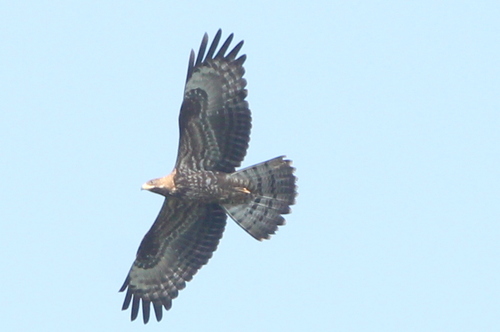
ヨーロッパハチクマ (Pernis apivorus) ヨーロッパハチクマ
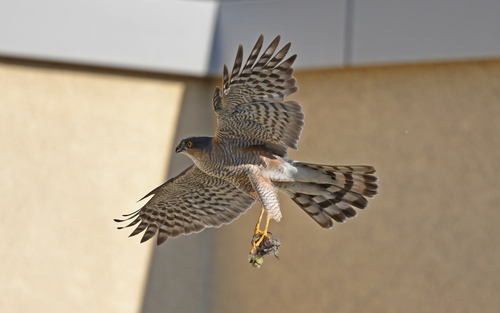
ハイタカ (Accipiter nisus) ハイタカ

メディア

読み込み中…

要点

ヨーロッパハチクマとハイタカの間で最も信頼できるフィールドマークは、飛行中の構造です:ハチクマは長くて平らなパドル状の翼と小さな鳩のような頭を示し、一方ハイタカは短くて幅広い翼と相対的に長い尾を持つコンパクトな形状です。幼鳥のハチクマはヨーロッパノスリを模倣できますが、ハイタカは模倣できません。特に雌や幼鳥のハイタカはずっと小さく、特徴的なフラップ・フラップ・グライドの飛行スタイルを持ち、ハチクマは平らな翼と突き出た頭で滑空します。羽毛の違いは距離があると微妙ですが、ハチクマの尾のパターン(少ない、幅の広いバー)とハイタカの細かいバーニングとカウンターシェーディングは役立ちます。最初に構造と飛行スタイルを使用し、次に羽毛とサイズを考慮してください。

識別のコツ

  1. Structure in flight: ハチクマは平らに保持された長いパドル状の翼と前方に突き出た小さな鳩のような頭を示します;ハイタカは短くて幅広い翼と相対的に長い四角い尾を持っています。これはすべての年齢に対して最も信頼できるフィールドマークです。
  2. Flight style: ハチクマは平らな翼で滑空し、ハイタカはフラップ・フラップ・グライドのパターンを使用し、迅速な翼の動きと短い滑空を行い、波状の飛行経路を作ります。
  3. Tail pattern: ハチクマの尾は長く、2本の狭い暗いバーと幅の広いサブターミナルバーのみがあります(すべての年齢);ハイタカの尾は多くの細かいバーがあり、四角い先端を持っています(すべての年齢)。
  4. Head and neck: ハチクマは小さな鳩のような頭を持つ長い首のように見えます;ハイタカは短い首でコンパクトです。
  5. Adult male plumage: 雄のハチクマは青灰色の頭を持っています(大型猛禽類の中でユニークです);雄のハイタカはスレート灰色の上面とオレンジのバーがある下面を持っています。
  6. Adult female plumage: 雌のハチクマは茶色の頭を持ち、雄よりも少し大きく/暗いです;雌のハイタカは上面が茶色または灰色がかった茶色で、茶色のバーがある下面を持っています。
  7. Juvenile/immature plumage: 幼鳥のハチクマはヨーロッパノスリを模倣できますが、ハイタカは模倣できません;幼鳥のハイタカは上面が茶色で、錆色の縁取りがあり、下面は粗くバーが入ったり斑点があったりし、淡い黄色の目と縞模様の喉を持っています。
  8. Plumage barring: すべての年齢のハイタカは下面に細かく均一な水平のバーニングを示します(成鳥)または粗いバーニング(幼鳥);ハチクマはこのパターンを示しません。
  9. Size: ハチクマはずっと大きく、翼が長いです;最大の雌のハイタカでさえハチクマに比べて小さく見えます。
  10. Perched jizz: ハチクマはスリムで長い首を持ち、直立して見えます;ハイタカはコンパクトで直立し、短い首を持っています。
  11. Habitat/context: ハチクマは稀で局所的で、通常は成熟した森林に生息し、移動中に見られます;ハイタカは一般的で広範囲に分布し、しばしば庭や都市部に見られます。
  12. Behavior: ハチクマは滑空したり、森林の床でスズメバチの巣を掘ったりして過ごします;ハイタカは活発な鳥のハンターで、しばしば木々の間を素早く飛び回る姿が見られます。
  13. Voice: ハチクマの「ぴーるー」という鳴き声はめったに聞かれません;ハイタカはフィールドではほとんど静かです。
  14. Sexual dimorphism: 両種は性差を示しますが、ハチクマの雄だけが青灰色の頭を持っています;ハイタカの雌は雄よりもずっと大きいですが、両方ともハチクマよりはずっと小さいです。
  15. Pitfalls: 幼鳥のハチクマはヨーロッパノスリを模倣することがありますが、ハイタカは模倣できません;混乱は羽毛よりも構造と飛行スタイルで起こりやすいです。

大きさ

ヨーロッパハチクマはハイタカよりもずっと大きく、翼が長いです。ハチクマは長さ52–60 cm、翼幅130–150 cmで、サイズに対して比較的軽量に作られています。一方、ハイタカは長さ29–41 cm、翼幅59–80 cmで、体重は約220 g(成鳥の平均;雌は大きい)です。最大の雌のハイタカでさえハチクマに比べて小さく見えます。フィールドでは、ハチクマは長い首でスリムに見え、ハイタカはコンパクトで短い首に見えます。

羽色

行動

ハチクマは翼の先端を水平またはわずかに下向きに保ちながら平らな翼で滑空し、しばしば突き出た頭と時には角ばった胸を示します、特に直線飛行中に。多くの時間を滑空またはグライドに費やし、春のディスプレイ以外では目立たないことが多いです。ハイタカは特徴的なフラップ・フラップ・グライドのパターンで飛び、波状の飛行経路を作り、高い機動性を持ち、小さな鳥を追いかけて森林や庭を素早く飛び回る姿がよく見られます。止まっているとき、ハチクマは長い首でスリムに見え、ハイタカはコンパクトで直立して見えます。

生息環境

ハチクマは成熟した森林で繁殖し、秘密主義で、移動中やディスプレイ飛行中以外は見落とされがちです。イギリスでは稀で局所的で、主にイングランド南東部とウェールズおよびスコットランドの一部に生息しています。ハイタカはずっと広範囲に分布し、一般的で、さまざまな森林の生息地、公園、さらには庭に見られ、特に小さな鳥が豊富な場所で見られます。開けた国や高く滑空しているのが見られた場合、ハチクマの可能性が高く、木々や庭を駆け抜けているのが見られた場合、ハイタカがデフォルトです。

声

ハチクマは明確な「ぴーるー」という鳴き声を出しますが、繁殖シーズン以外は一般的に静かで目立たないです。ハイタカもほとんど静かで、提供された情報源にはフィールドでの識別のための特徴的な鳴き声は記載されていません。

より良い説明を送る

比較と同じ項目を使ってください。文章はすぐに公開されます。

The most reliable field mark between European Honey-buzzard and Eurasian Sparrowhawk is their structure in flight: Honey-buzzard shows long, flat, paddle-shaped wings and a small, pigeon-like head, while Sparrowhawk is compact with short, broad wings and a proportionally longer tail. Juvenile Honey-buzzards can mimic Common Buzzards, but not Sparrowhawks. Sparrowhawks, especially females and juveniles, are much smaller and have a characteristic flap-flap-glide flight style, while Honey-buzzards soar with flat wings and a protruding head. Plumage differences are subtle at a distance, but the Honey-buzzard's tail pattern (fewer, broader bars) and the Sparrowhawk's fine barring and countershading are helpful. Use structure and flight style first, then plumage and size.

  1. Structure in flight: Honey-buzzard shows long, paddle-shaped wings held flat and a small, pigeon-like head that projects forward; Sparrowhawk has short, broad wings and a proportionally longer, square-tipped tail. This is the most reliable field mark for all ages.
  2. Flight style: Honey-buzzard soars and glides with flat wings; Sparrowhawk uses a flap-flap-glide pattern, with rapid wingbeats and short glides, creating an undulating flight path.
  3. Tail pattern: Honey-buzzard's tail is long with only two narrow dark bars and a broad subterminal bar (all ages); Sparrowhawk's tail has many fine bars and is square-tipped (all ages).
  4. Head and neck: Honey-buzzard appears long-necked with a small, pigeon-like head; Sparrowhawk is short-necked and compact.
  5. Adult male plumage: Male Honey-buzzard has a blue-grey head (unique among large raptors); male Sparrowhawk has slate-grey upperparts and orange-barred underparts.
  6. Adult female plumage: Female Honey-buzzard has a brown head and is slightly larger/darker than the male; female Sparrowhawk is brown or grey-brown above with brown-barred underparts.
  7. Juvenile/immature plumage: Juvenile Honey-buzzard can mimic Common Buzzard but not Sparrowhawk; juvenile Sparrowhawk is brown above with rusty fringes and coarsely barred or spotted brown below, with pale yellow eyes and a streaked throat.
  8. Plumage barring: Sparrowhawk of all ages shows fine, even horizontal barring on the underparts (adults) or coarser barring (juveniles); Honey-buzzard never shows this pattern.
  9. Size: Honey-buzzard is much larger and longer-winged; even the largest female Sparrowhawk is dwarfed by a Honey-buzzard.
  10. Perched jizz: Honey-buzzard looks slim, long-necked, and upright; Sparrowhawk is compact, upright, and short-necked.
  11. Habitat/context: Honey-buzzard is scarce and local, usually in mature woodland or seen migrating; Sparrowhawk is common and widespread, often in gardens or urban areas.
  12. Behavior: Honey-buzzard spends time soaring or on the forest floor digging for wasp nests; Sparrowhawk is an active bird-hunter, often seen darting through trees.
  13. Voice: Honey-buzzard's 'peee-lu' call is rarely heard; Sparrowhawk is mostly silent in the field.
  14. Sexual dimorphism: Both species show sex differences, but only Honey-buzzard males have a blue-grey head; Sparrowhawk females are much larger than males, but both are much smaller than Honey-buzzard.
  15. Pitfalls: Juvenile Honey-buzzard may mimic Common Buzzard, but not Sparrowhawk; confusion is more likely with structure and flight style than with plumage.

European Honey-buzzard is much larger and longer-winged than Eurasian Sparrowhawk. Honey-buzzard measures 52–60 cm in length with a 130–150 cm wingspan and is relatively lightly built for its size, while Sparrowhawk is 29–41 cm long with a 59–80 cm wingspan and weighs around 220 g (adult average; females larger). Even the largest female Sparrowhawk is dwarfed by a Honey-buzzard. In the field, Honey-buzzard appears long-necked and slim, whereas Sparrowhawk is compact and short-necked.

  • Juvenile/immature birds: Juvenile Honey-buzzards can resemble Common Buzzards but not Sparrowhawks. They lack the fine horizontal barring of Sparrowhawks and instead show a longer tail with only two narrow dark bars and a broad subterminal bar. Juvenile Sparrowhawks are brown above with rusty fringes and coarsely barred or spotted brown below, with pale yellow eyes and a streaked throat (no midline stripe).

  • Adult males: Honey-buzzard males have a blue-grey head (unique among large raptors in the region), while Sparrowhawk males have slate-grey upperparts and orange-barred underparts. The Honey-buzzard's underparts are variable but never show the fine, even barring of Sparrowhawk.

  • Adult females: Female Honey-buzzard has a brown head, is slightly larger and darker than the male, and still shows the long tail with few bars. Female Sparrowhawks are brown or grey-brown above, with brown-barred underparts and bright yellow to orange irides.

  • Flight feathers and tail: Honey-buzzard's tail is longer with fewer, broader bars; Sparrowhawk's tail is long but square-tipped with many fine bars. Honey-buzzard's wings are longer and paddle-shaped; Sparrowhawk's are short and rounded.

Honey-buzzard soars on flat wings with the wing tips held horizontal or slightly down, often showing a protruding head and sometimes an angular chest, especially in direct flight. It spends much time soaring or gliding and is inconspicuous except during spring displays. Sparrowhawk flies with a distinctive flap-flap-glide pattern, creating an undulating flight path, and is highly maneuverable, often seen darting through woodland or gardens in pursuit of small birds. Perched, Honey-buzzard looks long-necked and slim, while Sparrowhawk appears compact and upright.

Honey-buzzard breeds in mature woodlands and is secretive, often overlooked except during migration or display flights. In Britain, it is scarce and local, mostly in southeastern England and parts of Wales and Scotland. Sparrowhawk is much more widespread and common, found in a variety of wooded habitats, parks, and even gardens, especially where small birds are abundant. If seen in open country or soaring high, Honey-buzzard is more likely; if seen dashing through trees or gardens, Sparrowhawk is the default.

Honey-buzzard gives a clear 'peee-lu' call, but is generally silent and inconspicuous outside the breeding season. Sparrowhawk is also mostly silent, with no distinctive call noted in the provided sources for field separation.

変更を破棄しますか?

保存していない編集があります。今離れると失われます。

ヨーロッパハチクマ · ハイタカ · 苦手な鳥