

Motmot

ヨーロッパコノハズク 対 スズメフクロウ

Otus scops 対 Glaucidium passerinum

ヨーロッパコノハズクとスズメフクロウのクイズ
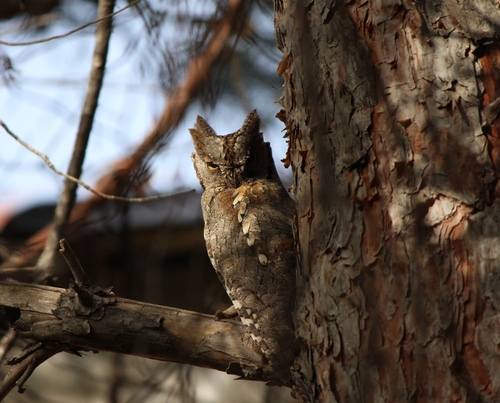
ヨーロッパコノハズク (Otus scops) ヨーロッパコノハズク
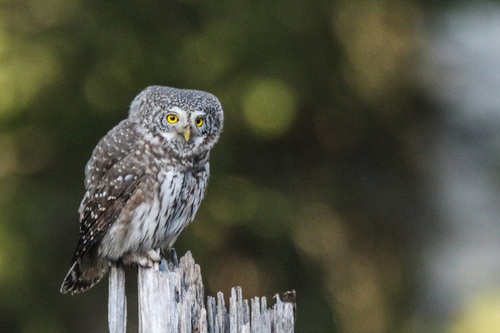
スズメフクロウ (Glaucidium passerinum) スズメフクロウ

メディア

読み込み中…

要点

ヨーロッパコノハズクとスズメフクロウを区別する最も信頼できるフィールドマークは、コノハズクに見られる小さな耳の房であり、これはフクロウには常に存在しません。コノハズクはまた、わずかに大きく、翼が長く、より直立した姿勢と全体的に淡い、パターンの少ない羽毛を持っています。スズメフクロウはコンパクトで、耳の房がなく、後頭部に特徴的な白いハーフカラーと斑点のある側面を示します。飛行中、コノハズクの長く狭い翼は、スズメフクロウの短く丸い翼と比較して目立ち、相対的に長い尾を持っています。鳴き声はかなり異なり、コノハズクは深いヒキガエルのような口笛を発し、スズメフクロウは高音でフルートのような音を出します。

識別のコツ

  1. 耳の房の有無(コノハズクあり、スズメフクロウなし): コノハズクは常に小さく尖った耳の房を示し、特に警戒しているときに顕著です。スズメフクロウには耳の房がありません。これはすべての季節と年齢において最も信頼できるマークです。
  2. 頭の形: コノハズクは耳の房のためにより角ばった「角のある」外観を持ち、スズメフクロウの頭は丸く小さく、平らな頭頂を持っています。
  3. 羽毛のパターン: コノハズクは全体的に灰褐色でかなり地味で、淡い顔と肩のラインを持ちますが、明らかなパターンはほとんどありません。スズメフクロウは特に側面と背中に斑点が多く、後頭部には特徴的な白いハーフカラーがあります(後ろからまたは横から見ることができます)。
  4. 尾のパターン: スズメフクロウの尾は暗く、5本の狭い白っぽい帯があります—止まっている鳥や飛んでいる鳥でこれを探してください。コノハズクの尾はあまり明確に帯状ではなく、一般的に淡いです。
  5. 腹部: コノハズクは淡く、マークの少ない腹部を持っています。スズメフクロウの腹は白く、茶色の斑点があり、下側がより重くマークされているように見えることがよくあります。
  6. サイズと構造: コノハズクはわずかに大きく、より細長い体型で、長く狭い翼とより直立した姿勢を持っています。スズメフクロウはコンパクトで、首が短く、全体的に小さな頭と丸みを帯びた外観を持っています。
  7. 飛行スタイル: コノハズクは長く尖った翼で強く、直接的な羽ばたきで飛びます。スズメフクロウの飛行はより速く、よりフラッターし、短く丸い翼と相対的に長い尾を持ちます。
  8. 止まり方: スズメフクロウはしばしば開けた場所に止まり、時には針葉樹の頂上に止まり、昼間に活動します。コノハズクはより秘密主義で、しばしば密な葉の中に止まり、主に薄明かりまたは夜行性です。
  9. 鳴き声: コノハズクの鳴き声は深いヒキガエルのような口笛で、間隔を置いて繰り返されます。スズメフクロウは高音でフルートのような音を出し、約2秒ごとに間隔を置いています。音の高さとリズムの違いは、聞こえた場合に診断的です。
  10. 生息地: 南ヨーロッパの混合またはエッジの生息地ではコノハズクを期待し、特に北ヨーロッパやシベリアの密な北方林や山地の森林ではスズメフクロウを期待します。
  11. 顔の特徴: スズメフクロウは白から灰色の「眉」と黄色の目を持ち、コノハズクの淡く対照的でない顔と比較して異なる顔の表情を与えます。
  12. くちばしと足: スズメフクロウは灰色がかった黄色のフック状のくちばしを持ち、そのサイズに対して不釣り合いに大きな足を持っています(大きな獲物を捕らえるために適応しています)。これらは微妙ですが、近くで見ると見えることがあります。
  13. 季節的文脈: コノハズクはその範囲の多くで渡り鳥であり、冬には北方の森林からは姿を消します。スズメフクロウは北方の森林に年間を通じて生息しています。
  14. 性別と年齢: どちらの種にもフィールドマークにおいて強い性差はありません。年齢特有の飛行や翼のパターンは、情報源では診断的とは記述されていません。
  15. 一般的な落とし穴: すべての小さく地味なフクロウがスズメフクロウであると仮定しないように注意してください—常に耳の房と全体の構造を確認してください。光が悪いと、コノハズクの淡い肩のラインがスズメフクロウの白い後頭部のカラーと混同されることがありますが、カラーは常に首の後ろにあり、スズメフクロウではより完全です。

大きさ

ヨーロッパコノハズクはわずかに大きく、全長19〜21 cm、翼幅47〜54 cm(情報源には質量は記載されていません)。ヨーロッパスズメフクロウは最小のヨーロッパのフクロウで、雌は17.4〜19 cm、雄は15.2〜17 cmの長さで、平均的な成体の質量は65.5 gです。フィールドでは、コノハズクはしばしばより細長く直立して見え、スズメフクロウは特にコンパクトで小さな頭を持っています。距離があると違いは微妙ですが、コノハズクの長い翼と全体的に細長い構造は、飛行中または並んで止まっているときに明らかになることがあります。

羽色

情報源では、どちらの種についても年齢特有の上翼や飛行パターンのマークは記載されていないため、成人と一般的な羽毛に焦点を当てます。コノハズクは主に灰褐色で、淡い顔、腹部、淡い肩のラインを持ち、その羽毛は比較的地味で隠蔽的であり、小さな耳の房が止まっているときにしばしば見えます。スズメフクロウは色がより変動し、赤褐色から灰褐色まであり、側面と背中に明確に斑点があります。スズメフクロウの尾は暗く、5本の狭い白っぽい帯があり、後頭部には白いハーフカラーがあります—これらはコノハズクには見られない特徴です。スズメフクロウの腹は主に白く、茶色の斑点がありますが、コノハズクの腹部は淡いですが、マークは少ないです。スズメフクロウの耳の房がないことは、すべての年齢において重要な違いです。

行動

コノハズクは直立して止まり、しばしばより秘密主義で、カモフラージュに依存しています。その飛行は強く、長く狭い翼で直接的であり、渡りの習性を反映しています。スズメフクロウは昼間(昼行性)により活発で、しばしば露出した枝に目立って止まり、飛行中に鳥を捕らえたり獲物を貯蔵したりする大胆な狩猟行動で知られています。スズメフクロウの飛行はより速く、よりフラッターし、短く丸い翼と相対的に長い尾を持ち、より流線型のコノハズクと比較して異なる印象を与えます。

生息環境

コノハズクは南ヨーロッパから南シベリア、西ヒマラヤで繁殖し、サハラ以南のアフリカで冬を越しますが、地中海地域の一部には生息しています。オープンな森林、林、時には公園を好みます。スズメフクロウは北方および中央ヨーロッパからシベリアの森林に見られる北方および山地の種で、針葉樹または混合林を好みます。重複する地域では、スズメフクロウは密で成熟した森林にいる可能性が高く、コノハズクはオープンまたはエッジの生息地に関連しています。

声

コノハズクは深く繰り返される口笛を発し、ヒキガエル(Alytes)を思わせ、ほとんどのフクロウの鳴き声よりも低い音です。両性がこの鳴き声を出します。スズメフクロウの鳴き声は音程がはるかに高く、約2秒ごとに間隔を置いた明確なフルートのような音のシリーズで、雄と雌は似ていますが、雌の方が高いです。繁殖期の前後に、両性が短い上昇する音のシリーズを出すことがあります。音の高さとリズムは、2つの種の間でかなり異なり、特に薄明かりや夜明けに分離に役立ちます。

より良い説明を送る

比較と同じ項目を使ってください。文章はすぐに公開されます。

The most reliable field mark to separate Eurasian Scops Owl from Eurasian Pygmy-Owl is the presence of small ear-tufts in Scops Owl, which are always absent in Pygmy-Owl. Scops Owl is also slightly larger and longer-winged, with a more upright posture and paler, less patterned plumage overall. Pygmy-Owl is compact, lacks ear-tufts, and shows a distinctive white half-collar on the nape and spotted sides. In flight, Scops Owl's long, narrow wings contrast with the Pygmy-Owl's shorter, rounded wings and relatively longer tail. Vocalizations are quite different, with Scops Owl giving a deep, toad-like whistle, while Pygmy-Owl produces a high-pitched, fluted series of notes.

  1. Ear-tufts present (Scops Owl) vs absent (Pygmy-Owl): Scops Owl always shows small, pointed ear-tufts, especially when alert; Pygmy-Owl never has ear-tufts. This is the single most reliable mark in all seasons and ages.
  2. Head shape: Scops Owl has a more angular, 'horned' look due to ear-tufts, while Pygmy-Owl's head is rounded and small, with a flat crown.
  3. Plumage pattern: Scops Owl is overall grey-brown and fairly plain, with a pale face and shoulder line but little obvious patterning. Pygmy-Owl is more spotted, especially on the sides and back, and has a distinctive white half-collar on the nape (visible from behind or in profile).
  4. Tail pattern: Pygmy-Owl's tail is dark with five narrow, whitish bars—look for this in perched or flying birds. Scops Owl's tail is less distinctly barred and generally paler.
  5. Underparts: Scops Owl has paler, less marked underparts; Pygmy-Owl's belly is white with brown speckles, often appearing more heavily marked below.
  6. Size and structure: Scops Owl is slightly larger and more elongated, with long, narrow wings and a more upright posture. Pygmy-Owl is compact, short-necked, and appears smaller-headed and rounder overall.
  7. Flight style: Scops Owl flies with strong, direct wingbeats on long, pointed wings. Pygmy-Owl's flight is quicker, more fluttery, with shorter, rounded wings and a relatively longer tail.
  8. Perching behavior: Pygmy-Owl often perches in the open, sometimes on the tops of conifers, and is active during the day. Scops Owl is more secretive, often roosting in dense foliage and is mainly crepuscular or nocturnal.
  9. Vocalization: Scops Owl's call is a deep, toad-like whistle, repeated at intervals. Pygmy-Owl gives a high-pitched, fluted series of notes, spaced by about two seconds. The difference in pitch and rhythm is diagnostic if heard.
  10. Habitat: In mixed or edge habitats in southern Europe, expect Scops Owl; in dense boreal or montane forests, especially in northern Europe and Siberia, expect Pygmy-Owl.
  11. Facial features: Pygmy-Owl has white to grey 'eyebrows' and yellow eyes, giving a different facial expression compared to the paler, less contrasting face of Scops Owl.
  12. Bill and feet: Pygmy-Owl has a greyish-yellow, hooked bill and disproportionately large feet for its size (adapted for taking large prey); these are subtle but may be visible at close range.
  13. Seasonal context: Scops Owl is migratory in much of its range and is absent from northern forests in winter; Pygmy-Owl is resident year-round in boreal forests.
  14. Sex and age: No strong sexual dimorphism in field marks for either species; age-specific flight or wing patterns are not described as diagnostic in the sources.
  15. Common pitfalls: Beware of assuming all small, plain owls are Pygmy-Owl—always check for ear-tufts and overall structure. In poor light, the pale shoulder line of Scops Owl can be confused with the white nape collar of Pygmy-Owl, but the collar is always on the back of the neck and more complete in Pygmy-Owl.

Eurasian Scops Owl is slightly larger, measuring 19–21 cm in length with a wingspan of 47–54 cm (no mass given in the sources). Eurasian Pygmy-Owl is the smallest European owl, with females 17.4–19 cm and males 15.2–17 cm in length, and an average adult mass of 65.5 g. In the field, Scops Owl often appears more elongated and upright, while Pygmy-Owl is notably compact and small-headed. The difference is subtle at a distance, but Scops Owl's longer wings and overall lankier structure can be apparent in flight or perched side-by-side.

No age-specific upperwing or flight pattern marks are described for either species in the sources, so focus is on adult and general plumage. Scops Owl is predominantly grey-brown with a paler face, underparts, and a pale shoulder line; its plumage is relatively plain and cryptic, with small ear-tufts that are often visible when perched. Pygmy-Owl is more variable in color, ranging from reddish to greyish-brown, and is distinctly spotted on the sides and back. The Pygmy-Owl's tail is darker with five narrow, whitish bars, and it has a white half-collar on the nape—features not seen in Scops Owl. The Pygmy-Owl's belly is mostly white with brown speckles, while Scops Owl's underparts are paler but less heavily marked. The absence of ear-tufts in Pygmy-Owl is a key difference at all ages.

Scops Owl perches upright and is often more secretive, relying on camouflage. Its flight is strong and direct on long, narrow wings, reflecting its migratory habits. Pygmy-Owl is more active during the day (diurnal), often perching conspicuously on exposed branches, and is known for its bold hunting behavior, including catching birds in flight and storing prey. Pygmy-Owl's flight is quicker and more fluttery, with shorter, rounded wings and a relatively longer tail, giving a different jizz compared to the more streamlined Scops Owl.

Scops Owl breeds in southern Europe to southern Siberia and the western Himalayas, wintering in sub-Saharan Africa but is resident in parts of Mediterranean Europe. It favors open woodlands, groves, and sometimes parks. Pygmy-Owl is a boreal and montane species, found in the forests of northern and central Europe to Siberia, preferring coniferous or mixed woodlands. In areas of overlap, Pygmy-Owl is more likely in dense, mature forest, while Scops Owl is more associated with open or edge habitats.

Scops Owl gives a deep, repetitive whistle, reminiscent of midwife toads (Alytes), and is lower-pitched than most owl calls. Both sexes give this call. Pygmy-Owl's call is much higher in pitch: a series of clear, fluted notes spaced by about two seconds, with males and females similar but females higher. Before and after the mating season, both sexes may give a short, rising series of notes. The pitch and rhythm are quite different between the two species and are useful for separation, especially at dusk or dawn.

変更を破棄しますか?

保存していない編集があります。今離れると失われます。

ヨーロッパコノハズク · スズメフクロウ · 苦手な鳥