

Motmot

ダイシャクシギ 対 オオソリハシシギ

Numenius arquata 対 Limosa lapponica

ダイシャクシギとオオソリハシシギのクイズ

ダイシャクシギ (Numenius arquata) ダイシャクシギ
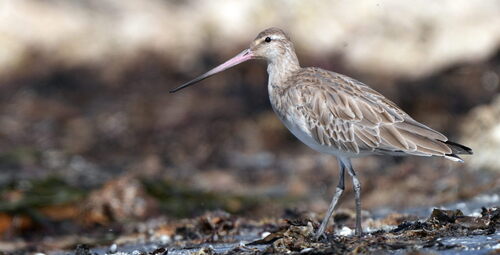
オオソリハシシギ (Limosa lapponica) オオソリハシシギ

メディア

読み込み中…

要点

ユーラシアダイシャクシギとオオソリハシシギの最も信頼できるフィールドマークはくちばしです:ダイシャクシギのくちばしは非常に長く、滑らかに下向きに曲がっており、重いのに対し、オオソリハシシギのくちばしは明らかに短く、細く、わずかに上向きです。飛行中、ダイシャクシギの長い脚と足は尾を超えてよく突き出し、明確な「ポイント」を形成しますが、オオソリハシシギの脚は短く、尾の先を超えません。繁殖羽の成鳥オオソリハシシギは豊かなレンガ色の腹部を示しますが、ダイシャクシギは年間を通じてまだらの茶色と白のままです。両種は非繁殖羽では似て見えることがありますが、サイズと構造は信頼できます。幼鳥と未熟な鳥は、構造とくちばしの形で最もよく区別されます。両者は主に茶色がかり、まだら模様です。

識別のコツ

  1. くちばしの形と長さ:ダイシャクシギのくちばしは非常に長く、重く、滑らかに下向きに曲がっています;オオソリハシシギのくちばしは短く、細く、わずかに上向きです。これはすべての年齢と季節で最も信頼できるフィールドマークです。
  2. 飛行中の脚の突き出し:ダイシャクシギの長い脚と足は尾を超えてよく突き出し、目立つポイントを形成します;オオソリハシシギの脚は尾の先を超えません。これはすべての年齢で飛行中の診断的な特徴です。
  3. サイズと体格:ダイシャクシギはオオソリハシシギよりもはるかに大きく、体格がしっかりしています。並んで見ると、ダイシャクシギはオオソリハシシギよりも高く見えますが、孤立した鳥や遠くの群れには注意が必要です。
  4. 繁殖羽:成鳥のオオソリハシシギ(特にオス)は春/夏に豊かなレンガ色の腹部を示します;ダイシャクシギはこの色を示さず、茶色でまだらのままです。
  5. 非繁殖羽と幼鳥の羽:両種は茶色がかりでまだら模様ですが、ダイシャクシギはより灰色がかりで大きく、白い背中を持っています。オオソリハシシギは上面がより均一な灰褐色で、下面は白っぽく、微妙にまだら模様です。
  6. 尾の模様:オオソリハシシギの尾は縞模様ですが、これは鳥が近くにいるか尾が扇状に広がっていない限り見るのが難しいです。ダイシャクシギの尾はあまり明確にマーキングされていません。
  7. くちばしの色:オオソリハシシギのくちばしは基部がピンクで先端が黒く、特に新しい羽毛では目立ちます;ダイシャクシギのくちばしは均一に暗いです。
  8. 脚の色と長さ:両者は青灰色の脚を持っていますが、オオソリハシシギの脚は比較的短く、飛行中に尾を超えることはありません。
  9. 飛行スタイル:ダイシャクシギは遅く、深い羽ばたきで飛び、重そうに見えます;オオソリハシシギはより敏捷で直接的で、羽ばたきが速いです。
  10. 声:ダイシャクシギの大きく、泡立つ「クルーオー」という声は特徴的です;オオソリハシシギは静かで、この呼び声はありません。
  11. 生息地の文脈:繁殖期には、ダイシャクシギは内陸または湿地にいる可能性が高いです;オオソリハシシギは北極で繁殖し、繁殖以外では厳密に沿岸にいます。冬には、両者は河口にいることがありますが、ダイシャクシギは内陸でも見つかる可能性が高いです。
  12. 性差:両種はサイズにおいていくつかの性的二形性を示しますが、これは微妙で、直接比較しない限りフィールドでは信頼できません。
  13. 落とし穴:光が悪い場合や距離がある場合、非繁殖のオオソリハシシギはダイシャクシギに似て見えることがありますが、くちばしの形と脚の突き出しは信頼できます。特に孤立した鳥や混合した群れには注意が必要です。
  14. 幼鳥の混乱:幼鳥のオオソリハシシギは成鳥よりも胸がより茶色がかりでまだら模様ですが、ダイシャクシギとの構造的な違いは同じです。幼鳥のダイシャクシギはより大きく、灰色がかりです。
  15. 群れの構造:オオソリハシシギはしばしばより密で、より同期した群れを形成しますが、ダイシャクシギはより緩やかにグループ化されます。

大きさ

ユーラシアダイシャクシギははるかに大きく、重いです:平均体重は約805.5gで、オオソリハシシギの333.5gと比較されます。ダイシャクシギの長さ(50–60 cm)と翼幅(89–106 cm)は、オオソリハシシギの(37–41 cmの長さ、70–80 cmの翼幅)を大きく上回ります。フィールドでは、ダイシャクシギは体格がしっかりしていて、首が長く、より威圧的に見えますが、オオソリハシシギはよりコンパクトでスレンダーです。

羽色

幼鳥と非繁殖のオオソリハシシギは上面が無地の灰褐色で、下面はより淡い色合いで、微妙にまだら模様を示しますが、上翼や尾に大胆な模様はありません。幼鳥と非繁殖のダイシャクシギも茶色でまだら模様ですが、一般的により灰色がかりで大きく、白い背中を持ち、強い翼の模様はありません。繁殖羽では、成鳥のオオソリハシシギはレンガ色の腹部で間違いなく識別可能です(オスが最も明るく、メスは鈍い色合い)、一方でダイシャクシギは茶色でまだらのままです。両種は青灰色の脚を持っていますが、オオソリハシシギの脚は比較的短いです。飛行中、ダイシャクシギの長い脚と足は尾を超えてよく突き出しますが、オオソリハシシギの脚はそうではありません。オオソリハシシギの尾は縞模様ですが(そのため名前が付けられました)、これは近距離または良い光の条件でないと見るのが難しいです;ダイシャクシギの尾はあまり明確にマーキングされていません。くちばしの色も役立ちます:オオソリハシシギのくちばしは基部がピンクで先端が黒く、ダイシャクシギのくちばしは均一に暗いです。

行動

両種は干潟や湿った草地で無脊椎動物を探し、探餌しますが、ダイシャクシギの探餌スタイルは遅く、より計画的で、長いくちばしを使って深い獲物に到達します。オオソリハシシギはより活発で、迅速に走ったり探餌したりするのが見られます。飛行中、ダイシャクシギは重く、だるそうに見え、深く、遅い羽ばたきをしますが、オオソリハシシギはより敏捷で直接的です。ダイシャクシギの長い脚は飛行中に目立って引きずられますが、オオソリハシシギの脚はそうではありません。両種は移動や冬に群れを成しますが、オオソリハシシギはしばしばより密な群れを形成します。

生息環境

ユーラシアダイシャクシギは開けた草原、草地、湿地で繁殖し、河口や干潟で冬を越します。オオソリハシシギは北極のツンドラで繁殖し、移動や冬には厳密に沿岸にいます。潮の干潟や砂浜を好みます。繁殖期以外では両者は河口で見られることがありますが、ダイシャクシギは繁殖中は内陸や荒れた草地にいる可能性が高く、オオソリハシシギはほとんど沿岸から離れることはありません。

声

ダイシャクシギは大きく、泡立つ「クルーオー」という呼び声を持ち、飛行中やディスプレイでよく聞かれ、特徴的で遠くまで届きます。オオソリハシシギは静かで、より柔らかく、短い呼び声を持ち、ダイシャクシギの魅力的なホイッスルは出しません。声はよく聞こえれば信頼できる区別要因です。

より良い説明を送る

比較と同じ項目を使ってください。文章はすぐに公開されます。

The most reliable field mark between Eurasian Curlew and Bar-tailed Godwit is the bill: Curlew’s is extremely long, smoothly downcurved, and heavy, while Bar-tailed Godwit’s is noticeably shorter, thinner, and slightly upturned. In flight, Curlew’s long legs and feet project well beyond the tail, forming a clear 'point,' whereas Bar-tailed Godwit’s legs are shorter and do not extend past the tail tip. Adult Bar-tailed Godwits in breeding plumage show rich brick-red underparts, while Curlews remain streaky brown and white year-round. Both species can appear similar in non-breeding plumage, but size and structure remain reliable. Juvenile and immature birds are best separated by structure and bill shape, as both are mostly brownish and streaked.

  1. Bill shape and length: Curlew’s bill is extremely long, heavy, and smoothly downcurved; Godwit’s is shorter, thinner, and slightly upturned. This is the single most reliable field mark at all ages and seasons.
  2. Leg projection in flight: Curlew’s long legs and feet extend well beyond the tail, forming a noticeable point; Godwit’s legs do not project past the tail tip. This is diagnostic in flight for all ages.
  3. Size and bulk: Curlew is much larger and bulkier than Godwit. If seen side by side, Curlew towers over Godwit, but beware lone birds or distant flocks.
  4. Breeding plumage: Adult Bar-tailed Godwits (especially males) show rich brick-red underparts in spring/summer; Curlew never shows this color, remaining brown and streaked.
  5. Non-breeding and juvenile plumage: Both species are brownish and streaked, but Curlew is greyer and larger, with a white back. Godwit is more uniform grey-brown above and whitish below, with a subtly streaked look.
  6. Tail pattern: Godwit’s tail is barred, but this is hard to see unless the bird is close or the tail is fanned. Curlew’s tail is less distinctly marked.
  7. Bill color: Godwit’s bill is pink at the base and black-tipped, especially obvious in fresh plumage; Curlew’s bill is uniformly dark.
  8. Leg color and length: Both have blue-grey legs, but Godwit’s are relatively shorter and never project past the tail in flight.
  9. Flight style: Curlew flies with slow, deep wingbeats and looks heavy; Godwit is more agile and direct, with faster wingbeats.
  10. Voice: Curlew’s loud, bubbling 'curloo-oo' is distinctive; Godwit is quieter and lacks this call.
  11. Habitat context: In breeding season, Curlew is likely inland or on moorland; Godwit breeds in the Arctic and is strictly coastal outside breeding. In winter, both may be on estuaries, but Curlew is more likely to be found inland as well.
  12. Sex differences: Both species show some sexual dimorphism in size, but this is subtle and not reliable in the field except in direct comparison.
  13. Pitfalls: In poor light or at distance, non-breeding Godwits can look similar to Curlews, but bill shape and leg projection remain reliable. Beware especially of lone birds or mixed flocks.
  14. Juvenile confusion: Juvenile Godwits are buffier and more streaked on the breast than adults, but still show the same structural differences from Curlew. Juvenile Curlews are larger and greyer.
  15. Flock structure: Godwits often form tighter, more synchronized flocks, while Curlews are more loosely grouped.

Eurasian Curlew is much larger and heavier: average body mass is about 805.5g compared to Bar-tailed Godwit’s 333.5g. Curlew’s length (50–60 cm) and wingspan (89–106 cm) far exceed Godwit’s (37–41 cm length, 70–80 cm wingspan). In the field, Curlew looks bulkier, longer-necked, and more imposing, while Bar-tailed Godwit is more compact and slender.

Juvenile and non-breeding Bar-tailed Godwits are plain grey-brown above with paler underparts, and show a subtle streaked look, but lack any bold patterning on the upperwing or tail. Juvenile and non-breeding Curlews are also brown and streaked, but are generally greyer and larger, with a white back and no strong wing pattern. In breeding plumage, adult Bar-tailed Godwits are unmistakable with brick-red underparts (males brightest, females duller), while Curlews remain brown and streaky. Both species have blue-grey legs, but Godwit’s are relatively shorter. In flight, Curlew’s long legs and feet project well past the tail, while Godwit’s do not. The Godwit’s tail is barred (hence the name), but this can be hard to see except at close range or in good light; Curlew’s tail is less distinctly marked. Bill color is also helpful: Godwit’s bill is pink at the base and black-tipped, while Curlew’s is uniformly dark.

Both species forage on mudflats and wet meadows, probing for invertebrates, but Curlew’s foraging style is slower and more methodical, using its long bill to reach deeper prey. Bar-tailed Godwits are more active and can be seen running and probing rapidly. In flight, Curlews appear heavy and languid, with deep, slow wingbeats, while Godwits are more agile and direct. Curlew’s long legs trail conspicuously in flight, unlike Godwit’s. Both species are gregarious in migration and winter, but Godwits often form tighter flocks.

Eurasian Curlew breeds in open grasslands, meadows, and moorland, and winters on estuaries and mudflats. Bar-tailed Godwit breeds on Arctic tundra and is strictly coastal in migration and winter, favoring tidal mudflats and sandy shores. While both can be found on estuaries outside the breeding season, Curlew is more likely inland or in rough grassland during breeding, while Godwit is almost never far from the coast.

Curlew has a loud, bubbling 'curloo-oo' call, often heard in flight or display, and is distinctive and far-carrying. Bar-tailed Godwit is quieter, with softer, more clipped calls, and does not give the evocative Curlew whistle. Voice is a reliable separator if heard well.

変更を破棄しますか?

保存していない編集があります。今離れると失われます。

ダイシャクシギ · オオソリハシシギ · 苦手な鳥