

Motmot

チャイロツバメ 対 Rock Martin

Ptyonoprogne rupestris 対 Ptyonoprogne fuligula

チャイロツバメとRock Martinのクイズ

チャイロツバメ (Ptyonoprogne rupestris) チャイロツバメ
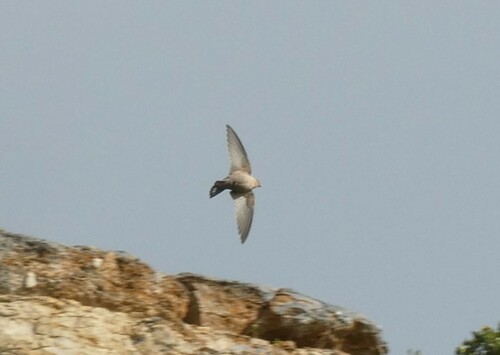
Rock Martin (Ptyonoprogne fuligula) Rock Martin

メディア

読み込み中…

要点

ユーラシアクライグマーティンとロックマーティンを区別する最も信頼できるフィールドマークは、白い尾の斑点の大きさと目立ち具合です:ユーラシアクライグマーティンは、特に飛行中にロックマーティンよりも尾に大きく明らかな白い斑点を示します。両種は茶色の上面と短い四角い尾を持っていますが、ユーラシアクライグマーティンは一般的に大きく、がっしりしており、下側はより淡い色をしています。一方、ロックマーティンはより地味で、シナモン色の喉と翼の覆羽を持っています。両種の幼鳥は上面に淡い先端を持っていますが、全体的なコントラストと尾の斑点の大きさが最良の手がかりです。飛行スタイルや下部の色合いの微妙な違いも役立ちますが、尾のパターンはほとんどの観察者にとって最も迅速な区別点です。

識別のコツ

  1. Tail spot size (all ages): ユーラシアクライグマーティンは常に尾に大きく大胆な白い斑点を示します(中央と最外羽を除く);ロックマーティンの尾の斑点ははるかに小さく、目立たず、飛行中にはかすかな窓のようにしか見えないことが多いです。
  2. Tail spot visibility in flight: 滑空中または尾を広げた状態では、ユーラシアクライグマーティンの白い斑点は目を引き、はっきりと見えます;ロックマーティンの斑点は控えめで、よく見ないと見逃されることがあります。
  3. Overall size and build: ユーラシアクライグマーティンは大きく、がっしりしており、翼が広いです;ロックマーティンはスリムでより繊細です。これは両種が同時に存在する場合や経験がある場合に最も役立ちます。
  4. Underpart coloration: ユーラシアクライグマーティンは下側がより淡く、灰色がかった茶色の上面との明確なコントラストがあります;ロックマーティンはより均一な茶色で、上面と下面の間にコントラストはほとんどありませんが、シナモン色の喉と翼の覆羽を除きます。
  5. Throat and underwing color: ロックマーティンはシナモン色の顎、喉、上胸部、翼の覆羽を示します;ユーラシアクライグマーティンはこれを欠き、代わりに黒っぽい翼と尾の覆羽を持っています。
  6. Juvenile plumage: 両種の幼鳥は上面と飛行羽に淡いまたはバフ色の先端を持っていますが、これらは微妙で主なフィールドマークではありません;代わりに尾の斑点の大きさと下部のコントラストに依存してください。
  7. Flight style: ユーラシアクライグマーティンの飛行は遅くて重く、翼が広く、機敏さが少ないです;ロックマーティンはよりアクロバティックで機敏で、特に崖の近くで巧みに動きます。
  8. Perched jizz: ユーラシアクライグマーティンは止まっているときによりがっしりしていて直立しているように見えます;ロックマーティンはスリムで、より細長く見えることがあります。
  9. Habitat and range: ユーラシアクライグマーティンは南ヨーロッパ、北西アフリカ、そしてユーラシア全体で見られます;ロックマーティンは南アフリカに生息しています。場所はしばしば決定的です。
  10. Habitat preference: 両種は崖や岩場を利用しますが、ロックマーティンは水から遠く、都市や人工的な環境で見られる可能性が高いです。
  11. Vocalizations: 鳴き声は通常診断的ではありませんが、ユーラシアクライグマーティンは短く高い音を出します;ロックマーティンは静かで、柔らかいツイッターと鼻にかかったり高音の鳴き声を持っています。
  12. Sex and age: 両種の性別は似ています;年齢の違いは微妙で、通常フィールドでは診断的ではありません。
  13. Confusion with other swallows: 両種は胸のバンドがなく(ショウドウツバメとは異なり)、白い斑点のある四角い尾を持っていますが、ユーラシアクライグマーティンの斑点だけが大きく明らかです。
  14. Pitfalls: 照明が悪い場合や遠くから見ると、ロックマーティンは実際よりも淡く見えることがあり、ユーラシアクライグマーティンは暗く見えることがあります;常に尾の斑点の大きさと下部のコントラストを探してください。
  15. When in doubt: 飛行中の尾の斑点の大きさと全体的な下部のコントラストに焦点を当ててください;これらはすべての年齢と季節で最も信頼できるフィールドマークです。

大きさ

ユーラシアクライグマーティンは二種の中で大きく、がっしりしており、平均して約14 cmの長さと20 gの体重を持ち、他のヨーロッパのツバメよりも広い体、翼、尾を持っています。ロックマーティンはやや小さく(12〜15 cm)、スリムで頑丈さが少ないように見えます。フィールドでは、ユーラシアクライグマーティンはしばしば明らかにがっしりしていて胸が重いように見えますが、ロックマーティンはより繊細です。しかし、長さには重複があるため、両種が一緒に見られない限り、サイズだけでは常に診断的ではありません。

羽色

行動

両種は遅く滑空する飛行スタイルを持ち、急速な羽ばたきと平らな翼での滑空が交互に行われます。ユーラシアクライグマーティンの飛行はツバメとしては比較的遅く、広い翼と重く、より鈍重な印象を与えます。ロックマーティンはよりアクロバティックで機敏で、しばしば崖の近くで巧みに動きます。ユーラシアクライグマーティンは高く飛ぶ傾向があり、尾を広げたときに白い尾の斑点をより明確に示します。両種は岩や建物に止まりますが、ユーラシアクライグマーティンは止まっているときによりがっしりしていて直立しているように見えることがあります。

生息環境

ユーラシアクライグマーティンは南ヨーロッパ、北西アフリカ、そしてユーラシア全体の山岳地帯で繁殖し、通常は崖や岩の露頭の近くにいます。ロックマーティンは南アフリカに生息し、しばしば山岳地帯や岩場にいますが、低い高度に対してより寛容で、水から遠く、都市環境でも見られることがあります。ヨーロッパやアジアで見られた場合、その鳥はほぼ確実にユーラシアクライグマーティンです;南アフリカではロックマーティンがデフォルトです。両種は崖や岩の生息地に関連していますが、ロックマーティンは水から遠く、人工的な環境で見られる可能性が高いです。

声

ユーラシアクライグマーティンは短く高い「pli」、「piieh」、および「tshir」の鳴き声を出し、リンネットやハウスマーティンを思わせる部分があります。ロックマーティンは静かで、歌としては muffled twitter を持ち、鳴き声には「trrt」(ハウスマーティンのように)、鼻にかかった「vick」、および高音の「twee」が含まれます。両種の鳴き声は微妙で、よく聞かれない限り通常は診断的ではありません。

より良い説明を送る

比較と同じ項目を使ってください。文章はすぐに公開されます。

The most reliable field mark to separate Eurasian Crag Martin from Rock Martin is the size and prominence of the white tail spots: Eurasian Crag Martin shows significantly larger and more obvious white patches on the tail than Rock Martin, especially in flight. Both species have brown upperparts and short, square tails, but Eurasian Crag Martin is generally larger, bulkier, and paler below, while Rock Martin is drabber, with a more cinnamon-toned throat and underwing coverts. Juveniles of both species have pale tips to the upperparts, but the overall contrast and tail spot size remain the best clues. Flight style and subtle differences in underpart coloration can help, but tail pattern is the quickest separator for most observers.

  1. Tail spot size (all ages): Eurasian Crag Martin always shows large, bold white patches on the tail (except central and outermost feathers); Rock Martin's tail spots are much smaller and less obvious, often only visible as faint windows in flight.
  2. Tail spot visibility in flight: In gliding or fanned tail, Eurasian Crag Martin's white spots are striking and flash clearly; Rock Martin's are subdued and may be missed unless seen well.
  3. Overall size and build: Eurasian Crag Martin is larger, bulkier, and broader-winged; Rock Martin is slimmer and more delicate. This is most useful if both species are present or with experience.
  4. Underpart coloration: Eurasian Crag Martin is paler below, with a clear contrast to ash-brown upperparts; Rock Martin is more uniformly brown, with little contrast between upper- and underparts except for the cinnamon throat and underwing.
  5. Throat and underwing color: Rock Martin shows a cinnamon chin, throat, upper breast, and underwing coverts; Eurasian Crag Martin lacks this, instead having blackish underwing and undertail coverts.
  6. Juvenile plumage: Both species' juveniles have pale or buff tips to upperparts and flight feathers, but these are subtle and not a primary field mark; rely on tail spot size and underpart contrast instead.
  7. Flight style: Eurasian Crag Martin's flight is slower and heavier, with broader wings and less agility; Rock Martin is more acrobatic and nimble, especially near cliffs.
  8. Perched jizz: Eurasian Crag Martin appears bulkier and more upright when perched; Rock Martin is slimmer and may look more elongated.
  9. Habitat and range: Eurasian Crag Martin is found in southern Europe, northwestern Africa, and across the Palearctic; Rock Martin is resident in southern Africa. Location is often decisive.
  10. Habitat preference: Both use cliffs and rocky areas, but Rock Martin is more likely to be seen far from water and in urban or man-made settings.
  11. Vocalizations: Calls are not usually diagnostic, but Eurasian Crag Martin gives short, high notes; Rock Martin is quieter with a soft twitter and nasal or high-pitched calls.
  12. Sex and age: Sexes are alike in both species; age differences are subtle and not usually diagnostic in the field.
  13. Confusion with other swallows: Both lack a breast band (unlike sand martins) and have square tails with white spots, but only Eurasian Crag Martin's are large and obvious.
  14. Pitfalls: In poor light or distant views, Rock Martin may appear paler or Eurasian Crag Martin darker than reality; always look for tail spot size and underpart contrast.
  15. When in doubt: Focus on tail spot size in flight and overall underpart contrast; these are the most reliable field marks across all ages and seasons.

Eurasian Crag Martin is the larger and stockier of the two, averaging about 14 cm in length and 20 g in mass, with a broader body, wings, and tail than any other European swallow. Rock Martin is slightly smaller (12–15 cm), and appears slimmer and less robust. In the field, Eurasian Crag Martin often looks noticeably bulkier and heavier-chested, while Rock Martin is more delicate. However, there is overlap in length, so size alone is not always diagnostic unless both species are seen together.

  • Juveniles: Both species' juveniles have pale or buff tips to the upperparts and flight feathers, but Eurasian Crag Martin juveniles show buff-brown tips on the head, upperparts, and wing coverts, while Rock Martin juveniles have pale edges to the upperparts and flight feathers. These differences are subtle and not always reliable at distance.
  • Tail pattern (all ages): Eurasian Crag Martin has large, bold white patches near the tips of all but the central and outermost tail feathers; these are much more conspicuous than the small white spots of Rock Martin. In flight, Eurasian Crag Martin's tail spots flash clearly, while Rock Martin's are smaller and less obvious, sometimes appearing as faint 'windows.'
  • Underparts: Eurasian Crag Martin is paler below, with a clear contrast between ash-brown upperparts and lighter underparts. Rock Martin is more uniform brown, with the underparts (except for the throat and underwing coverts) matching the upperparts in tone. Rock Martin's chin, throat, and upper breast are cinnamon, and the underwing coverts are also cinnamon, while Eurasian Crag Martin's underwing and undertail coverts are blackish.
  • Other marks: Both have brown eyes, blackish bills, and brownish-pink legs. Sexes are alike in both species.

Both species have a slow, gliding flight style with rapid wingbeats interspersed with flat-winged glides. Eurasian Crag Martin's flight is relatively slow for a swallow, with broad wings and a heavier, more ponderous jizz. Rock Martin is more acrobatic and agile, often maneuvering deftly near cliffs. Eurasian Crag Martin tends to fly higher and shows its white tail spots more obviously when spreading the tail. Both species perch on rocks and buildings, but Eurasian Crag Martin may appear bulkier and more upright when perched.

Eurasian Crag Martin breeds in mountains of southern Europe, northwestern Africa, and across the Palearctic, usually near cliffs or rocky outcrops. Rock Martin is resident in southern Africa, often in mountainous or rocky areas, but is more tolerant of lower altitudes and can be found far from water, including urban environments. If seen in Europe or Asia, the bird is almost certainly Eurasian Crag Martin; in southern Africa, Rock Martin is the default. Both species are associated with cliffs and rocky habitats, but Rock Martin is more likely to be found away from water and in man-made settings.

Eurasian Crag Martin gives short, high 'pli,' 'piieh,' and 'tshir' calls, somewhat reminiscent of linnet or house martin. Rock Martin is quieter, with a muffled twitter as song, and calls including a 'trrt' (like house martin), nasal 'vick,' and high-pitched 'twee.' Both species' calls are subtle and not usually diagnostic unless heard well and with experience.

変更を破棄しますか?

保存していない編集があります。今離れると失われます。

チャイロツバメ · Rock Martin · 苦手な鳥