

Motmot

ニシクロウタドリ 対 ノハラツグミ

Turdus merula 対 Turdus pilaris

ニシクロウタドリとノハラツグミのクイズ
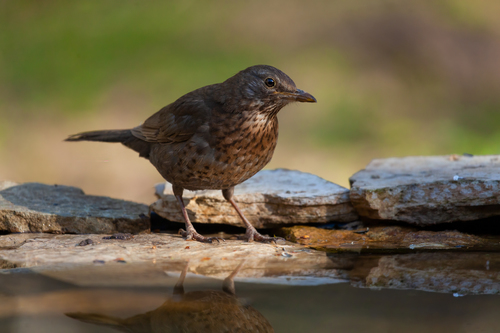
ニシクロウタドリ (Turdus merula) ニシクロウタドリ
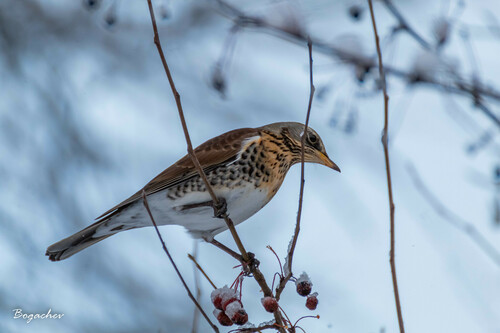
ノハラツグミ (Turdus pilaris) ノハラツグミ

メディア

読み込み中…

要点

ニシクロウタドリとノハラツグミを区別する最も信頼できるフィールドマークは全体の色合いです:成鳥のオスのニシクロウタドリは全体が光沢のある黒で、明るい黄色-オレンジ色のくちばしを持っていますが、ノハラツグミは灰色の頭、栗色の背中、そして heavily spotted breast という大胆な模様を持っています。飛行中、ノハラツグミは目を引く白いアンダーウィングカバーと腋羽を示し、この特徴はどの年齢のニシクロウタドリにも見られません。幼鳥のニシクロウタドリは上面に淡い斑点がある茶色ですが、ノハラツグミの灰色の頭と白いアンダーウィングは依然として欠けています。構造と行動も異なります:ニシクロウタドリはより孤独で、低い位置または地面で見られることが多いのに対し、ノハラツグミは群れで行動し、しばしば群れで見られ、より厳しい、チャタリングの飛行コールを持っています。両者は中型のツグミですが、ノハラツグミはわずかにがっしりしていて、翼が長いです。

識別のコツ

  1. 白いアンダーウィングカバーの飛行中:すべての年齢のノハラツグミは目立つ白いアンダーウィングカバーと腋羽を示し、特に飛行中または翼を伸ばすときに見えます。ニシクロウタドリはこの特徴を示しません。
  2. 灰色の頭と尾:ノハラツグミ(成鳥と幼鳥)はスレートグレーの頭、後頭部、尾を持ち、栗色の背中と対照的です。ニシクロウタドリ(すべての年齢)は頭や尾に灰色がありません。
  3. 全体の色合い:成鳥のオスのニシクロウタドリは全体が光沢のある黒で、黄色-オレンジ色のくちばしとアイリングを持っています;メスはすすけた茶色で、くちばしは鈍いです。ノハラツグミは灰色の頭、栗色の背中、黒っぽい尾、そして heavily spotted creamy-buff breast という大胆な模様を持っています。
  4. 幼鳥の混乱:幼鳥のニシクロウタドリは上面に淡い斑点があり、斑点のある胸を持っていますが、灰色や白いアンダーウィングは決して示しません。幼鳥のノハラツグミは鈍いですが、依然として頭と尾に灰色がかっており、体の羽毛には淡い筋があります。
  5. くちばしの色:成鳥のオスのニシクロウタドリは明るい黄色-オレンジ色のくちばしを持っています(冬は鈍くなります)、メスと幼鳥は鈍い黄色または茶色のくちばしを持っています。ノハラツグミは冬にオレンジ-黄色のくちばしを持ち、夏にはより黄色く、上顎は茶色で先端は暗いです。
  6. 胸の模様:ノハラツグミは大胆に斑点があり、ストライプのあるクリーミー-バフの胸を持ち、斑点は上部の胸に集中しています。ニシクロウタドリは平坦(オス)または弱く斑点のある(メス/幼鳥)胸を持ち、ノハラツグミほど大胆に模様はありません。
  7. 尾の色と形:ノハラツグミは先端が丸い黒っぽい尾を持ち、基部には灰色の縁取りがあります;ニシクロウタドリは長い全黒の尾(オス)または茶色の尾(メス/幼鳥)を持ち、より細身の外観です。
  8. 飛行スタイル:ノハラツグミは群れで飛び、跳ねるような直接的な飛行と頻繁な呼び声を持っています。ニシクロウタドリは単独またはペアで飛び、急速な羽ばたきのバーストとより敏捷で孤独な動きを持っています。
  9. 社会的行動:ノハラツグミは冬に非常に群れで行動し、大きくて騒がしい群れで見られることが多いです。ニシクロウタドリは通常孤独またはペアで、冬でもそうです。
  10. 生息地の文脈:冬の開けた野原や大きな群れではノハラツグミがより可能性が高く、庭、公園、または森林の孤独な場所ではニシクロウタドリがより可能性があります。
  11. 鳴き声:ノハラツグミの厳しい「ツァク ツァク」という呼び声を聞いてください、特に飛行中や止まっている群れから。ニシクロウタドリの呼び声はより柔らかく、あまりチャタリングしません。
  12. アイリング:成鳥のオスのニシクロウタドリは明確な黄色のアイリングを持っています;ノハラツグミは強いアイリングを示しません。
  13. 性差:メスのニシクロウタドリはオスよりも茶色く鈍いですが、それでもノハラツグミの灰色の頭と白いアンダーウィングは欠けています。メスのノハラツグミはオスに似ていますが、より淡く、胸の模様が少ないです。
  14. 季節的文脈:ノハラツグミはヨーロッパの多くの地域で主に冬に存在し、しばしば群れで見られます;ニシクロウタドリは多くの地域で年間を通じて生息しています。
  15. 落とし穴:幼鳥のニシクロウタドリには注意してください、斑点があり茶色に見えることがありますが、常にノハラツグミの灰色の頭と白いアンダーウィングは欠けています。暗い光の中では、ノハラツグミの大胆な模様と群れで行動する習性が重要です。

大きさ

両種は中型のツグミですが、ノハラツグミは平均してわずかに大きく、重いです(成鳥のノハラツグミの体重は約105 g [wikidata]、ニシクロウタドリは80–125 g [wikipedia])。ノハラツグミはわずかに長い翼幅(39–42 cm)を持ち、特に群れでの姿勢はより頑丈で直立しています。ニシクロウタドリはより細身に見え、尾は相対的に長いです。フィールドでは、サイズの違いは微妙で、単独では診断的ではありませんが、ノハラツグミは特に群れで見られるときにがっしりして見えることがあります。

羽色

幼鳥と未熟な鳥はしばしば混同されます。幼鳥のニシクロウタドリは全体が茶色で、上面に淡い斑点があり、斑点のある胸を持っていますが、頭や尾に灰色はなく、アンダーウィングに白もありません。初年度のオスのニシクロウタドリは成鳥に似ていますが、くちばしは鈍く、暗く、アイリングは弱く、折りたたまれた翼は茶色で、黒ではありません。対照的に、幼鳥のノハラツグミは成鳥よりも鈍いですが、依然として頭と尾に灰色がかっており、体の羽毛には淡い筋があります。成鳥のノハラツグミはスレートグレーの頭、後頭部、尾、栗色の背中、黒っぽい尾、そしてクリーミー-バフの背景に大胆に斑点のある胸を持ち、間違いなく識別可能です。飛行中、ノハラツグミは常に白いアンダーウィングカバーと腋羽を示し、これら二つの中で独特の特徴です。成鳥のオスのニシクロウタドリは全体が光沢のある黒で、黄色-オレンジ色のくちばしとアイリングを持ち、メスはすすけた茶色で、鈍いくちばしと弱い斑点を持っています。どの年齢や性別のニシクロウタドリもノハラツグミの灰色の頭、栗色の背中、または白いアンダーウィングを示しません。

行動

ニシクロウタドリは通常孤独またはペアで行動し、特に繁殖期には、低い植生や地面で採餌していることが多いです。彼らは特にオスが積極的にテリトリーを守り、急速な羽ばたきのバーストを伴う直接的で敏捷な飛行を持っています。ノハラツグミは繁殖期以外は非常に群れで行動し、しばしば大きくて騒がしい群れを形成し、木々と開けた地面の間を移動します。彼らの飛行はより跳ねるようで直接的であり、他のツグミと一緒に開けた野原や高い木に止まっているのを見る可能性が高いです。ノハラツグミはまた、より移動性が高く、大きな冬の移動と群れで行動する習性を持っています。

生息環境

両種は森林や低木で繁殖しますが、ニシクロウタドリはより適応性があり、ヨーロッパ、西アジア、北アフリカの庭、公園、都市部で一般的です。ノハラツグミはさらに北と東で繁殖し、開けた森林や森林の縁を好み、強く移動性があり、より南の地域で越冬します。冬には、ノハラツグミはしばしば開けた野原、果樹園、そして生け垣で見られ、通常は群れで行動しますが、ニシクロウタドリはより広範囲の生息地に留まり、しばしば単独またはペアで見られます。

声

ノハラツグミは特徴的な厳しい、チャタリングの飛行コール(「ツァク ツァク」)を持ち、しばしば飛行中や木に止まっている群れから聞こえます。彼らの歌は弱く、口笛や喉の音が混ざっていますが、繁殖地以外ではほとんど聞かれません。ニシクロウタドリは豊かでメロディックな歌を持っています(ここでは診断的ではありません)が、彼らの呼び声はより柔らかく、あまり厳しくなく、ノハラツグミのチャタリングの質が欠けています。フィールドでは、群れからの厳しい「ツァク ツァク」という呼び声の存在はノハラツグミの強い指標です。

より良い説明を送る

比較と同じ項目を使ってください。文章はすぐに公開されます。

The most reliable field mark to separate Eurasian Blackbird from Fieldfare is overall coloration: adult male Blackbirds are entirely glossy black with a bright yellow-orange bill, while Fieldfares are boldly patterned with a grey head, chestnut back, and heavily spotted breast. In flight, Fieldfares show striking white underwing coverts and axillaries, a feature never present in Blackbirds of any age. Juvenile Blackbirds are brownish with pale spots above, but still lack the Fieldfare's grey head and white underwings. Structure and behavior also differ: Blackbirds are more solitary and often seen low or on the ground, while Fieldfares are gregarious, often in flocks, and have a harsher, chattering flight call. Both are medium-sized thrushes, but Fieldfares are slightly bulkier and longer-winged.

  1. White underwing coverts in flight: Fieldfares of all ages show prominent white underwing coverts and axillaries, especially visible in flight or when stretching wings. Eurasian Blackbirds never show this feature.
  2. Grey head and rump: Fieldfares (adult and juvenile) have a slate-grey head, nape, and rump, contrasting with a chestnut back. Blackbirds (all ages) lack any grey on the head or rump.
  3. Overall coloration: Adult male Blackbirds are entirely glossy black with a yellow-orange bill and eye-ring; females are sooty-brown with a duller bill. Fieldfares are boldly patterned with a grey head, chestnut back, blackish tail, and heavily spotted creamy-buff breast.
  4. Juvenile confusion: Juvenile Blackbirds are brownish with pale spots on the upperparts and a speckled breast, but never show grey or white underwings. Juvenile Fieldfares are duller but still have a greyish tinge to the head and rump and pale streaks on the body feathers.
  5. Bill color: Adult male Blackbirds have a bright yellow-orange bill (duller in winter), females and juveniles have a duller yellowish or brownish bill. Fieldfares have an orange-yellow bill in winter, more yellow in summer, with a brownish upper mandible and dark tip.
  6. Breast pattern: Fieldfares have a boldly spotted and streaked creamy-buff breast, with spots concentrated on the upper breast. Blackbirds have a plain (male) or weakly mottled (female/juvenile) breast, never as boldly marked as Fieldfare.
  7. Tail color and shape: Fieldfares have a blackish tail with a rounded tip and some grey fringing at the base; Blackbirds have a long, all-black tail (male) or brownish tail (female/juvenile) with a more slender appearance.
  8. Flight style: Fieldfares fly in flocks with bounding, direct flight and frequent calling. Blackbirds fly singly or in pairs, with bursts of rapid wingbeats and more agile, solitary movement.
  9. Social behavior: Fieldfares are highly gregarious in winter, often in large, noisy flocks. Blackbirds are usually solitary or in pairs, even in winter.
  10. Habitat context: In open fields or large flocks in winter, Fieldfare is more likely; in gardens, parks, or solitary in woodland, Blackbird is more probable.
  11. Vocalization: Listen for the Fieldfare's harsh 'tsak tsak' call, especially from flocks in flight or perched. Blackbird calls are softer and less chattering.
  12. Eye-ring: Adult male Blackbirds have a distinct yellow eye-ring; Fieldfares do not show a strong eye-ring.
  13. Sex differences: Female Blackbirds are browner and duller than males, but still lack the Fieldfare's grey head and white underwings. Female Fieldfares are similar to males but paler and with fewer breast markings.
  14. Seasonal context: Fieldfares are mostly present in winter in much of Europe, often in flocks; Blackbirds are resident year-round in many areas.
  15. Pitfalls: Beware of juvenile Blackbirds, which can appear spotted and brownish, but always lack the grey head and white underwing of Fieldfare. In poor light, Fieldfare's bold pattern and flocking habit are key.

Both species are medium-sized thrushes, but Fieldfares are marginally larger and heavier on average (adult Fieldfare body mass around 105 g [wikidata], Blackbird 80–125 g [wikipedia]). Fieldfares have a slightly longer wingspan (39–42 cm) and a more robust, upright posture, especially in flocks. Blackbirds appear more slender and have a proportionally longer tail. In the field, the size difference is subtle and rarely diagnostic on its own, but Fieldfares can look bulkier, especially when seen in groups.

Juvenile and immature birds are often confused. Juvenile Blackbirds are brownish overall with pale spots on the upperparts and a speckled breast, but lack any grey on the head or rump and have no white on the underwing. First-year male Blackbirds are similar to adults but with a duller, darker bill and weaker eye-ring, and their folded wings are brown, not black. In contrast, juvenile Fieldfares are duller than adults but still show a greyish tinge to the head and rump, and pale streaks on the body feathers. Adult Fieldfares are unmistakable with a slate-grey head, nape, and rump, chestnut-brown back, blackish tail, and a boldly speckled breast on a creamy-buff background. In flight, Fieldfares always show white underwing coverts and axillaries, a unique feature among these two. Adult male Blackbirds are entirely glossy black with a yellow-orange bill and eye-ring, while females are sooty-brown with a duller bill and weak mottling below. No Blackbird of any age or sex shows the Fieldfare's grey head, chestnut back, or white underwings.

Eurasian Blackbirds are usually solitary or in pairs, especially during breeding season, and are often seen foraging low in vegetation or on the ground. They defend territories aggressively, especially males, and have a direct, agile flight with bursts of rapid wingbeats. Fieldfares are highly gregarious outside the breeding season, often forming large, noisy flocks that move between trees and open ground. Their flight is more bounding and direct, and they are much more likely to be seen in open fields or perched high in trees with other thrushes. Fieldfares are also more migratory, with large winter movements and flocking behavior.

Both species breed in woodland and scrub, but Eurasian Blackbirds are more adaptable and common in gardens, parks, and urban areas across Europe, western Asia, and North Africa. Fieldfares breed further north and east, preferring open woodland and forest edges, and are strongly migratory, wintering in more southern areas. In winter, Fieldfares are often found in open fields, orchards, and hedgerows, usually in flocks, while Blackbirds remain in a wider range of habitats, often singly or in pairs.

Fieldfares have a distinctive harsh, chattering flight call ('tsak tsak'), often heard from flocks in flight or perched in trees. Their song is weak and mixed with whistles and guttural notes, but rarely heard except on breeding grounds. Eurasian Blackbirds have a rich, melodious song (not diagnostic here), but their calls are softer, less harsh, and lack the Fieldfare's chattering quality. In the field, the presence of a harsh 'tsak tsak' call from a flock is a strong indicator of Fieldfare.

変更を破棄しますか?

保存していない編集があります。今離れると失われます。

ニシクロウタドリ · ノハラツグミ · 苦手な鳥