

Motmot

サンカノゴイ 対 ヌマセンニュウ

Botaurus stellaris 対 Locustella luscinioides

サンカノゴイとヌマセンニュウのクイズ
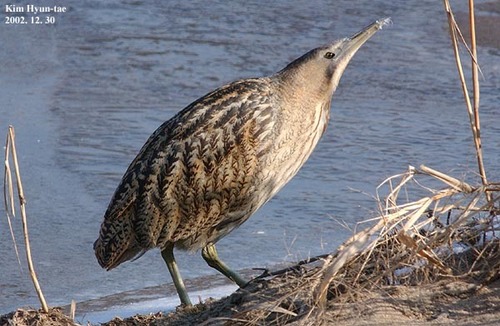
サンカノゴイ (Botaurus stellaris) サンカノゴイ
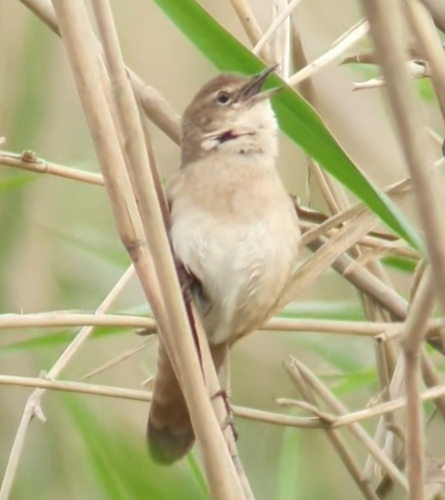
ヌマセンニュウ (Locustella luscinioides) ヌマセンニュウ

メディア

読み込み中…

要点

サンカノゴイとヌマセンニュウを区別する最も信頼できる方法は、構造とサイズによるものです。サンカノゴイは、重いくちばしと広く丸い翼を持つ巨大でがっしりしたヘロンであり、ヌマセンニュウは、細いくちばしと短い翼を持つ小さくスリムな歌鳥です。飛んでいる時や葦の間でも、サンカノゴイの隠れた大胆な縞模様と横縞の羽毛、そして直立して凍りつく習性は特徴的であり、ヌマセンニュウは上面が均一に暗い赤褐色で、はるかに小さいです。幼鳥のサンカノゴイはより淡いですが、全体的な構造と縞模様は同じです。生息地の重複は葦原で発生する可能性がありますが、密な植生の中で短い隠れた視界しか得られない場合に混乱が最も起こりやすいです。

識別のコツ

  1. Size is the fastest check: サンカノゴイは巨大なヘロンで、ヌマセンニュウは小さな歌鳥です。カラスのサイズまたはそれ以上の鳥を見た場合、それはヌマセンニュウではありません。
  2. Bill structure: サンカノゴイは厚くて強力な緑がかった黄色のくちばしを持ち、ヌマセンニュウは細くてスリムな茶色のくちばしを持っています。これは中距離でも明らかです。
  3. Plumage pattern: サンカノゴイ(すべての年齢)は、特に翼と腹部に大胆で暗い縞模様と横縞を持つ淡褐色の羽毛を持っています。ヌマセンニュウは上面が均一に暗い赤褐色で、縞模様や横縞はありません。
  4. Facial markings: サンカノゴイは黄褐色の眉斑と暗い口ひげの縞を示し、ヌマセンニュウはわずかな黄褐色の目の縞と暗い顔を持ち、強い顔のコントラストはありません。
  5. Leg color: サンカノゴイの脚は緑がかっており、黄色のハイライトがあります。ヌマセンニュウの脚は茶色です。
  6. Flight silhouette: サンカノゴイは広く丸い翼と引きずる脚で飛び、首を伸ばして離陸しますが、安定した飛行中には引っ込めます。ヌマセンニュウは短く丸い翼を持ち、引きずる脚のないコンパクトな歌鳥のような飛行をします。
  7. Behavior: サンカノゴイは警戒すると直立して凍りつき、葦に溶け込みます。ヌマセンニュウはこれを決してせず、代わりに素早く動き、葦を登って歌います。
  8. Habitat context: 両者は葦原を利用しますが、サンカノゴイは通常、広範で成熟した群落にいて、開けた場所や疎らな植生にはめったに出ません。ヌマセンニュウは小さなまたは密度の低い葦原、湿地、または繁殖後の湿った野原を利用することができます。
  9. Vocalization: サンカノゴイの鳴き声は深い轟音で、ヌマセンニュウは長い昆虫のようなトリルを出します。トリルを聞いた場合、それはサンカノゴイではありません。
  10. Juvenile confusion: 幼鳥のサンカノゴイは淡いですが、同じ縞模様と横縞のパターンと大きさを保持しています。ヌマセンニュウの幼鳥は、大人と異なる方法で混乱を引き起こすとは説明されていません。
  11. Perched posture: サンカノゴイはがっしりしており、背中を丸めた力強い外見と長い首を持っています。ヌマセンニュウはスリムで直立しており、典型的な歌鳥の姿勢を持っています。
  12. Open ground: サンカノゴイは厳しい冬以外は開けた場所で見られることはまれです。ヌマセンニュウは繁殖中に露出した葦の茎から歌っているのが見られることがあります。
  13. Feeding behavior: サンカノゴイは水の上で獲物を追ったり、じっと立っていることが多いです。ヌマセンニュウは葦や植生から昆虫を素早く飛び回って採取します。
  14. Seasonal timing: 両種は春と夏にヨーロッパに存在しますが、ヌマセンニュウは渡り鳥であり、冬には不在の可能性があります。一方、サンカノゴイは地域によっては定住または冬の訪問者です。
  15. When in doubt: 葦の中で大きく縞模様のあるヘロンのような鳥を見た場合、それはサンカノゴイです。葦の中で小さく、地味な茶色の鳥が飛び回ったり歌っているのを見た場合、それはヌマセンニュウです。

大きさ

サンカノゴイはヌマセンニュウと比較して巨大です。サンカノゴイは約2461.5 gの重さで、長さは69〜81 cm、翼幅は100〜130 cmです。対照的に、ヌマセンニュウは約14 cmの長さで、はるかに軽いです(具体的には指定されていませんが、小さな歌鳥に典型的です)。この違いは非常に極端であり、遠くからのシルエットや部分的な視界でも、どの種が存在するかを即座に示すべきです。

羽色

年齢特有の上翼パターンはどちらの種にも記載されていませんが、全体的な羽毛は非常に特徴的です。すべての年齢のサンカノゴイは、特に翼、背中、腹部に淡褐色、茶色、黒の複雑な縞模様と横縞を持っています。頭頂と後頭部は黒で、淡褐色の先端があります。顔は黄褐色の眉斑と茶色がかった黒の口ひげの縞を示します。幼鳥は成鳥に似ていますが、より淡く、特徴的な模様は少ないです。対照的に、ヌマセンニュウは上面が均一に暗い赤褐色で、わずかな淡褐色の目の縞しかなく、大胆な縞模様や横縞はありません。腹部は白っぽい淡褐色から砂色の茶色で、サンカノゴイの大胆な縞模様は欠けています。ヌマセンニュウは、サンカノゴイの目を引く模様と混乱を引き起こすような季節的または年齢に関連した羽毛の変化は示しません。

行動

サンカノゴイは孤独で秘密主義的で、動きが遅く、しばしばくちばしを空に向けて直立して凍りつき(「ビトーニング」)、葦に溶け込みます。彼らはめったに飛ばず、獲物を追ったり、じっとしていることを好みます。追い立てられると、彼らの飛行は重く、広く丸い翼と引きずる脚を持っています。ヌマセンニュウははるかに活発で敏捷で、葦の中を素早く飛び回り、しばしば茎を登って歌います。歌っている時以外は開けた場所で見られることはまれで、サンカノゴイのように直立して凍りつくことはありません。歌鳥の動きは、サンカノゴイの慎重な歩き方に比べて速く軽やかです。

生息環境

両種は密な植生のある葦原や湿地に見られますが、これが混乱が起こる理由かもしれません。しかし、サンカノゴイは広範で成熟した葦原を必要とし、通常は水の近くにいて、しばしば隠れているか水辺にいます。ヌマセンニュウも葦原を好みますが、小さな群落、湿地、または繁殖後の湿った野原にも見られることがあります。両者は秘密主義的ですが、サンカノゴイは開けた場所や植生の少ない場所で見られる可能性がはるかに低いです。

声

サンカノゴイはその深く轟音の鳴き声で有名で、長距離にわたって響き渡りますが、ここでは詳細には説明されていません。ヌマセンニュウは連続的な昆虫のようなトリルを出し、草むらの歌鳥よりも低音で、持続時間も短いです。二つの種の鳴き声は全く異なり、混同してはいけません。

より良い説明を送る

比較と同じ項目を使ってください。文章はすぐに公開されます。

The most reliable way to separate Eurasian Bittern from Savi's Warbler is by structure and size: the bittern is a massive, thickset heron with a heavy bill and broad, rounded wings, while Savi's Warbler is a small, slender songbird with a fine bill and short wings. Even in flight or among reeds, the bittern’s cryptic, boldly streaked and barred plumage and its habit of freezing upright are distinctive, whereas Savi’s Warbler is uniformly dark reddish-brown above and much smaller. Juvenile bitterns are paler but still share the same overall structure and streaked pattern. Habitat overlap can occur in reedbeds, but confusion is most likely when only brief, obscured views are had in dense vegetation.

  1. Size is the fastest check: Eurasian Bittern is a huge heron, Savi’s Warbler is a tiny songbird. If you see a bird the size of a crow or larger, it cannot be Savi’s Warbler.
  2. Bill structure: Bittern has a thick, powerful, greenish-yellow bill; Savi’s Warbler has a fine, slender brown bill. This is obvious even at moderate range.
  3. Plumage pattern: Bitterns (all ages) have bold, dark streaks and bars on buffy-brown plumage, especially on the wings and underparts. Savi’s Warbler is plain dark reddish-brown above, with no streaks or barring.
  4. Facial markings: Bittern shows a yellowish-buff supercilium and a dark moustachial stripe; Savi’s Warbler has only a faint buff eye-stripe and dark lores, lacking strong facial contrast.
  5. Leg color: Bittern’s legs are greenish with yellow highlights; Savi’s Warbler’s legs are brown.
  6. Flight silhouette: Bittern flies with broad, rounded wings and trailing legs, neck extended at takeoff but retracted in steady flight. Savi’s Warbler has short, rounded wings and a compact, warbler-like flight with no trailing legs.
  7. Behavior: Bitterns freeze upright when alarmed, blending into reeds; Savi’s Warbler never does this, instead moving quickly and climbing reeds to sing.
  8. Habitat context: Both use reedbeds, but bitterns are usually in extensive, mature stands and seldom stray into open or patchy vegetation. Savi’s Warbler can use smaller or less dense reedbeds, fens, or even marshy fields.
  9. Vocalization: Bittern’s call is a deep boom, Savi’s Warbler gives a long, insect-like trill. If you hear a trill, it is not a bittern.
  10. Juvenile confusion: Even juvenile bitterns, though paler, retain the same streaked and barred pattern and large size; Savi’s Warbler juveniles are not described as differing from adults in a way that would create confusion.
  11. Perched posture: Bitterns are thickset, with a hunched, powerful look and long neck; Savi’s Warbler is slim and upright, with a typical warbler jizz.
  12. Open ground: Bitterns are rarely seen in the open except in harsh winter; Savi’s Warbler may be seen singing from exposed reed stems during breeding.
  13. Feeding behavior: Bitterns stalk or stand motionless above water; Savi’s Warbler flits and gleans insects from reeds and vegetation.
  14. Seasonal timing: Both species are present in spring and summer in Europe, but Savi’s Warbler is migratory and may be absent in winter, while bitterns can be resident or winter visitors depending on region.
  15. When in doubt: If you see a large, streaked, heron-like bird in reeds, it is a bittern. If you see a small, plain brown bird flitting or singing in reeds, it is a Savi’s Warbler.

Eurasian Bittern is enormous compared to Savi's Warbler. Bitterns weigh around 2461.5 g [wikidata], with a length of 69–81 cm and a wingspan of 100–130 cm [wikipedia]. In contrast, Savi's Warbler is about 14 cm long [wikipedia] and weighs much less (not specified, but typical for small warblers). The difference is so extreme that even a distant silhouette or a partial view should immediately suggest which species is present.

Age-specific upperwing patterns are not described for either species, but overall plumage is highly distinctive. Eurasian Bitterns of all ages have a complex pattern of buff, brown, and black streaks and bars, especially on the wings, back, and underparts. The crown and nape are black with buff tips, and the face shows a yellowish-buff supercilium and a brownish-black moustachial stripe. Juveniles resemble adults but are paler with less distinct markings. In contrast, Savi's Warbler is uniformly dark reddish-brown above, with only indistinct buff eye-stripes and no bold streaking or barring. The underparts are whitish-buff to sandy brown, lacking the bittern’s bold stripes. Savi’s Warbler shows no seasonal or age-related plumage changes that would create confusion with the bittern’s striking pattern.

Eurasian Bitterns are solitary, secretive, and slow-moving, often freezing upright with bill pointed skyward ('bitterning') to blend into reeds. They seldom fly, preferring to stalk prey or remain motionless. When flushed, their flight is heavy, with broad, rounded wings and trailing legs. Savi’s Warbler is much more active and agile, flitting rapidly through reeds and often climbing stems to sing. It is seldom seen in the open except when singing, and does not freeze upright like a bittern. The warbler’s movements are quick and light compared to the bittern’s deliberate gait.

Both species can be found in reedbeds and marshes with dense vegetation, which is likely why confusion can occur. However, Eurasian Bitterns require extensive, mature reedbeds and are usually close to water, often remaining hidden or at the water’s edge. Savi’s Warbler also prefers reedbeds but can be found in smaller patches, fens, or even marshy fields, especially after breeding. Both are secretive, but the bittern is much less likely to be seen in open or less vegetated areas.

Eurasian Bittern is famous for its deep, booming call, which carries over long distances but is not described in detail here. Savi’s Warbler produces a continuous, insect-like trill, lower-pitched and less prolonged than Grasshopper Warbler, often preceded by ticking notes. The two species’ vocalizations are entirely different and should not be confused.

変更を破棄しますか?

保存していない編集があります。今離れると失われます。

サンカノゴイ · ヌマセンニュウ · 苦手な鳥