

Motmot

Tarabuso vs Salciaiola

Botaurus stellaris contro Locustella luscinioides

Fai un quiz con Tarabuso e Salciaiola
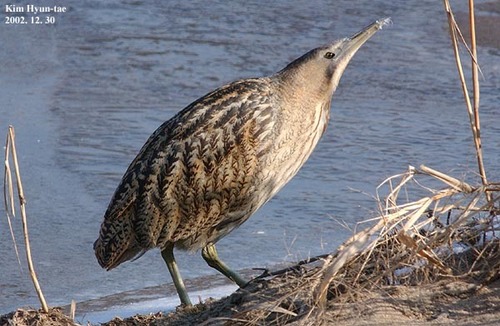
Tarabuso (Botaurus stellaris) Tarabuso
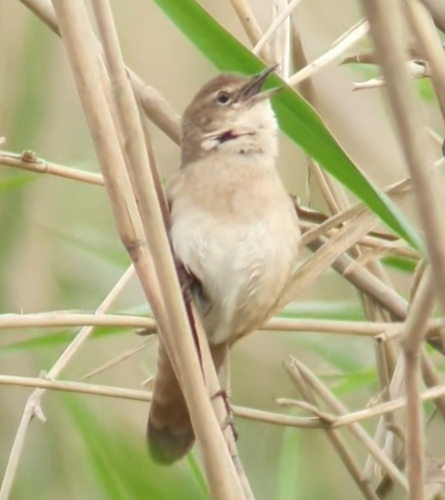
Salciaiola (Locustella luscinioides) Salciaiola

Media

Caricamento…

In breve

The most reliable way to separate Eurasian Bittern from Savi's Warbler is by structure and size: the bittern is a massive, thickset heron with a heavy bill and broad, rounded wings, while Savi's Warbler is a small, slender songbird with a fine bill and short wings. Even in flight or among reeds, the bittern’s cryptic, boldly streaked and barred plumage and its habit of freezing upright are distinctive, whereas Savi’s Warbler is uniformly dark reddish-brown above and much smaller. Juvenile bitterns are paler but still share the same overall structure and streaked pattern. Habitat overlap can occur in reedbeds, but confusion is most likely when only brief, obscured views are had in dense vegetation.

Consigli di identificazione

  1. Size is the fastest check: Eurasian Bittern is a huge heron, Savi’s Warbler is a tiny songbird. If you see a bird the size of a crow or larger, it cannot be Savi’s Warbler.
  2. Bill structure: Bittern has a thick, powerful, greenish-yellow bill; Savi’s Warbler has a fine, slender brown bill. This is obvious even at moderate range.
  3. Plumage pattern: Bitterns (all ages) have bold, dark streaks and bars on buffy-brown plumage, especially on the wings and underparts. Savi’s Warbler is plain dark reddish-brown above, with no streaks or barring.
  4. Facial markings: Bittern shows a yellowish-buff supercilium and a dark moustachial stripe; Savi’s Warbler has only a faint buff eye-stripe and dark lores, lacking strong facial contrast.
  5. Leg color: Bittern’s legs are greenish with yellow highlights; Savi’s Warbler’s legs are brown.
  6. Flight silhouette: Bittern flies with broad, rounded wings and trailing legs, neck extended at takeoff but retracted in steady flight. Savi’s Warbler has short, rounded wings and a compact, warbler-like flight with no trailing legs.
  7. Behavior: Bitterns freeze upright when alarmed, blending into reeds; Savi’s Warbler never does this, instead moving quickly and climbing reeds to sing.
  8. Habitat context: Both use reedbeds, but bitterns are usually in extensive, mature stands and seldom stray into open or patchy vegetation. Savi’s Warbler can use smaller or less dense reedbeds, fens, or even marshy fields.
  9. Vocalization: Bittern’s call is a deep boom, Savi’s Warbler gives a long, insect-like trill. If you hear a trill, it is not a bittern.
  10. Juvenile confusion: Even juvenile bitterns, though paler, retain the same streaked and barred pattern and large size; Savi’s Warbler juveniles are not described as differing from adults in a way that would create confusion.
  11. Perched posture: Bitterns are thickset, with a hunched, powerful look and long neck; Savi’s Warbler is slim and upright, with a typical warbler jizz.
  12. Open ground: Bitterns are rarely seen in the open except in harsh winter; Savi’s Warbler may be seen singing from exposed reed stems during breeding.
  13. Feeding behavior: Bitterns stalk or stand motionless above water; Savi’s Warbler flits and gleans insects from reeds and vegetation.
  14. Seasonal timing: Both species are present in spring and summer in Europe, but Savi’s Warbler is migratory and may be absent in winter, while bitterns can be resident or winter visitors depending on region.
  15. When in doubt: If you see a large, streaked, heron-like bird in reeds, it is a bittern. If you see a small, plain brown bird flitting or singing in reeds, it is a Savi’s Warbler.

Taglia

Eurasian Bittern is enormous compared to Savi's Warbler. Bitterns weigh around 2461.5 g [wikidata], with a length of 69–81 cm and a wingspan of 100–130 cm [wikipedia]. In contrast, Savi's Warbler is about 14 cm long [wikipedia] and weighs much less (not specified, but typical for small warblers). The difference is so extreme that even a distant silhouette or a partial view should immediately suggest which species is present.

Piumaggio

Age-specific upperwing patterns are not described for either species, but overall plumage is highly distinctive. Eurasian Bitterns of all ages have a complex pattern of buff, brown, and black streaks and bars, especially on the wings, back, and underparts. The crown and nape are black with buff tips, and the face shows a yellowish-buff supercilium and a brownish-black moustachial stripe. Juveniles resemble adults but are paler with less distinct markings. In contrast, Savi's Warbler is uniformly dark reddish-brown above, with only indistinct buff eye-stripes and no bold streaking or barring. The underparts are whitish-buff to sandy brown, lacking the bittern’s bold stripes. Savi’s Warbler shows no seasonal or age-related plumage changes that would create confusion with the bittern’s striking pattern.

Comportamento

Eurasian Bitterns are solitary, secretive, and slow-moving, often freezing upright with bill pointed skyward ('bitterning') to blend into reeds. They seldom fly, preferring to stalk prey or remain motionless. When flushed, their flight is heavy, with broad, rounded wings and trailing legs. Savi’s Warbler is much more active and agile, flitting rapidly through reeds and often climbing stems to sing. It is seldom seen in the open except when singing, and does not freeze upright like a bittern. The warbler’s movements are quick and light compared to the bittern’s deliberate gait.

Habitat

Both species can be found in reedbeds and marshes with dense vegetation, which is likely why confusion can occur. However, Eurasian Bitterns require extensive, mature reedbeds and are usually close to water, often remaining hidden or at the water’s edge. Savi’s Warbler also prefers reedbeds but can be found in smaller patches, fens, or even marshy fields, especially after breeding. Both are secretive, but the bittern is much less likely to be seen in open or less vegetated areas.

Voce

Eurasian Bittern is famous for its deep, booming call, which carries over long distances but is not described in detail here. Savi’s Warbler produces a continuous, insect-like trill, lower-pitched and less prolonged than Grasshopper Warbler, often preceded by ticking notes. The two species’ vocalizations are entirely different and should not be confused.

Invia una descrizione migliore

Usa le stesse sezioni del confronto. Il testo viene pubblicato subito.

The most reliable way to separate Eurasian Bittern from Savi's Warbler is by structure and size: the bittern is a massive, thickset heron with a heavy bill and broad, rounded wings, while Savi's Warbler is a small, slender songbird with a fine bill and short wings. Even in flight or among reeds, the bittern’s cryptic, boldly streaked and barred plumage and its habit of freezing upright are distinctive, whereas Savi’s Warbler is uniformly dark reddish-brown above and much smaller. Juvenile bitterns are paler but still share the same overall structure and streaked pattern. Habitat overlap can occur in reedbeds, but confusion is most likely when only brief, obscured views are had in dense vegetation.

  1. Size is the fastest check: Eurasian Bittern is a huge heron, Savi’s Warbler is a tiny songbird. If you see a bird the size of a crow or larger, it cannot be Savi’s Warbler.
  2. Bill structure: Bittern has a thick, powerful, greenish-yellow bill; Savi’s Warbler has a fine, slender brown bill. This is obvious even at moderate range.
  3. Plumage pattern: Bitterns (all ages) have bold, dark streaks and bars on buffy-brown plumage, especially on the wings and underparts. Savi’s Warbler is plain dark reddish-brown above, with no streaks or barring.
  4. Facial markings: Bittern shows a yellowish-buff supercilium and a dark moustachial stripe; Savi’s Warbler has only a faint buff eye-stripe and dark lores, lacking strong facial contrast.
  5. Leg color: Bittern’s legs are greenish with yellow highlights; Savi’s Warbler’s legs are brown.
  6. Flight silhouette: Bittern flies with broad, rounded wings and trailing legs, neck extended at takeoff but retracted in steady flight. Savi’s Warbler has short, rounded wings and a compact, warbler-like flight with no trailing legs.
  7. Behavior: Bitterns freeze upright when alarmed, blending into reeds; Savi’s Warbler never does this, instead moving quickly and climbing reeds to sing.
  8. Habitat context: Both use reedbeds, but bitterns are usually in extensive, mature stands and seldom stray into open or patchy vegetation. Savi’s Warbler can use smaller or less dense reedbeds, fens, or even marshy fields.
  9. Vocalization: Bittern’s call is a deep boom, Savi’s Warbler gives a long, insect-like trill. If you hear a trill, it is not a bittern.
  10. Juvenile confusion: Even juvenile bitterns, though paler, retain the same streaked and barred pattern and large size; Savi’s Warbler juveniles are not described as differing from adults in a way that would create confusion.
  11. Perched posture: Bitterns are thickset, with a hunched, powerful look and long neck; Savi’s Warbler is slim and upright, with a typical warbler jizz.
  12. Open ground: Bitterns are rarely seen in the open except in harsh winter; Savi’s Warbler may be seen singing from exposed reed stems during breeding.
  13. Feeding behavior: Bitterns stalk or stand motionless above water; Savi’s Warbler flits and gleans insects from reeds and vegetation.
  14. Seasonal timing: Both species are present in spring and summer in Europe, but Savi’s Warbler is migratory and may be absent in winter, while bitterns can be resident or winter visitors depending on region.
  15. When in doubt: If you see a large, streaked, heron-like bird in reeds, it is a bittern. If you see a small, plain brown bird flitting or singing in reeds, it is a Savi’s Warbler.

Eurasian Bittern is enormous compared to Savi's Warbler. Bitterns weigh around 2461.5 g [wikidata], with a length of 69–81 cm and a wingspan of 100–130 cm [wikipedia]. In contrast, Savi's Warbler is about 14 cm long [wikipedia] and weighs much less (not specified, but typical for small warblers). The difference is so extreme that even a distant silhouette or a partial view should immediately suggest which species is present.

Age-specific upperwing patterns are not described for either species, but overall plumage is highly distinctive. Eurasian Bitterns of all ages have a complex pattern of buff, brown, and black streaks and bars, especially on the wings, back, and underparts. The crown and nape are black with buff tips, and the face shows a yellowish-buff supercilium and a brownish-black moustachial stripe. Juveniles resemble adults but are paler with less distinct markings. In contrast, Savi's Warbler is uniformly dark reddish-brown above, with only indistinct buff eye-stripes and no bold streaking or barring. The underparts are whitish-buff to sandy brown, lacking the bittern’s bold stripes. Savi’s Warbler shows no seasonal or age-related plumage changes that would create confusion with the bittern’s striking pattern.

Eurasian Bitterns are solitary, secretive, and slow-moving, often freezing upright with bill pointed skyward ('bitterning') to blend into reeds. They seldom fly, preferring to stalk prey or remain motionless. When flushed, their flight is heavy, with broad, rounded wings and trailing legs. Savi’s Warbler is much more active and agile, flitting rapidly through reeds and often climbing stems to sing. It is seldom seen in the open except when singing, and does not freeze upright like a bittern. The warbler’s movements are quick and light compared to the bittern’s deliberate gait.

Both species can be found in reedbeds and marshes with dense vegetation, which is likely why confusion can occur. However, Eurasian Bitterns require extensive, mature reedbeds and are usually close to water, often remaining hidden or at the water’s edge. Savi’s Warbler also prefers reedbeds but can be found in smaller patches, fens, or even marshy fields, especially after breeding. Both are secretive, but the bittern is much less likely to be seen in open or less vegetated areas.

Eurasian Bittern is famous for its deep, booming call, which carries over long distances but is not described in detail here. Savi’s Warbler produces a continuous, insect-like trill, lower-pitched and less prolonged than Grasshopper Warbler, often preceded by ticking notes. The two species’ vocalizations are entirely different and should not be confused.

Scartare le modifiche?

Hai modifiche non salvate. Se esci ora, andranno perse.

Tarabuso · Salciaiola · I miei uccelli difficili