

Motmot

エレオノラハヤブサ 対 ハヤブサ

Falco eleonorae 対 Falco peregrinus

エレオノラハヤブサとハヤブサのクイズ
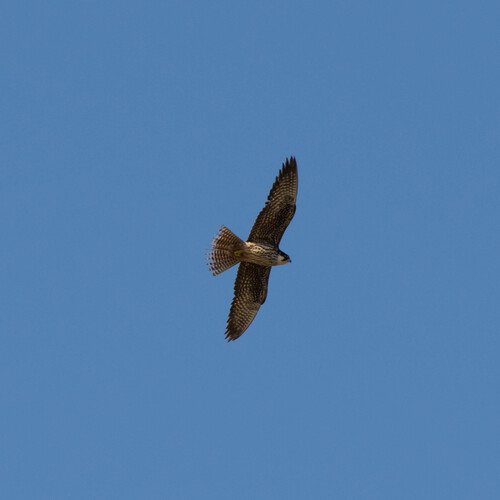
エレオノラハヤブサ (Falco eleonorae) エレオノラハヤブサ
ハヤブサ (Falco peregrinus) ハヤブサ

メディア

読み込み中…

要点

幼鳥と明色型のエレオノラハヤブサは、特に飛行中にハヤブサと混同されることがありますが、エレオノラハヤブサは常に黒い下翼の覆羽と淡い飛行羽の間に際立ったコントラストを示し、ハヤブサは決してそうではありません。 エレオノラハヤブサはスリムで、翼が長く、尾も長く、2つの異なる色型(すすけた暗色と淡いバフ/明色)を持っています。ハヤブサはより大きく、青灰色の背中、白い横縞のある腹部、黒いフードを持っています。構造と翼の形は、特に遠くからや光が悪いときの識別において羽毛と同じくらい重要です。両種は速く、空中のハンターですが、エレオノラハヤブサは移動中の小鳥を捕まえるためにより特化しており、しばしば海岸の崖を巡回しているのが見られますが、ハヤブサはより広範囲で多様です。声はフィールドでの信頼できる識別要因ではありません。

識別のコツ

  1. 飛行中の下翼のパターン(暗色型エレオノラハヤブサを除くすべての年齢): エレオノラハヤブサ(明色型と幼鳥)は、黒い下翼の覆羽と淡い飛行羽の間に強いコントラストを示します—この大胆な二色効果を探してください。ハヤブサは決してこれを示しません。
  2. 暗色型エレオノラハヤブサ: 全体が均一にすすけた茶色で、下部と下翼を含み、ハヤブサとは異なります(ハヤブサは全体がすすけていることはありません)。注意:遠くから見ると、暗色型は影のようなハヤブサに見えることがありますが、横縞のある腹部と黒いフードが欠けています。
  3. ハヤブサの成鳥の羽毛: 青灰色の背中、黒いフード、きれいに横縞のある白い腹部。色型はありません。幼鳥は上がより茶色く、下が縞模様ですが、エレオノラハヤブサの下翼のコントラストはまだ欠けています。
  4. 構造と印象: エレオノラハヤブサは明らかにスリムで、長く狭い翼と長い尾を持ち、より浮遊感のある、ハヤブサのような飛行をします。ハヤブサはより大きく、広い翼と短い尾を持ち、飛行中により力強くコンパクトに見えます。
  5. 尾の形: エレオノラハヤブサの尾は長く、より尖っており、特に止まっているときや滑空しているときに明らかです。ハヤブサの尾は短く、より四角いです。
  6. くちばしと頭部: ハヤブサはより頑丈なくちばしと、目立つ黒いフードを持つ大きくてブロック状の頭を持っています。エレオノラハヤブサの頭は小さく、ブロック状ではなく、強いフード効果はありません。
  7. 止まっている鳥: エレオノラハヤブサはスリムで長い翼を持ち、翼先が尾先に達するかそれを超えることがよくあります。ハヤブサはよりコンパクトに見え、尾に対して翼が短いです。
  8. 色型: エレオノラハヤブサだけが暗色型と明色型を示し、ハヤブサは決してそうではありません。尖った翼を持つすすけた茶色のハヤブサを見たら、エレオノラハヤブサを考慮してください。
  9. 生息地と文脈: エレオノラハヤブサは繁殖中はほぼ常に海岸や地中海の島にいます。ハヤブサは、遠く内陸や都市部を含む、はるかに広範囲の生息地で見られます。
  10. 季節: エレオノラハヤブサは晩夏/初秋に繁殖し、鳥の移動のピークと一致します。ハヤブサは早く繁殖し、多くの地域で年間を通じて存在します。
  11. 行動: エレオノラハヤブサは、安定した水平な翼の打撃で移動者を探しながら崖に沿って巡航することがよくあります。ハヤブサは高く舞い上がったり、劇的な急降下を行ったりするのがより一般的です。
  12. 餌: エレオノラハヤブサは生きた獲物を捕まえ、時には後で食べるために監禁することで知られています。ハヤブサは通常、空中で獲物を直接殺します。
  13. 声: 両種は「ケック・ケック・ケック」と呼ぶが、声に頼って識別しないでください。
  14. 性的二形性: ハヤブサの雌は雄よりもはるかに大きいですが、これは一緒にペアを見る場合にのみ役立ちます。
  15. 落とし穴: 幼鳥のハヤブサは明色型のエレオノラハヤブサと混同されることがありますが、鋭い下翼のコントラストが欠けています。暗色型のエレオノラハヤブサは影のようなハヤブサに見えることがありますが、常に全体がすすけており、横縞やフードはありません。

大きさ

エレオノラハヤブサは中型のハヤブサで、体重は約334g [wikidata]であり、大きなチゴハヤブサまたは小さくスリムなハヤブサの形をしています。ハヤブサは全体的に大きくて頑丈です(直接の質量は示されていませんが、「大きく、カラスサイズ」と説明されています [wikipedia])、特に雌ではより力強い体格を持っています。エレオノラハヤブサは明らかにスリムで、相対的に長い翼と尾を持ち、より優雅で浮遊感のある印象を与えます。

羽色

幼鳥と明色型のエレオノラハヤブサ(および若い鳥)は、暗い下翼の覆羽と暗い翼先/覆羽との間に強いコントラストを示す淡い下部を持っています—このコントラストは飛行中に見られ、すべての非暗色型エレオノラハヤブサの重要な特徴です。暗色型エレオノラハヤブサは均一にすすけた茶色で、黒い下翼の覆羽を持ち、明色型の淡い下部が欠けています。ハヤブサの成鳥は青灰色の背中、白い横縞のある腹部、黒い頭/フードを持ち、色型の変異はありません。幼鳥のハヤブサは上がより茶色く、下が縞模様ですが、エレオノラハヤブサの強い下翼のコントラストはまだ欠けています。すべての年齢において、ハヤブサはより均一な下翼を示し、黒い覆羽/淡い飛行羽のコントラストはありません。両種は尖った翼と長い尾を持っていますが、エレオノラハヤブサは全体的に翼が長く、よりスリムです。

行動

両種は非常に空中性が高く、空中で鳥を狩りますが、エレオノラハヤブサは小さな渡り鳥を捕まえるためにより特化しています。しばしば安定した浮遊感のある翼の打撃で海岸の崖を巡回しているのが見られます。生きた獲物を捕まえ、時には後で食べるために監禁することがユニークです。ハヤブサはより多様で、広範囲の鳥や一部の哺乳類を狩り、高速の急降下を使用し、力強く直接的な飛行を行います。ハヤブサは開けた風景、都市、湿地で狩りをしているのがより一般的ですが、エレオノラハヤブサは繁殖中は海岸や島の生息地に密接に結びついています。

生息環境

エレオノラハヤブサはほぼ完全に地中海の島や海岸の崖で繁殖し、特にギリシャや近隣地域で見られ、移動中を除いて内陸ではめったに見られません。ハヤブサはコスモポリタンで、崖、都市、湿地、ツンドラ、開けた土地を含む広範囲の開けた生息地で見られます。繁殖シーズン中に地中海から遠く離れている場合や海岸の崖の近くにいない場合、エレオノラハヤブサは見られない可能性が高いです。

声

両種は典型的なハヤブサの「ケック・ケック・ケック」という呼び声を持ち、声は両者の間の信頼できるフィールドの識別要因ではありません。

より良い説明を送る

比較と同じ項目を使ってください。文章はすぐに公開されます。

Juvenile and light-morph Eleonora's Falcons can be confused with Peregrine Falcons, especially in flight, but Eleonora's always shows a striking contrast between black underwing coverts and paler flight feathers, while Peregrine never does. Eleonora's is slimmer, longer-winged, and longer-tailed, with two distinct color morphs (sooty dark and pale buff/light). Peregrine is bulkier, with a blue-grey back, barred white underparts, and a black hood. Structure and wing shape are as important as plumage for separation, especially at a distance or in poor light. Both species are fast, aerial hunters, but Eleonora's is more specialized for catching small birds on migration, often seen cruising coastal cliffs, while Peregrine is more widespread and versatile. Voice is not a reliable separator in the field.

  1. Underwing pattern in flight (all ages except dark-morph Eleonora's): Eleonora's Falcon (light morph and juveniles) shows a strong contrast between black underwing coverts and paler flight feathers—look for this bold two-tone effect, which Peregrine never shows.
  2. Dark morph Eleonora's: Uniformly sooty brown overall, including underparts and underwing, unlike any Peregrine (which is never sooty all over). Beware: at distance, dark morph can look like a shadowy Peregrine, but lacks the barred underparts and black hood.
  3. Peregrine Falcon adult plumage: Blue-grey back, black hood, and cleanly barred white underparts. No color morphs. Juveniles are browner above and streaked below, but still lack the underwing contrast of Eleonora's.
  4. Structure and jizz: Eleonora's is noticeably slimmer, with longer, narrower wings and a longer tail, giving it a more buoyant, hobby-like flight. Peregrine is bulkier, with broader wings and a shorter tail, and appears more powerful and compact in flight.
  5. Tail shape: Eleonora's tail is longer and more tapered, especially obvious when perched or gliding. Peregrine's tail is shorter and more squared-off.
  6. Bill and head: Peregrine has a more robust bill and a larger, blockier head with a prominent black hood. Eleonora's head is smaller and less blocky, with no strong hood effect.
  7. Perched birds: Eleonora's looks slim and long-winged, with wingtips often reaching or exceeding the tail tip. Peregrine appears more compact, with shorter wings relative to tail.
  8. Color morphs: Only Eleonora's shows dark and light morphs; Peregrine never does. If you see a sooty-brown falcon with pointed wings, consider Eleonora's.
  9. Habitat and context: Eleonora's is almost always coastal or on Mediterranean islands during breeding. Peregrine can be found in a much wider range of habitats, including far inland and urban areas.
  10. Season: Eleonora's breeds in late summer/early autumn, coinciding with peak bird migration. Peregrine breeds earlier and is present year-round in many regions.
  11. Behavior: Eleonora's often cruises along cliffs with steady, level wingbeats, scanning for migrants. Peregrine is more likely to be seen soaring high or performing dramatic stoops.
  12. Feeding: Eleonora's is known for catching and sometimes imprisoning live prey for later. Peregrine typically kills prey outright in mid-air.
  13. Voice: Both species give a 'kek-kek-kek' call; do not rely on voice for separation.
  14. Sexual dimorphism: Peregrine females are much larger than males, but this is only useful if you see a pair together.
  15. Pitfalls: Juvenile Peregrines can be confused with light-morph Eleonora's, but lack the sharp underwing contrast. Dark-morph Eleonora's can look like a shadowy Peregrine, but is always sooty all over, never barred or hooded.

Eleonora's Falcon is a medium-sized falcon, with a body mass around 334 g [wikidata], and is shaped like a large Eurasian hobby or a small, slender Peregrine. Peregrine Falcon is larger and bulkier overall (no direct mass given, but described as 'large, crow-sized' [wikipedia]), with a more powerful build, especially in females. Eleonora's is distinctly slimmer, with proportionally longer wings and tail, giving it a more elegant, buoyant jizz in flight compared to the more compact, muscular Peregrine.

Juvenile and light-morph Eleonora's Falcons (and young birds) show pale underparts with a strong contrast to the dark underwing coverts and darker wingtips/coverts—this contrast is visible in flight and is a key mark for all non-dark-morph Eleonora's. Dark-morph Eleonora's is uniformly sooty brown, with black underwing coverts, lacking the pale underparts of the light morph. Peregrine Falcon adults have a blue-grey back, barred white underparts, and a black head/hood, with no morph variation. Juvenile Peregrines are browner above and streaked below, but still lack the strong underwing contrast of Eleonora's. In all ages, Peregrine shows a more uniform underwing, without the black coverts/pale flight feather contrast. Both species have pointed wings and long tails, but Eleonora's is longer-winged and more slender overall.

Both species are highly aerial and hunt birds on the wing, but Eleonora's Falcon is more specialized for catching small migratory birds, often seen patrolling coastal cliffs with steady, buoyant wingbeats. It is unique in sometimes imprisoning live prey for later feeding. Peregrine Falcon is more versatile, hunting a wide range of birds and some mammals, often using high-speed stoops from altitude and powerful, direct flight. Peregrine is more likely to be seen hunting over open landscapes, cities, or wetlands, while Eleonora's is closely tied to coastal and island habitats during breeding.

Eleonora's Falcon breeds almost exclusively on Mediterranean islands and coastal cliffs, especially in Greece and nearby regions, and is rarely seen inland except on migration. Peregrine Falcon is cosmopolitan, found in a wide range of open habitats including cliffs, cities, wetlands, tundra, and open country. If you are far from the Mediterranean or not near a coastal cliff during the breeding season, Eleonora's is unlikely.

Both species have a typical falcon 'kek-kek-kek' call, and voice is not a reliable field separator between the two.

変更を破棄しますか?

保存していない編集があります。今離れると失われます。

エレオノラハヤブサ · ハヤブサ · 苦手な鳥