

Motmot

エジプトヨタカ 対 シロアゴヨタカ

Caprimulgus aegyptius 対 Caprimulgus affinis

エジプトヨタカとシロアゴヨタカのクイズ
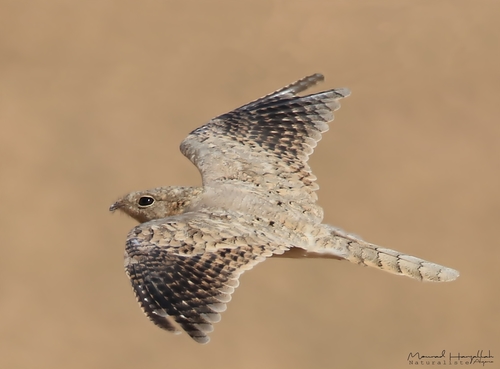
エジプトヨタカ (Caprimulgus aegyptius) エジプトヨタカ
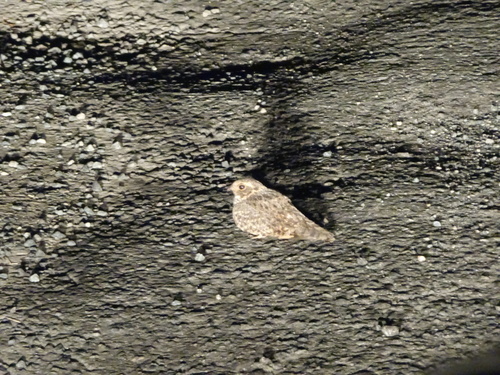
シロアゴヨタカ (Caprimulgus affinis) シロアゴヨタカ

メディア

読み込み中…

要点

エジプトヨタカとシロアゴヨタカの最も信頼できるフィールドマークは全体の羽色のトーンです:エジプトヨタカははるかに淡い色合いで、砂色または白っぽい腹部と、砂色で軽く模様のある上面を持ち、シロアゴヨタカは明らかに暗く、より虫食い模様の灰褐色です。飛行中、成鳥のオスのシロアゴヨタカは喉、尾、翼に白い斑点を示し、これはエジプトヨタカには存在しないか、はるかに目立たないです。シロアゴヨタカの幼鳥と雌はこれらの白い斑点を欠き、エジプトヨタカと混同されることがありますが、後者は常により淡く、より均一に見えます。構造も役立ちます:エジプトヨタカはそのサイズに対して比較的長い翼と長い尾を持ち、より優雅な印象を与えます。両種は地面では隠蔽色ですが、生息地と範囲はめったに重なりません。声は非常に異なり、エジプトヨタカは機械的で反復的な鳴き声を出し、シロアゴヨタカは大きく、轟音のような夜の歌で知られています。

識別のコツ

  1. Overall color tone: エジプトヨタカははるかに淡い色合いで、砂色または白っぽい腹部と砂色の上面を持ち、シロアゴヨタカはより暗く、虫食い模様の灰褐色です。これはすべての年齢と性別で最も信頼できるマークです。
  2. White patches (adult males): オスのシロアゴヨタカは喉、尾、翼に大胆な白い斑点を示します;エジプトヨタカのオスは小さな白い翼の斑点を持つことがありますが、シロアゴの広範な白は欠けています。これは良好な光や飛行の視界での成鳥のオスにとって診断的です。
  3. Female and juvenile confusion: 雌と未熟なシロアゴヨタカは白い尾の斑点を欠き、赤みがかった色合いを持っていますが、常にエジプトヨタカよりも暗く、より斑点模様です。エジプトヨタカはすべての羽色で淡く砂色を保ちます。
  4. Underpart color: エジプトヨタカは砂色または白っぽい腹部を持ち、シロアゴヨタカのより暗く、より斑点模様の腹部と対照的です。止まっている鳥や下から見える鳥に役立ちます。
  5. Tail and wing structure: エジプトヨタカはそのサイズに対して比較的長い翼と長い尾を持ち、特に飛行中により優雅で伸びた印象を与えます。シロアゴヨタカはよりコンパクトまたは頑丈に見えることがあります。
  6. Facial pattern: 両者は隠蔽色の顔を持っていますが、シロアゴヨタカのオスは白い喉の斑点を持ち、エジプトヨタカの顔はより均一で淡いです。
  7. Flight style: エジプトヨタカは強く、意図的な翼の拍動で飛び、滑空し、蛾のようで静かに見えます。シロアゴヨタカの飛行も敏捷ですが、特に蛾のようだとは説明されていません。
  8. Habitat context: エジプトヨタカは開けた砂漠と砂地の草原に生息し、シロアゴヨタカは開けた岩の地面、草原、または都市の屋上を好みます。真の砂漠で見られた場合、エジプトがより可能性が高く、都市や岩の草原ではシロアゴが期待されます。
  9. Geographic range: エジプトヨタカは北アフリカと中東に生息し、シロアゴヨタカは南アジアと東南アジアに見られます。範囲外の記録は稀で、注意深く調査されるべきです。
  10. Vocalization: エジプトヨタカの鳴き声は反復的で機械的な「クルー・クルー・クルー…」であり、シロアゴヨタカは大きく、轟音のような夜の歌を出します。もし聞かれた場合、これは診断的です。
  11. Camouflage on ground: エジプトヨタカは淡い砂色の土壌と混ざり合います;シロアゴヨタカはより暗い岩の地面でより良くカモフラージュされます。
  12. Urban adaptation: シロアゴヨタカは平らな都市の屋上に巣を作ることがあり、これはエジプトヨタカには記録されていません。
  13. Distraction display: シロアゴヨタカの親は巣から捕食者を引き離すために怪我を装うことがあります;これはエジプトヨタカには特に言及されていません。
  14. Bill and gape: 両者は広い口とリクタルブラシを持っていますが、これは分離のための信頼できるフィールドマークではありません。
  15. Size: シロアゴヨタカはわずかに大きく、よりがっしりしていることがありますが、重なりがかなりあり、フィールドでの診断にはなりません。

大きさ

シロアゴヨタカは平均してわずかに大きく、翼幅は最大64 cm、体重は54–110 g(平均82.5 g)[wikidata]で、エジプトヨタカの25 cmの長さと55 cmの翼幅 [wikipedia] と比較されます。エジプトヨタカは中小型で、そのサイズに対して比較的長い翼と長い尾を持つと説明されており、シロアゴヨタカは亜種によってサイズが小型から中型大に変化します。フィールドでは、違いは微妙で、分離のために常に信頼できるわけではありませんが、シロアゴヨタカは特に近距離で少しがっしりして見えることがあります。

羽色

行動

両種は夜行性で薄明薄暮性であり、主に飛んでいる昆虫(特に蛾)を地面や低い止まり木から飛び出して捕食します。エジプトヨタカは強く、意図的な翼の拍動で飛び、滑空し、蛾のようで静かな飛行をすることが説明されています。シロアゴヨタカも飛び出して狩りをしますが、特に都市化した個体群では轟音のような夜の呼び声で知られています。両者は巣を作らずに地面に巣を作り、卵や雛を保護するためにカモフラージュと気をそらすディスプレイに依存しています。シロアゴヨタカの親は巣から捕食者を引き離すために怪我を装うことが知られていますが、これはエジプトヨタカには特に言及されていません。

生息環境

エジプトヨタカは開けた砂漠、砂地の草原、そしてまばらな植生の乾燥した田舎に生息し、通常は北アフリカ、中東、そして南西アジアの一部に見られます。砂地を好み、水の近くや散在する低木のある地域によく見られます。対照的に、シロアゴヨタカは南アジアと東南アジアに生息し、岩の土壌、草原、または一部の地域では都市の屋上のような開けた場所を好みます。彼らの範囲は稀な迷子として重なることはありますが、生息地の好みは明確に異なります:エジプトヨタカは砂漠の専門家であり、シロアゴヨタカはより一般的で適応力があり、都市環境も含まれます。

声

エジプトヨタカは反復的で機械的な「クルー・クルー・クルー…」という鳴き声を出し、鳥が頭を回すと上昇し下降します。これはシロアゴヨタカとはかなり異なり、シロアゴヨタカは大きく、轟音のような夜の呼び声で知られ、最大90デシベルに達することがあり、都市部ではしばしば迷惑と見なされます。シロアゴヨタカの歌ははるかに力強く、遠くまで届きますが、エジプトヨタカはより柔らかく、機械的です。

より良い説明を送る

比較と同じ項目を使ってください。文章はすぐに公開されます。

The most reliable field mark between Egyptian Nightjar and Savanna Nightjar is overall plumage tone: Egyptian Nightjar is much paler, with sandy or whitish underparts and a sand-colored, lightly marked upper side, while Savanna Nightjar is distinctly darker and more vermiculated grey-brown. In flight, adult male Savanna Nightjars show white patches on the throat, tail, and wings, which are absent or much less obvious in Egyptian Nightjar. Juveniles and females of Savanna Nightjar lack these white patches and can be confused with Egyptian, but the latter always appears paler and more uniform. Structure also helps: Egyptian Nightjar is relatively longer-winged and longer-tailed for its size, giving it a more elegant jizz. Both species are cryptic on the ground, but habitat and range rarely overlap. Voice is very different, with Egyptian Nightjar giving a mechanical, repetitive call, while Savanna Nightjar is known for its loud, booming nocturnal song.

  1. Overall color tone: Egyptian Nightjar is much paler, with sandy or whitish underparts and sand-colored upperparts, while Savanna Nightjar is darker, more vermiculated grey-brown. This is the most reliable mark in all ages and sexes.
  2. White patches (adult males): Male Savanna Nightjars show bold white patches on the throat, tail, and wings; Egyptian Nightjar males may have tiny white wing spots but lack the extensive white of Savanna. This is diagnostic for adult males in good light or flight views.
  3. Female and juvenile confusion: Female and immature Savanna Nightjars lack white tail patches and have a reddish tint, but are always darker and more mottled than Egyptian Nightjar. Egyptian Nightjar remains pale and sandy in all plumages.
  4. Underpart color: Egyptian Nightjar has sandy or whitish underparts, contrasting with the darker, more mottled underparts of Savanna Nightjar. Useful in perched birds or birds seen from below.
  5. Tail and wing structure: Egyptian Nightjar is relatively longer-winged and longer-tailed for its size, giving a more elegant, stretched jizz, especially in flight. Savanna Nightjar may appear more compact or robust.
  6. Facial pattern: Both have cryptic faces, but Savanna Nightjar males have a white throat patch, while Egyptian Nightjar's face is more uniform and pale.
  7. Flight style: Egyptian Nightjar flies with strong, deliberate wingbeats and glides, appearing moth-like and silent. Savanna Nightjar's flight is also agile, but not described as particularly moth-like.
  8. Habitat context: Egyptian Nightjar is found in open desert and sandy steppe, while Savanna Nightjar prefers open rocky ground, grassland, or urban rooftops. If seen in true desert, Egyptian is more likely; in urban or rocky grassland, Savanna is expected.
  9. Geographic range: Egyptian Nightjar is native to North Africa and the Middle East; Savanna Nightjar is found in South and Southeast Asia. Out-of-range records are rare and should be scrutinized.
  10. Vocalization: Egyptian Nightjar's call is a repetitive, mechanical "kroo-kroo-kroo…"; Savanna Nightjar gives a loud, booming nocturnal song. If heard, this is diagnostic.
  11. Camouflage on ground: Egyptian Nightjar blends with pale sandy soils; Savanna Nightjar is better camouflaged on darker, rocky ground.
  12. Urban adaptation: Savanna Nightjar may be found nesting on flat urban rooftops, a behavior not recorded for Egyptian Nightjar.
  13. Distraction display: Savanna Nightjar parents may feign injury to distract predators from the nest; this is not specifically noted for Egyptian Nightjar.
  14. Bill and gape: Both have wide gapes and rictal bristles, but this is not a reliable field mark for separation.
  15. Size: Savanna Nightjar can be slightly larger and bulkier, but overlap is considerable and not diagnostic in the field.

Savanna Nightjar is slightly larger on average, with a wingspan up to 64 cm and body mass ranging from 54–110 g (mean 82.5 g) [wikidata], compared to Egyptian Nightjar's 25 cm length and 55 cm wingspan [wikipedia]. Egyptian Nightjar is described as medium-small and relatively long-winged and long-tailed for its size, while Savanna Nightjar varies more in size depending on subspecies, from small to medium-large. In the field, the difference is subtle and not always reliable for separation, but Savanna Nightjar may appear a bit bulkier, especially at close range.

  • Juvenile/Immature birds: Both species' juveniles are cryptic, but Savanna Nightjar immatures resemble adult females, lacking white patches and showing mottled, darker coloration. Egyptian Nightjar juveniles are not described in detail, but the species is always paler overall, with sandy or whitish underparts and less contrast.
  • Adult males: Savanna Nightjar males have distinct white patches on the throat, tail, and wings, which are absent or much reduced in Egyptian Nightjar. Egyptian Nightjar males may show tiny white wing spots, but these are much less conspicuous.
  • Adult females: Female Savanna Nightjars lack white tail patches, have only subtle throat patches, and show a reddish tint to the feathers; Egyptian Nightjar females remain paler and more uniform, lacking any reddish tones.
  • General coloration: Egyptian Nightjar is always paler, sand-colored above, with buff and brown barring and streaking, and sandy or whitish underparts. Savanna Nightjar is more vermiculated, with a grey-brown, heavily mottled appearance, blending more with darker soils or rocks. Both are cryptic, but Egyptian Nightjar is much better camouflaged on pale sandy ground.

Both species are nocturnal and crepuscular, feeding mainly on flying insects (especially moths) by sallying from the ground or low perches. Egyptian Nightjar is described as flying with strong, deliberate wingbeats alternating with glides, giving a moth-like, silent flight. Savanna Nightjar also hunts by sallying, but is noted for its booming nocturnal calls, especially in urbanized populations. Both nest on the ground without constructing a nest, relying on camouflage and distraction displays to protect eggs and chicks. Savanna Nightjar parents are known to feign injury to lure predators away from the nest, a behavior not specifically mentioned for Egyptian Nightjar.

Egyptian Nightjar is found in open desert, sandy steppe, and dry countryside with sparse vegetation, typically in North Africa, the Middle East, and parts of southwest Asia. It prefers sandy soils and is often near water or in areas with scattered bushes. Savanna Nightjar, by contrast, is native to South and Southeast Asia, favoring open and exposed places with rocky soils, grassland, or even urban rooftops in some areas. Their ranges do not overlap except as rare vagrants, and their habitat preferences are distinct: Egyptian Nightjar is a desert specialist, while Savanna Nightjar is more generalist and adaptable, including urban environments.

Egyptian Nightjar gives a repetitive, mechanical "kroo-kroo-kroo…" call, rising and falling as the bird turns its head. This is quite different from the Savanna Nightjar, which is famous for its loud, booming nocturnal calls that can reach up to 90 decibels and are often considered a nuisance in urban areas. The Savanna Nightjar's song is much more forceful and far-carrying, while Egyptian Nightjar is softer and more mechanical.

変更を破棄しますか?

保存していない編集があります。今離れると失われます。

エジプトヨタカ · シロアゴヨタカ · 苦手な鳥