

Motmot

ハイイロウタムシクイ 対 アレチウタムシクイ

Iduna pallida 対 Hippolais languida

ハイイロウタムシクイとアレチウタムシクイのクイズ
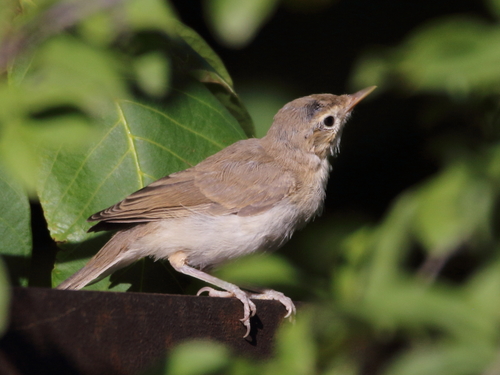
ハイイロウタムシクイ (Iduna pallida) ハイイロウタムシクイ
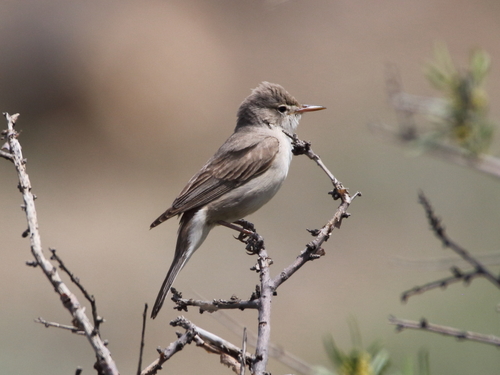
アレチウタムシクイ (Hippolais languida) アレチウタムシクイ

メディア

読み込み中…

要点

ハイイロウタムシクイとアレチウタムシクイの最も信頼できるフィールドマークは行動にあります:アレチウタムシクイは頻繁におしゃべりのような尾の動きを示し、これはハイイロウタムシクイの特徴的でありながら控えめな下向きの尾のフリよりもはるかに顕著です。構造的には、アレチウタムシクイは大きく、尾とくちばしが長く、一般的に灰色がかっていますが、ハイイロウタムシクイはより淡く、繊細です。両種は全体的な色合いは似ていますが、アレチウタムシクイは灰色がかったトーンとシルビアウタムシクイを思わせる印象があります。声は非常に異なり、アレチウタムシクイの歌はヒッポライスの中で独特であり、ハイイロウタムシクイの鼻にかかったおしゃべりとはまったく異なります。羽毛だけでの識別は特に幼鳥にとっては難しいため、構造と尾の動きに注目してください。

識別のコツ

  1. 尾の動きは診断的です: アレチウタムシクイは頻繁に尾をフリフリし、扇状に広げ、長い尾をおしゃべりのように持ち上げます。ハイイロウタムシクイは単純な下向きの尾のフリしか示しません。鳥が止まっているときや採餌しているときにこの行動に注意してください。
  2. 構造と印象: アレチウタムシクイは大きく、明らかに長い尾とくちばしを持ち、より頑丈で細長い外観です。ハイイロウタムシクイはよりコンパクトで、より細いくちばしと短い尾を持っています。特に横からの視点で比率を注意深く評価してください。
  3. 全体的な色合い: アレチウタムシクイは上面と下面がかなり灰色で、ハイイロウタムシクイが時々示す淡い茶色や緑がかった色合いが欠けています。鳥が暖かい色合いまたは淡い色に見える場合はハイイロウタムシクイを、寒色で灰色に見える場合はアレチウタムシクイを選んでください。
  4. 下面の色: ハイイロウタムシクイは白っぽい下面を持ち(幼鳥ではよりバフ色)、アレチウタムシクイはより均一に灰色がかっています。これは微妙で、良い光の下で使用するのが最適です。
  5. くちばしの形: アレチウタムシクイのくちばしは長くて重く、特に基部で、ハイイロウタムシクイの強いがより細いくちばしと比較されます。これを尾の長さと組み合わせて使用してください。
  6. 脚の色: 両者ともに灰色の脚を持っています;これは識別要因ではありません。
  7. 歌: 歌っている場合、ハイイロウタムシクイは速い鼻にかかったおしゃべりを示し、アレチウタムシクイは独特の非おしゃべりのヒッポライスの歌を持っています。春と初夏には歌を主な識別要因として使用してください。
  8. 飛行の印象: アレチウタムシクイは飛行中に尾が長く、より浮遊感があります;ハイイロウタムシクイはよりコンパクトで目立たないです。
  9. 幼鳥/未成熟の羽毛: どちらの種にも強い上翼パターンの違いは記載されていないため、若い鳥の翼パネルや覆羽のマーキングに頼らないでください。
  10. 性差: 両種は性別が同形であり、性別を識別要因として使用しないでください。
  11. 季節的文脈: 東南ヨーロッパと西アジアでは、両者が移動中に発生する可能性があります;範囲と季節を確認してくださいが、場所だけに頼らないでください。
  12. 生息地: 両者は乾燥した低木や開けた森林を利用しますが、アレチウタムシクイは東部の範囲でより乾燥した、より開けた地域を好むかもしれません。重複ゾーンでは診断的ではありません。
  13. 落とし穴: 両者は悪い光や距離で地味で似たように見えることがあります。常に微妙な羽毛の色合いよりも尾の動きと構造を優先してください。
  14. 若い鳥: 幼いハイイロウタムシクイは下面がバフ色に見えることがありますが、これはアレチウタムシクイとの強い識別要因ではなく、アレチウタムシクイは常により均一な灰色です。
  15. 疑わしい場合: 頻繁で活発な尾の動きと長い尾を持つ灰色がかったウタムシクイを見た場合はアレチウタムシクイを選んでください。鳥がより静的で、淡くコンパクトな外観で、下向きの尾のフリしか示さない場合はハイイロウタムシクイを選んでください。

大きさ

アレチウタムシクイは二つの中で大きく、キイロウタムシクイと同様の体の大きさを持ち、より長いくちばし、より長い尾、より短い翼を特徴としています。ハイイロウタムシクイはウタムシクイとしては中型ですが、明らかにより繊細で、より小さく、細いくちばしと短い尾を持っています。フィールドでは、アレチウタムシクイはより細長く、長い尾に見え、ハイイロウタムシクイはよりコンパクトでスリムなくちばしに見えます。両者は他のヒッポライス/イデュナウタムシクイと同様のサイズですが、アレチウタムシクイは明らかにより頑丈です。

羽色

どちらの種にも強い診断的な幼鳥や未成熟の上翼パターンは記載されていないため、識別は全体的な色合いと微妙な違いに依存します。成鳥のハイイロウタムシクイは上面が淡い茶色で、下面は白っぽく、時々上面にかすかな緑がかった色合いを示し、若い鳥はバフ色の腹部を持っています。アレチウタムシクイは全体的に灰色がかっており、茶色や緑がかった色合いが欠けており、下面は決して淡くありません。両者は単純な羽毛を持っていますが、アレチウタムシクイは常に灰色がかっていてより均一であり、ハイイロウタムシクイは新しい羽毛ではより淡く、やや暖かく見える傾向があります。くちばしと脚の色は似ています(灰色の脚、強い尖ったくちばし)ですが、アレチウタムシクイのくちばしはより長く、より頑丈です。両種の性別は似ています。

行動

尾の動きは主要な行動的識別要因です:アレチウタムシクイは常に長い尾をフリフリし、シルビアウタムシクイやおしゃべりのように扇状に広げ、エネルギーを持って上下に動かします。ハイイロウタムシクイも尾をフリフリしますが、その動きはより控えめで、通常は単純な下向きのフリです。飛行中、アレチウタムシクイは尾が長く、より浮遊感がありますが、ハイイロウタムシクイはよりコンパクトで目立たないです。両者は似たような方法で採餌し、葉から昆虫を採取しますが、アレチウタムシクイは尾の動きのためにより目立ちます。

生息環境

両種は東南ヨーロッパと西アジアの重複する地域で繁殖し、しばしば乾燥した低木、開けた森林、または茂みのある地域に生息します。ハイイロウタムシクイは東南ヨーロッパと中東でより広範囲に分布する傾向がありますが、アレチウタムシクイはトルコからパキスタンまでのより厳密な東部に分布しています。冬には両者ともアフリカに移動しますが、アレチウタムシクイはより東南に見られます。生息地は重複ゾーンでは強く診断的ではありませんが、アレチウタムシクイはわずかに乾燥した、より開けた低木を好むかもしれません。

声

歌は非常に異なり、聞こえた場合には診断的です。ハイイロウタムシクイは速い鼻にかかったおしゃべりの歌を示し、イデュナウタムシクイに典型的です。対照的に、アレチウタムシクイはヒッポライスウタムシクイの中で独特の歌を持ち、明確であり、ハイイロウタムシクイのおしゃべりとはまったく異なります。呼び声はあまりよく記載されていませんが、歌は聞こえた場合に強い識別要因です。

より良い説明を送る

比較と同じ項目を使ってください。文章はすぐに公開されます。

The most reliable field mark between Eastern Olivaceous Warbler and Upcher's Warbler is behavioral: Upcher's Warbler shows frequent, chat-like tail movements, which are much more pronounced than the characteristic but subtler downward tail flick of Eastern Olivaceous. Structurally, Upcher's is larger, with a longer tail and bill, and a generally greyer appearance, while Eastern Olivaceous is paler and more delicate. Both species are similar in overall coloration, but Upcher's has a greyer tone and a jizz reminiscent of a Sylvia warbler. Vocalizations are very different, with Upcher's song being distinctive among Hippolais and nothing like the nasal babble of Eastern Olivaceous. Separation is challenging on plumage alone, especially for immatures, so focus on structure and tail behavior.

  1. Tail movement is diagnostic: Upcher's Warbler frequently flicks, fans, and raises its long tail in a chat-like manner; Eastern Olivaceous Warbler only gives a simple downward tail flick. Watch for this behavior when the bird is perched or foraging.
  2. Structure and jizz: Upcher's is larger, with a noticeably longer tail and bill, and a more robust, lanky appearance. Eastern Olivaceous is more compact, with a finer bill and shorter tail. Assess proportions carefully, especially in side view.
  3. Overall coloration: Upcher's is rather grey above and below, lacking the pale brown or greenish tinge sometimes shown by Eastern Olivaceous. If the bird looks warm-toned or pale, favor Eastern Olivaceous; if cold and grey, favor Upcher's.
  4. Underpart color: Eastern Olivaceous has whitish underparts (buffier in juveniles), while Upcher's is more uniformly greyish below. This is subtle and best used in good light.
  5. Bill shape: Upcher's bill is longer and heavier, especially at the base, compared to the strong but finer bill of Eastern Olivaceous. Use this in combination with tail length.
  6. Leg color: Both have grey legs; this is not a separator.
  7. Song: If singing, Eastern Olivaceous gives a fast nasal babbling, while Upcher's has a distinctive, non-babbling Hippolais song. Use song as a primary separator in spring and early summer.
  8. Flight jizz: Upcher's looks longer-tailed and more buoyant in flight; Eastern Olivaceous is more compact and less showy.
  9. Juvenile/immature plumage: No strong upperwing pattern differences are described for either species, so do not rely on wing panels or covert markings in young birds.
  10. Sex differences: Both species are sexually monomorphic; do not use sex as a separator.
  11. Seasonal context: In southeastern Europe and western Asia, both may occur in migration; check range and season, but do not rely solely on location.
  12. Habitat: Both use dry scrub and open woodland, but Upcher's may prefer drier, more open areas in its eastern range. Not diagnostic in overlap zones.
  13. Pitfalls: Both can appear drab and similar in poor light or at distance. Always prioritize tail movement and structure over subtle plumage tones.
  14. Young birds: Juvenile Eastern Olivaceous can look buffier below, but this is not a strong separator from Upcher's, which is always more uniform grey.
  15. When in doubt: If you see frequent, energetic tail movements and a long-tailed, greyish warbler, favor Upcher's. If the bird is more static, with a pale, compact look and only a downward tail flick, favor Eastern Olivaceous.

Upcher's Warbler is the larger of the two, with a body size similar to Icterine Warbler, featuring a longer bill, longer tail, and shorter wings. Eastern Olivaceous Warbler is medium-sized for a warbler but noticeably more delicate, with a smaller, finer bill and shorter tail. In the field, Upcher's will look lankier and longer-tailed, while Eastern Olivaceous appears more compact and slim-billed. Both are similar in size to other Hippolais/Iduna warblers, but Upcher's is distinctly more robust.

There are no strongly diagnostic juvenile or immature upperwing patterns described for either species, so separation relies on overall coloration and subtle differences. Adult Eastern Olivaceous Warbler is plain pale brown above with whitish underparts, sometimes showing a faint greenish tinge on the upperparts, and young birds have a buffier belly. Upcher's Warbler is rather grey overall, lacking the brown or greenish tones, and is never as pale below. Both have plain plumage, but Upcher's is always greyer and more uniform, while Eastern Olivaceous tends to look paler and slightly warmer, especially in fresh plumage. Bill and leg color are similar (grey legs, strong pointed bill), but Upcher's bill is longer and more robust. Sexes are alike in both species.

Tail movement is the key behavioral separator: Upcher's Warbler constantly flicks and fans its long tail in a manner reminiscent of Sylvia warblers or chats, often raising and lowering it with energy. Eastern Olivaceous Warbler also flicks its tail, but the movement is more restrained and typically a simple downward flick. In flight, Upcher's looks longer-tailed and more buoyant, while Eastern Olivaceous is more compact and less showy. Both forage in similar fashion, gleaning insects from foliage, but Upcher's is more conspicuous due to its tail action.

Both species breed in overlapping regions of southeastern Europe and western Asia, often in dry scrub, open woodland, or bushy areas. Eastern Olivaceous tends to be more widespread in southeastern Europe and the Middle East, while Upcher's is more strictly eastern, from Turkey to Pakistan. In winter, both migrate to Africa, but Upcher's is found farther east and south. Habitat is not strongly diagnostic in overlap zones, but Upcher's may prefer slightly drier, more open scrub.

The songs are very different and can be diagnostic if heard. Eastern Olivaceous Warbler gives a fast, nasal babbling song, typical of Iduna warblers. Upcher's Warbler, in contrast, has a distinctive song among Hippolais warblers, described as unmistakable and entirely unlike the olivaceous's babble. Calls are less well described, but song is a strong separator where heard.

変更を破棄しますか?

保存していない編集があります。今離れると失われます。

ハイイロウタムシクイ · アレチウタムシクイ · 苦手な鳥