

Motmot

センダイムシクイ 対 ヤナギムシクイ

Phylloscopus coronatus 対 Phylloscopus trochiloides

センダイムシクイとヤナギムシクイのクイズ
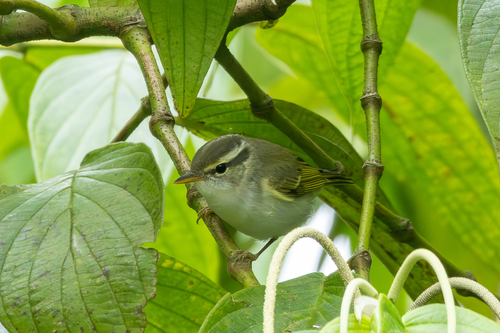
センダイムシクイ (Phylloscopus coronatus) センダイムシクイ
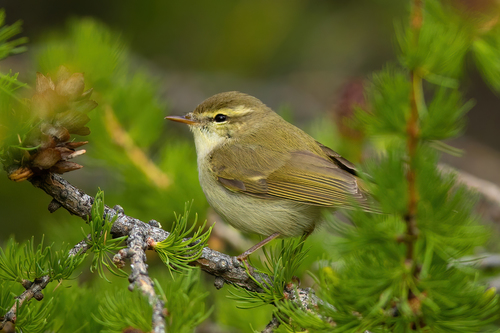
ヤナギムシクイ (Phylloscopus trochiloides) ヤナギムシクイ

メディア

読み込み中…

要点

センダイムシクイとヤナギムシクイを区別する最も信頼できるフィールドマークは、前者の大胆な頭の模様です:センダイムシクイは、淡い、しばしば黄色がかった中央の冠ストライプと、強く暗い側面の冠ストライプ、そして目立つスーペリシリウムを示しますが、ヤナギムシクイはこの冠の模様が欠けており、代わりに黄色がかったスーペリシリウムを持つより均一な頭をしています。両種は単一の淡い翼帯を示すことがありますが、センダイムシクイはより頑丈で明るく、わずかに分叉した尾を持ち、スリムで鈍いヤナギムシクイと比較されます。構造とくちばしの形も役立ちます:センダイムシクイはより強く、淡いくちばしと暗い脚を持ち、ヤナギムシクイはより細く、暗い先端のくちばしを持っています。幼鳥や未成熟の翼の模様はどちらの種についても詳細には説明されていないため、すべての年齢に対して頭の模様と構造に焦点を当ててください。

識別のコツ

  1. Head pattern is key: センダイムシクイは強い暗い側面の冠ストライプと淡い、しばしば黄色がかった中央の冠ストライプを示し、大胆な頭の模様を作り出します;ヤナギムシクイはこれを欠いており、黄色がかったスーペリシリウムだけのより均一な冠を示します。これはすべての年齢に対して機能し、最も信頼できるマークです。
  2. Supercilium: 両種は淡いスーペリシリウムを持っていますが、センダイムシクイの方が長く、対照的であり、ヤナギムシクイの方は通常黄色がかっていて目立たないです。
  3. Eye-stripe and lores: センダイムシクイは目を通る暗いストライプと暗いロアを持ち、強い顔のコントラストを加えます;ヤナギムシクイの顔はより平坦で、目のストライプがあまりはっきりしていません。
  4. Cheek color: センダイムシクイは薄暗い黄色の頬を持ち、良い光の中で役立つことがあります;ヤナギムシクイの頬はそれほど明確に色付けされていません。
  5. Bill structure: センダイムシクイは強く、頑丈で淡いくちばしを持っています;ヤナギムシクイはより細いくちばしを持ち、下顎の先端が暗いことがよくあります。これは近距離または写真で最もよく見られます。
  6. Leg color: センダイムシクイは暗い脚を持っています;ヤナギムシクイの脚の色は特に目立たないため、注意して使用してください。
  7. Wingbars: 両種は単一の淡い翼帯を示すことがあります。いくつかのヤナギムシクイ(特定の亜種)はかすかな第二の翼帯を示すことがありますが、フタオビムシクイのように大胆ではありません。翼帯の数だけに頼らないでください。
  8. Upperparts color: センダイムシクイは上面が暗いオリーブグリーンです;ヤナギムシクイは上面が灰色がかった緑または鈍い緑で、しばしば明るさが少ないです。
  9. Underparts: センダイムシクイは下面が白です;ヤナギムシクイはオフホワイトで、時々いくつかの亜種の喉と胸に黄色がかった洗いが見られます。
  10. Tail shape: センダイムシクイは四角い、わずかに分叉した尾を持っています;ヤナギムシクイの尾はより典型的で、あまり明確に形作られていません。
  11. Structure and jizz: センダイムシクイはより頑丈で明るく、よりがっしりとした外観を持っています;ヤナギムシクイはスリムでより繊細です。
  12. Size: センダイムシクイはわずかに重く、より大きい(10.1g)ですが、ヤナギムシクイはより小さく、軽いです。
  13. Habitat context: 東アジアの北方または成熟した温帯林にいる場合、センダイムシクイの方が可能性が高いです;低地または山地の混合林、特に渡りの際には、ヤナギムシクイがより期待されます。
  14. Voice: 高く、ぎこちないトリルが聞こえ、音が不明瞭であれば、ヤナギムシクイの可能性があります;センダイムシクイの歌の詳細が欠けているため、沈黙は診断的ではありません。
  15. Pitfalls: 両種は単一の翼帯を示すことがあるため、翼帯の数だけに頼らないでください。常に確認のために頭の模様と構造をチェックしてください。

大きさ

センダイムシクイはわずかに重く(体重約10.1g [wikidata])見え、ヤナギムシクイよりも頑丈に見えます。ヤナギムシクイは一般的に小さく、スリムです(直接の質量は示されていませんが、[wikipedia]では小さく、スリムな体型と説明されています)。フィールドでは、センダイムシクイはよりがっしりとした外観を持ち、より強いくちばしと四角い、わずかに分叉した尾を持つように見える一方で、ヤナギムシクイは全体的により繊細に見える傾向があります。

羽色

すべての年齢において、センダイムシクイは暗いオリーブグリーンの上面と明るい白の下面によって際立ちますが、特にその強い頭の模様によって:暗い側面の冠ストライプ、黄色がかった中央の冠ストライプ(時には不明瞭なこともあります)、長い黄色がかった白のスーペリシリウム、そして薄暗い黄色の頬を持つ暗い目のストライプです。また、単一の淡い翼帯と四角い、わずかに分叉した尾を示します。ヤナギムシクイは上面が灰色がかった緑で、下面がオフホワイトで、黄色がかったスーペリシリウムとほとんどの個体に単一の(時にはかすかな)翼帯を持っています。いくつかのヤナギムシクイは特定の亜種で第二の翼帯の痕跡を示すことがありますが、決してセンダイムシクイの大胆な冠の模様を持つことはありません。くちばしの色も役立ちます:センダイムシクイは頑丈で淡いくちばしを持ち、ヤナギムシクイのくちばしはより細く、淡い基部が欠けています。どちらの種についても年齢特有の上翼や飛行パターンの違いは説明されていないため、これらの対比はすべての羽毛に適用されます。

行動

両種は活発で昆虫食の葉ムシクイであり、しばしば葉の中で餌を探します。センダイムシクイはその構造のために動きがやや頑丈で意図的に見えることがありますが、ヤナギムシクイは通常、より落ち着きがなく、敏捷で、葉や枝の間を飛び回ります。飛行中、センダイムシクイのわずかに分叉した尾が見えることがありますが、ヤナギムシクイの飛行は小型のPhylloscopusムシクイの典型的なもので、迅速で直接的です。

生息環境

センダイムシクイは東パレアールクトの北方および温帯林で繁殖し、成熟した森林を好みます。ヤナギムシクイはより広範囲に分布し、北東ヨーロッパから温帯および亜熱帯アジアを横断して繁殖し、しばしば低地の落葉樹林や混合林で繁殖し、非繁殖期には特にヒマラヤの山地林に移動します。迷子の状況では、両種は似たような森林生息地に現れることがありますが、ヤナギムシクイは西ヨーロッパでの渡りや迷子としてより可能性が高いです。

声

センダイムシクイの歌は提供されたメモには記載されていません。ヤナギムシクイは高く、ぎこちないトリルを持ち、時には音が下がったり上がったりすることがあり、歌の構造は個体群によって異なることがあります。フィールドでは、歌はヤナギムシクイの有用なマークですが、センダイムシクイの詳細が欠けているため、これは現在のメモに基づく信頼できる区別ではありません。

より良い説明を送る

比較と同じ項目を使ってください。文章はすぐに公開されます。

The most reliable field mark to separate Eastern Crowned Warbler from Greenish Warbler is the bold head pattern of the former: Eastern Crowned Warbler shows a strong, dark lateral crown stripe with a pale, often yellowish median crown stripe, and a prominent supercilium, while Greenish Warbler lacks this crown pattern and instead has a more uniform head with a yellowish supercilium. Both species can show a single pale wingbar, but Eastern Crowned Warbler is more robust and bright, with a slightly forked tail, compared to the slimmer and duller Greenish Warbler. Structure and bill shape also help: Eastern Crowned Warbler has a stronger, paler bill and darker legs, while Greenish Warbler has a finer, darker-tipped bill. Juvenile and immature wing patterns are not described in detail for either species, so focus on head pattern and structure for all ages.

  1. Head pattern is key: Eastern Crowned Warbler shows a strong dark lateral crown stripe and a pale, often yellowish median crown stripe, creating a bold head pattern; Greenish Warbler lacks this, showing a more uniform crown with only a yellowish supercilium. This works for all ages and is the most reliable mark.
  2. Supercilium: Both species have a pale supercilium, but Eastern Crowned's is longer and more contrasting, while Greenish's is usually yellowish and less striking.
  3. Eye-stripe and lores: Eastern Crowned has a dark stripe through the eye and dark lores, adding to the strong facial contrast; Greenish Warbler's face is plainer, with a less distinct eye-stripe.
  4. Cheek color: Eastern Crowned has dusky yellow cheeks, which can help in good light; Greenish Warbler's cheeks are not as distinctly colored.
  5. Bill structure: Eastern Crowned Warbler has a strong, robust, pale bill; Greenish Warbler has a thinner bill, often with a dark tip to the lower mandible. This is best seen at close range or in photos.
  6. Leg color: Eastern Crowned has dark legs; Greenish Warbler's leg color is not highlighted as distinctive, so use with caution.
  7. Wingbars: Both can show a single pale wingbar. Some Greenish Warblers (certain subspecies) may show a faint second wingbar, but never as bold as in Two-barred Warbler. Do not rely solely on wingbar count.
  8. Upperparts color: Eastern Crowned is dark olive-green above; Greenish Warbler is grayish-green or dull green above, often less bright.
  9. Underparts: Eastern Crowned is white below; Greenish Warbler is off-white, sometimes with a yellowish wash on throat and breast in some subspecies.
  10. Tail shape: Eastern Crowned has a square, slightly forked tail; Greenish Warbler's tail is more typical and less distinctly shaped.
  11. Structure and jizz: Eastern Crowned appears more robust and bright, with a chunkier look; Greenish Warbler is slimmer and more delicate.
  12. Size: Eastern Crowned is slightly heavier and bulkier (10.1g), while Greenish Warbler is smaller and lighter.
  13. Habitat context: If in boreal or mature temperate forest in East Asia, Eastern Crowned is more likely; in lowland or montane mixed forest, especially in migration, Greenish Warbler is more expected.
  14. Voice: If you hear a high, jerky trill with slurred notes, Greenish Warbler is likely; lack of song detail for Eastern Crowned means silence is not diagnostic.
  15. Pitfalls: Do not rely on wingbar count alone, as both can show a single wingbar. Always check head pattern and structure for confirmation.

Eastern Crowned Warbler is slightly heavier (body mass about 10.1g [wikidata]) and appears more robust than Greenish Warbler, which is generally smaller and more slender (no direct mass given, but described as smaller and slimmer in build [wikipedia]). In the field, Eastern Crowned Warbler may look chunkier, with a stronger bill and a squarer, slightly forked tail, while Greenish Warbler tends to look more delicate overall.

For all ages, Eastern Crowned Warbler stands out by its dark olive-green upperparts and bright white underparts, but especially by its strong head pattern: a dark lateral crown stripe, a yellowish median crown stripe (though sometimes indistinct), a long yellowish-white supercilium, and a dark eye-stripe with dusky yellow cheeks. It also shows a single pale wingbar and a square, slightly forked tail. Greenish Warbler is grayish-green above and off-white below, with a yellowish supercilium and a single (sometimes faint) wingbar in most populations. Some Greenish Warblers may show traces of a second wingbar, especially in certain subspecies, but never the bold crown pattern of Eastern Crowned. Bill color is also useful: Eastern Crowned has a robust, pale bill, while Greenish Warbler's bill is finer and lacks a pale base. No age-specific upperwing or flight pattern differences are described for either species, so these contrasts apply to all plumages.

Both species are active, insectivorous leaf warblers, often foraging in foliage. Eastern Crowned Warbler may appear a bit more robust and deliberate in movement due to its structure, while Greenish Warbler is typically more restless and agile, flitting through leaves and branches. In flight, Eastern Crowned Warbler's slightly forked tail may be visible, while Greenish Warbler's flight is more typical of small Phylloscopus warblers, quick and direct.

Eastern Crowned Warbler breeds in boreal and temperate forests of the east Palearctic, favoring mature woodland. Greenish Warbler has a broader range, breeding from northeastern Europe across temperate and subtropical Asia, often in lowland deciduous or mixed forests, and moving to montane forests in the non-breeding season, especially in the Himalayas. In vagrancy situations, both can turn up in similar wooded habitats, but Greenish Warbler is more likely as a migrant or vagrant in Western Europe.

Eastern Crowned Warbler's song is not described in the provided notes. Greenish Warbler has a high, jerky trill, sometimes with down- and up-slurred notes, and song structure can vary by population. In the field, song is a useful mark for Greenish Warbler, but lack of detail for Eastern Crowned means this is not a reliable separation based on the current notes.

変更を破棄しますか?

保存していない編集があります。今離れると失われます。

センダイムシクイ · ヤナギムシクイ · 苦手な鳥