

Motmot

マミジロイシチドリ 対 キスジカマドドリ

Hesperoburhinus bistriatus 対 Syndactyla subalaris

マミジロイシチドリとキスジカマドドリのクイズ
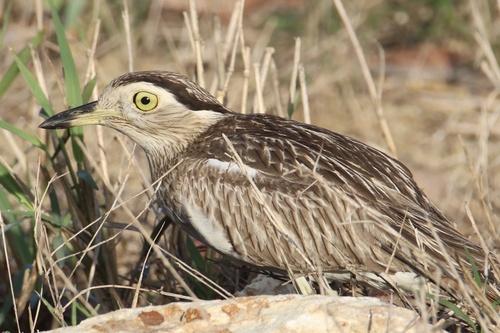
マミジロイシチドリ (Hesperoburhinus bistriatus) マミジロイシチドリ
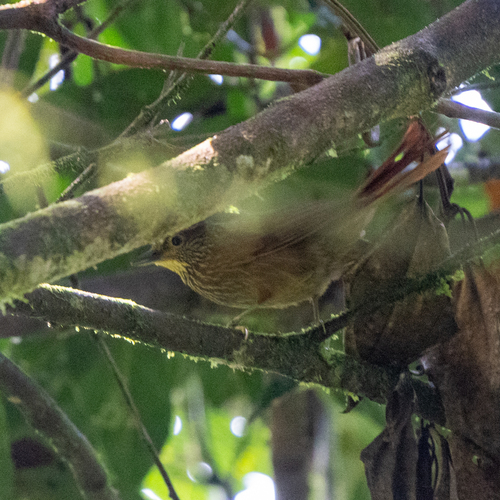
キスジカマドドリ (Syndactyla subalaris) キスジカマドドリ

メディア

読み込み中…

要点

最も信頼できるフィールドマークは全体の構造とサイズです:マミジロイシチドリは、重いくちばしと隠れた縞模様の羽毛を持つ巨大で長脚の水鳥であり、キスジカマドドリは、細いくちばしと強いバフの縞模様を持つはるかに小さく、コンパクトな森林の鳥です。飛行中、マミジロイシチドリは暗い上翼に大胆な白い斑点を示し、すべての年齢で黒い後縁を持つ白い下翼を持っていますが、これはキスジカマドドリには見られません。止まっているとき、マミジロイシチドリの強い頭の縞模様と巨大な黄色い目は、キスジカマドドリの縞模様の顔と暗い目と対照的です。生息地も強い手がかりです:マミジロイシチドリは開けた乾燥した草原に生息し、キスジカマドドリは湿った森林に留まります。

識別のコツ

  1. Size and structure: マミジロイシチドリは巨大で、長い緑がかった灰色の脚と重くて強いくちばしを持っています;キスジカマドドリは小さく、コンパクトで、短い脚を持っています。サイズだけでも、共に見られた場合やスケール感がある場合には診断的です。
  2. Flight pattern (all ages): マミジロイシチドリは暗い上翼に大胆な白い斑点を示し、白い下翼には黒い後縁があります—これはユニークで、キスジカマドドリには見られません。キスジカマドドリは均一に暗い茶色の翼を持ち、曲がり部分にはいくつかの赤褐色があります。
  3. Leg color and length: マミジロイシチドリの脚は非常に長く緑がかった灰色で、しゃがんでいるときでもよく見えます;キスジカマドドリの脚ははるかに短く、オリーブグリーンから緑がかった灰色で、通常は葉に隠れています。
  4. Bill shape and color: マミジロイシチドリは強い黒と黄色のくちばしを持ち、地面の獲物を捕まえるのに適しています;キスジカマドドリは細くて暗いくちばしを持ち、樹皮や落ち葉を探るのに適応しています。
  5. Eye color: マミジロイシチドリの目は大きく明るい黄色で、夕暮れ時でも目立ちます;キスジカマドドリの目は茶色から暗い茶色で、はるかに目立ちません。
  6. Head pattern: マミジロイシチドリは、黒い縞で囲まれた大胆な白い眉斑を持ち、二重の縞模様を形成しています;キスジカマドドリは不連続なバフの眉斑と、より縞模様で、はっきりとした顔を持っています。
  7. Upperparts streaking: マミジロイシチドリの上面は細かく灰褐色の縞模様があります;キスジカマドドリの背中と冠は、特に幼鳥ではバフで重く大胆に縞模様があります。
  8. Underparts: マミジロイシチドリの胸は淡い茶色で、白い腹部に融合しています;キスジカマドドリの胸と腹部は暗い茶色で、バフの縞模様があり、後方に向かって薄くなります。
  9. Tail: マミジロイシチドリの尾は特徴的ではありません;キスジカマドドリの尾は暗い栗色で、扇状に広げたときに時々見えます。
  10. Juvenile differences: 幼鳥のマミジロイシチドリは上面がやや暗く、白っぽい後頭部を持っています;幼鳥のキスジカマドドリは明るく、より赤みがかっており、黒っぽくシナモン色の縞模様の冠と下部にオクラ色のトーンを持っています。
  11. Habitat: マミジロイシチドリは開けた乾燥した草原や牧草地に生息し、キスジカマドドリは湿った森林に限定されています。文脈はしばしば決定的です。
  12. Behavior: マミジロイシチドリは開けた場所で立っているかしゃがんでいることが多く、めったに飛ばず、夕暮れ時や夜によく見られます;キスジカマドドリは活発で、密な葉の中で採餌し、開けた地面ではめったに見られません。
  13. Vocalization: 夜に大きな「キーキーキー」という声を聞いたら、それはマミジロイシチドリです。キスジカマドドリの鳴き声はここでは説明されていません。
  14. Perching/flying posture: マミジロイシチドリは立っているとき、ほぼガチョウのように直立して見えます;キスジカマドドリはより水平で、しばしば幹や枝にしがみついています。
  15. Pitfalls: 遠くから見ると、両者は茶色で縞模様に見えることがありますが、サイズ、構造、生息地の組み合わせは、注意深く観察すれば常にそれらを区別します。

大きさ

マミジロイシチドリは、キスジカマドドリよりも劇的に大きく、重い(体重約675g)です。マミジロイシチドリは46〜50cmの長さに達し、キスジカマドドリの17〜19cmを超えています。マミジロイシチドリの体格、長い脚、大きな頭はフィールドで明確であり、キスジカマドドリは小さく、スリムで短脚の鳥です。遠くからでも、または暗い光の中でも、サイズのギャップは極端で診断的です。

羽色

飛行中、マミジロイシチドリ(すべての年齢)は、暗い上翼に目を引く白い斑点を示し、白い下翼には黒い後縁があります—これはキスジカマドドリには見られません。キスジカマドドリは均一に暗い茶色の翼を持ち、曲がり部分にはいくつかの赤褐色のトーンがあります。止まっているとき、マミジロイシチドリの成鳥と幼鳥は細かく灰褐色の上面を持ち、淡い茶色の首と胸が白い腹部に融合し、黒い縞で囲まれた大胆な白い眉斑を持っています。幼鳥のマミジロイシチドリは上面がやや暗く、白っぽい後頭部を持っています。キスジカマドドリの成鳥は不連続なバフの眉斑、薄いバフの縞模様のある暗い茶色の冠、長いバフの縞模様のある豊かな茶色の背中、栗色の尾を持ち、幼鳥はより明るく、赤みがかっており、黒っぽくシナモン色の縞模様の冠とよりオクラ色のトーンを持っています。キスジカマドドリの縞模様は顔、冠、背中、下部で非常に大胆で広範囲にわたりますが、マミジロイシチドリの縞模様は細かく、上面に限られています。マミジロイシチドリの白い腹部と大胆な頭の縞模様は、キスジカマドドリの全体的な縞模様の茶色の外観と対照的です。

行動

マミジロイシチドリは主に夜行性で薄明かりの時間帯に活動し、開けた地面で動かずに立っているかしゃがんでいることが多く、カモフラージュに頼り、押されたときだけ飛びます。その動きは遅く、慎重であり、木の中で見られることはほとんどありません。キスジカマドドリは活発で落ち着きのない鳥で、密な森林の下草や中層でエネルギッシュに採餌し、しばしば幹や枝を登り、開けた地面ではめったに見られません。キスジカマドドリの行動はオーブンバードの典型的なもので、素早く、敏捷で、ほぼ常にカバーの中にいます。

生息環境

生息地は強い区別要因です。マミジロイシチドリは乾燥した草原、サバンナ、その他の乾燥した開放的な生息地に生息し、しばしば開けた牧草地や半開放的な地域にいます。森林や密な植生を避けます。それに対して、キスジカマドドリは湿った森林の鳥であり、山麓や山地のゾーンを含み、開けた草原では見られません。開けた乾燥した地域で鳥を見た場合、それはほぼ確実にマミジロイシチドリです;密な森林では、キスジカマドドリです。

声

マミジロイシチドリは夜に大きく繰り返される「キーキーキー」という鳴き声を出します。提供されたメモにはキスジカマドドリの声の説明はないため、鳴き声はここでは信頼できる区別要因ではありません。マミジロイシチドリの特徴的な鳴き声を聞かない限り、区別はできません。

より良い説明を送る

比較と同じ項目を使ってください。文章はすぐに公開されます。

The most reliable field mark is overall structure and size: Double-striped Thick-knee is a massive, long-legged wader with a heavy bill and cryptic, streaked plumage, while Lineated Foliage-gleaner is a much smaller, compact forest bird with a slender bill and strong buff streaking. In flight, Thick-knee shows a bold white patch on the dark upperwing and a white underwing with a black rear edge (all ages), which is never matched by the Foliage-gleaner. Perched, Thick-knee’s strong head stripes and huge yellow eyes contrast with the Foliage-gleaner’s streaked face and dark eyes. Habitat is also a strong clue: Thick-knee is found in open, arid grasslands, while Foliage-gleaner stays in humid forests.

  1. Size and structure: Double-striped Thick-knee is enormous, with long, greenish-grey legs and a heavy, strong bill; Foliage-gleaner is small, compact, and short-legged. Size alone is diagnostic if seen together or with a sense of scale.
  2. Flight pattern (all ages): Thick-knee shows a bold white patch on the dark upperwing and a white underwing with a black rear edge—unique and never matched by Foliage-gleaner, which has uniformly dark brown wings with some rufous at the bend.
  3. Leg color and length: Thick-knee’s legs are very long and greenish-grey, often visible even when crouched; Foliage-gleaner’s legs are much shorter and olive-green to greenish gray, usually hidden by foliage.
  4. Bill shape and color: Thick-knee has a strong, black and yellow bill, suited for grabbing prey on the ground; Foliage-gleaner has a slender, dark bill, adapted for probing bark and leaf litter.
  5. Eye color: Thick-knee’s eyes are large and bright yellow, standing out even at dusk; Foliage-gleaner’s eyes are brown to dark brown and much less prominent.
  6. Head pattern: Thick-knee has a bold white supercilium bordered above by a black stripe, giving a double-striped look; Foliage-gleaner has a discontinuous buff supercilium and a more streaked, less sharply marked face.
  7. Upperparts streaking: Thick-knee’s upperparts are finely streaked grey-brown; Foliage-gleaner’s back and crown are heavily and boldly streaked with buff, especially in juveniles.
  8. Underparts: Thick-knee’s breast is pale brown merging into a white belly; Foliage-gleaner’s breast and belly are dark brown with buff streaks, fading towards the rear.
  9. Tail: Thick-knee’s tail is not distinctive; Foliage-gleaner’s tail is dark chestnut, sometimes visible when fanned.
  10. Juvenile differences: Juvenile Thick-knee is slightly darker above with a whitish nape; juvenile Foliage-gleaner is brighter, more reddish, with a blacker, cinnamon-streaked crown and ochraceous tones below.
  11. Habitat: Thick-knee is found in open, dry grasslands and pastures; Foliage-gleaner is restricted to humid forests. Context is often decisive.
  12. Behavior: Thick-knee stands or crouches in open, rarely flies, and is often seen at dusk or night; Foliage-gleaner is active, foraging in dense foliage, rarely seen on the ground in the open.
  13. Vocalization: If you hear a loud 'kee-kee-kee' at night, it is Thick-knee. Foliage-gleaner’s call is not described here.
  14. Perching/flying posture: Thick-knee appears upright, almost goose-like, when standing; Foliage-gleaner is more horizontal, often clinging to trunks or branches.
  15. Pitfalls: At a distance, both can appear brown and streaky, but the combination of size, structure, and habitat will always separate them if carefully observed.

Double-striped Thick-knee is dramatically larger and heavier (body mass ~675 g) than Lineated Foliage-gleaner (~29 g). Thick-knee reaches 46–50 cm in length, towering over the Foliage-gleaner’s 17–19 cm. The Thick-knee’s bulk, long legs, and large head are unmistakable in the field, while the Foliage-gleaner is a small, slim, short-legged bird. Even at a distance or in poor light, the size gap is extreme and diagnostic.

In flight, Double-striped Thick-knee (all ages) shows a striking white patch on the otherwise dark upperwing and a white underwing with a black rear edge—this is never seen in Lineated Foliage-gleaner, which has uniformly dark brown wings with some rufescent tones at the bend and no bold contrast. Perched, Thick-knee adults and juveniles have finely streaked grey-brown upperparts, a pale brown neck and breast merging into a white belly, and a bold white supercilium bordered above by a black stripe. Juvenile Thick-knees are slightly darker above with a whitish nape. Foliage-gleaner adults have a discontinuous buff supercilium, a dark brown crown with thin buff streaks, a rich brown back with long buff streaks, and a chestnut tail; juveniles are brighter and more reddish, with a blacker, cinnamon-streaked crown and more ochraceous tones. The Foliage-gleaner’s streaking is much bolder and more extensive on the face, crown, back, and underparts, while Thick-knee’s streaking is finer and more limited to the upperparts. The Thick-knee’s white belly and bold head stripes contrast with the Foliage-gleaner’s overall streaky brown look.

Double-striped Thick-knee is largely nocturnal and crepuscular, often seen standing motionless or crouching in open ground, relying on camouflage and flying only when pressed. Its movements are slow and deliberate, and it is rarely seen in trees. Lineated Foliage-gleaner is an active, restless bird, foraging energetically in dense forest undergrowth or mid-levels, often climbing trunks and branches, and rarely seen on open ground. The Foliage-gleaner’s behavior is typical of ovenbirds: quick, agile, and almost always in cover.

Habitat is a strong separator. Double-striped Thick-knee inhabits arid grasslands, savannas, and other dry, open habitats, often in cleared pastures or semi-open country. It avoids forests and dense vegetation. In contrast, Lineated Foliage-gleaner is strictly a bird of humid forests, including foothill and montane zones, and is never found in open grasslands. If you see the bird in open, dry country, it is almost certainly a Thick-knee; if in dense forest, it is a Foliage-gleaner.

Double-striped Thick-knee gives a loud, repeated 'kee-kee-kee' call at night. There is no description of the Foliage-gleaner’s voice in the provided notes, so vocalization is not a reliable separator here unless you hear the Thick-knee’s distinctive call.

変更を破棄しますか?

保存していない編集があります。今離れると失われます。

マミジロイシチドリ · キスジカマドドリ · 苦手な鳥