

Motmot

サルハマシギ 対 ムラサキハマシギ

Calidris ferruginea 対 Calidris maritima

サルハマシギとムラサキハマシギのクイズ
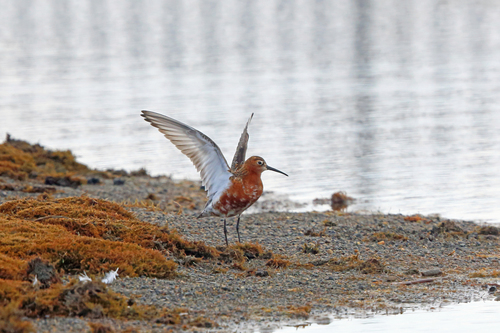
サルハマシギ (Calidris ferruginea) サルハマシギ
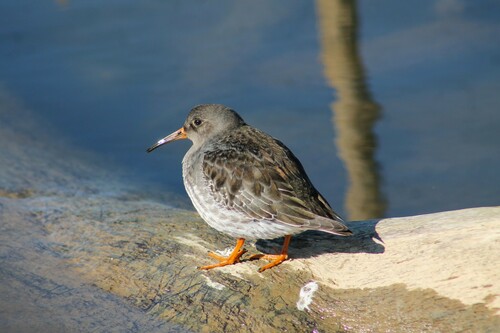
ムラサキハマシギ (Calidris maritima) ムラサキハマシギ

メディア

読み込み中…

要点

サルハマシギとムラサキハマシギをどの羽色でも区別する最も信頼できるフィールドマークは、サルハマシギの大胆な白い尾羽と上尾羽で、飛行中に見えるもので、ムラサキハマシギの黒い尾羽と対照的です。幼鳥と非繁殖のサルハマシギは、鱗状の淡い色合いの上面パターンと長く下向きの黒いくちばしを示しますが、ムラサキハマシギは上面がより暗く、わずかに紫がかった光沢があり、短い黄褐色の脚と、より太くまっすぐなくちばしを持っています。サルハマシギはスリムで長い脚を持ち、オープンな干潟で見られることが多いのに対し、ムラサキハマシギは岩の多い沿岸生息地を好み、よりずんぐりとした印象を与えます。これらの違いは、鳥が飛んでいるときや活発に餌を探しているときに最も明らかですが、悪い光の中や距離がある場合には微妙なことがあります。

識別のコツ

  1. 白い尾羽の飛行中(すべての年齢): サルハマシギは常に大きな白い尾羽と上尾羽を示し、しばしば下背部にまで広がり、鳥が飛び立つときに大胆なフラッシュとして見えます。ムラサキハマシギは黒い尾羽と尾を持ち、白いフラッシュはありません。
  2. 上翼のパターン(すべての年齢): サルハマシギは飛行中に目立つ白い翼のストライプを示し、暗い翼と対照的です。ムラサキハマシギの上翼はより均一に暗く、強い白いストライプが欠けています。
  3. くちばしの形と長さ: サルハマシギは長く、細く、明確に下向きの黒いくちばしを持っています。ムラサキハマシギのくちばしは短く、太く、わずかに下向きで、黄色い基部があります(特に近距離で明らかです)。
  4. 脚の色: ムラサキハマシギは短い黄色の脚を持ち、サルハマシギの脚は長く、暗い灰色から黒です。これは、止まっている鳥や餌を探している鳥に最も有用です。
  5. 体の形と姿勢: サルハマシギはスリムで長い脚を持ち、優雅で、しばしばより高く、より直立して見えます。ムラサキハマシギはずんぐりしており、プロファイルが低く、脚が短いです。
  6. 幼鳥/初冬の上面: 幼鳥のサルハマシギは上面が鱗状で淡い色合いを持ち、細い淡い縁取りの羽毛を持っています。ムラサキハマシギの幼鳥はより暗く、黒とシナモンの斑点と白い斑点を持っていますが、全体的に鱗状の外観はありません。
  7. 眉(スーペリシリウム): サルハマシギは明確な白いスーペリシリウムを示し、特に非繁殖期と幼鳥の羽色で顕著です。ムラサキハマシギの顔はより平坦で、コントラストが少ないです。
  8. 胸部と下部: サルハマシギ(非繁殖/幼鳥)は下部が白く、いくつかの淡い灰色の筋があります。繁殖期の鳥は下部が赤みがかっています。ムラサキハマシギは常に下部が白いですが、胸部には重い灰色のにじみがあり、決して赤くはありません。
  9. 尾羽と尾のパターン(止まっているとき): 上尾羽が見える場合、サルハマシギは白い上尾羽の覆いと尾を示します。ムラサキハマシギの尾羽と尾は黒です。
  10. 生息地の文脈: 岩の多い沿岸では、特に冬に、ムラサキハマシギがはるかに多く見られます。オープンな干潟や塩田では、特に渡りの際に、サルハマシギが期待されます。
  11. 餌を探す行動: サルハマシギは深く探り、流れるように動きます。ムラサキハマシギは岩の間をつまんで這い回り、深く探ることはほとんどありません。
  12. くちばしの基部の色: 近距離では、ムラサキハマシギのくちばしの基部は黄褐色ですが、サルハマシギのくちばしはすべて黒です。
  13. 季節的文脈: イギリスでは、サルハマシギは主に渡りの移動者(春と秋)ですが、ムラサキハマシギは岩の多い沿岸の冬の居住者です。
  14. 群れの構成: ムラサキハマシギはしばしば岩の上でウミネコと一緒に見られます。サルハマシギは通常、干潟で他の小型のシギと一緒にいます。
  15. 羽毛の摩耗: サルハマシギの非繁殖羽毛は羽毛の摩耗により茶色がかりますが、白い尾羽と翼のストライプはまだ示しています。ムラサキハマシギは年間を通じて上面が暗く光沢があります。

大きさ

両種は全体の長さが似ています(サルハマシギ:18–23 cm; ムラサキハマシギ:20–22 cm)が、ムラサキハマシギは平均して重いです(平均質量約72 g対サルハマシギの44–117 gの範囲、ただし上限は稀です)。ムラサキハマシギはわずかに広い翼幅を持ち(42–46 cm対サルハマシギの38–46 cm)、ずんぐりとした印象で、脚が短く、体が厚いです。サルハマシギはよりスリムで、脚が長く、より長く下向きのくちばしを持っています。

羽色

幼鳥と初冬のサルハマシギは上面が鱗状で淡い色合いを持ち、細い淡い縁取りの羽毛と、飛行中に見える特徴的な白い尾羽と上尾羽を持っています。下部は白く、いくつかの淡い灰色の筋があります。非繁殖羽毛では、上面が灰色で、白いスーペリシリウムと白い下部を持ち、飛行中には常に白い翼のストライプを示します。繁殖期の成鳥は下部が赤みがかり、頭部も赤みがかり、変動する筋があり、白い尾羽を持っています。ムラサキハマシギの成鳥は、すべての羽色で上面がより暗く、わずかに紫がかった光沢があり、黒い尾羽と灰色のにじみのある白い下部を持っています。脚は黄色で、くちばしは暗く、黄色の基部があります。幼鳥は成鳥に似ていますが、上面にシナモン色と白い斑点が多く見られます。飛行中、ムラサキハマシギは白い尾羽がなく、暗い尾と尾羽を示します。サルハマシギの白い翼のストライプは、すべての年齢での重要な飛行マークであり、ムラサキハマシギの上翼はより均一に暗いです。

行動

サルハマシギはオープンな干潟や塩田で活発に探る姿がよく見られ、より優雅で長い脚の歩き方で移動します。ムラサキハマシギは通常、岩の多い海岸で見られ、小さな群れで岩や海藻の間を這い回り、特に人懐っこく近づきやすいです。ムラサキハマシギの餌を探す行動は、サルハマシギよりもより慎重で、深く探ることはほとんどありません。

生息環境

サルハマシギは潮汐の干潟、塩田、オープンな沿岸湿地を好み、特に渡りや冬の間に見られます。ムラサキハマシギは岩の多い波にさらされた海岸と強く関連しており、干潟ではめったに見られません。イギリスと北欧では、ムラサキハマシギは岩の多い海岸の典型的な冬の鳥であり、サルハマシギは河口の泥や砂の平地で見られる可能性が高いです。重なりは渡りや異常気象の際を除いては稀です。

より良い説明を送る

比較と同じ項目を使ってください。文章はすぐに公開されます。

The most reliable field mark to separate Curlew Sandpiper from Purple Sandpiper in any plumage is the Curlew Sandpiper’s bold white rump and uppertail, visible in flight, contrasting with the Purple Sandpiper’s black rump. Juvenile and non-breeding Curlew Sandpipers show a scaly, buff-tinged upperpart pattern and a long, downcurved black bill, while Purple Sandpipers are darker above with a slight purplish gloss, shorter yellowish legs, and a stouter, straighter bill with a yellow base. Curlew Sandpipers are slimmer and longer-legged, often found on open mudflats, whereas Purple Sandpipers prefer rocky coastal habitats and appear chunkier. These differences are most obvious when birds are in flight or actively feeding, but can be subtle in poor light or at distance.

  1. White rump in flight (all ages): Curlew Sandpiper always shows a large white rump and uppertail, often extending onto the lower back, visible as a bold flash when the bird takes off. Purple Sandpiper has a black rump and tail, with no white flash.
  2. Upperwing pattern (all ages): Curlew Sandpiper displays a prominent white wing stripe in flight, contrasting with the darker wing. Purple Sandpiper’s upperwing is more uniformly dark, lacking a strong white stripe.
  3. Bill shape and length: Curlew Sandpiper has a long, slender, and distinctly downcurved black bill. Purple Sandpiper’s bill is shorter, stouter, and only slightly decurved, with a yellow base (especially obvious at close range).
  4. Leg color: Purple Sandpiper has short, yellow legs, while Curlew Sandpiper’s legs are longer and dark grey to black. This is most useful on perched or feeding birds.
  5. Body shape and posture: Curlew Sandpiper is slim, long-legged, and elegant, often appearing taller and more upright. Purple Sandpiper is chunkier, with a lower profile and shorter legs.
  6. Juvenile/first-winter upperparts: Juvenile Curlew Sandpiper is scaly and buff-tinged above, with slim pale fringes; Purple Sandpiper juvenile is darker, with black and cinnamon patches and white specks, but lacks the overall scaly look.
  7. Supercilium (eyebrow): Curlew Sandpiper shows a clear white supercilium, especially in non-breeding and juvenile plumage. Purple Sandpiper’s face is plainer, with less contrast.
  8. Breast and underparts: Curlew Sandpiper (non-breeding/juvenile) is white below with some pale grey streaks; breeding birds are reddish below. Purple Sandpiper is always white below but with heavy grey smudging on the breast, never reddish.
  9. Rump and tail pattern (perched): If the uppertail is visible, Curlew Sandpiper shows white uppertail coverts and rump; Purple Sandpiper’s rump and tail are black.
  10. Habitat context: On rocky coasts, especially in winter, Purple Sandpiper is far more likely. On open mudflats or saltpans, especially on passage, Curlew Sandpiper is expected.
  11. Feeding behavior: Curlew Sandpiper probes deeply and moves fluidly; Purple Sandpiper picks and creeps among rocks, rarely probing deeply.
  12. Bill base color: At close range, Purple Sandpiper’s bill base is yellowish, while Curlew Sandpiper’s bill is all black.
  13. Seasonal context: In Britain, Curlew Sandpiper is mostly a passage migrant (spring and autumn), while Purple Sandpiper is a winter resident on rocky coasts.
  14. Flock composition: Purple Sandpiper often associates with Turnstones on rocks; Curlew Sandpiper is usually with other small waders on mudflats.
  15. Plumage wear: Curlew Sandpiper’s non-breeding plumage becomes browner with feather wear, but still shows the white rump and wing stripe; Purple Sandpiper remains dark and glossy above year-round.

Both species are similar in overall length (Curlew Sandpiper: 18–23 cm; Purple Sandpiper: 20–22 cm), but Purple Sandpiper is heavier on average (mean mass ~72 g vs. Curlew Sandpiper’s range of 44–117 g, though the upper end is rare). Purple Sandpiper has a slightly broader wingspan (42–46 cm vs. Curlew Sandpiper’s 38–46 cm), and appears stockier and more compact, with shorter legs and a thicker body. Curlew Sandpiper is more slender, with longer legs and a longer, more downcurved bill.

Juvenile and first-winter Curlew Sandpipers are scaly and buff-tinged above, with slim, pale-fringed feathers and a distinctive white rump and uppertail visible in flight; their underparts are white with some pale grey streaks. In non-breeding plumage, they are grey above with a white supercilium and white underparts, and always show a white wing stripe in flight. Breeding adults are reddish below and on the head, with variable streaking and a white rump. Purple Sandpiper adults, in all plumages, are darker above with a faint purplish gloss, black rump, and white underparts with grey-smudged breast; their legs are yellow and the bill is dark with a yellow base. Juveniles are similar to adults but with more cinnamon and white speckling above. In flight, Purple Sandpiper lacks the white rump and shows a dark tail and rump. The white wing stripe of Curlew Sandpiper is a key flight mark at all ages, while Purple Sandpiper’s upperwing is more uniformly dark.

Curlew Sandpiper is often seen probing actively on open mudflats or saltpans, moving with a more graceful, longer-legged gait. Purple Sandpiper is typically found on rocky shorelines, often in small flocks, creeping among rocks and seaweed, and is notably tame and approachable. Purple Sandpiper’s feeding is more deliberate and less probing than Curlew Sandpiper’s, and it is rarely seen away from rocky coasts in winter.

Curlew Sandpiper prefers tidal mudflats, saltpans, and open coastal wetlands, especially during migration and winter. Purple Sandpiper is strongly associated with rocky, wave-battered shorelines and is rarely found on mudflats. In Britain and northern Europe, Purple Sandpiper is a classic winter bird of rocky coasts, while Curlew Sandpiper is much more likely on estuarine mud or sandy flats. Overlap is rare except in passage or unusual weather.

変更を破棄しますか?

保存していない編集があります。今離れると失われます。

サルハマシギ · ムラサキハマシギ · 苦手な鳥