

Motmot

モリアオゲラ 対 シマベニアオゲラ

Picus puniceus 対 Chrysophlegma miniaceum

モリアオゲラとシマベニアオゲラのクイズ
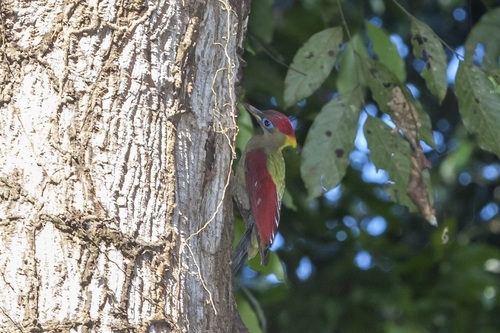
モリアオゲラ (Picus puniceus) モリアオゲラ
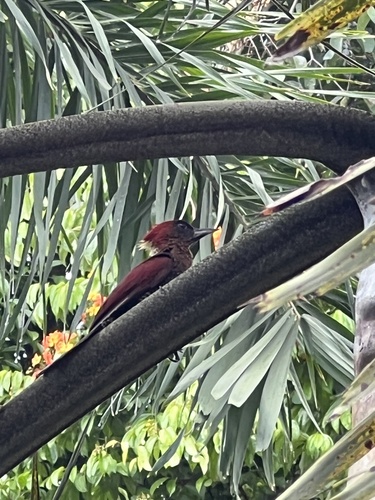
シマベニアオゲラ (Chrysophlegma miniaceum) シマベニアオゲラ

メディア

読み込み中…

要点

モリアオゲラとシマベニアオゲラを区別する最も信頼できる方法は、全体の色合いです:モリアオゲラは非常に明るく、鮮やかなクリムゾンレッドの翼と一般的にカラフルな外観を持っているのに対し、シマベニアオゲラはより控えめで、赤褐色の上面、黄色い尾羽、そして下部に広範囲の縞模様を示します。両種は分布域と生息地が重なるため、羽毛が重要です。明るい赤い翼と目を引く外観のキツツキを見たら、それはモリアオゲラです;もしその鳥がよりアーストーンで、下部に重い縞模様があり、黄色い尾羽を持っているなら、それはシマベニアオゲラです。シマベニアオゲラの性差は微妙ですが、これら二種の間での混乱の主要な原因ではありません。

識別のコツ

  1. クリムゾンレッドの翼(全ての年齢): 翼に明るいクリムゾンレッドが見えたら、それはモリアオゲラです。シマベニアオゲラはこの色を示すことはありません;その翼はせいぜい赤褐色です。
  2. 全体の明るさ: モリアオゲラは全体的に非常にカラフルな鳥で、鮮やかで目を引く外観を持っています。シマベニアオゲラはアーストーンで控えめです。
  3. 黄色い尾羽(シマベニアオゲラ): シマベニアオゲラの黄色い尾羽を探してください;それは赤褐色の上面と対照的です。モリアオゲラにはこの特徴がありません。
  4. 重い縞模様の下部(シマベニアオゲラ): シマベニアオゲラは白っぽい腹部と胸部に強い茶色がかった黒の縞模様を示します。モリアオゲラにはこの広範囲の縞模様はありません。
  5. 背中の色と模様: シマベニアオゲラは鈍いオリーブ色の背中にバフのスケーリングがありますが、モリアオゲラはより均一でカラフルです。
  6. 尾の色: シマベニアオゲラはチョコレートブラウンの尾を持っています;モリアオゲラの尾は特に記述されていませんが、診断的な特徴としては言及されていません。
  7. 頭部と後頭部: シマベニアオゲラの頭部は赤褐色で、毛羽立った黄色がかった後頭部があります。モリアオゲラの頭部はより明るく、カラフルです。
  8. 性差(シマベニアオゲラ): オスのシマベニアオゲラは顔と喉がより赤く、メスはより茶色で白い斑点があります。これは常に明るいモリアオゲラとの混乱の主要なポイントではありません。
  9. くちばし、目、足の色: 両者ともに暗いくちばしを持っていますが、シマベニアオゲラの栗色の目は青みがかった眼窩リングと緑がかった足が近くで見えるかもしれません。これらは区別のための強いフィールドマークではありません。
  10. 年齢特有の飛行パターンはなし: どちらの種も特異な幼鳥や未熟な翼のパターンが記述されていないため、羽毛の色と縞模様に焦点を当ててください。
  11. 生息地の重複: 両種は同じ森林に生息しているため、識別のために位置や生息地に頼らないでください。
  12. サイズ: 両者はサイズが似ており、サイズを主要なフィールドマークとして使用しないでください。
  13. 行動: 両者は木の中で昆虫や幼虫を探します;行動は信頼できる区別要因ではありません。
  14. 疑問がある場合は、モリアオゲラの明るいクリムゾンの翼と全体的な鮮やかな色合いの組み合わせ、対してシマベニアオゲラの黄色い尾羽と強い下部の縞模様を探してください。

大きさ

両種はサイズが似ており、モリアオゲラは最大25 cmの長さに達し、シマベニアオゲラは約26 cmです。モリアオゲラはわずかに軽い(体重81g)[wikidata]ですが、フィールドではそのサイズの違いは無視できるものであり、信頼できる区別ポイントではありません。

羽色

モリアオゲラは明るくカラフルな羽毛で際立っており、特に鮮やかなクリムゾンレッドの翼は全ての年齢で診断的です。残りの羽毛も明るく、誤認識が難しいです。それに対して、シマベニアオゲラは全体的にかなり鈍いです:その上面は赤褐色で、背中はオリーブ色にバフのスケーリングがあり、尾羽は黄色です。下部は白っぽい背景に茶色がかった黒の強い縞模様があり、尾はチョコレートブラウンです。頭部は赤褐色で、毛羽立った黄色がかった後頭部があります。シマベニアオゲラの両性は暗いくちばし、栗色の目、緑がかった足を持っていますが、オスは顔と喉がより赤く、メスはより茶色で白い斑点があります。どちらの種にも年齢特有の翼や飛行パターンのマークは記述されていないため、全体的な色合いと縞模様に焦点を当ててください。

行動

フィールドでこれら二種を区別するのに役立つ行動の違いは、情報源には強調されていません。両者は典型的なキツツキで、低地の森林で昆虫や幼虫を探しています。

生息環境

両種は同様の生息地を共有しており、ブルネイ、インドネシア、マレーシア、ミャンマー、シンガポール、タイの亜熱帯または熱帯の湿潤低地森林に生息しています。シマベニアオゲラはマングローブ森林にも見られますが、この重複だけでは生息地によって信頼できる区別はできません。

より良い説明を送る

比較と同じ項目を使ってください。文章はすぐに公開されます。

The most reliable way to separate Crimson-winged Woodpecker from Banded Woodpecker is by overall coloration: Crimson-winged is much brighter, with vivid crimson-red wings and a generally colorful appearance, while Banded is more subdued, showing rufous-brown upperparts, a yellow rump, and extensive barring below. Both species overlap in range and habitat, so plumage is key. If you see a woodpecker with bright red wings and a striking appearance, it's Crimson-winged; if the bird is more earth-toned with heavy barring on the underparts and a yellow rump, it's Banded. Sex differences are subtle in Banded, but not a major source of confusion between these two.

  1. Crimson-red wings (all ages): If you see bright crimson-red on the wings, it's Crimson-winged Woodpecker. Banded Woodpecker never shows this color; its wings are rufous-brown at best.
  2. Overall brightness: Crimson-winged is a much more colorful bird overall, with a vivid and striking appearance. Banded is earth-toned and subdued.
  3. Yellow rump (Banded): Look for a yellow rump on Banded Woodpecker, contrasting with its otherwise rufous-brown upperparts. Crimson-winged lacks this feature.
  4. Heavily barred underparts (Banded): Banded Woodpecker shows strong brownish-black barring on a whitish belly and breast. Crimson-winged does not have this extensive barring.
  5. Mantle color and pattern: Banded has a dull olive mantle with buff scaling, while Crimson-winged is more uniform and colorful.
  6. Tail color: Banded has a chocolate-brown tail; Crimson-winged's tail is not specifically described but is not noted as diagnostic.
  7. Head and nape: Banded's head is rufous-brown with a shaggy yellowish nape. Crimson-winged's head is brighter and more colorful.
  8. Sex differences (Banded): Male Banded has a redder face and throat, female is browner with white flecks. This is not a major confusion point with Crimson-winged, which is always brighter overall.
  9. Bill, eye, and leg color: Both have dark bills, but Banded's chestnut eye with a bluish orbital ring and greenish legs may be visible at close range. These are not strong field marks for separation.
  10. No age-specific flight pattern: Neither species is described as having distinctive juvenile or immature wing patterns, so focus on plumage color and barring.
  11. Habitat overlap: Both species occur in the same forests, so don't rely on location or habitat for ID.
  12. Size: Both are similar in size; do not use size as a primary field mark.
  13. Behavior: Both forage for insects and larvae in trees; behavior is not a reliable separator.
  14. If in doubt, look for the combination of bright crimson wings and overall vivid coloration for Crimson-winged, versus yellow rump and strong underpart barring for Banded.

Both species are similar in size, with Crimson-winged Woodpecker reaching up to 25 cm in length and Banded Woodpecker about 26 cm. Crimson-winged is slightly lighter (body mass 81g) [wikidata], but in the field, their size difference is negligible and not a reliable separation point.

Crimson-winged Woodpecker stands out for its bright, colorful plumage, especially the vivid crimson-red wings, which are diagnostic at all ages. The rest of the plumage is also bright, making it hard to misidentify. In contrast, Banded Woodpecker is much duller overall: its upperparts are rufous-brown, the mantle is olive with buff scaling, and the rump is yellow. The underparts are heavily barred with brownish-black on a whitish background, and the tail is chocolate-brown. The head is rufous-brown with a shaggy yellowish nape. Both sexes of Banded have a dark bill, chestnut eye, and greenish legs, but males are redder on the face and throat, while females are browner and flecked with white. No age-specific wing or flight pattern marks are described for either species, so focus on overall coloration and barring.

No behavioral differences are highlighted in the sources that would help separate these two species in the field. Both are typical woodpeckers, foraging for insects and larvae in lowland forests.

Both species share similar habitats, occurring in subtropical or tropical moist lowland forests across Brunei, Indonesia, Malaysia, Myanmar, Singapore, and Thailand. Banded Woodpecker is also found in mangrove forests, but this overlap is not enough to reliably separate them by habitat alone.

変更を破棄しますか?

保存していない編集があります。今離れると失われます。

モリアオゲラ · シマベニアオゲラ · 苦手な鳥